Britain looking to resettle poisoned Russian spy to the United States, says source

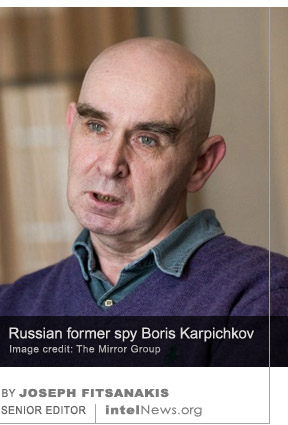
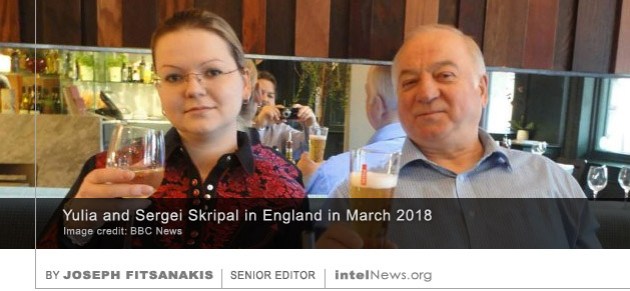
Sergei SkripalThe British government may relocate Sergei Skripal, the Russian double spy who appears to have survived an assassination attempt in England, to the United States, in an effort to protect him from further attacks. The BBC reported last week that Skripal, who had been in a critical condition for nearly a month, was “improving rapidly”. Skripal, 66, who spied for Britain in the early 2000s, and has been living in England since 2010, was poisoned with what London claims was a military-grade nerve agent. Nearly every European country, as well as Canada, Australia and the United States, expelled Russian diplomats in response to the attack on the Russian former spy. His daughter, Yulia, who is 33, also came down with nerve-agent poisoning on the same day as her father, but appears to have survived.
The London-based newspaper The Sunday Times said yesterday that British government officials are exploring the possibility of resettling Skripal and his daughter in an allied country. The paper claimed that the countries being considered for possible relocation belong to the so-called “Five Eyes” agreement (also known as UKUSA), a decades-old pact between intelligence agencies from Australia, New Zealand, Britain, Canada and the United States. The Times quoted “an intelligence source” familiar with the negotiations allegedly taking place between the British government and its UKUSA partners. The source reportedly told the paper that the Skripals “will be offered new identities”, but did not elaborate on how they would avoid attention after their images were published by every major media outlet in the world following last month’s incident in England.

The anonymous source told The Times that “the obvious place to resettle [the two Russians] is America because they are less likely to be killed there and it is easier to protect them there under a new identity”. The paper also reported that Britain’s Secret Intelligence Service, also known as MI6, is holding discussions with its American counterpart, the Central Intelligence Agency, about resettling the Skripals on American soil. But an article published on Sunday in another British newspaper, The Daily Telegraph, said that senior government officials in the United States are now worried that Russian defectors and former spies living there may not be safe. The paper quoted an unnamed “senior US administration official” as saying that Washington has “massive concerns” that US-based Russians who have spied for America, or have publicly criticized the Kremlin, could be targeted just like Skripal. The Times said it contacted the British Foreign Office seeking to confirm whether the Skripals would be relocated abroad, but did not get a response.

Author: Joseph Fitsanakis | Date: 9 April 2018 | Permalink

Taiwan admits for the first time that Chinese general Liu Liankun was one of its spies

Taiwan MIBThe government of Taiwan has acknowledged publicly for the first time that a Chinese major general, who was executed by Beijing in 1999 for espionage, was indeed one of its spies. The military officer was Liu Liankun, a logistician for the Chinese People’s Liberation Army, who headed its Department of General Logistics. However, China arrested Liu for espionage in 1999, and accused him of having spied for Taiwan for five years, in exchange for money. At the time, Taiwan denied that Liu spied on its behalf and refused to acknowledge that it had any role in the major general’s alleged espionage activities.
According to his Chinese government accusers, Liu passed information to Taiwan during the so-called 1996 missile crisis —known in Taiwan as the 1996 Taiwan Strait crisis. The crisis was prompted by a series of missile tests conducted by Beijing in the waters around the island of Taiwan. The crisis lasted several months, from July of 1995 to March of 1996. Many in Taiwan were convinced that China’s missile tests were the precursors of a military advance by Beijing, aimed at conquering the island one and for all. However, Taiwan’s Ministry of Defense eventually issued a press statement saying it was aware that the Chinese missiles were not equipped with armed warheads. The information was correct, but it made China realize that Taiwan was receiving information from a highly placed source inside its military. After an extensive counterintelligence investigation, the Chinese arrested Liu and accused him of having spied for Taiwan in exchange for nearly $2 million in bribes. Liu was eventually executed by lethal injection in a Beijing prison. He was 58. At the time of his conviction, Liu was the most senior Chinese military officer to have ever been convicted of spying for Taiwan.

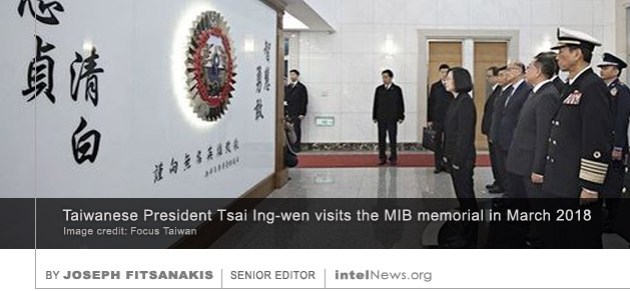
But Taiwan continued to deny any involvement in Liu’s case. That changed last week, however, when Taiwan’s Military Information Bureau unveiled its renovated memorial, which is housed at its headquarters in Taipei City. The memorial features plaques commemorating 75 individuals who have died while carrying out MIB intelligence operations. Those featured include both intelligence officers and their assets —foreign people recruited by intelligence officers to spy for Taiwan. Among the plaques, visitors to the memorial saw one dedicated to Liu for the first time. A note beneath the plaque acknowledges Liu’s contributions during the 1996 missile crisis. But it also states that the Chinese military official also provided assistance to Taiwan during earlier crises with China in the 1990s, as well as inside information about the death of Chinese Premier Deng Xiaoping in 1997.

Author: Joseph Fitsanakis | Date: 6 April 2018 | Permalink

US government publicly admits existence of rogue phone-tapping devices in DC

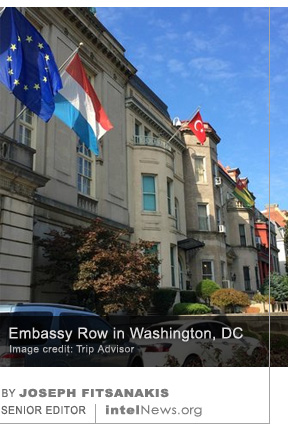
Embassy RowThe United States government has for the first time admitted publicly that it has detected devices known to be used by foreign intelligence services to spy on cellular communications in the nation’s capital. Known commonly as Stingrays, after a leading hardware brand, these devices are primarily used by government agencies, including law enforcement. But they can be purchased by anyone with anywhere from $1,000 to $200,000 to spare. They work by simulating the activity of legitimate cell towers and tricking cell phones into communicating with them. That allows the users of these cellphone-site simulators to monitor the physical whereabouts of targeted cell phones. Some of the more expensive Stingray models can intercept the actual content of telephone conversations and can even plant Trojans on the compromised phones of unsuspecting users.
Many governments have expressed concerns about the use of these devices, which are known to be used by intelligence agencies to monitor cellular communications on foreign soil. Major cities around the world, including Washington, are major targets of cellphone-site simulators, which are frequently located inside foreign embassies. However, the US government has never publicly commented on this issue, despite intense rumors that government agencies headquartered in Washington are major targets of Stingray devices. This changed recently, however, after Senator Ron Wyden (D-OR) wrote a letter to the Department of Homeland Security seeking information about the use of such devices in Washington. Wyden received a written response from Christopher Krebs, who heads the DHS’ National Protection and Programs Directorate. In the letter, dated March 26, Krebs confirmed that the DHS detected a number of active Stingrays in the DC area in 2017, which he referred to as “anomalous activity consistent with Stingrays”. But he added that the DHS lacks both funding and equipment needed to detect the full number of the devices and the full spectrum of Stingrays that are active in the nation’s capital.

The Associated Press, which published Krebs’ letter, said it acquired it from Wyden’s office in the US Senate. The news agency noted that the letter from DHS did not provide the technical specifications of the cellphone-site simulators, and did not enter into speculation about who might be employing them. Additionally the letter did not provide the exact number of Stingrays detected in DC in 2017, nor did it provide the exact locations in DC where Stingray activity was traced. In response to Krebs’ letter, Senator Wyden’s office released a statement blaming the US Federal Communications Commission for having failed to hold the cellular telecommunications industry accountable for the lack of security against Stingrays. “Leaving security to the phone companies has proven to be disastrous”, Senator Wyden’s statement concluded.

Author: Joseph Fitsanakis | Date: 4 April 2018 | Permalink

Dozens of successor groups forming in wake of ISIS defeat, experts warn

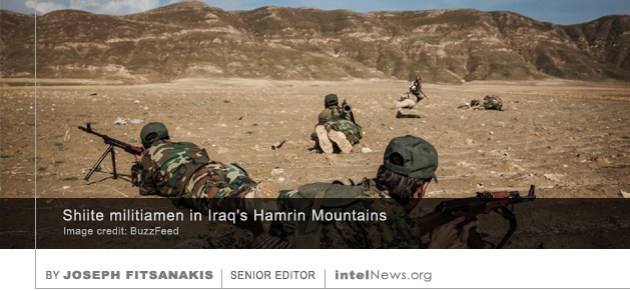
Hamrin Mountains IraqThe collapse of the Islamic State of Iraq and Syria is giving rise to a host of successor groups, which are quickly regrouping, recruiting members and launching increasingly sophisticated attacks against government forces, according to experts. A military victory in the war against ISIS was officially declared by the Iraqi government in December of last year. In recent weeks, United States President Donald Trump has repeated his government’s claim that American forces are “knocking the hell out of ISIS”. The Sunni militant group, which rose to prominence in 2014 after conquering much of Syria and northwestern Iraq, is clearly on the retreat, having lost every major urban center that it used to control. However, the collapse of the organization has led to the emergence of numerous insurgent groups that are quickly forming in Iraq and Syria.
Many of these highly agile groups are operating in the sparsely inhabited and remote southern district of Iraq’s Kurdish region, which includes the Hamrin Mountains. Others are found in Iraq’s arid regions west of the Euphrates. All are engaged in recruitment, propaganda and —increasingly— attacks against government forces and rival Shiite militias. Writing on Sunday, BuzzFeed’s Turkey-based Middle East correspondent Borzou Daragahi profiled one such group, the so-called White Flags. The group was formed in late 2017 through the union of two ISIS commanders, Khaled al-Moradi, an Iraqi Turkman, and Hiwa Chor, a former member of Ansar al-Islam, a predominantly Kurdish jihadist group that was active in northern Iraq after 2003. Daragahi notes that the White Flags have managed to carry out strikes in Baghdad and Kirkuk, and have repeatedly ambushed Iraqi government forces and members of Shiite militias. Senior White Flag members have been involved with ISIS for years and have “a wide range of experience [and] a high level of training”, says Daragahi. They are one of several post-ISIS armed groups that are recruiting members from Iraq’s disaffected Sunni Arab minority, while promising to protect them from the ire of the almost exclusively Shiite Iraqi government.

In a separate but related development, two analysts with Britain’s Government Communications Headquarters —the country’s primary communications interception agency— have warned that ISIS remains a “significant threat” to the West. The two analysts spoke on Britain’s Sky News television, using only their first names, Ben and Sunny. They recognized that ISIS has lost much of its territory in recent months, but cautioned that it continues to be “a very advanced adversary”, primarily due to its technological dexterity. Operational planners of ISIS have “pushed the bar and raised the bar” in terms of the “technology they have used and the ways in which they have used it”, said one of the analysts, adding that British intelligence agencies have to keep adapting their techniques to remain “one step ahead” of ISIS operatives. IntelNews regulars will recall that last year this blog advised Western counter-terrorism officials to “actively and immediately prepare” for attacks by ISIS militants using chemical weapons.

Author: Joseph Fitsanakis | Date: 3 April 2018 | Permalink

Surge in Russian spy activity prompts US agencies to bring back retired officers

FBIA surge in the activity of Russian intelligence personnel on United States soil has caused American spy agencies to rehire retired Russia specialists, according to Newsweek. Additionally, Russian defectors living in the US are reevaluating their personal safety in light of the poisoning of Russian spy Sergei Skripal in England last month, said Newsweek’s intelligence correspondent Jeff Stein in an article published on Sunday. Writing from Washington, Stein said that US counterintelligence agencies —notably the Federal Bureau of Investigation— are “on edge” over the attack on Skripal, which the British government said was carried out with a military-grade nerve agent on orders of the Kremlin.
Soviet spy agencies have a long history of assassinating defectors, called ‘wet operations’ in Russian spy parlance. But such activities were considerably scaled back after the 1970s. However, many claim that the rise of Vladimir Putin to power brought back these tactics, and that Moscow may now be investing more time and money in ‘wet operations’ training. Stein quoted one anonymous Russian defector living in the US as saying that it would be “easy [for Russian spy services] to find us if they are really determined”. It usually takes an email, text or phone call to friends or relatives back in Russia for Moscow to start tracking the physical whereabouts of defectors. In other cases, family members of defectors may be followed by Russian intelligence personnel while visiting the US to reunite with relatives, said the US-based defector.

The same source told Stein that suspected Russian intelligence personnel had been spotted by US counterintelligence teams surveilling the neighborhoods where Russian defectors reside. To address what they see as an “uptick in Russian activity […] over the past two years”, the FBI and the Central Intelligence Agency “have been bringing people out of retirement” with expertise on Russian intelligence operations, Stein reports. The veteran intelligence correspondent also spoke to retired CIA officers, who did not rule out an attempt by Russian intelligence to carry out a ‘wet operation’ on American soil. Stein contacted the CIA and the FBI, asking them to respond to these concerns. He said the CIA declined to comment, while the FBI did not return his messages.

Author: Joseph Fitsanakis | Date: 01 April 2018 | Permalink

Russia retains massive global diplomatic footprint despite recent expulsions

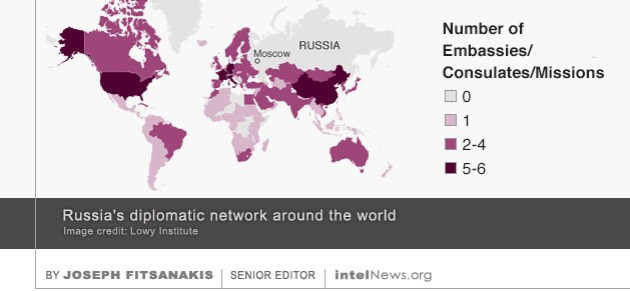
Russian embassiesThough unprecedented in size, the recent expulsions of over 150 diplomats by nearly 30 countries and organizations around the world have hardly made a dent on Russia’s huge diplomatic footprint. The coordinated expulsions were announced last week in response to Britain’s allegation that the Kremlin tried to kill a Russian former spy living in England. Sergei Skripal, 66, who spied for Britain in the early 2000s, and has been living in England since 2010, is fighting for his life after being poisoned with what London claims was a military-grade nerve agent. Nearly every European country, as well as Canada, Australia and the United States, expelled Russian diplomats in response to the attack on Skripal.

The largest share of the expulsions came from the United States, where the White House announced that 60 Russian diplomats had been ordered to leave by the end of the week. The majority of these diplomats are posted at the Russian embassy in Washington and consulate in New York. At least a dozen more are serving in Russia’s permanent mission at the United Nations in New York. On Thursday, several US media outlets said that all 60 Russians told to leave the US are undeclared intelligence officers serving under diplomatic cover. Fox News quoted an unnamed “senior administration official” in the US as saying that “these are not diplomats that we expelled […]. They are intelligence officers […] operating under diplomatic cover”. The official added that the Russians were expelled because they “were engaging in activities that were not commensurate with their diplomatic roles and functions”. That description is often used by governments to allude to diplomats who are in fact engaging in espionage or other intelligence-related activities.

But in an analysis piece written for the BBC, Alex Oliver, research director at the Lowy Institute in Australia, points out that the 150 diplomats expelled in recent days are but “a tiny part” of Russia’s massive diplomatic presence around the world. With 242 diplomatic posts around the world, Russia has the world’s fourth largest diplomatic footprint, behind the United States, China and France. Several thousand Russian diplomats are stationed at any one time in 143 Russian embassies, 87 consulates, and about a dozen other diplomatic missions in nearly every country in the world. Of these, approximately 170 serve in the United States. The 60 expulsions announced last week by the US government, will still leave Russia with over 100 accredited diplomats in America —many of whom are presumably intelligence officers. Earlier today, Moscow announced that it would expel 60 American diplomats, as well as nearly 100 more diplomats for other countries. The White House said that it may choose to respond with further expulsions of Russian diplomatic personnel.

Author: Joseph Fitsanakis | Date: 26 April 2018 | Permalink

Britain shared “unprecedented” intelligence details to secure expulsions of Russians

Diplomatic ExpulsionsBritain secured the largest expulsion of Russian diplomats in history by sharing “unprecedented degrees of intelligence” with dozens of foreign countries about the attempted killing of former spy Sergei Skripal. Nearly 30 countries and international organizations, including the European Union and the North Atlantic Treaty Organization, have expelled or refused to accredit over 150 Russian diplomats in the past 72 hours. The coordinated move came in response to the alleged attack on Skripal, a Russian former intelligence officer who has been living in England since 2010. Skripal left Russia after he was released from prison as part of a spy swap between Russia, the United Kingdom and the United States. He had previously been caught spying on Russia for Britain’s Secret Intelligence Service, known as MI6. Skripal, 66, and his daughter Yulia, 33, are currently in a comatose state in hospital.

The United States, Canada and Australia joined most European countries in expelling Russian spies, after Britain accused Moscow of using a Soviet-era nerve agent to attack the Skripals. But according to a senior British government official, the coordinated expulsions were not coincidental. The official, who refused to be named, told The Financial Times that the British government took the unprecedented decision to share “unprecedented degrees of intelligence” with dozens of countries in order to convince them to take action against the Kremlin. Shared information included complete intelligence assessments of Russian activities. Complete intelligence assessments are rarely —if ever— shared by nations. The latter typically share headline assessments —short snippets of longer analyses produced by their intelligence agencies— with allied nations. But in this case, British officials were authorized to share complete intelligence reports along with underlying data, which included a “detailed scientific analysis of the nerve agent used in the attack”, said The Financial Times.

Sharing complete intelligence reports runs the risk of revealing how much a nation knows about the secret activities of its adversaries, and may end up harming its intelligence-collection efforts. But the paper said that the complete intelligence shared with dozens of countries around the world convinced them that “there was no plausible alternative other than […] the Russian state” was behind the attack on the Skripals. Moreover, said the paper, London shared intelligence with foreign governments that pointed to the existence of an “explicit” state-backed assassination program run by the Kremlin. The program allegedly includes targets in numerous countries worldwide, said The Financial Times. The Russian government has vehemently rejected London’s assertions and has suggested that the attack on the Skripals was part of a British intelligence operation aimed at turning Russia into an international pariah.

Author: Joseph Fitsanakis | Date: 29 March 2018 | Permalink

Analysis: Will the mass expulsion of diplomats affect Russia’s spy capabilities?

Russian embassy in WashingtonRelations between Russia and much of the West reached a new low on Monday, with the expulsion of over 100 Russian diplomats from two dozen countries around the world. The unprecedented expulsions were publicized on Monday with a series of coordinated announcements issued from nearly every European capital, as well as from Washington, Ottawa and Canberra. By the early hours of Tuesday, the number of Russian diplomatic expulsions had reached 118 —not counting the 23 Russian so-called “undeclared intelligence officers” that were expelled from Britain last week. Further expulsions of Russian diplomats are expected in the coming days.

It is indeed difficult to overstate the significance of this development in the diplomatic and intelligence spheres. Monday’s announcements signified the largest collective expulsion of Russian intelligence personnel (intelligence officers working under diplomatic cover) in history, and is remarkable even by Cold War standards. In the United States, the administration of President Donald Trump expelled no fewer than 60 Russian diplomats and shut down the Russian consulate in Seattle. Such a move would have been viewed as aggressive even for Mr. Trump’s predecessor, Barack Obama, and his Secretary of State Hillary Clinton, who is known for her hardline anti-Russian stance. In Europe, the move to expel dozens of Russian envoys from 23 different countries —most of them European Union members— was a rare act of unity that surprised European observers as much as it did the Russians.

RUSSIA’S ESPIONAGE CAPABILITY

However, in considering the unprecedented number of diplomatic expulsions from an intelligence point of view, the question that arises is, how will these developments affect Russia’s espionage capabilities abroad? If the Kremlin did indeed authorize the attempted assassination of the Russian defector Sergei Skripal, it must be assumed that it expected some kind of reaction from London, possibly in the form of limited diplomatic expulsions. The resulting worldwide wave of expulsions must have caught Russian intelligence planners by surprise. There is little question, therefore, that these are difficult hours for the GRU, Russia’s military-run Main Intelligence Directorate, and the SVR, Russia’s Foreign Intelligence Service. These agencies will be losing as much as two thirds of their official-cover officers in Europe and North America. The last time this happened on such a massive scale was during World War II, as Soviet embassies across Europe were unceremoniously shut down by the advancing Nazi forces. Read more of this post

Russian double agent Sergei Skripal wrote to Putin seeking to return, says friend

Vladimir PutinSergei Skripal, the Russian double agent who was poisoned with a military-grade nerve agent in England earlier this month, wrote to the Kremlin asking to return to Russia, according to one of his old school friends. Skripal, 66, and his daughter Yulia, 33, remain in critical condition in hospital, three weeks after being poisoned with a nerve agent that British scientists say belongs to Russia’s Cold-War-era chemical stockpiles. Moscow has angrily rejected claims that Skripal, who spied for Britain in the early 2000s, was on a Kremlin-approved hit-list of defectors. On March 17, the Kremlin expelled 23 British diplomats from Moscow in response to London’s earlier expulsion of 23 Russians, which the British government said were “undeclared intelligence officers”.

On Saturday, the BBC said it contacted one of Skripal’s friends from his school days, who said that he was contacted by the double spy in 2012. Vladimir Timoshkov told the BBC that he was a childhood friend of Skripal when the two were in school together, but lost contact later in life. In 2006, when he learned through the media that Skripal had been convicted of espionage, Timoshkov said he managed to contact Skripal’s daughter, Yulia, after finding her on a social media platform. He remained in contact with her, and in 2012 he received a telephone call from Skripal himself. By that time, the double spy was living in England, having relocated there after the Kremlin swapped him and three others for 10 Russian spies who had been caught in the United States.

Timoshkov said that he and Skripal spoke for half an hour, during which Skripal told him he was “not a traitor” to the Soviet Union, the country that he had initially promised to protect. According to Timoshkov, Skripal also said that he had “regretted being a double agent” because his life had “become all messed up”. He also said that he felt isolated from his old classmates and friends, who shunned him following his arrest and conviction for espionage. During the telephone conversation, Skripal allegedly told Timoshkov that he had written a personal letter to the Russian President Vladimir Putin, asking for a full pardon. He did so because he missed his mother, brother, and other relatives who were living in Russia, and he wanted to visit them. In the letter to President Putin, Skripal denied that he betrayed his country and asked for “complete forgiveness” from the Russian leader, said Timoshkov.

But on Sunday, the Russian government denied that a letter from Skripal had been received by the Kremlin. The BBC report was also denied by the Russian embassy in London. In a tweet quoting the Kremlin, the embassy said: “There was no letter from Sergei Skripal to President Putin to allow him to come back to Russia.”

Author: Joseph Fitsanakis | Date: 26 March 2018 | Permalink

Report from Holland: Cable-bound interceptions and ‘dragnets’

Wet op de Inlichtingen- en VeiligheidsdienstenFor the past year, the Netherlands has had a new law governing its two secret services, the AIVD and the MIVD. The new Intelligence and Security Services Act (Wet op de inlichtingen- en veiligheidsdiensten or Wiv) was and still is heavily criticized, especially because it allows untargeted access to cable-bound telephone and internet traffic. Under the previous law, which dates from 2002, the intelligence services were only allowed to conduct bulk interception of wireless transmissions, like satellite and radio communications —besides of course the traditional targeted telephone and internet taps aimed at individual targets.

That prohibition of bulk cable tapping is not the only thing that makes Dutch intelligence services different from those of many other countries. Probably the biggest difference is the fact that the Wiv applies to both foreign and domestic operations, as if the two secret services were responsible for both domestic security and foreign intelligence.

The General Intelligence and Security Service (Algemene Inlichtingen- en Veiligheidsdienst, or AIVD) covers the civilian domain, and focuses at Jihadist terrorism, radicalization, rightwing and leftwing extremism, counter-intelligence and countering cyber threats. This is mostly domestic, but the AIVD also has a small branch that gathers foreign intelligence from and about a select range of countries. The Military Intelligence and Security Service (Militaire Inlichtingen- en Veiligheidsdienst, or MIVD) covers military issues, and is therefore more foreign-orientated than its civilian counterpart. The MIVD is responsible for the security of Dutch armed forces and for collecting foreign intelligence in military matters, while at the same time providing support of Dutch military missions abroad, like for example in Mali. When it comes to Signals Intelligence (SIGINT), the AIVD and MIVD combined their efforts in a joint unit called the Joint SIGINT Cyber Unit (JSCU), which became operational in 2014. The JSCU is responsible for most of the technical interception capabilities, from traditional wiretaps to cyber operations. The JSCU is not allowed to conduct offensive cyber operations. The latter are conducted by the Defence Cyber Command (DCC) of the Dutch armed forces. Read more of this post

EU recalls envoy to Moscow over Skripal poisoning, more expulsions may follow

Theresa MayThe European Union has recalled its ambassador to Moscow in an apparent response to the poisoning of Sergei Skripal, a Russian double agent, who was attacked with a nerve agent in England earlier this month. Skripal, 66, and his daughter Yulia, 33, remain in critical condition in hospital, nearly three weeks after being poisoned with a nerve agent that British scientists say belongs to Russia’s Cold-War-era chemical stockpiles. Moscow has angrily rejected claims that Skripal, who spied for Britain in the early 2000s, was on a Kremlin-approved hit-list of defectors. But British Prime Minister Theresa May traveled to Brussels on Thursday to brief European Union heads of state about the attack on Skripal.

The summit concluded in the early hours of Friday with the publication of a joint statement, signed by every participating head of state, backing the British claims and expressing outrage at Moscow’s alleged use of a military-grade nerve agent on British soil. The statement said that EU leaders “agree with the United Kingdom government’s assessment that it is highly likely that the Russian Federation is responsible” for the attack on the Skripals. “There is no plausible alternative explanation”, said the statement, and described the attack on the two Russians as a “grave challenge to our shared security”. The statement will be seen as a foreign-policy triumph by London, as Britain has been contacting EU governments seeking from them a direct condemnation of Russia and possible diplomatic actions in response to the alleged attack.

The jointly authored statement also said that the EU would recall its ambassador to Moscow, effective immediately. Markus Ederer, a German diplomat who represents the EU in the Russian capital, will be leaving Russia “for a month of consultations”, in what appears to be a symbolic act of protest by the Europeans. However, some EU members threatened further action and said that they would “coordinate on the consequences to be drawn in the light of” future Russian actions on the matter of the Skripals. In statements made to reporters early on Friday, German Chancellor Angela Merkel said that there may be “further punitive measures” against Russia, adding that they would be coordinated among EU states.

Some media reported that at least five EU member states were considering expelling undeclared Russian intelligence officers from their soil in response to the alleged Russian attack in England. They are said to include France, Lithuania and Poland. The London-based newspaper Daily Telegraph reported that Russia was in danger of having its Western European spy network dismantled in response to the attack on the Skripals. Some EU countries, however, including Italy and Greece, appeared less interested in taking action against Russia. The Greek Prime Minister, Alexis Tsipras, said on Thursday that his government expressed its “solidarity with the United Kingdom”, but that the EU had to investigate what happened in England on March 4.

Author: Joseph Fitsanakis | Date: 23 March 2018 | Permalink

Analysis: Trump has made record use of US Special Forces since becoming president

special forcesWith reports about the activities of the United States Special Forces continuously surfacing in the media lately, it is important to remember that the White House has drastically increased Special Forces deployments since Donald Trump assumed the presidency. In December last year, it was reported that President Trump had ordered the deployment of Special Forces troops more often than any other president in American history. At that time, US Special Forces troops were deployed in 150 nations, a number that represented 75 percent of all nations on the planet, according to government data. The figures were published by TomDispatch, which said it received them directly from the US Special Operations Command. The website said that American Special Forces troops were participating in wars, counter-insurgency operations and covert-action activities across Africa, Asia and the Middle East, and saw action every day.

According to the statistics provided by the US Special Operations Command, it appears more than 10 percent (8,000 troops) of the US Special Operations Command’s 70,000 troops are deployed each day. These deployments take place daily in more than 80 countries. This rate of deployment represents a significant increase from the eight years of the administration of US President Barack Obama, which ended in 2016. That year, US Special Forces troops were deployed in 138 countries, according to media reports. The Trump administration’s use of Special Forces troops also represents a jump of approximately 150 percent from the last Republican administration, that of George W. Bush, which ended in early 2008.

Africa represents an area of consistent rise in the rates of deployment of US Special Forces. Currently, US Special Forces troops are active in no fewer than 33 countries across Africa. Most of these countries are witnessing activity by Islamist groups that are described as terrorist by the region’s governments. But the US Special Operations Command has also deployed contingents in Europe, said TomDispatch. Currently, the US maintains Special Forces troops at every country bordering Russia’s western region, with the exception of Belarus.

These numbers echo the record growth of the US Special Forces community since September 11, 2001, when Washington declared its global war on terrorism. Observers estimate the post-9/11 numerical growth of US Special Forces at 75 percent. However, little is known about the nature of campaigns in which US Special Forces are deployed, and whether they are effective in establishing security, or whether they inflame tensions across different battlefronts. There is also limited information about the resulting casualties. The US government has admitted that US Special Forces troops died in 2017 in Syria, Iraq, Afghanistan, Yemen, Niger, Mali and Somalia.

Author: Ian Allen | Date: 22 March 2018 | Permalink

French consular employee caught smuggling guns to Gaza using diplomatic car

French consulate in JerusalemAn employee of France’s consulate in Jerusalem is under arrest for allegedly smuggling weapons from the Gaza Strip to the West Bank, according to French media reports, which have been confirmed by Israel. The consular employee has been identified by the Shin Bet, Israel’s domestic security agency, as Romain Franck, 23. He reportedly worked as a driver at the consulate, a job he managed to secure through a prestigious “international volunteer” program sponsored by the French government. The elite program allows recent French college graduates to gain work experience in various countries around the world. Although he had a relatively junior post at the French consulate, Franck carried a diplomatic passport, which allowed him to move through international borders without being searched, due to his diplomatic immunity privileges.

But, according to French newspaper Liberation, Franck was detained by Shin Bet officers on February 19 of this year, as he was trying to enter Israel from the Gaza Strip at the Erez border crossing. He was driving a car that bears French diplomatic license plates and belongs to the French consulate in Jerusalem. Inside the car, the Shin Bet officers reportedly found pistols and assault rifles. According to Liberation, Franck’s arrest has been kept secret. The Shin Bet admitted that the newspaper’s story was true on Tuesday afternoon. Franck reportedly told his Israeli captors that he had received the weapons from a Palestinian who worked at the French Cultural Center in Gaza. He then transported them over several trips to the West Bank, where other Palestinians picked them up, paid him, and sold them on to others.

Israel has reportedly arrested eight more people in connection with the gun running, all of whom are Palestinians. They include a Palestinian security guard at the French consulate. According to the Shin Bet, Franck was not ideologically or politically allied with Hamas, Fatah, or any other Palestinian group. Instead, he participated in the gun smuggling for financial gain. A spokesman at France’s embassy in Tel Aviv said that Paris was closely monitoring the incident and was “in close contact with the Israeli authorities on the matter”.

Author: Joseph Fitsanakis | Date: 21 March 2018 | Permalink | Research credit: MF

CIA is running informal negotiation channels with North Korea, say sources

Mike PompeoThe Central Intelligence Agency has reportedly established back channels for negotiation between the United States and North Korea, which the Department of State is now using to communicate with Pyongyang. Rex Tillerson, who was summarily fired as US Secretary of State by President Donald Trump last week, was famously in favor of diplomatic negotiations between the US and North Korea. The White House had resisted and even publicly criticized Tillerson’s views. Ironically, Tillerson was fired just as his pro-diplomacy views on North Korea are being adopted by the White House.

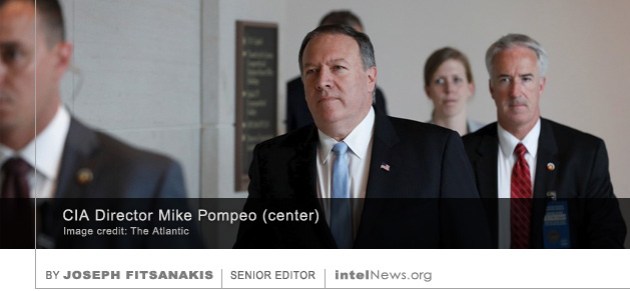
It is now the task of the new US Secretary of State, Mike Pompeo to help facilitate President’ Trump’s desire to meet with North Korean Supreme Leader Kim Jong-un. On Sunday, US television network CBS reported that Pompeo had already established an informal negotiation channel with Pyongyang during his prior post as director of the Central Intelligence Agency. According to CBS, the CIA used the back channel to communicate directly with the North Korean regime, bypassing the Department of State, which is the traditional instrument of US foreign policy. The network quoted “two current and one former” US officials, which it did not name.

Now that Pompeo has been placed in charge of the Department of State, said CBS, he has already tapped into the CIA’s direct line of communication with Pyongyang, and has begun utilizing it as Secretary of State. The CIA remains in charge of the channel, according to the television network. Meanwhile, German news media said on Sunday that North Korea’s missiles could now reach Germany and other areas of Western Europe. The reports quoted Dr. Ole Diehl, deputy director of the BND, Germany’s foreign-intelligence agency, who allegedly made the statement at a closed-door meeting of the Bundestag, Germany’s parliament.

Author: Joseph Fitsanakis | Date: 19 March 2018 | Permalink

Report from Holland: A heated debate over a new intelligence and security act

Wet op de Inlichtingen- en VeiligheidsdienstenOn March 21, the Dutch public cast their vote about the new Intelligence and Security Services Act, in Dutch Wet op de Inlichtingen- en Veiligheidsdiensten (or WIV). In this two-part post, we report about the debate currently taking place. In our first contribution, the discussion itself will be analyzed. In our second post, we will focus on the new special powers that the Act grants the Dutch intelligence community, more specifically the practice of cable-bound interception, which is central here.

First the discussion. Public unrest about the new intelligence act came rather late. In August, a group of concerned students from Amsterdam was able to collect more than ten thousand signatures for a consultative referendum on the Intelligence and Security Services Act, to which the House of Representatives agreed on 14 February, and the Senate on 11 July 2017. The students were supported by a variety of digital civil liberties organizations, including Amnesty International and Bits of Freedom, and successfully petitioned 300,000 signatures. By law (which has been abolished in the meantime) the Dutch government was required to hold a consultative referendum about the new Act.

What conclusions they will draw from a ‘yes’ or ‘no’ majority, based on whatever turn-out percentage, is unclear. Some leaders of the coalition parties, such as the Christian-Democratic parliamentary leader Sybrand Buma, have stated that they will ignore the referendum altogether. A bit late to the party (parliament has discussed and accepted the new Act throughout 2017), the concerned students and digital civil rights groups claim their goal is to start a discussion about the ‘tapping law’ or ‘vacuum cleaner capability’, most often referred to as the ‘dragnet law’ in popular metaphors. Although this complex and comprehensive law settles a variety of intelligence matters, the discussion has focused almost exclusively on the ‘dragnet’: the interception of communication traffic that runs through fiber optic cables, and the consequences of the application of this special power for the privacy of Dutch citizens. Read more of this post