News you may have missed #775

Ramstein Air Base, GermanyBy IAN ALLEN | intelNews.org |
►►Israel arrests man for allegedly spying for Syria. Israeli prosecutors have charged Iyad Jamil Assad al-Johari, a Druze resident of the occupied Golan Heights, with spying for Syria. The Shin Bet internal security service said in a statement that Johari, who is from the border village of Majdal Shams, was charged with “having contact with a foreign agent” and “passing information to the enemy”. The Shin Bet said Johari was arrested last month “on suspicion of maintaining contact with Syrian intelligence and passed information on Israeli army deployment on the Golan Heights”. The man’s family has denied the accusations.
►►German NATO employee charged with spying. Markus Koehler, a spokesman for German federal prosecutors, said in a statement that the suspect –identified only as Manfred K. in accordance with German privacy rules– was arrested Monday on charges of obtaining state secrets with the intent to provide them to an unidentified third party. The civilian NATO employee, who works at the US air base at Ramstein, is alleged to have obtained the data and then transferred it to his private computer.
►►Aussie spy agency looking for locksmith. In a new notice on its careers webpage, ASIS, Australia’s foreign intelligence agency, is looking for a “corporate locksmith”. “This is a unique role for a highly motivated and dedicated locksmith to provide complex locksmith services and advice across our organisation”, the notice states. “The position involves interstate and overseas travel, often at short notice”. The job notice says the successful applicant would have to manage the purchasing of all locks, safes and other secure containers for the service.

News you may have missed #770

Horn of Africa mapBy TIMOTHY W. COLEMAN | intelNews.org |
►►Kaspersky Lab is ‘thwarting US cyber spies’. According to an article in Wired magazine, Eugene Kaspersky, the CEO of Russia-based Kaspersky Labs has been working to support Russian allies in the Kremlin and the FSB. Kasperksy’s firm first discovered the cyber attack weapon known as Stuxnet. As the profile piece notes, “Kaspersky’s rise is particularly notable —and to some, downright troubling— given his KGB-sponsored training, his tenure as a Soviet intelligence officer, his alliance with Vladimir Putin’s regime, and his deep and ongoing relationship with Russia’s Federal Security Service, or FSB”.
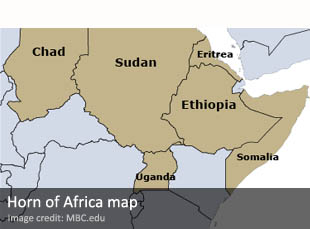
►►Al-Shabaab executes alleged CIA and MI6 assets. Somalia’s largest and most deadly armed Islamist group, al-Shabaab, announced that it had captured and executed at least three informants who were allegedly passing intelligence to the CIA and to MI6. The Associated Press stated that Al-Shabaab’s official Twitter feed stated that the individuals, who were summarily interrogated and then executed by firing squad, “were part of a wide network of spies deployed by the British and American intelligence agencies”.
►►Australian intelligence briefed on Canadian spy. The espionage case against accused Canadian spy, former Sub-Lieutenant Jeffrey Paul Delisle, continues to garner intrigue. As was previously reported on this blog, Delisle, a former navy intelligence officer is accused of spying for Russia. But a report in The National Post states that representatives of Canada’s intelligence service briefed members of Australia’s intelligence services on the Delisle’s case and that information exchanges appear ongoing. The particulars of Australia’s involvement in the case are explained here.

Canadian spy compromised Australian, British intelligence

Jeffrey Paul DelisleBy JOSEPH FITSANAKIS | intelNews.org |
Most regular readers of this blog are undoubtedly familiar with the case of Jeffrey Paul Delisle, a Sub-Lieutenant in the Royal Canadian Navy, who until recently was employed at Canada’s ultra-secure TRINITY communications center in Halifax. Delisle was arrested in January on suspicion of passing information gathered from radio and radar signal interceptions to a foreign power, most likely Russia. Back in May, when it was disclosed that the United States helped Canadian counterintelligence investigators build their case against Delisle, we warned that “a far more important subject concerns the degree in which [Delisle’s] penetration has affected Canada’s intelligence-sharing relationship with its […] partners”. Now a new report in The Sydney Morning Herald reveals that Delisle’s espionage activities compromised Australian secrets that had been shared with Canada under longstanding intelligence cooperation arrangements. Citing “Australian security sources”, the paper said that the Delisle case “has sent shock waves through Western security agencies” due to the volume of compromised information. The Herald claims that the stolen intelligence is “on a scale comparable to the alleged handover to WikiLeaks of US military and diplomatic reports by US Army private Bradley Manning”. An unnamed “Australian security source” told the paper that Delisle’s access to classified information was “apparently very wide” and that Australian intercepts were “inevitably compromised”. Read more of this post

News you may have missed #767

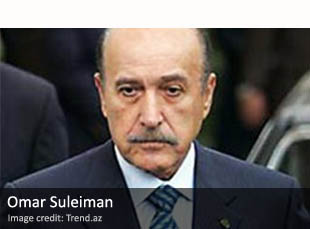
Omar SuleimanBy IAN ALLEN | intelNews.org |
►►Aussie spy chief warns of ‘digital footprints’. For the first time in the 60-year history of the Australian Secret Intelligence Service (ASIS), Australia’s main external spy agency, its Director has spoken publicly. Nick Warner used this unprecedented opportunity to reflect on where ASIS has come in the last 60 years, and the challenges it faces into the future. Among them, he said, are “developments in the cyber-realm”, which “are a two-edged sword for an agency like ASIS; they offer new ways of collecting new information, but the digital fingerprints and footprints which we all now leave behind complicate the task of operating covertly”.
►►India arrests alleged Pakistani spy. Indian authorities have announced the arrest of Zubair Khan, 37, of Uttar Pradesh, who was allegedly caught with several Indian Army documents in his possession. He had been reportedly asked to gather information on Air India pilots, military bases in the country, journalists who frequently visit Pakistan, and relatives of officials working in the Indian High Commission in Pakistan. Maps of cantonment boards and details of many battalions have been recovered from him, according to Indian media reports. Investigators are also said to have identified one of Khan’s handlers, a man named “Talib”, who works at Pakistan’s High Commission in New Delhi.
►►Egypt spies try to repair image as ex-Director dies. Egypt’s top spy agency, the General Intelligence Service —known as the “Mukhabarat” in Arabic— is taking a small but unprecedented step out of the shadows, in an apparent attempt to win the public’s support in the new Egypt. In an unusual move, the agency released a 41-minute-long documentary boasting of its achievements, presenting itself as the defender of the nation and vowing to continue to protect the country. The effort comes as the Mukhabarat’s former Director, the notorious Omar Suleiman, has died in the United States.

News you may have missed #754

Jonathan EvansBy IAN ALLEN | intelNews.org |
►►New German spy HQ to open a year late. The BND, Germany’s foreign intelligence service, was due to move from its base in Pullach, near Munich, to an enormous newly built center in Berlin, at the end of 2014. But that has now been officially put back by a year. The Berliner Morgenpost newspaper quoted BND president Gerhard Schindler saying he was “regularly losing young new staff”, due to the delay. The uncertainty has meant “they leave our authority and find themselves another employer”, he said.
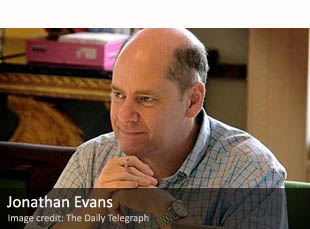
►►UK spy chief warns of ‘astonishing’ levels of cyberespionage. In a rare public speech, Jonathan Evans, director general of MI5, Britain’s domestic spy service, has said that the West now faces an “astonishing” cyberespionage threat on an “industrial scale” from specific nation states. He said that cyberespionage is now conducted “with industrial-scale processes involving many thousands of people lying behind both state-sponsored cyber espionage and organized cyber crime”. Surely, however, Evans does not mean to imply that the West’s role in cyberespionage is purely defensive?
►►Aussie spy agency lacks resources to vet asylum seekers. An official audit into the Australian Security Intelligence Organisation’s ability to vet asylum seekers for potential security threats, has found that it is struggling with the “sharp increase” in boat arrivals, rudimentary computer systems and 30 per cent fewer staff than needed. The audit report examined 411 cases as a sample of the almost 180,000 security assessments ASIO completes each year.

News you may have missed #741

Glenn CarleBy IAN ALLEN | intelNews.org |
►►MI6 role in rendition could be concealed in new bill. Libyan government officials Sami al-Saadi and Abdel Hakim Belhaj, who allege that they were taken by rendition by Britain to Libya eight years ago, are expected to begin legal proceedings against the British government and Jack Straw, Britain’s former foreign secretary, next month. However, after pressure from the security services, MI5 and MI6, the British government is preparing to publish a Justice and Security Bill that could allow these cases to be held in their entirety behind closed doors.
►►Aussie spy agency defends new headquarters. The Australian Security Intelligence Organisation says its new headquarters in Canberra is not at risk of being spied upon, despite the use of a lot of glass. ASIO director general David Irvine told a senate committee on Thursday it would be impossible for someone with a high resolution camera on the other side of Lake Burley Griffin to spy on the nation’s spies. Australian Greens senator Scott Ludlam had asked whether the design of the “glass palace” could threaten the secrecy of its work.
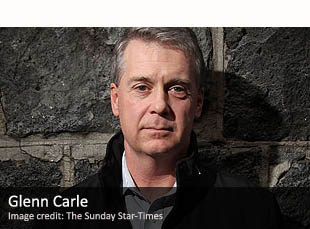
►►Good interview with ex-CIA officer Glenn Carle. In this interview, Carle, a retired CIA case officer who wrote The Interrogator: An Education, says his former employers have called his publisher asking them to pulp his book; they rang every major network to prevent him going on air. They are, he says several times, “vicious” and have perpetrated a stain on America’s national character.

News you may have missed #734

Aviv KochaviBy IAN ALLEN | intelNews.org |
►►Australian spy agency in rent dispute. The Australian government insists there is no dispute over the lease of the new, state-of-the-art headquarters of the Australian Security Intelligence Organisation, which cost nearly A$589 to build. But according to a number of government sources, the property has become the subject of a standoff between the ASIO and Australia’s Department of Finance and Deregulation. The Canberra Times reports that the Finance Department has told ASIO it will have to hand over more money than anticipated because of a blowout to building costs and timing. But the ASIO is refusing to pay more than initially agreed.
►►US unveils spy model of bin Laden compound. The United States intelligence community has unveiled a scale model of the compound in Abbottabad, Pakistan, where Osama bin Laden spent the last few years of his life in hiding. The model was built by the National Geospatial-Intelligence Agency (NGIA) and used by military and intelligence leaders to plan the daring night raid on May 2, 2011, that killed the al Qaeda founder. Its scale is an exact 1:84; every tree, bush, wall, animal pen, trash can and physical structure in the model existed at one time at the original compound in Abbottabad.
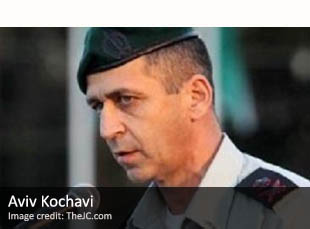
►►Israel military intelligence head in secret US visit. Israeli military intelligence chief Aviv Kochavi made a “secret visit” to Washington earlier this month to discuss the upcoming talks between world powers and Iran. An Israeli security official confirmed the visit, which was reported in Israel’s Haaretz newspaper, but could not provide further details. Meanwhile, three senior IDF intelligence officers resigned recently, following what they called “questionable” appointments to key positions. The three colonels held some of the most senior and classified positions in the Israeli military intelligence community.

News you may have missed #727

Jeffrey Paul DelisleBy IAN ALLEN | intelNews.org |
►►US government-authorized wiretaps increased in 2011. The US Justice Department sought 1,745 secret wiretapping warrants in 2011, an increase of 239 over 2010, according to correspondence sent to Congressional leaders and oversight committees. The secret warrants are governed under the Foreign Intelligence Surveillance Act (FISA) and are used in terrorist and espionage investigations by the FBI. The letter, dated April 30, 2012, also notes that the FBI issued 16,511 National Security Letters (NSLs) to obtain certain records and information in investigations. It further asserts that the requests were for investigations relating to 7,201 different US persons. The number of NSLs declined dramatically from 2010 when the FBI had sought 24,287.
►►Australia axes spy agency funding. Large budget cuts by the Australian Labour government, which is trying to engineer a federal budget surplus, are expected to affect funding for the country’s intelligence agencies. The six agencies of the Australian intelligence community have been given a collective budget of $81 million over four years, a figure that is $20.4 million lower than previous budgets. The government said that savings will be “redirected to support other national intelligence priorities”.
►►Canada spy case adjourned until June. The case of Jeffrey Delisle, a Halifax naval intelligence officer accused of espionage, has been adjourned until next month because his lawyer has not yet received all of the files in the case. Delisle is charged with communicating information to a foreign entity —probably Russia— that could harm national interests. Until 2010, Delisle worked for both Canada’s Chief of Defence Intelligence and at the Strategic Joint Staff, which oversees virtually every major aspect of the military’s domestic and international plans and operations.

News you may have missed #714

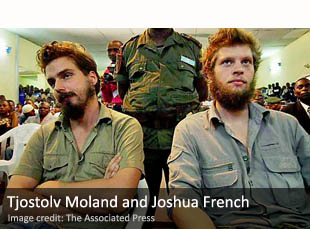
Tjostolv Moland and Joshua FrenchBy IAN ALLEN | intelNews.org |
►►British PM urged to intervene in Congo spy case. The mother of Joshua French, who has dual British and Norwegian nationality, and is facing execution in the Democratic Republic of Congo, has urged British Prime Minister David Cameron to ask Congolese authorities to pardon him. French, and his Norwegian friend Tjostolv Moland, were sentenced to death for murder and spying in the vast central African country in 2009. A prison official claimed in August last year that the pair had tried to escape, but their lawyer denies this.
►►Computers of Syrian activists infected with Trojan. Since the beginning of the year, pro-Syrian-government hackers have steadily escalated the frequency and sophistication of their attacks on Syrian opposition activists. Many of these attacks are carried out through Trojans, which covertly install spying software onto infected computers, as well as phishing attacks which steal YouTube and Facebook login credentials. According to the Electronic Frontier Foundation, the latest surveillance malware comes in the form of an extracting file which is made to look like a PDF if users have their file extensions turned off. The PDF purports to be a document concerning the formation of the leadership council of the Syrian revolution and is delivered via Skype message from a known friend.
►►Report claims Australian government spied on anti-coal activists. The leader of the Australian Greens, Bob Brown, says he is outraged at reports that the Australian Security Intelligence Organisation (ASIO) is spying on mining protesters, and says such action is a misuse of the spy agency’s resources. The revelations were reported in Australian newspapers yesterday, and are based on a Freedom of Information request to the Department of Resources, Energy and Tourism that was reportedly rejected because it involved “an intelligence agency document”. The ASIO says it cannot confirm whether it has conducted surveillance of anti-coal protesters, but it says it does not target particular groups or individuals unless there is a security-related reason to do so.

US rejects calls to free Navy analyst who spied for Israel

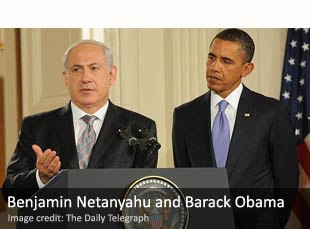
Benjamin Netanyahu and Barack ObamaBy JOSEPH FITSANAKIS | intelNews.org |
The White House has rejected persistent calls by Israeli politicians and lobbyists to free a United States Navy intelligence analyst serving a life sentence for giving classified US government documents to Israel. Jonathan Jay Pollard was convicted in 1987 for selling classified information to the Israeli government. Ronald Olive, a former counterintelligence officer for the US Naval Criminal Investigative Service, who led the US Navy’s prosecution of Jonathan Pollard, has described Pollard’s spying activity as “one of the most devastating cases of espionage in US history”, involving the theft of over “one million classified documents”. Recently it emerged that, before spying for Israel, Pollard had attempted to spy on the US for the government of Australia. However, in Israel, Pollard, who is now an Israeli subject after renouncing his American citizenship, is widely considered a national hero. Last week, senior Israeli political figures renewed persistent calls to the administration of US President Barack Obama to free Pollard. According to the Israelis’ reasoning, the life sentence imposed on Pollard is too harsh considering that he spied for a US ally. Last week’s calls were led by Israeli Prime Minister Benjamin Netanyahu, who urged the White House to free the convicted spy “in the spirit of the Jewish Passover. Netanyahu said that “the Festival of Freedom of all the Jews should be turned into Pollard’s private one”. Prime Minister Netanyahu’s plea was echoed in a personal letter addressed to President Obama by Israeli President Shimon Peres, along with a petition signed by over 80 members of the Israeli Knesset. Read more of this post

Australian special forces secretly operating in Africa, says newspaper

Special Air Service RegimentBy JOSEPH FITSANAKIS| intelNews.org |
One of Australia’s most prominent newspapers suggested in a leading article yesterday that a secret Australian special forces squadron has been illegally conducting espionage operations in several African countries during the past year. According to Melbourne-based The Age, the 4 Squadron of Australia’s Special Air Service Regiment (SASR) has been deployed in “dozens of secret operations” during the past 12 months, in countries such as Kenya, Nigeria and Zimbabwe. Members of 4 Squadron have been operating dressed in civilian clothing, carrying forged identity papers, and with strict instructions to deny any connection with SASR if captured, said The Age. Although the existence of 4 Squadron has never been officially acknowledged, the unit is believed to have been established in 2004 or 2005, and is currently thought to be based at Swan Island in Victoria, north of the town of Queenscliff. Its initial mission was to provide armed protection to officers of the Australian Secret Intelligence Service (ASIS) whenever the latter are deployed in warzones or other exceptionally dangerous overseas environments. But 4 Squadron’s missions in Africa, which The Age says were authorized in 2010 by then Prime Minster Kevin Rudd, do not include ASIS officers, and instead require SASR members to act both in a military and civilian capacity in espionage assignments. According to the paper’s allegations, 4 Squadron missions have involved regular assessment and evaluation of inter-African border control standards, developing scenarios for evacuating Australians, mapping out landing sites for possible military interventions, and gathering first-hand intelligence on local politics and the activities of insurgents. The paper claims that the scope and breadth of 4 Squardon’s African assignments have raised concerns within the SASR, with some senior officials viewing the unit’s actions as “a possibly dangerous expansion of Australia’s foreign military engagement”. Read more of this post

News you may have missed #691

Thomas DrakeBy IAN ALLEN| intelNews.org |
►►NSA whistleblower says Obama worse than Bush. Thomas Drake, the whistleblower whom the administration of US President Barack Obama tried and failed to prosecute for leaking information about waste, fraud and abuse at the National Security Agency, now works at an Apple store in Maryland. In an interview with Salon, Drake says the Obama administration is “expanding the secrecy regime far beyond what Bush ever intended”.
►►Australian spies reportedly buying computer bugs. The Australian government is buying computer security weaknesses found by hackers before they are sold on the black market, as part of its defense strategy, according to an Australian security consultant who wishes to remain anonymous. He says while the government won’t admit it, buying vulnerabilities is an obvious part of “gathering intelligence”.
►►Refugees in Finland face spying threats. Foreign governments and groups are carrying out more spying on refugees and dissidents living in Finland, according to SUPO, the country’s security intelligence service. SUPO issued a report last week contending that while the Scandinavian country isn’t seeing an increased threat of terrorist acts on its soil, it still faces several terror-related challenges. One of them is “regular” surveillance activity by foreign intelligence services operating within Finland, whose aim is spy on their home countries’ dissidents and develop links with other refugees and expatriates.

News you may have missed #672

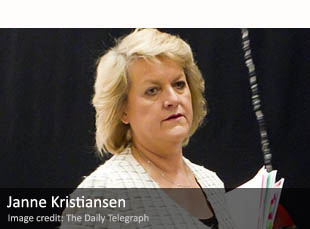
Janne KristiansenBy IAN ALLEN | intelNews.org |
►►Russian military intelligence to ‘change tactics’. Russian military intelligence is adjusting its work methods in response to the “worsening international situation”, Igor Sergun, the head of GRU —the country’s largest espionage agency— has told President Dmitry Medvedev. Currently, the GRU’s main focus is on “hot spots where terrorist and extremist groups are acting, regions with crisis situations, and also the sources and possible routes of illegal proliferation of nuclear materials and the components of weapons of mass destruction”, Sergun told Medvedev.
►►Norway spy chief quits in secrecy gaffe. Norway’s head of intelligence Janne Kristiansen has handed in her resignation because she said too much during a parliamentary hearing. According to a transcript, Ms Kristiansen, who until now headed the country’s Police Security Service (PST), told the hearing that Norway had agents working in Pakistan. According to reports Pakistan has asked the government of Norway to explain Kristiansen’s remarks.
►►Review of Australia’s spy community released. Public findings of the first independent review of Australia’s intelligence community in eight years were released on January 25. The 2011 Independent Review of the Intelligence Community acknowledges and justifies the Australian spy agencies’ unprecedented growth since September 11, which saw some agencies increasing their funding almost 500 per cent in a decade. Meanwhile, David Irvine, Director of the Australian Security Intelligence Organization, said in a rare public talk that future Australian spies would be recruited “from within our newly arrived migrant communities”.

News you may have missed #660

Margaret ThatcherBy IAN ALLEN | intelNews.org |
►►Taiwan President accused of spying on political opponents. Taiwan’s opposition challenger for the presidency, Tsai Ing-wen, has accused intelligence services under the control of incumbent President Ma Ying-jeou of tracking her campaign events for political advantage. The allegations – unproven and denied by Ma – conjure up memories of Taiwan’s one-party past when Ma’s party, the Nationalists, used their total control of the state apparatus to persecute opponents.
►►Analysis: Has Israeli-Australian spy relationship been restored? Intelligence sharing between Israel and Australia was halted this time last year, when a Mossad hit squad with forged Australian passports assassinated senior Hamas official Mahmoud al-Mabhouh in in Dubai. But Australian newspaper The Age reports that “the flow of top secret intelligence between the two countries has now been restored”, in a move apparently initiated by the Australian side.
►►Thatcher threatened to ban BBC program on MI5 and MI6. The Conservative government of British Prime Minister Margaret Thatcher threatened to “veto” a BBC investigative program about British intelligence services MI5 and MI6, because it would reveal details about how they operated and question their public accountability. In a letter marked “top secret and personal”, cabinet secretary Sir Robert Armstrong, recommended that Margaret Thatcher consider invoking the rarely used power, saying that “the government has the power to ban any program”. Thatcher wrote on the note: “I would be prepared to use the veto”.

Australian government feared KGB spy scandal, documents show

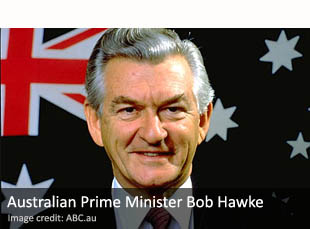
Bob HawkeBy JOSEPH FITSANAKIS | intelNews.org |
Declassified papers from a 1983 Australian Cabinet meeting reveal that the Labor government of the day feared it could be brought down by revelations of spying by a Soviet diplomat in Canberra. The spy was Valeriy Nikolayevich Ivanov, First Secretary at the Soviet embassy in the Australian capital. Suspecting the Soviet diplomat of espionage activities, the Australian Security Intelligence Organisation (ASIO) had bugged his home, and by 1982 had concluded that he was “a professional KGB intelligence officer”. Moreover, ASIO counterintelligence officials believed that Ivanov had been actively cultivating a relationship with an Australian citizen with a possible view to recruitment. Their concern apparently intensified after the Australian citizen began meeting Ivanov at his diplomatic residence, at the Soviet official’s request. On April 20, 1983, ASIO Director General Harvey Barnett met newly installed Australian Prime Minister Bob Hawke, and informed him that the Australian citizen in question was no other than David Combe. A former National Secretary of the Australian Labor Party (ALP) from 1973 to 1981, Combe was also the Prime Minster’s personal friend and close associate. A member of the Australia-USSR Friendship Society, Combe had come to know Ivanov in 1982, when he asked the Soviet embassy in Canberra for assistance in preparing for a business trip to the Soviet Union. Combe had exited politics before the 1983 national election, which had resulted in a landslide victory for the ALP, and he had entered a career as a business consultant and lobbyist. But his close relationship with Hawke alerted senior ALP officials. Meeting minutes of the government’s National and International Security Committee, released last week by the National Archives of Australia, show that Hawke chose to take Director General Barnett and other ASIO officers with him to brief senior cabinet members on April 21, the day after he himself had been briefed about the Ivanov affair. Read more of this post