Why did Canada suddenly suspend all diplomatic ties with Iran?
September 12, 2012 2 Comments
 By JOSEPH FITSANAKIS | intelNews.org |
On Friday September 7, 2012, John Baird, Canada’s Minister of Foreign Affairs, announced that Canada was suspending all diplomatic relations with Iran and was expelling Iranian diplomats from the country, effective immediately. Additionally, said Baird, Ottawa would officially list Iran as a state sponsor of terrorism under the Canadian Justice for Victims of Terrorism Act. By the time Baird made his announcement, all Canadian diplomats serving in Iran were on their way home. Iranian diplomats in Canada were given five days to leave the country. Relations between the two countries have been rocky since at least 2003, when Canadian photographer Zahra Kazemi was killed under detention in Tehran, and Iran has not had a full ambassador in Canada for nearly five years. Still, the news surprised even former government insiders in Canada. Ray Boisvert, until recently Assistant Director of the Canadian Security Intelligence Service, described Ottawa’s move as “unprecedented”. What was it that caused the final rupture in Canadian-Iranian relations? Why expel the Iranian diplomats now? Leading Middle Eastern experts in Canada cannot seem put their finger on a specific reason. Iran observer James Devine, of Canada’s Mount Allison University, told CBS that Ottawa’s move was “not tied to a specific event”. The Canadian former Ambassador to Tehran, John Mundy, said he believed the break in relations was not tied to a direct threat against Canadian interests. But CBS said many Iranian-Canadians believe the drastic move by the Canadian government should be seen as “an immediate sign” of a looming military attack on Iran by Western powers or Israel. In a recent article on the subject, Canadian political analyst Brian Stewart argued that Ottawa’s “overnight liquidation” of its diplomatic relations with Tehran must be rooted in “new intelligence” showing that Iran “absolutely poses a security threat in Canada”. Read more of this post


 By TIMOTHY W. COLEMAN | intelNews.org |







 intelNews.org
News you may have missed #796
September 24, 2012 by Ian Allen Leave a comment
►►Iranian spy scandal sparks outrage in Turkey. After a nearly yearlong investigation into an alleged Iranian spy ring in Turkey, seven people were charged in early September with “providing information related to state security and establishing an [illegal] organization”. The charges against five Turkish citizens and two Iranian nationals followed a raid on the suspects’ residences and workplaces on August 29, in which videos and pictures of border security, documents, correspondence with Iranian intelligence and weapons were found, according to the investigation materials. Tehran denied any connections to those arrested, while officials in Ankara revealed more alleged evidence showing that Iran is providing support to the PKK.
►►British SIGINT agency ‘helps US drone attacks’. Britain’s former Director of Public Prosecutions, Lord Macdonald, has said there is “pretty compelling” evidence that the British government’s signals intelligence agency, GCHQ, is passing information to the United States to help it locate targets for controversial drone attacks in Pakistan. Earlier this year David Anderson, the British state’s independent reviewer of terrorism-related legislation, warned that the British government faced “a raft of civil cases” over possible complicity in the CIA drone attacks.
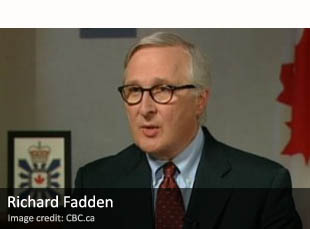
►►Canada’s top spy dismisses call for human rights scrutiny. In a newly declassified memo, CSIS director Richard Fadden appears to dismiss the Canadian Human Rights Commission’s recommendation that national security agencies do more to ensure they are not taking part in racial profiling or other objectionable practices. “I am confident in the service’s existing human rights policies and procedures, as well as our accountability and review structures”, Fadden says in the January 2012 memo, which is addressed to Canada’s Public Safety Minister Vic Toews. The memo —initially classified secret— was discovered by Mike Larsen, a criminology instructor in British Columbia, who obtained it under the Access to Information Act.
Filed under Expert news and commentary on intelligence, espionage, spies and spying Tagged with 0 British SIGINT agency 'helps US drone attacks', 0 Canada's top spy dismisses call for human rights scrutiny, 0 Iranian spy scandal sparks outrage in Turkey, Access to Information Act (Canada), Canada, Canadian Human Rights Commission, David Anderson, espionage, GCHQ, Gus Macdonald, human rights, intelligence cooperation, Iran, Kurdistan, Mike Larsen, News, news you may have missed, PKK, Predator drones, Richard Fadden, SIGINT, Turkey, UK, United States, Vic Toews