News you may have missed #624

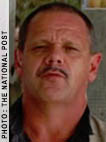
Viktor Bout

Viktor Bout

►►Russia angry at Viktor Bout’s US guilty verdict. Moscow has reacted angrily to the guilty verdict handed down to Russian arms dealer Viktor Bout by a court in the United States. Bout, a former Soviet military intelligence (GRU) officer, was arrested in a sting operation in Bangkok, Thailand, in March of 2008. At the time of his arrest, he and his two collaborators were negotiating a complex weapons deal with two informants posing as representatives of the Revolutionary Armed Forces of Colombia (FARC), Latin America’s largest leftist paramilitary group.
►►Symposium examined Reagan’s use of intelligence. The CIA released more than 200 declassified documents it prepared for US President Ronald Reagan during a symposium last week at the Ronald Reagan Presidential Library in Simi Valley, California. The CIA conference, entitled “Ronald Reagan, Intelligence, and the End of the Cold War“, included a discussion by American and Soviet former spies.
►►Suspected Chinese spy loses bid to rejoin Canada civil service. Haiyan Zhang, worked as a senior communications analyst with the Privy Council Office in Ottawa. She was fired when Canada’s spy agency questioned her “loyalty to Canada” over suspicion she was spying for China. Now she has lost her fight to return to the civil service.

Did Australian bodyguard help Gaddafi’s son flee to Niger?

Gary Peters

Gary Peters

By JOSEPH FITSANAKIS | intelNews.org |
An Australian private security consultant is accused of having helped one of Colonel Muammar al-Gaddafi’s sons escape to relative safety in Niger. For several years, Gary Peters, who lives in Ontario, Canada, worked as a personal bodyguard for Al-Saadi al-Gaddafi, the third oldest son of Libya’s deceased former leader. A few days ago, Peters, who is now back in Canada, told the country’s National Post newspaper that he led “an international security team” tasked with exfiltrating Saadi Gaddafi to the African country of Niger, located immediately to the south of Libya. He also told the paper that he was injured when the three-car convoy carrying Gaddafi’s international security team came under fire as it returned to Libya from Niger. But he said he only “discovered” his injuries while onboard a flight back to Toronto, and was subsequently hospitalized in Canada. Now the paper hosts comments from Nada Basir, spokesperson of the Canadian Libyan Council, which has called for an official investigation into whether Peters broke international laws and sanctions imposed on Libya, by helping a member of the Gaddafi family escape abroad. As with other members of Libya’s former ruling family, Saadi Gaddafi is wanted by INTERPOL, which has issued an international arrest warrant in his name. Basir told The Post that it was an insult to have a Canadian resident apparently defy the NATO mission in Libya, to which the government of Canada is party; he added that Canada’s Libyan community hopes that the government takes this issue seriously. Peters previously told the newspaper that he had been interviewed by the Royal Canadian Mounted Police, but that no charges had been filed against him. Read more of this post
News you may have missed #620 (cyberespionage edition)

GCHQ

GCHQ

►►Canada government ‘warned prior to cyberattack’. Canada’s spy agency, CSIS, warned the government that federal departments were under assault from rogue hackers just weeks before an attack crippled key computers. A newly released intelligence assessment, prepared last November, sounded a security alarm about malicious, targeted emails disguised as legitimate messages —the very kind that shut down networks two months later.
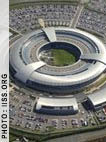
►►GCHQ warns cyber crime reaches ‘disturbing’ levels. Cyber attacks on the British government, the public and industry have reached “disturbing” levels, according to the director of Britain’s biggest intelligence agency. Iain Lobban, who runs the British government’s listening centre, GCHQ, has warned that the “UK’s continued economic wellbeing” is under threat.
►►Japanese parliament hit by cyber-attack. Alleged Chinese hackers were able to snoop upon emails and steal passwords from computers belonging to lawmakers at the Japanese parliament for over a month, according to Japanese daily Asahi Shimbun. The paper claims that computers and servers were infected after a Trojan virus was emailed to a Lower House member in July. The Trojan then allegedly downloaded malware from a server allegedly based in China —allowing remote hackers to secretly spy on email communications and steal usernames and passwords from Japanese lawmakers.

News you may have missed #616

CSIS seal

CSIS seal

►►S. Koreans say several N. Korean assassination bids stopped. South Korea has arrested several North Korean agents for plotting to assassinate anti-Pyongyang activists, according to Won Sei-Hoon, head of South Korea’s National Intelligence Service, who spoke to the parliament’s intelligence committee. Earlier this month, Seoul prosecutors charged a North Korean agent with trying to murder Park Sang-Hak, an outspoken activist in Seoul, with a poison-tipped weapon.
►►MI5 inspectors’ website shut down after security blunder. A new website for the former High Court judges responsible for oversight of MI5, MI6 and wiretapping has been shut down after it emerged that anyone could edit any page of it. The security blunder forced the Intelligence Services Commissioner, Sir Mark Waller, and the Interception of Communications Commissioner, Sir Paul Kennedy, to pull the plug on their new website.
►►Report urges Canadian spies to share more info with diplomats. Canada’s spy agency needs to share more information with the Department of Foreign Affairs so the department is better prepared for negative reactions to Canadian intelligence work overseas, according to a new report by Canada’s Security Intelligence Review Committee. The Committee, which reports to Parliament on the work of the Canadian Security Intelligence Service, found the organization had “limited exchanges” with Canada’s diplomats on its operations.

Canada memos decry use of Canadian passports by Russian spies

Canadian passport

Canadian passport

By JOSEPH FITSANAKIS | intelNews.org |
In June of 2010 media headlines were dominated by news of a Russian spy ring in the United States that was busted by the Federal Bureau of Investigation. On June 27, eleven people, all sleeper agents of the SVR, Russia’s Foreign Intelligence Service, were arrested in early morning raids across several US states. The arrestees, who included media sensation Anna Chapman, were later exchanged for four alleged CIA agents serving time in Russian jails. What is less known however, is the fact that four of the members of the busted spy ring were claiming to be Canadian citizens. SVR operative Natalia Pereverzeva was caught using a forged Canadian passport under the fake name ‘Patricia Mills’. Two other SVR officers, Andrei Bezrukov and Elena Vavilova, were claiming Canadian nationality under the forged names Donald Heathfield and Tracey Foley. A fourth alleged member of the spy ring, ‘Christopher Metsos’, was apprehended in Cyprus, after using a forged Canadian passport to enter the Mediterranean island. He later disappeared, having skipped bail. Now, sixteen months after the arrests of the Russian spies, The Canadian Press has acquired several hundred pages of memoranda and internal emails from Canada’s Department of Foreign Affairs and International Trade (DFAIT). Substantial portions of the documents, which were acquired through Canada’s Access to Information Act, remain censored; but The Press reports that they show that employees of DFAIT’s Passport Canada office held “urgent meetings and high-level briefings” in the days following the FBI arrests, in order to address the revelations concerning SVR’s illegal use of Canadian passports. In the documents, Canadian officials opine that the use by Russian spies of forged Canadian travel documents poses a “troubling threat to the integrity of Canadian [passports] and identity security”. Read more of this post

News you may have missed #595

Bruce Carlson

Bruce Carlson

►►US commander sees proliferation threat in Libyan chemicals. Libya’s stockpile of chemical warfare materials remains a potential source of proliferation, General Carter Ham, the US military commander for Africa, told reporters on Wednesday. In addition to chemical materials, Ham said he is concerned about shoulder-fired missiles falling into the hands of al-Shabaab, al-Qaeda in the Islamic Maghreb, or Boko Haram, the continent’s three major extremist organizations.
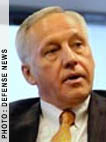
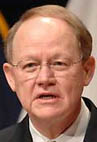
►►NRO spy satellites on time and on budget. Bruce Carlson, director of the US National Reconnaissance Office, has told reporters in Washington that every one of his agency’s programs is on time and on budget. This is seen as a success for the US intelligence community, which is known for botched and grossly over-budget programs outsourced to industry.
►►Watchdog says Canadian spies must follow same rules abroad. A new report by the watchdog body for the Canadian Security Intelligence Service argues that rules governing the conduct of Canadian spies do not relax once they leave Canada. While it cleared CSIS of complicity in any detainee abuse in America’s ‘war on terrorism’, the report did criticize the country’s spymasters for lax record keeping and for sending CSIS officers overseas without sufficient guidance.

News you may have missed #593

Omar Suleiman

Omar Suleiman

►►Libyan woman spy guided NATO bombs to Gaddafi targets. The NATO bombing campaign which fatally weakened Muammar Gaddafi’s rule had a secret asset: a 24-year-old Libyan woman who spent months spying on military facilities and passing on the details to the alliance. The woman, operating under the codename Nomidia, used elaborate methods to evade capture –constantly changing her location, using multiple mobile telephone SIM cards and hiding her activities from all but the closest members of her family.
►►Canadian ex-spy wins court claim against CSIS. Marc-André Bergeron, who was fired four years ago by the Canadian Security Intelligence Service (CSIS) for alleged incompetence, has been vindicated by winning his claim of wrongful dismissal. In doing so, he has revealed a rather remarkable state of affairs at CSIS. Its bosses lament that they are held to impossible legal standards in court cases involving terrorism, but couldn’t muster sufficient proof to fire one of their own.
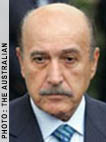
►►Mubarak’s spy chief testifies in Egypt trial. One of the most secretive figures of Hosni Mubarak’s inner circle testified Tuesday at the ousted leader’s trial under a complete media blackout. Omar Suleiman, who was Mubarak’s longtime intelligence chief and was named vice president during the last weeks of his rule, is the first in a string of members of the ousted leader’s senior leadership to appear in the court.

CIA Helped Gaddafi Torture Libyan Dissidents, Documents Show

Abdel Hakim Belhaj

Abdel Belhaj

By JOSEPH FITSANAKIS | intelNews.org |
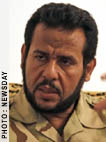
Back in February, when Libyan leader Muammar al-Gaddafi blamed the popular revolt against him on al-Qaeda, he was ridiculed in the international media. But documents discovered at an abandoned Libyan government office complex show that the Libyan rebels’ supreme military commander was abducted in 2004 by the CIA, which suspected him of links to al-Qaeda. Abdel Hakim Belhaj, also known as Abdullah al-Sadiq, was snatched by a CIA team in Malaysia, and secretly transported to Thailand, where he says he was “directly tortured by CIA agents”. The CIA then renditioned him to Libya, where he says he was tortured routinely until his release from prison, in 2010. In the 1980s, Belhaj was a member of the foreign Mujahedeen summoned by Osama bin Laden’s al-Qaeda to fight the Russians in Afghanistan. Upon returning to Libya in the early 1990s, he led the Libyan Islamic Fighting Group, an al-Qaeda-inspired armed organization that unsuccessfully sought to assassinate Colonel Gaddafi. Ironically, Belhaj is now the Tripoli-based military commander of the Libyan National Transitional Council, and says that he wants a full apology from the United States and Britain “for the way he was transported to prison in Libya in 2004”. But the former Mujahedeen is one of several terrorism suspects delivered to Libya by Western intelligence agencies in the years after 9/11, according to Libyan government documents discovered by Human Rights Watch (HRW) workers at the office of Libyan former intelligence chief and foreign minister Moussa Koussa. The documents show that Libya’s External Security Organization maintained extremely close relations with German, Canadian, British, and American intelligence services. Read more of this post

News you may have missed #563 [updated]

Mike McConnell

Mike McConnell

►►Colombia spy official imprisoned for illegal wiretapping. Gustavo Sierra Prieto, the former analysis chief of Colombia’s soon-to-be-dismantled DAS intelligence agency, has been sentenced to eight years and four months in jail for his role in the illegal wiretapping of government opponents, judges and journalists. But the main culprit in the wiretapping scandal, former DAS Director Maria Pilar Hurtado, is still hiding in Panama.
►►Cold War documents detail CIA interest of Canada. The CIA has declassified some of its Cold-War-era reports on Canada. The documents show that the Agency’s interest in America’s northern neighbor was mostly related to the its satellite R&D, as well as its economic sector, with a particular focus on Canada’s energy and minerals sector. There is also discussion in some documents of how to best utilize Canada’s energy resources in a possible war with the Soviet Union.
►►Ex-intel official says US must engage in cyberspying. Is it just me, or is there a calculated echo chamber developing by former senior US spy officials? Read more of this post

News you may have missed #553 (Canada edition)

Northrop Frye

Northrop Frye

►►Analysis: Are Chinese spies getting an easy ride in Canada? Carl Meyer, of Embassy magazine, asks why Canada’s counterintelligence agencies are unwilling or unable to bring Chinese spies to court in recent years. Readers of this blog may recall controversial comments made last year by the director of CSIS, Richard Fadden, who claimed that some Canadian politicians work for foreign powers.
►►Canadian agency ‘illegally spying on Canadians’. Canada’s ultra-secret Communications Security Establishment, which engages in electronic communications interception, is prohibited from spying on Canadian citizens. But a new Canadian government report appears to instruct it to engage in mining ‘metadata’ from digital communications of Canadians. Readers of this blog may remember that, in 2009, a court permitted for the first time the CSE and the Canadian Security Intelligence Service to eavesdrop on Canadian nationals traveling overseas.
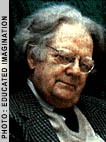
►►RCMP spied on Canadian academic Northrop Frye. Speaking on spying on Canadians… Read more of this post

News you may have missed #552

Nikolai Kuznetsov

Nikolai Kuznetsov

►►This just in: South Korea arrests five for spying for North. South Korean prosecutors have arrested five people on charges of “setting up an underground communist group on the instructions of an espionage unit of North Korea’s ruling Workers Party”, a report from South Korea’s Yonhap news agency said on Friday. According to the report, South Korean authorities are “investigating about 20 other people including union activists and opposition party members”. We will publish more information as it comes in.
►►Some US intel analysts believe al-Qaeda near collapse. Citing classified intelligence reports and closed-door Capitol Hill briefings from the CIA, the National Counterterrorism Center and other agencies, some US officials are telling The Washington Post that bin Laden’s death has “pushed al-Qaida to the brink of collapse”. One official told the paper that al-Qaeda is now “largely incapable” of mass-casualty attacks against the United States. Could the ‘Leon Panetta Legacy Committee’ be the source of this report?
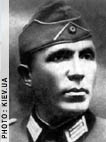
►►Russia and Ukraine commemorate legendary Soviet spy. Russia and Ukraine are celebrating 100 years from the birth of legendary Soviet spy Nikolai Kuznetsov. Kuznetsov, who operated in Nazi-occupied Ukraine, uncovered Read more of this post

News you may have missed #540

Jim Judd

Jim Judd

By IAN ALLEN | intelNews.org |
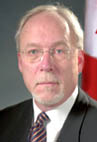
►► Bulgaria bars ex-spies from holding diplomatic posts. Bulgaria’s conservative-majority parliament has voted to bar individuals who once worked for the country’s communist-era secret service from holding top diplomatic jobs. The aim of the legislation is what Eastern European countries call ‘lustration’, namely the process of cleansing of their security and intelligence agencies from Soviet-era operatives. The practical problem with that, of course, is that, in doing so, Eastern European intelligence services do away with some of their best-trained operatives. Moreover, there is nothing to suggest that Bulgaria’s post-communist spy agencies are significantly more law-abiding than their communist-era predecessors. Regular IntelNews readers might remember our coverage of Operation GALERIA as a case in point. ►► Ex-spymaster says Canada is too concerned about torture. The Canadian Security Intelligence Service’s (CSIS) struggle to isolate itself from complicity in torture by US and British spy agencies has reached the “point where we were probably alienating foreign partners” by not sharing intelligence. This is the opinion of Jim Judd, former Director of CSIS. He also argued that “strident anti-torture interpretations” would affect “everything and anything CSIS did, with respect to foreign intelligence agencies”. Judd, a career spy who retired in 2009, is considered something of a hawk, and probably rightly so. ►► NSA whistleblower requests reduced sentence (update: No jail time for Drake, judge releases him saying he has been through “four years of hell”). Thomas Drake was a senior official with the US National Security Agency. Read more of this post

News you may have missed #487 (Canada edition)

  • Canadian MPs want spy services director to quit. A group of Canadian parliamentarians have asked for the resignation of the country’s Security Intelligence Service director Dick Fadden, who claimed last summer that several Canadian politicians were under the control of foreign governments.
  • Canada agencies still not sharing intelligence. Almost a decade after 9/11, the many arms of Canada’s national security network still do not share all their intelligence about terrorist threats with sister agencies, according to a new parliamentary report by the special Senate Committee on Anti-terrorism.
  • Chinese intelligence are after us, say immigrants to Canada. A spokesman for a Falun Gong group in Ottawa has accused the Chinese government of planting spies among the Chinese ex-pat community in the country. According to an unnamed former employee at China’s embassy in Sydney, Australia, who defected in 2005, there are more than 1,000 Chinese spies operating in Canada.

News you may have missed #476

News you may have missed #466

  • France blasts economic warfare by industrial spies. The French government says it is the victim of an economic war, after Renault, France’s partially state-owned carmaker, suspended three top executives over leaks of secret electric-car technology. The French intelligence services are probing a possible Chinese connection. It should be noted that, according to US estimates, France leads industrial spying in Europe.
  • Canada a target for foreign interference, says spy chief. A keenly anticipated report by Canadian Security Intelligence Service director Richard Fadden paints a picture of a broad threat of foreign interference from countries out to influence Canada’s policy and politicians, target dissidents and pilfer technology. It is the most detailed articulation of the spy service’s concerns about overtures from foreign agents, including two suspected cases involving provincial cabinet ministers.
  • Jordanian Hamas spy awarded PhD in jail. Jordanian Azzam Jaber, jailed in Jordan for spying for the Palestinian group Hamas on potential targets including the Israeli embassy, has obtained his doctorate from the University of Yarmuk.