Chinese telecoms manufacturer denies spying claims (again)

Huawei HQ

Huawei HQ

By IAN ALLEN| intelNews.org |
Huawei Technologies is one of China’s fastest-rising corporations. Founded in 1988 to import Western office telephone systems to China, the company today has become one of the country’s leading exporters, producing all kinds of hi-tech communications hardware equipment, ranging from routers to cell towers and undersea cables. But, as intelNews has indicated on several instances, Huawei’s export growth has been hampered in recent years by widely circulated suspicions that the company maintains close ties to the Chinese military and intelligence establishments. In 2009, the Australian Security Intelligence Organisation (ASIO) investigated one of Huawei’s Australian-based subsidiaries for links to Chinese intelligence operations. In the following year, the Indian government barred the company from operating in India, citing its allegedly “strong links with the Chinese military”. In August of 2010, several American senators called for an investigation into a proposed collaboration between Huawei and US-based Sprint-Nextel, arguing that the Chinese hardware manufacturer is “effectively controlled by China’s civilian and military intelligence establishment”. Further controversy erupted in the United States in February of this year, when another group of American Congress members accused Huawei of having supplied telecommunications equipment to Iran and the Afghan Taliban. The controversy around Huawei, which currently employs over 110,000 people in China and beyond, centers partly on its founder and chief executive owner, Ren Zhengfei. A former Director of the People’s Liberation Army’s Engineering Corps, Zhengfei founded Huawei a few years after retiring from his government job. His critics claim that he never truly retired from the PLA, and that he maintains routine links with the Communist Party of China, of which he is a member, as well as Chinese military intelligence. Read more of this post
News you may have missed #520

  • CIA director returns from Pakistan empty-handed. CIA Director Leon Panetta’s surprise visit to Pakistan last week yielded little, according to US officials. Panetta bypassed the protocol of first meeting with the president and prime minister, and instead met with Pakistan’s military and intelligence directors.
  • Chinese spying devices found in Hong Kong cars. A Hong Kong newspaper has alleged that the Chinese authorities have been secretly installing spy devices on all dual-plate Chinese-Hong Kong vehicles since July of 2007. Photographic evidence is here.
  • NSA releases over 50000 pages of documents. The US National Security Agency has announced that it has declassified and released to the US National Archives and Records Administration over 50,000 pages of historic records, covering a time-frame from before World War I through the 1960s.

News you may have missed #518

  • Pakistan to intensify intel collaboration with China. Pakistan has assured China of full co-operation in providing intelligence about the activities of the East Turkestan Islamic Movement (ETIM), which aims to separate Xinjiang, an autonomous region, from China.
  • US spy community launches ‘Analytical Olympics’. This new competition for analysts to see who makes the best predictions, was outlined in a recent report by the US National Research Council, which suggests practical ways to apply insights from the behavioral and social sciences to the intelligence community.
  • UAE mercenaries say they have no Blackwater contacts. Michael Roumi, president of Reflex Responses, a company training foreign mercenary troops for the United Arab Emirates, has told the US State Department and members of Congress that Erik Prince, the former head of the security firm Blackwater Worldwide, plays no role in operating the business.

News you may have missed #517

  • New Zealand to launch new cybersecurity agency. The new National Cyber Security Centre will protect high-risk government agencies from attacks by cyber spies and criminals. It will also take on the functions of the Centre for Critical Infrastructure Protection, which helps protect critical national infrastructure such as the computer networks of banks and power companies.
  • New book on China-US spy wars. An extensive review by Joseph Goulden (author of SpySpeak: The Dictionary of Intelligence) of David Wise‘s new book, Tiger Trap: America’s Secret Spy War with China, which has been published by Houghton Mifflin Harcourt.
  • Over 1,000 cyber attacks against UK MoD last year. Criminals and foreign spy agencies launched more than 1,000 cyber attacks on Britain’s Ministry of Defence last year in an effort to steal secrets and disrupt services, Britain’s Defence Secretary Liam Fox has revealed.

News you may have missed #515

  • US spies tracked suspected terrorists in Sweden. US intelligence agents have staked out suspected terrorists in Sweden without the authorization of the government there, Svenska Daglbadet newspaper has reported. Last November, Norway, Sweden and Denmark launched official investigations into reports that US embassies there operated illegal intelligence-gathering networks.
  • Aussie spy agency reported on WikiLeaks. Australian Prime Minister Julia Gillard’s department has revealed that WikiLeaks and its founder, Julian Assange, were the subject of Australian intelligence reporting last year, as the government anticipated the whistleblower website would spill “highly sensitive and politically embarrassing” secrets.
  • Former Taiwanese general accused of spying. Taiwanese government prosecutors are seeking a life sentence for Major General Lo Hsien-che, the most senior Taiwanese official to be arrested on espionage charges in the country since the early 1960s.

News you may have missed #511

Comment: Bin Laden’s Alleged ‘Magazine Stash’ May be CIA PsyOp

Osama bin Laden

Osama bin Laden

By IAN ALLEN| intelNews.org |
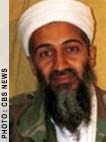
Rumors of an alleged discovery of “a stash of pornography” in Osama bin Laden’s hideout in Pakistan have spread like wildfire since Friday, when Reuters published an “exclusive” report on the subject. The report, written by Mark Hosenball and Tabassum Zakaria, cites “current and former US officials […] who discussed the discovery […] on condition of anonymity”. According to the allegations, “[t]he pornography recovered in bin Laden’s compound in Abbottabad, Pakistan, consists of modern, electronically recorded video and is fairly extensive”. The report was almost immediately picked up by several news outlets, including The New York Times, which notes that the disclosure “will be welcomed by counter-terrorism officials because it could tarnish [the al-Qaeda founder’s] legacy and erode [his] appeal”. Indeed. It appears that only Danger Room‘s Spencer Ackerman thought it wise to air a brief disclaimer to the effect that the “welcomed disclosure” may in fact be “a CIA information operation”. He has a point. Read more of this post

News you may have missed #508

  • US not to withdraw Pakistan CIA chief. The US has said it will not withdraw the CIA station chief in Pakistan, despite his name being leaked to local media last week. But officials quoted by US media said the name published in Pakistani news outlets was spelled incorrectly.
  • CIA, not Pentagon, ran bin Laden operation. Has anyone noticed that CIA Director Leon Panetta has said a lot more about the Navy commandos’ killing of Osama bin Laden than has the Pentagon chief? The reason Defense Secretary Robert Gates has said exactly nothing about the raid is that the CIA, not the Pentagon, ran the operation.
  • Spy vs. spy in China. Interesting summary of the case of Glenn Shriver, an American who was arrested last year for accepting $70,000 from Chinese spies as he attempted to secure jobs with the CIA and US Foreign Service that would have allowed him to expose US government secrets.

News you may have missed #507

  • Pakistani media reveal name of CIA station chief. Mark Carlton, the purported CIA station chief in Islamabad, was named by a Pakistani newspaper and a private television news network over the weekend, the second holder of that post in less than a year to have his cover blown by the media.
  • How an immigrant from Taiwan came to spy for China. Well-researched article on Tai Shen Kuo, a Taiwanese-born American citizen who is serving time in an Arizona prison for spying on the US for China.
  • Domestic surveillance grew in US in 2010. The level of domestic US intelligence surveillance activity in 2010 increased from the year before, according to a new Justice Department report to Congress. Moreover, the secretive Foreign Intelligence Surveillance Court approved all 1,506 government requests to electronically monitor suspected “agents” of a foreign power or terrorists on US soil.

Leaked US cable reveals concern about China spying in Chile

WikiLeaks

WikiLeaks

By JOSEPH FITSANAKIS | intelNews.org |
A leaked US government document reveals strong concerns expressed by the US embassy in Santiago about Chinese intelligence operations in Chile. The document, classified “secret”, and dated August 29, 2005, was released by whistleblower website WikiLeaks. It contains a report sent by the embassy to the US Department of State, concerning Chinese intelligence collection activities in the South American nation. The report points out that the Chinese embassy in the Chilean capital is one of the largest in Latin America, with 22 employees, who are “all good Spanish speakers”. It also notes that Chinese news agency Xinhua maintains three full-time correspondents in Chile, who are “assumed [to be] involved in some kind of collection activity”. But the leaked document focuses mostly on alleged Chinese intelligence collection activities aimed at the Chilean military, which is heavily subsisted by the United States. It suggests that bilateral ties between the Chinese and Chilean military were significantly strengthened in 2004, when, during an official visit to China, the then Chief of the Chilean Army, General Juan Emilio Cheyre, adopted a Chinese proposal to establish a Mandarin-language training program for selected officers of the Chilean military, which became operational shortly after. Read more of this post

News you may have missed #496

  • US secretly collaborating with Chinese spies on North Korea. Leaked records of highly sensitive US-China defense consultations reveal that the CIA, the US Office of the Director of National Intelligence, and the US Defense Department, have all held secret discussions on North Korea with Chinese military intelligence.
  • Cuba denounces acquittal of ex-CIA agent. Cuba has denounced as a ‘farce’ the acquittal in the United States of Luis Posada Carriles, a former CIA agent who Havana says participated in terrorist attacks against the island. Carriles was accused of lying to US immigration officials.
  • Analysis: US spy agencies struggling to adjust to Middle East changes. With popular protests toppling rulers in Tunisia and Egypt and threatening leaders in Yemen and elsewhere, US intelligence agencies are struggling to adjust to a radically changed landscape, US officials, former intelligence officers and experts say.

News you may have missed #489

  • Russian spies want their stuff back from the FBI. Two of the ten Russians deported from the United States in a spy row last July have demanded that some of the property they were forced to leave behind be returned to them. The claim was lodged on behalf of Vladimir and Lidia Guryev, better known as Richard and Cynthia Murphy.
  • Kuwait sentences three to death for espionage. Two Iranians and a Kuwaiti national, all serving in Kuwait’s army, were condemned to death yesterday for belonging to an Iranian spy ring, which allegedly passed on information to the Iran’s Islamic Revolutionary Guards. A Syrian and a stateless Arab, who are also members of the alleged spy ring, were handed life terms.
  • ‘Foreign spies’ hacked Australian leader’s computer. Chinese hackers seeking information on commercial secrets are suspected of having broken into a computer used by Julia Gillard, the Australian prime minister. Her computer was among 10 machines used by senior government ministers which were compromised by the hackers. According to one source, the Australians were tipped off to the hacking by the CIA and the FBI.

News you may have missed #487 (Canada edition)

  • Canadian MPs want spy services director to quit. A group of Canadian parliamentarians have asked for the resignation of the country’s Security Intelligence Service director Dick Fadden, who claimed last summer that several Canadian politicians were under the control of foreign governments.
  • Canada agencies still not sharing intelligence. Almost a decade after 9/11, the many arms of Canada’s national security network still do not share all their intelligence about terrorist threats with sister agencies, according to a new parliamentary report by the special Senate Committee on Anti-terrorism.
  • Chinese intelligence are after us, say immigrants to Canada. A spokesman for a Falun Gong group in Ottawa has accused the Chinese government of planting spies among the Chinese ex-pat community in the country. According to an unnamed former employee at China’s embassy in Sydney, Australia, who defected in 2005, there are more than 1,000 Chinese spies operating in Canada.

General arrested in Taiwan’s biggest spy scandal in 50 years

Lo Hsien-che

Lo Hsien-che

By JOSEPH FITSANAKIS | intelNews.org |
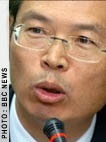
A “tall, beautiful and chic” Chinese female operative, who held an Australian passport, appears to be behind Taiwan’s most serious espionage scandal in almost half a century, according to news reports. The scandal centers on the arrest earlier this week of Major General Lo Hsien-che, who heads the Taiwanese military’s Office of Communications and Information. Taiwanese prosecutors said that General Lo is the most senior Taiwanese official to be arrested on espionage charges since the early 1960s. He had apparently been investigated for several months by Taiwanese counterintelligence investigators, who claim that Lo was recruited by Chinese intelligence while stationed in Thailand, between 2002 and 2005. Paris-based Agence France Presse cites The China Times in reporting that the General was lured by a female Chinese operative in her early 30s, who cajoled him with “sex and money”. Read more of this post

News you may have missed #468