US government secretly obtained phone records of journalists

Associated PressBy JOSEPH FITSANAKIS | intelNews.org |
The Associated Press (AP) accused the United States government on Monday of secretly obtaining telephone records of its reporters, as part of a leak inquiry related to an intelligence operation. The news agency, which is owned cooperatively by news outlets worldwide, said the Department of Justice had secretly obtained pen-register information on 20 AP telephone lines in the US. Pen-register data includes lists of all numbers contacted from a particular telephone line and the duration of each call over a defined period. The agency said the government investigation included “the work and personal phone numbers of individual reporters”, as well as AP office telephone lines in New York and Washington, and even the main telephone line used by AP correspondents at the US Capitol Building. It is believed that government prosecutors were probing the source(s) of a May 7, 2012, AP report, which disclosed that the Central Intelligence Agency (CIA) had prevented a terrorist plot by al-Qaeda in the Islamic Arabian Peninsula. AP correspondents Matt Apuzzo and Adam Goldman had cited anonymous sources in claiming that the plot, allegedly hatched in Yemen, involved placing a bomb on a US-bound civilian airplane on the one-year anniversary of the death of al-Qaeda founder Osama bin Laden. Less than a fortnight later, sources told the Reuters news agency that the White House and CIA were furious with AP’s revelation, because it allegedly forced the termination of an “operation which they hoped could have continued for weeks longer”. Read more of this post

Court rejects release of spy records on iconic Canadian politician

Tommy DouglasBy JOSEPH FITSANAKIS | intelNews.org |
Canada’s highest court has rejected a legal argument in favor of releasing surveillance records on Tommy Douglas, an iconic Canadian politician who was monitored for most of his life by the security services. Douglas was a Scottish-born Baptist minister who later became the leader of the New Democratic Party and Premier of the Canadian province of Saskatchewan. Under his Premiership, which lasted from 1944 to 1961, Saskatchewan’s government became the first democratic socialist administration in North America and the first in the Americas to introduce a single-payer universal healthcare program. But Douglas, who is widely recognized as the father of Canada’s healthcare system, was under constant surveillance by Canadian intelligence throughout most of his life. Government records show that the now-defunct Security Service of the Royal Canadian Mounted Police (RCMP) began monitoring the socialist politician shortly before the outbreak of World War II. It appears that, in the political context of the Cold War, Douglas had drawn the attention of Canada’s security establishment by supporting antiwar causes, which led some to suspect him of holding pro-communist sympathies. The government surveillance, which was at times extensive, lasted until shortly before the politician’s death in 1986. Under Canada’s legal system, security dossiers on individuals are typically released 20 years after the target’s death. However, even though several hundred pages from Douglas’ dossier have already been released, many hundreds more remain secret. In 2005, Canadian Press reporter Jim Bronskill launched a legal campaign aimed at securing the release of the remaining pages in Douglas’ dossier. His campaign is supported by Douglas’ family, notably Douglas’ daughter, Shirley. But the Canadian government has resisted Bronskill’s effort from the very beginning. Read more of this post
News you may have missed #821 (civil liberties edition)

Bernard SquarciniBy IAN ALLEN | intelNews.org |
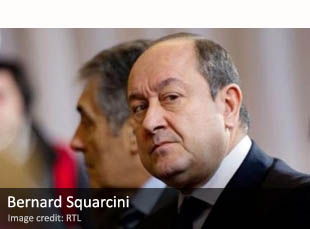
►►French domestic spy chief cleared of snooping charges. Back in October of 2011, intelNews reported that Bernard Squarcini, who then headed France’s domestic intelligence agency, the DCRI, had been charged with spying on a journalist with the daily Le Monde. The accusation was part of a wider case of domestic snooping, in which Squarcini was believed to have been trying to detect the source of government leaks to the press, allegedly on orders by then-President Nicolas Sarkozy. Earlier this month, however, an appeals court in Paris rejected two of three charges against the former DCRI chief. Squarcini could face up to five years in prison if convicted of the remaining charge.
►►FBI documents termed Occupy movement as ‘terrorism’. A number of heavily redacted US government documents, released following a Freedom of Information Act request, reveal that the FBI organized a nationwide law enforcement investigation and monitoring of the Occupy Wall Street movement beginning in August of 2011. In some documents, the FBI refers to the Occupy Wall Street protests as a “criminal activity” and “domestic terrorism”.
►►Wiretapping by Russian spy agencies doubled in five years. Wiretapping by Russia’s intelligence agencies has nearly doubled over the past five years, according to The Moscow Times. In Western countries, intelligence agencies were given wider powers after the 9/11 terrorist attacks. But in Russia, the exponential growth of wiretapping began after 2007, when terrorism by Islamic-inspired separatists was already on the decline. A federal law passed in 2010 expanded the legal grounds for wiretapping Russian citizens. Now, intelligence officers can wiretap someone’s phones or monitor their Internet activity simply because they allegedly received reports that an individual is preparing to commit a crime.

News you may have missed #794

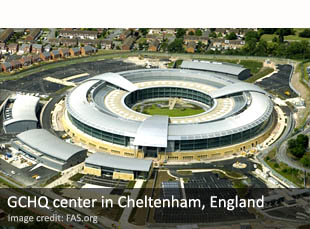
GCHQ center in Cheltenham, EnglandBy IAN ALLEN | intelNews.org |
►►Racism charge against GCHQ settled out of court. The British government’s SIGINT agency, GCHQ has been spared having its inner workings broadcast in public after a potentially embarrassing racism case was settled out of court at the last minute. The racial harassment and constructive dismissal lawsuit had been filed by Alfred Bacchus, a 42-year-old former employee. There are unconfirmed reports that, as part of the settlement, the plaintiff has signed a non-disclosure agreement banning him from revealing any more details about his complaints.
►►US spy agencies renew call for electronic surveillance rights. US intelligence officials had made a public plea on Tuesday, the 11th anniversary of the September 11, 2001, attacks, for quick Congressional action to extend a sweeping but controversial US electronic surveillance law. If the law, which expires at the end of 2012, is not extended, US spy agencies say they would lose access to what they describe as a “very, very important source of valuable intelligence information”. But at least one congressional critic of the surveillance law, Democratic Senator Ron Wyden, says he is willing to use legislative tactics to stall the bill, which has been passed by the House, unless the administration and other legislators agree to include stronger provisions to protect Americans’ civil liberties.
►►Yemen claims arrest of ‘Mossad agent’. Al-Nas, a Yemeni weekly associated with the Islamist Yemeni Reform Party, reported last weekend that an Israeli citizen, identified only by his initials and year of birth, 1982, was arrested in the southwestern city of Taizz. He reportedly admitted to smuggling children out of Yemen to neighboring countries and from there to Israel “through Zionist organizations”. Bizarrely, the man reportedly told his Yemeni interrogators that he “spent three years in a Greek prison for researching the biographies of well-known computer hackers”.

News you may have missed #773

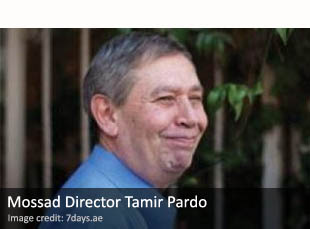
Tamir PardoBy IAN ALLEN | intelNews.org |
►►Conflicting reports on CIA-ISI meeting. Lieutenant General Zahir ul-Islam, who heads Pakistan’s premier intelligence agency, the ISI, held talks in Washington with his CIA counterpart General David Petraeus, between August 1 and 3. It was the first time in a year that the chief of the ISI made the trip to the US, signaling a possible thaw in relations. Depending on the source, the meeting was either “substantive, professional and productive”, or “made no big strides on the main issues”.
►►Senior Mossad official suspected of financial misconduct. A senior Mossad official is suspected of financial misconduct and has been forced to take a leave of absence until Israeli police complete an investigation into his alleged deeds, Israeli media reported on Sunday. The official, a department head in Israel’s spy organization, has reportedly denied any wrongdoing, but sources said he would likely not be reinstated in light of investigation findings and is effectively being forced to retire. The nature of the official’s alleged misconduct has not been reported, but it is said that the official in question has close ties to Mossad Director Tamir Pardo, who appointed him to his position last year.
►►Ex-NSA official disputes DefCon claims by NSA chief. William Binney, a former technical director at the NSA, has accused NSA director General Keith Alexander of deceiving the public during a speech he gave at the DefCon hacker conference last week. In his speech, Alexander asserted that the NSA does not collect files on Americans. But Binney accused Alexander of playing a “word game” and said the NSA was indeed collecting and indexing e-mails, Twitter writings, Internet searches and other data belonging to Americans. “The reason I left the NSA was because they started spying on everybody in the country. That’s the reason I left”, said Binney, who resigned from the agency in late 2001.

News you may have missed #748 (US edition)

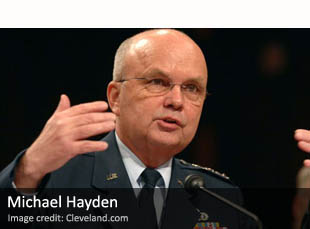
Michael HaydenBy IAN ALLEN | intelNews.org |
►►US lawmakers probe China companies over spy concerns. In letters sent last week to Chinese communications hardware firms Huawei Technologies and ZTE Corporation, a group of senior members of the US House of Representatives Intelligence Committee have outlined concerns about the companies’ ties with the Chinese government, including the role of a “party committee” at Huawei. The lawmakers have also asked about Huawei’s relationships with five US consulting firms and requested an expansive collection of documents, including the contracts between the firms and Huawei.
►►Lone Senator resists Bush/Obama NSA wiretapping plan. The Obama administration wanted a quick, no-questions-asked-or-answered renewal of broad electronic eavesdropping powers that largely legalized the Bush administration’s illegal warrantless wiretapping program. That’s despite President Barack Obama’s campaign promise to revisit and revise the rules to protect Americans’ rights. Everything seemed to be going to plan after a Senate committee approved the re-authorization in secret last month. But Senator Ron Wyden (D-Oregon) has stepped in to stop the bill because the government refuses to say how often the spy powers are being used.
►►What did Hayden tell Obama in January 2009? In December of 2008, a meeting took place between the incoming US Presiden Barack Obama and the departing CIA Director Michael Hayden. Several days later, on January 15, Hayden told journalists that Obama had privately assured him that “no plans to launch a legal inquiry” into the CIA’s use of controversial interrogation methods during the Bush administration. Now, several years later, Salon has published an insider’s account of what was said in that meeting between Obama and Hayden, as well as during the days that followed.

News you may have missed #739

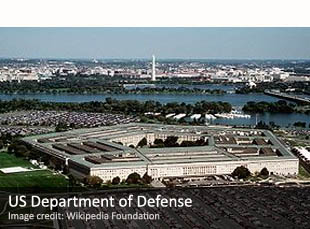
The US Department of DefenseBy IAN ALLEN | intelNews.org |
►►US Supreme Court to consider case on secret wiretapping. The Supreme Court has agreed to consider blocking a constitutional challenge to the government’s secret wiretapping of international phone calls and emails. At issue is whether Americans who have regular dealings with overseas clients and co-workers can sue to challenge the sweep of this surveillance if they have a “reasonable fear” their calls will be monitored. The case, to be heard in the fall, will put a spotlight on a secret surveillance program that won congressional approval in the last year of President George W. Bush’s presidency.
►►Analysis: Why is CIA applauding DoD’s intel grab? Last month, Director of National Intelligence James Clapper and Secretary of Defense Leon Panetta announced the creation of a new US espionage agency: the Defense Clandestine Service, or DCS. The new agency is expected to expand the Pentagon’s espionage personnel by several hundred over the next few years, while reportedly leaving budgets largely unchanged. The news nonetheless surprised some observers in Washington because the move appeared, at least initially, to be a direct challenge to the Central Intelligence Agency, whose National Clandestine Service leads the country’s spy work overseas. Then came a second surprise: former CIA officers and other intelligence experts started applauding. The question is why.
►►FBI forms secretive online surveillance unit. On May 22, CNet’s Declan McCullagh revealed that the FBI had quietly formed a new Domestic Communications Assistance Center (DCAC), tasked with developing new electronic surveillance technologies, including intercepting Internet, wireless, and VoIP communications. According to McCullagh, DCAC’s goal is “to invent technology that will […] more readily eavesdrop on Internet and wireless communications”. Read more of this post

Scandinavian phone company helps ex-Soviet republics spy on citizens

TeliaSonera CEO Lars NybergBy JOSEPH FITSANAKIS | intelNews.org |
A highly profitable cellular telecommunications company, which is jointly owned by a Swedish-Finnish public-private consortium, is enabling some of the world’s most authoritarian regimes to spy on their own citizens, according to a new report. TeliaSonera AB, the dominant telephone company and mobile network operator in Sweden and Finland, is currently active in nearly 20 countries around the world. In 2011, it posted a net profit of nearly $3 billion, 25 percent of which came from the company’s operations in countries of the former Soviet Union. They include some of TeliaSonera’s most lucrative franchises, such as Geocell in Georgia, Kcell in Kazakhstan, Ucell in Uzebekistan, Tcell in Tajikistan, and Azercell in Azerbaijan, among others. But a new investigation by Sweden’s public broadcaster, Sveriges Television AB  (SVT), accuses TeliaSonera of knowingly giving some of the world’s most oppressive governments the means to spy on their own citizens. The report, which is available online in English, effectively states that TeliaSonera is directly complicit in some of the world’s most severe human rights abuses. The accusation is bound to cause embarrassment among senior officials in the Swedish government, which owns nearly 40 percent of TeliaSonera’s stock. The SVT investigation singles out Uzbekistan, Belarus and Azerbaijan, where TeliaSonera operates monopoly cellular networks on behalf of the state, “in exchange for lucrative contracts”. While running the networks, TeliaSonera allegedly grants local intelligence agencies complete and real-time access to the all telephone calls, pen-register data, and content of text messages exchanged by users. This, says the SVT report, has in turn facilitated several arrests of pro-democracy activists and political dissidents in countries like Belarus and Azerbaijan. Read more of this post

News you may have missed #675

Maria del Pilar HurtadoBy IAN ALLEN | intelNews.org |
►►Panama refuses to extradite Colombian ex-spy chief. Panama’s foreign ministry cited the Inter-American Convention on Human Rights, an international accord on asylum and Panamanian law, as reason for denying Colombia’s request to extradite Maria del Pilar Hurtado, who faces charges in Bogota over an illegal wiretapping scandal. Currently enjoying asylum in Panama are former presidents of Guatemala, Jorge Serrano Elias; and Ecuador, Abdala Bucaram; as well as erstwhile Haitian military strongman Raoul Cedras.
►►Russian spy chief to visit Syria. Russian Foreign Minister Sergei Lavrov said on Saturday he and Foreign Intelligence Service (SVR) head Mikhail Fradkov will visit Syria and meet with President Bashar al-Assad on February 7. The visit will be made on instructions from Russian President Dmitry Medvedev. Lavrov did not reveal any details of the upcoming the visit.
►►US spy chief: ‘we don’t know if Iran is building a bomb’. At a hearing of the Senate Select Committee on Intelligence last Tuesday, James Clapper, the US Director of National Intelligence, released the following statement: “We assess Iran is keeping open the option to develop nuclear weapons, in part by developing various nuclear capabilities that better position it to produce such weapons, should it choose to do so.  We do not know, however, if Iran will eventually decide to build nuclear weapons”.

News you may have missed #657

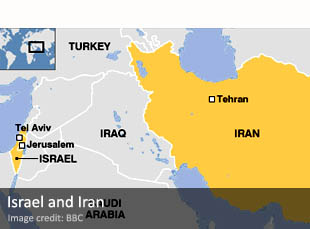
Israel and IranBy IAN ALLEN | intelNews.org |
►►Israeli company exported Internet-monitoring hardware to Iran. Israel bans all trade with its enemy, Iran. It turns out, however, that Israeli Internet-monitoring equipment has been finding its way to Iran for years, through Denmark. An Israeli company shipped the equipment to Denmark, where workers stripped away the packaging and removed the labels, before forwarding it to Iran. Now Israeli trade, customs and defense officials say they “did not know” that the systems were ending up in Iran.
►►Court decision revives NSA lawsuits. The 9th US Circuit Court of Appeals has ruled that the case of Jewel v NSA, which claims that after the 2001 terrorist attacks the NSA began large-scale monitoring of digital traffic, with the assistance of AT&T and others, can proceed. At the same time, the court denied leave to continue on a linked case against AT&T, for aiding and abetting the surveillance. The court upheld the 2008 Foreign Intelligence Surveillance Act (FISA) revision, voted for by the current president, which grants the telecommunications companies retroactive immunity from any actions carried out during the period.
►►Czechs charged with espionage in Zambia sent home. Three Czech citizens, who were detained in Zambia on October 12, 2011, and charged with espionage, have returned home, the Czech Foreign Ministry said Sunday. A ministry spokesman declined to give any details on the return of the three Czechs, who were arrested after they were found taking pictures near military sites.

News you may have missed #654

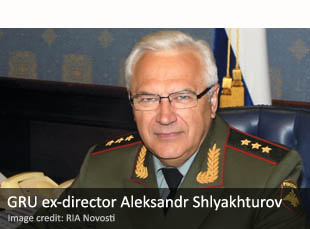
Aleksandr ShlyakhturovBy IAN ALLEN | intelNews.org |
►►Anonymous hacks intel analysis firm StratFor. The loose-knit hacking movement Anonymous claimed Sunday via Twitter that it had stolen thousands of credit card numbers and other personal information belonging to clients of intelligence analysis firm Stratfor. The company had apparently failed to encrypt its customers’ credit card account information. The hackers announced their intention to use the credit cards for charitable donations.
►►CIA Inspector General clears assistance with NYPD. Back in August, The CIA denied allegations by the Associated Press that it helped the New York Police Department conduct covert surveillance on New York Muslims. The agency said the report “mischaracterized the nature and scope” of the CIA’s support for the NYPD. Now a report by the office of the CIA Inspector General, the CIA’s internal watchdog, has concluded that there was “no evidence that any part of the agency’s support to the NYPD constituted ‘domestic spying’”. The Associated Press notes that it is not clear if this report opens the door for other municipal police departments nationwide to work closely with the CIA in the war on terrorism.
►►Russia replaces head of military spy agency. After denying initial rumors, Russia’s Defense Ministry said on Monday that “Major General Igor Sergun has been appointed head of the GRU [Russia’s Main Intelligence Directorate] through a Kremlin decree”. Sergun replaces Aleksandr Shlyakhturov, who had spearheaded a shake-up of the service since his appointment in 2009. The state RIA Novosti news agency quoted a ministry spokesman suggesting that Shlyakhturov had reached retirement age. No other reason was given for the move. Incidentally, if you are wondering how spies are faring in Dmitri Medvedev’s and Vladimir Putin’s administration, read this enlightening analysis by Mark Galeotti, Professor of Global Affairs at New York University.

News you may have missed #654

Abdel Hakim Belhaj►►Libyan military commander sues British intelligence. Just as he said he would, Abdel Hakim Belhaj, who commands the new Libyan military forces in Tripoli, has sued Britain for its role in his rendition into imprisonment and torture at the hands of Muammar Gaddafi’s regime. He said he resorted to legal action after waiting in vain for the British government to offer an apology for his seven years spent in the jails of the secret police.
►►Argentine Admiral fired over espionage scandal. The head of the Argentine Navy, Admiral Jorge Godoy, has stepped down after being accused of illegal espionage. He has been indicted for alleged practices of “domestic intelligence” –which are prohibited by Argentina’s laws– against political leaders and of human rights activists, in the years between 2003 and 2006.
►►US intelligence warned of strive after US Iraq pullout. This is what Reuters news agency reports, citing anonymous sources inside the US government. Then again, US intelligence agencies warned in 2002 of increasing strife in case of a US invasion in Iraq, and nobody in government listened to them. So why would anyone listen to them now?

News you may have missed #652

Amir Mirzaei HekmatiBy IAN ALLEN | intelNews.org |
►►Kremlin accused of covert tactics against opposition. The Kremlin says it will allow opposition groups to hold rallies, but cases of alleged preemptive arrests and phone-tapping show that it may be still seeking to defeat the protest movement. For previous intelNews coverage of civil liberties in Russia see here.
►►Iran releases two Kuwaitis accused of spying. Iran’s semi-official Mehr news agency says that two Kuwaitis detained In Iran for spying last month have been cleared of their charges and released. The report quoted Iran’s ambassador to Kuwait, Ruhollah Qahremani, as saying the men had illegally worked as journalists in Iran while traveling on tourist visas, but initial speculation that they were spies “had been wrong”.
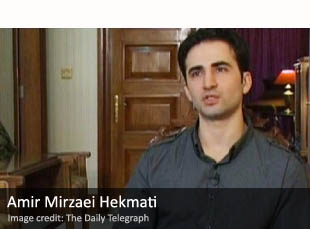
►►US sources deny spy charges for American detained in Iran. Amir Mirzaei Hekmati (pictured), from Arizona, who has been captured in Iran allegedly on a CIA mission, has not received any intelligence training from the US military, according to Pentagon sources. Also, one of Hekmati’s colleagues claims the Iranian-American helped develop an electronic translator for US troops but “wouldn’t have been involved in espionage”.

Russian spy agencies accused of hacking election monitor sites

FSB officer

FSB officer

By JOSEPH FITSANAKIS | intelNews.org |
Election monitors have accused Russia’s domestic intelligence service of launching a series of coordinated hacking attacks on opposition websites, timed to coincide with last Sunday’s elections. On that day, Russians voted —as they have done every five years since 1991— to determine the composition of the Duma, the country’s lower house. Election results show an unprecedented 14 percent drop for Prime Minister Vladimir Putin’s United Russia party, coupled with an equally sharp rise in the Communist Party share of the votes, which doubled to about 20 percent. But the election drew strong condemnations from international election monitors, including the Organization for Security and Cooperation in Europe, which said that the campaign was “slanted in favor of the ruling party”. Now Russian opposition organizations are accusing the government of launching a series of “massive” distributed denial of service (DDoS) attacks against their websites on the night of the elections. Websites affected include the prominent opposition magazine The New Times, the Ekho Moskvy radio station, the Russian arm of the Livejournal blogging website, business daily Kommersant, popular online news portal Slon.ru, as well as the Western-financed political watchdog group Golos. All of these outlets were simultaneously attacked on Sunday evening; their servers were bombarded with data that overwhelmed their computer systems and eventually knocked them offline. Liliya Shibanova, who directs Golos, told a news conference in Moscow late on Sunday night that the organization’s Internet and telephone systems, including an election violation hotline, had been blocked. She claimed that only Russia’s Federal Security Service (FSB), successor to the domestic intelligence wing of the Soviet-era KGB, had the resources required to launch such a massive attack. Read more of this post

News you may have missed #636

Lebanon

Lebanon

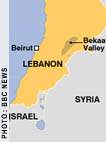
►►Careless codeword may have cost CIA its Lebanon network. Hezbollah have reportedly just rolled up the CIA’s network of spies in Lebanon. If so, it’s because of one of the stupidest, least secure code words in history. According to ABC News, Hezbollah operatives figured out that CIA informants, who had infiltrated the Iranian proxy group, were meeting with their agency handlers at a Beirut Pizza Hut. How could Hezbollah deduce that location? “The CIA used the codeword ‘PIZZA’ when discussing where to meet with the agents,” ABC reports.
►►UK spy chiefs to be publicly questioned for first time. The heads of British intelligence agencies are set to be questioned for the first time in public, under plans to make spies more accountable. The directors of MI5, MI6 and GCHQ will face Parliamentarians on the Intelligence and Security Committee. Although, they have recently begun to make rare public appearances, and deliver speeches, it will be the first time the intelligence agency heads will face public cross-examination over their activities.
►►Documents reveal largest domestic spy operation in Canadian history. Police organizations across Canada co-operated to spy on community organizations and activists in what the Royal Canadian Mounted Police called one of the largest domestic intelligence operations in Canadian history, documents reveal. Information about the extensive police surveillance in advance of last year’s G8 and G20 meetings in southern Ontario comes from evidence presented in the case of 17 people accused of orchestrating street turmoil during the summits.