British Nazi was in fact MI5 double spy, new book reveals

Arthur OwensBy JOSEPH FITSANAKIS | intelNews.org |
A Welsh nationalist, whose aversion to British rule led him to spy for Nazi Germany during World War II, was in fact a double spy for Britain, and was instrumental in helping he Allies win the war, a new book reveals. The book, Snow: The Double Life of a World War II Spy, by Madoc Roberts and Nigel West (At Her Majesty’s Secret Service, A Matter of Trust, etc), centers on the life of Arthur Owens, who was recruited by the Abwehr, Germany’s military intelligence, in 1935, during a business trip to the Continent. Given the operational codename JOHNNY O’BRIEN by the Germans, he quickly began providing Berlin with inside information on Britain’s military buildup in the run-up to the War. But, according to Roberts and West, who base their account on declassified government documents, British counterintelligence agency MI5 became aware of Owens’ espionage activities and eventually recruited him as a double agent for the Crown. According to the book, Owens, who was given the codename SNOW by his British masters, became one of the human intelligence cornerstones of MI5’s XX (Double-Cross) System. Consisting of a close-knit group of deception specialists, XX is known for a series of outrageous —and often highly successful— covert operations during World War II, including Operation FORTITUDE, a plan to deceive the Germans about the location of the invasion of Europe by the Western Allies. The authors claim that agent SNOW’s activities successfully lured a large number of Nazi agents into the arms of MI5, thus eventually paving the way for some of MI5’s greatest wartime counterintelligence successes. In fact, it is believed that Owens’ pro-Nazi activities were so convincing, and his operational cover so deeply buried within the XX System, that in 1941 his MI5 handlers recommended that he be interned in a British prison. But the book alleges that, while in prison in Dartmoor, England, SNOW continued his intelligence collection for the Crown and kept feeding his handlers with information extracted from the prison’s German inmates. Read more of this post

Did US agencies fail to heed warnings of 2008 Mumbai attacks?

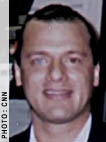
David Coleman Headley

David Headley

By JOSEPH FITSANAKIS | intelNews.org |
We have written before that the CIA alerted Indian authorities prior to the 2008 Mumbai attacks, which killed 166 people, including six American citizens. The incident, which was perpetrated by Pakistani-based militant group Lashkar-e-Taiba, is routinely described as the most sophisticated and spectacular terrorist strike since 9/11.  But there are numerous questions about the complex relationship between the United States, Lashkar-e-Taiba, and Pakistan’s Inter-Services Intelligence (ISI) directorate, which is widely believed to be protecting the terrorist group. Many of these questions center on David Coleman Headley, an American citizen, born in Washington, DC, who is currently in US custody, having confessed to helping plan the Mumbai attacks. According to Headley’s own court testimony, he worked for the ISI; moreover, despite early denials, the US government eventually admitted that Headley was a paid informant for the US Drug Enforcement Administration. There is, however, intense speculation in India and Pakistan that Headley, who is of Pakistani background, is in fact a CIA agent-gone-rogue, who used his CIA connections to pursue his militant plans undisturbed (something with the CIA flatly denies). Such rumors are reinforced by the US authorities’ puzzling refusal to allow Indian government investigators of the Mumbai attacks access to Headley. The curious relationship between US intelligence agencies and David Headley has been probed by several media outlets, including The New York Times, which in March of 2010 pointed out that Headley “moved effortlessly between the United States, Pakistan and India for nearly seven years, training at a militant camp in Pakistan on five occasions”. Now a new documentary by investigative group ProPublica, which aired on Tuesday as part of PBS’ Frontline television series, has unearthed new information that shows US government agencies failed to heed “repeated warnings over seven years”, which might have helped prevent the Mumbai attacks. Read more of this post
News you may have missed #598 (US edition)

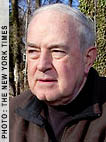
Brian Kelley

Brian Kelley

►►CIA officer wrongly accused of being KGB mole dies. CIA officer Brian J. Kelley, who was falsely accused by his own agency, as well as by the FBI, of supplying covert information to Moscow, has died at the age of 68. The real mole, the FBI agent-turned-spy Robert P. Hanssen, was apprehended in 2001, but not before Mr Kelley had been followed, interrogated, suspended and told that he might well be charged with a capital offense.
►►NSA working on secure smartphone technology. Troy Lange,  mobility mission manager at the US National Security Agency, says he is developing a secure smartphone that can be used to access classified information and apps while on the move. He is working on a pilot project using a smartphone that looks like any bought in stores but with security configurations to allow top-secret communication.
►►Kabul attack kills CIA contractor. An Afghan working for the US government killed a CIA contractor and wounded another American in an attack on the intelligence agency’s office in Kabul, making it the latest in a series of high-profile attacks this month on US targets. An anonymous US official in Washington said the Afghan attacker was providing security to the CIA office and that the American who died was working as a contractor for the CIA.

News you may have missed #526

  • Russia convicts colonel of exposing US spy ring. Colonel Alexander Poteyev has received a (relatively lenient) 25-year sentence for exposing a Russian ‘sleeper cell’ network in the United States. The sentence was delivered in absentia, as Poteyev is believed to have defected to the US, where he probably lives under an assumed identity. As he was fleeing Russia in June 2010, he texted his wife: “try to take this calmly: I am leaving not for a short time but forever. I am starting a new life. I shall try to help the children”. Here is the most detailed recent account the Poteyev’s case in English.
  • Libyan defector holed up in luxury hotel. Moussa Koussa, Libya’s former intelligence chief and foreign minister, faced calls last night to return to Britain for prosecution after he was tracked down to a penthouse suite at the Four Seasons Hotel in Doha, the capital of Qatar, where he has been living under the protection of the Qatari security services.
  • New NZ SIGINT spy agency boss named. The government of New Zealand has appointed Simon Murdoch as the acting chief executive and director of the Government Communications Security Bureau (GCSB) intelligence agency.

News you may have missed #516

  • UK government will continue to spy on Muslims says official. Britain’s Home Secretary, Theresa May, says she does not see “anything wrong with identifying people who are vulnerable to being taken down a certain route”.
  • UK government outed IRA double agent. Senior Irish Provisional Army volunteer Denis Donaldson, who spied for the British government, was deliberately outed by the government to send a message to the IRA that he was expendable, and that it had another, more valuable informant within the IRA leadership ranks. The revelation is contained in a leaked US diplomatic document published by whistleblower website WikiLeaks. Donaldson was shot dead shortly after his role as an MI5 informant was revealed.
  • Legendary CIA airline now in danger of crashing. There was a time, not so long ago, that CIA-linked contractor Evergreen International Aviation was doing quite well for itself. Today, the venerable intelligence-helpers have fallen on hard times. The other day, it had to unload its 200 million square foot maintenance facility in southern Arizona in order to help pay off its debts.

News you may have missed #514

  • The spy kid. Multipart series by The Oregonian‘s Bryan Denson, on Nathaniel James Nicholson, son of CIA double agent Harold James Nicholson, who was convicted for spying on the US for Russia. Nathaniel was convicted in 2009 for maintaining contacts with his father’s Russian handlers.
  • Listening bug found in NZ MP’s home. Sources close to New Zealand’s Government Communication Security Bureau (GCSB) have said that at least one clandestine listening device has been found after a sweep of senior government officials’ homes.
  • Israel sells spy camera to Turkey despite concerns. Israel’s defense establishment has approved the sale to Turkey of the Long-Range Oblique Photography pod, a sophisticated intelligence system considered the pinnacle in Israeli military technology, despite worsening relations between the two countries.

Suspicion mounts as US unlocks Moussa Koussa’s foreign assets

Moussa Koussa

Moussa Koussa

By JOSEPH FITSANAKIS | intelNews.org |
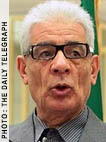
Eyebrows were raised in intelligence circles on Monday, after the United States lifted its freeze of foreign assets belonging to Libya’s former intelligence chief, who defected to London last week. Libya’s Minister of Foreign Affairs, Moussa Koussa, who headed the country’s intelligence agency from 1994 to 2009, managed to escape to the UK from Tunisia on a Swiss-registered private airplane. He is currently reported to be in an MI6 safe house in England, allegedly being interrogated about his inside knowledge of the regime of Muammar al-Gaddafi. But Koussa is also thought to be the mastermind behind the 1988 bombing of Pan Am flight 103 over Lockerbie, Scotland, which killed nearly 300 people. The 57-year-old defector is also believed to have facilitated Libya’s funding of the Provisional Irish Republican Army and to have authorized the assassination of several Libyan dissidents living in Britain. In light of that, the news that Washington lifted its sanctions on Koussa’s sizeable fortune abroad is worth noting. It is also interesting to note that Britain’s Foreign Secretary, William Hague, is reportedly pressuring European Union member-states to follow the US’ example in also unfreezing Koussa’s foreign assets. Read more of this post

News you may have missed #491

MI5 concealed report on Soviet penetration from CIA

Kim Philby

Kim Philby

By IAN ALLEN | intelNews.org |
British counterintelligence officials decided to conceal from their American counterparts a report detailing Soviet spy penetration of the UK, because it showed London’s permissive attitude towards intelligence infiltration. The secret report, entitled “Survey of Russian Espionage in the UK 1935-1955”, was authored by the D Branch of MI5, which was tasked with countering Soviet intelligence operations on British soil. It was declassified on Monday by Britain’s National Archives, 55 years after it was initially authored. The survey was apparently commissioned following the embarrassing defections of Guy Burgess and Donald Maclean, MI5 and MI6 officers respectively, who escaped to Moscow in 1951, after several years of spying for the Soviet Union. Its pages detail the cases of over 50 Soviet intelligence operatives and double agents who were believed at the time to be mostly at large in the UK or abroad. But senior MI5 officials decided to limit the report’s distribution, fearing that it revealed too many weaknesses in Britain’s counterintelligence posture. Instead, they decided to print only about 25 copies of the report, which were to be distributed strictly within MI5. Read more of this post

News you may have missed #459 (Russia edition)

  • Son of CIA double spy strikes deal with FBI. Nathan Nicholson, son of CIA officer Harold James Nicholson, who in 1997 was jailed for spying for Russia, has avoided a prison sentence after promising to help the FBI build a new case against his father. The latter has pleaded guilty to enlisting his son from prison to sell the Russians more secrets and collect money owed to him by the Russian spy services.
  • Moscow warns UK of tit-for-tat expulsions. Alexander Sternik, the Russian government’s senior official in Britain, has hinted that any attempt to deport parliamentary assistant Katia Zatuliveter, detained by MI5 for allegedly spying for Russia, could result in tit-for-tat expulsions.
  • Kim Philby honored by plaque at Moscow SVR HQ. Russia has honored British Cold War spy Kim Philby with a plaque at the headquarters of the country’s foreign intelligence agency. Philby, who defected to the Soviet Union in 1963, is depicted in a sculptured portrait on the plaque as the two-faced Roman god Janus.

FBI allegedly looking for Russian spy inside NSA

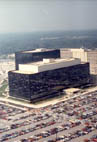
NSA Headquarters

NSA HQ

By IAN ALLEN | intelNews.org |
American counterintelligence investigators are allegedly trying to uncover at least one Russian-handled double agent operating inside the US National Security Agency (NSA), according to information published on Wednesday in The Washington Times. The paper based its allegation on an interview with an anonymous “former intelligence official” with close ties to the NSA —America’s largest intelligence agency, which is tasked with worldwide communications surveillance as well as communications security. The anonymous source told the Times that the probe is directly connected to the arrest of nearly a dozen Russian deep-cover operatives by the FBI last summer. Washington eventually exchanged the Russian spies with several Western-handled Russian operatives captured by Moscow and held in Russian prisons. But the FBI allegedly believes that the deep-cover operatives, most of whom used false identity papers and had lived in the US for years, were primarily tasked with aiding at least one Russian-handled double spy operating inside the NSA’s Forge George F. Meade headquarters, in the US state of Maryland. Read more of this post

Did FSB leak Russian double spy’s name to the media?

SVR seal

SVR seal

By JOSEPH FITSANAKIS | intelNews.org |
The revelation that a double agent betrayed the ten Russian deep-cover spies, who were arrested in the United States last summer, may have been leaked to the media as part of a turf war between two rival Russian spy agencies. On November 11, Russian newspaper Kommersant disclosed that a senior officer in Russia’s Foreign Intelligence Service (SVR) had defected to the United States shortly before the arrest of ten Russian deep-cover spies by the FBI, on June 27, 2010. The paper identified the alleged double agent as “Colonel Shcherbakov”, believed by veteran KGB officer Oleg Kalugin to be Aleksandr Vasilyevich Shcherbakov. The Kommersant disclosure was later confirmed by no other than Russian President Dmitry Medvedev. But who leaked Shcherbakov’s name to Kommersant, and why? According to Pavel Felgenhauer, military and intelligence correspondent for Russia’s Novaya Gazeta newspaper, the leak originated from within the Russian intelligence establishment. Specifically, Felgenhauer suggests that it was Russia’s Federal Security Service (FSB) that leaked the information to the media, in an attempt to score points against the SVR. Read more of this post

News you may have missed #452

  • Britain’s GCHQ turns to Google for help. GCHQ, Britain’s Cheltenham-based signals intelligence agency, is recruiting an expert on MapReduce, the patented number-crunching technique developed by Google to distribute the load of billions of web searches across its cluster of hundreds of thousands of commodity servers.
  • CIA double agent pleads guilty from prison. CIA officer Harold James Nicholson, who in 1997 was jailed for spying for Russia, has pleaded guilty to enlisting his son Nathan to sell the Russians more secrets and collect money owed to him by the Russian spy services.
  • Georgia offers to negotiate with Russia over spies. Tbilisi is ready for negotiations with Moscow on the repatriation of several alleged Russian spies arrested in Georgia, the country’s Deputy Foreign Minister Nino Kalandadze has said.

News you may have missed #441

  • US officials admit terrorist suspect was DEA informant. US government officials have told The Washington Post what the world’s media has been saying for almost a year, namely that Pakistani-American David Coleman Headley, who was arrested by the FBI in October for plotting an attack on a Danish newspaper, was working as a Drug Enforcement Administration informant while training with Islamist insurgents in Pakistan.
  • Ex-CIA officer decries Israeli policies. Philip Giraldi, a former counter-terrorism specialist and military intelligence officer at the CIA, has said in an interview that Israel’s policies in Palestine “are manifestly evil”.
  • Bomber who killed seven at CIA base was not vetted. Humam Khalil Abu-Mulal al-Balawi, a Jordanian al-Qaeda sympathiser who killed himself and seven CIA agents at a remote base in eastern Afghanistan in January had not been properly vetted, the CIA has said.

News you may have missed #329

  • Iran insists US hikers had intelligence links. Iran’s intelligence minister, Heydar Moslehi, has said that Americans Shane Bauer, Joshua Fattal and Sarah Shourd, who were arrested on Iranian soil last July, “were in contact with intelligence services”. The evidence would “soon be made public”, he said.
  • Gerdes case shows difficulty of CIA jobs. The case of CIA employee Kerry Gerdes, who was recently convicted for falsifying interview reports while performing background checks on CIA employees and potential employees, reveals how difficult the job is for young CIA recruits, who expect it to be exciting or glamorous, according to seasoned investigators.
  • US still denying India access to Headley. There has been intense speculation in India and Pakistan that David Coleman Headley, a former US Drug Enforcement Administration informant, who was arrested by the FBI in October for plotting an attack on a Danish newspaper, is in fact a renegade CIA agent. Could this be why the US is denying India access to Headley?

Bookmark and Share