News you may have missed #521 (Israel edition)

  • Lebanese officer gets 20 years for spying for Israel. Mansour Diab’s sentence marks the first time a Lebanese officer was convicted of spying for Israel. Meanwhile, Lebanon’s militant Shiite group Hezbollah has arrested several of its own members on suspicion of spying for Israel. Last weekend the Kuwaiti daily Al-Rai al-Aam reported that the group “was dumbfounded over the Israeli infiltration”, which appears to have been substantial.
  • Israel pressures US to temporarily release jailed spy. Several Israeli leaders on Sunday urged the United States to allow jailed Jewish-American spy Jonathan Pollard to attend his father’s funeral, after he was not granted permission to join him at his bedside before he died.
  • Israel seeks prisoner exchange for Ilan Grapel. Israel is pursuing a prisoner exchange for Ilan Grapel, a 27-year-old American-Israeli dual citizen, who was arrested by Egyptian state security officers at his downtown Cairo hotel last Sunday on charges of spying for Israeli intelligence. Meanwhile, both the US and Israel insist Grapel is no spy.

Analysis: Arab revolutions cause blind spot for US spies

Christopher Dickey

Dickey

By JOSEPH FITSANAKIS | intelNews.org
An unusually blunt piece published in Newsweek magazine describes the Arab democratic revolutions in Egypt, Tunisia, Libya and elsewhere as serious detriments to US intelligence collection in the Muslim world. Written by Newsweek’s Middle East Regional Editor Christopher Dickey, the lengthy article argues that the ongoing political changes in several Arab countries make US counterterrorism professionals long for the days “when thuggish tyrants, however ugly, were at least predictable”. It even quotes an unnamed senior intelligence officer who denounces the celebration of democracy in the Arab world as “just bullshit”, and sees “disaster […] lurking” in the region. The reason for such vehement reaction is plain: US intelligence professionals are witnessing an elaborate network of informants across the Arab world, which they painstakingly built and cultivated since the late 1960s, crumble before their very eyes. These informants, who had senior government positions in secularist Arab dictatorships, “are either gone or going”, says Christopher Boucek, of the Carnegie Endowment for International Peace. Read more of this post
News you may have missed #511

News you may have missed #491

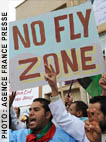
CIA active on the ground in Libya ‘for several weeks’

Libyan rebels

Libyan rebels

By JOSEPH FITSANAKIS | intelNews.org |
Few intelligence observers have been surprised by revelations in The New York Times that several cells of Central Intelligence Agency officers have been active on the ground in Libya for the best part of March. The US newspaper published the disclosure after the Reuters news agency first broke the story early on Wednesday. According to Reuters, US President Barack Obama authorized a secret Presidential finding three weeks ago, in which he instructed the CIA to deploy teams of operatives in the North African country. In reality, as Reuters commented later on, US intelligence officers were active on the ground in Libya before President Obama’s authorization for covert action. But his authorization gave the green light for the intensification of CIA activities throughout Libya’s northern regions. The CIA operatives are not working alone; they are part of what The Times called “a shadow force of Westerners”, which include “dozens of British special forces” and officers of the Secret Intelligence Service, otherwise known as MI6 —the UK’s foremost external intelligence agency. Citing “American officials”, The Times speculates that Western intelligence agents are actively collecting tactical intelligence on the Libyan armed forces, thus helping guide aerial strikes by NATO jets. Read more of this post

News you may have missed #488

  • Russians claim NATO plans ground operation in Libya. The international coalition force is “developing a plan for a ground operation on Libyan territory”, according to Russian news agency RIA Novosti, which quotes “a high-ranking Russian intelligence service source”.
  • Dutch Libya evacuee ‘not a spy’. An individual who was to be evacuated from the Libyan city of Sirte during a botched Dutch Navy helicopter rescue mission on February 27, is not a spy but an engineer who had been working there for two years on a construction project. This according to Erik Oostwegel, CEO of Royal Haskoning, the company that employed the engineer.
  • Syria arrests US engineer for ‘spying for Israel’. Syria has arrested an Egyptian engineer carrying a United States passport, who had been working in Syria after a secret visit to Israel, according to Syrian state-run television. But a “senior Syrian diplomatic source” has told Egyptian media that the spying charges are to be dropped.

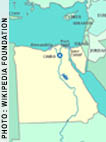
Egypt busts alleged Israeli spy ring

Egypt

Egypt

By IAN ALLEN | intelNews.org |
Authorities in Egypt announced Wednesday that they uncovered an espionage network, which they accuse of spying on the country on behalf of Israel. According to Egyptian newspaper Al-Masry al-Youm, which cited “informed security sources”, the alleged ring consisted of one Egyptian and several Israeli citizens, at least two of whom have been arrested. Other sources, however, state that the entire spy ring has been captured by Egyptian counterintelligence. The paper says that one of the detained Israelis entered Egypt in late January, carrying Jordanian travel documents and posing as a business executive interested in investing in the country. Al-Ahram has published a follow-up report suggesting that the alleged spy ring specialized on collecting information relating to the Egyptian military. The report also claims that the carrier of the Jordanian passport admitted before Egypt’s state prosecutor that he spied for the Mossad, Israel’s primary external intelligence agency. Al-Masry states that the alleged spy ring began its operations in Egypt following the January 25 revolution, with the aim of passing on information to Tel Aviv about the handover of power from the clique of former President Hosni Mubarak to Egypt’s military leadership, which has controlled the government since Mubarak’s ouster. Read more of this post

News you may have missed #481

  • Who brought down the CIA website last Thursday? US Federal officials as of Monday afternoon were still investigating the cause of a Thursday cyber incident that knocked offline the public website of the CIA and its unclassified e-mail system. The interference was isolated to CIA networks. Some cyber experts say the disruption may have been caused by a denial of service attack perpetrated by pranksters to show off their skills, rather than an act committed by a foreign government.
  • Israeli cabinet minister to visit jailed spy in US. Israel’s Communications Minister Moshe Kahlon is to make a visit next week to see Jonathan Pollard, an American serving a life term in a US jail for spying on the US for Israel. Israeli media claim that Kahlon will give Pollard a “verbal message” from Israel’s Prime Minister Benjamin Netanyahu.
  • Egypt’s spies dragged from shadows. New evidence of spying and torture by Egypt’s General Intelligence Services (GIS) has piled pressure on the country’s military rulers to abolish the agency. After breaking into the GIS Cairo headquarters and ransacking archives, activists posted videos showing a torture chamber with a bloodstained floor and equipped with chains.

News you may have missed #477 (Germany edition)

  • German ex-foreign minister in spat with ex-CIA director. Former CIA Director, George Tenet, claims that he discovered “too damn late” that Curveball –the Iraqi defector who became a key source for the CIA and the German secret service (BND)– was a fabricator. But Germany’s former foreign minister, Joschka Fischer, has told journalists that the BND did in fact share its doubts about Curveball with the CIA.
  • German spy chief claims Mubarak to stay in Egypt [unconfirmed]. According to German newspaper Die Welt, Ernst Uhrlau, director of Germany’s BND federal intelligence agency, says he has “no evidence that former Egyptian President Hosni Mubarak wants to leave the country, and that his comment that he intends to stay and be buried in Egypt “is credible”.
  • Austrian on trial in Germany on charges of spying for Russia. An Austrian soldier is on trial in Germany, accused of spying for Russia’s Foreign Intelligence Service (SVR) and passing on sensitive information about European helicopter prototypes. Prosecutors at the Munich court allege that the unnamed 54-year-old Austrian army mechanic spied from 1997 to 2002.

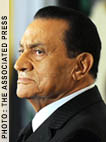
Mubarak delayed exit in order to move secret funds, say intel sources

Hosni Mubarak

Hosni Mubarak

By JOSEPH FITSANAKIS | intelNews.org |
One of the reasons why Egypt’s disgraced ex-president kept prolonging his rule amidst ferocious anti-government protests this month, was to transfer billions of dollars-worth of personal assets into bank accounts around the world. British newspaper The Sunday Telegraph quotes a “senior Western intelligence official” who claims that Hosni Mubarak’s fund managers began transferring his extensive fortune to numbered bank accounts during the first days of the popular revolution in Egypt. The intelligence official told The Telegraph that Western intelligence services were “aware of some urgent conversations” within the Mubarak family about how to best protect their fortune from Egyptian and international financial investigators. The Mubaraks may have thus pre-empted the freezing of their accounts in Zurich, which was announced by the Swiss government on Friday. In this, Hosni Mubarak appears to have learned from Tunisia’s former dictator, Zine El Abidine Ben Ali, who was forced to flee with his family to Saudi Arabia last month, without the benefit of his Swiss bank assets. The latter were frozen following an official request by the Tunisian government. In the case of Mubarak, whose vast $70 billion fortune is mostly managed by his son Gamal, it appears that most of his Swiss bank assets were moved to accounts in third countries in the days before his resignation and are thus “gone by now”, according to one US government official who spoke to The Telegraph on condition of anonymity. Read more of this post

News you may have missed #475 (Arab revolution edition)

  • Obama ‘disappointed’ with US intelligence on Tunisia. US President Barack Obama sent word to National Intelligence Director James Clapper that he was “disappointed with the intelligence community” over its failure to predict that the outbreak of demonstrations would lead to the ouster of President Zine el-Abidine Ben Ali in Tunis.
  • An Intelligence Failure in Egypt? The US intelligence community is like the offensive line of the government. They protect the quarterback all day long, and no one notices until they give up a sack. Which raises the question: was US President Barack Obama blindsided by the uprisings in Tunisia and Egypt?
  • Did US intelligence fail in North Africa? “One former official said US president Barack Obama recently urged the CIA to put as much effort into analysis of the situation in North Africa as into covert operations, including those targeting al-Qaida”.

Egypt intelligence highlights Congress-CIA tensions

Egypt uprising

Egypt uprising

By IAN ALLEN | intelNews.org |
A US Congressional hearing over a career CIA official’s promotion turned into a heated exchange on Thursday, as Congress members accused America’s intelligence community of failing to provide forewarning of the political instability in Egypt. Speaking before the US Senate’s Select Committee on Intelligence, Stephanie O’Sullivan, former Director of the CIA Directorate of Science and Technology, was faced with an unexpected barrage of questions concerning the Agency’s alleged failure to provide US policy planners with accurate warning of the Egyptian popular uprising. Shortly after the start of the hearing, which was intended to deliberate O’Sullivan’s nomination for the position of Deputy Director of the Office of Director of National Intelligence, attention turned to Egypt, with members of the Committee pressuring the CIA executive to explain why the US intelligence community had failed to issue ample warnings on Egypt. O’Sullivan responded repeatedly that the CIA and other US intelligence services had provided warnings to Obama Administration officials in November and December of 2010, about extreme political volatility in North Africa. Read more of this post

Analysis: Spy Agencies Failed to Predict Egypt Uprising

Egypt uprising

Egypt uprising

By JOSEPH FITSANAKIS| intelNews.org |
It is becoming increasingly clear that the ongoing popular uprising in Egypt represents the most important geopolitical development in the Middle East since the 1979 Islamic Revolution in Iran. In light of this, it is remarkable how unprepared foreign intelligence agencies have proven in forecasting the crisis. Even the Israelis were caught completely unaware: on January 25, the day when massive protests first erupted across Egypt, Major General Aviv Kochavi, newly appointed head of Israel’s Military Intelligence Directorate, told a Knesset committee that “there are no doubts about the stability of the regime in Egypt” and that “the Muslim Brotherhood is not organized enough to take over”. Instead, Kochavi focused on political volatility in Lebanon; ironically, the latter now seems like an oasis of tranquility compared to the explosive state of Egyptian politics. If the Israelis, whose very concept of national security is inextricably linked with developments in Cairo, were so unsuspecting of the popular wave of anger against the thirty-year dictatorship of President Hosni Mubarak, one can only imagine Washington’s surprise at the protests. Click here to read my article in Intelligent-Intelligence.com, a specialist publication edited by Kyle Cunliffe. Continue reading →

Analysis: What is the CIA doing in Egypt?

Egypt

Egypt

By JOSEPH FITSANAKIS | intelNews.org |
Every time there is a popular uprising anywhere in the Muslim world, the minds of American intelligence planners go immediately to 1979, when the Iranian Revolution tore down almost overnight one of Washington closest allies in the Middle East. By ignoring the immense unpopularity of the Shah’s brutal regime, and by limiting its Iranian contacts among the pro-Shah elites in the country, the CIA was caught completely in the dark as the Islamic revolution unfolded. Could the same be happening now in Egypt? Hopefully not, says The Washington Post’s veteran intelligence correspondent Jeff Stein. As in the case of Iran under the Shah, the US has stood by the 33-year dictatorship of Hosni Mubarak, choosing to abide by the simplistic dogma of ‘either secular repression or anti-American Islamism’. But, unlike 1970s Iran, one would hope that US intelligence agencies have been able to develop useful contacts across the fragmented but dynamic and energized Egyptian opposition community, says Stein, quoting former US Defense Intelligence Agency official Jeffrey White. It is unlikely that the CIA and other agencies have fully embraced persistent calls, such as those by Emile Nakhleh, former head of the CIA’s program on political Islam, to develop trustworthy contacts inside the Egyptian Islamic Brotherhood, as well as groups close to it, such as Hamas and Hezbollah. Read more of this post

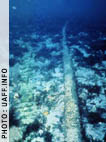
Israel sabotaged Egypt’s Internet, says alleged Mossad spy

Undersea Internet cable

Undersea cable

By IAN ALLEN | intelNews.org |
Israeli sabotage was behind the nationwide crippling of Egypt’s Internet in 2008, according to an alleged Mossad agent. The accused agent, Abdel Razeq Hussein Hassan, is an Egyptian businessman who was arrested earlier this year by Egyptian counterintelligence and is accused of working for the Israeli spy agency. Two of his alleged Israeli handlers, Joseph Daymour and Idid Moushay, are reportedly on the run and are wanted by the Egyptian government.  Hassan is due to go on trial next month, but transcripts of his interrogation records have been leaked to Egyptian media. In one instance, Hassan appears to tell his police interrogators that a team of Mossad operatives deliberately cut two undersea cables about 5 miles off the north Egyptian port city of Alexandria, disrupting the country’s Internet service for several days. Read more of this post