News you may have missed #836
May 10, 2013 Leave a comment
 By IAN ALLEN | intelNews.org |
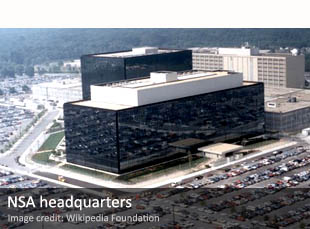
►►NSA guide explains how to access private info on Google. In 2007, the US National Security Agency produced a book to help its spies uncover intelligence hiding on the World Wide Web. The 643-page tome, called Untangling the Web: A Guide to Internet Research (.pdf), has just been released by the NSA following a FOIA request filed in April by MuckRock, a site that charges fees to process public records for activists and others. Although the author’s name is redacted in the version released by the NSA, Muckrock’s FOIA indicates it was written by Robyn Winder and Charlie Speight.
►►Are the EU’s unofficial spy services growing out of control? Since its founding, the European Union has been building its own spy programs, often triggered by specific needs, in an ad-hoc manner, without strategy and without a coherent concept about their structure, methods, and people. Unofficially, the has been building an intelligence apparatus of six services so far, some of them brand new, populated already by 1,300 specialists. But because they are technically not conducting covert operations, they simply deny being intelligence services.
►►Hearing on Boston bombings exposes intelligence failures. The US House Committee on Homeland Security’s hearing on the Boston Marathon bombings on Thursday amounted to more than the usual political posturing: it exposed clear deficiencies in communications among intelligence- and law-enforcement agencies. whatever the cause of the intelligence breakdown, the failure to share vital information —and the continued finger-pointing between agencies yesterday— shows the need to improve coordination.












 intelNews.org
Google removes Iranian government’s COVID-19 app amidst claims of espionage
March 10, 2020 by Ian Allen Leave a comment
The purpose of AC19 is to help coordinate the nationwide response to COVID-19, known as coronavirus, in a country that is experiencing one of the world’s most prolific outbreaks of the disease. App users can register using their unique phone number and determine whether their flu-like symptoms resemble those of COVID-19. The app’s developers argue that it can help keep people from flooding local hospitals throughout the country, which are already overwhelmed.
But some users have raised concerns that the app also requests access to the real-time geolocation data of users, which it then stores in remote databases. As technology news website ZDNet reports, some have accused the government in Tehran of using the AC19 app in order to track the movements of citizens. An expert consulted by ZDNet to examine the app’s technical details said that it did not appear to contain unusually intrusive features or functions.
However, the company used to develop the app, called Smart Land Strategy, has previously built apps that, according to ZDNet, were used by the Iranian intelligence services and were subsequently removed from the Google Play Store. Some Iranians claim that, given the connection between AC19 and Smart Land Strategy, it is possible that the new app may be used in the future by the Iranian government to spy on citizens, despite the fact that it may be presently useful in efforts to contain the COVID-19 epidemic.
The app continues to be available through Iranian government websites and app sites other than Google’s.
► Author: Ian Allen | Date: 10 March 2020 | Permalink
Filed under Expert news and commentary on intelligence, espionage, spies and spying Tagged with cellular telephony, Coronavirus, COVID-19, Google, Iran, Iranian Ministry of Health and Medical Education, News, privacy, Smart Land Strategy