News you may have missed #767
July 25, 2012 Leave a comment
 By IAN ALLEN | intelNews.org |
►►Aussie spy chief warns of ‘digital footprints’. For the first time in the 60-year history of the Australian Secret Intelligence Service (ASIS), Australia’s main external spy agency, its Director has spoken publicly. Nick Warner used this unprecedented opportunity to reflect on where ASIS has come in the last 60 years, and the challenges it faces into the future. Among them, he said, are “developments in the cyber-realm”, which “are a two-edged sword for an agency like ASIS; they offer new ways of collecting new information, but the digital fingerprints and footprints which we all now leave behind complicate the task of operating covertly”.
►►India arrests alleged Pakistani spy. Indian authorities have announced the arrest of Zubair Khan, 37, of Uttar Pradesh, who was allegedly caught with several Indian Army documents in his possession. He had been reportedly asked to gather information on Air India pilots, military bases in the country, journalists who frequently visit Pakistan, and relatives of officials working in the Indian High Commission in Pakistan. Maps of cantonment boards and details of many battalions have been recovered from him, according to Indian media reports. Investigators are also said to have identified one of Khan’s handlers, a man named “Talib”, who works at Pakistan’s High Commission in New Delhi.
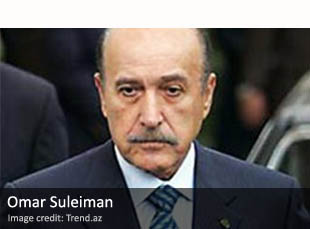
►►Egypt spies try to repair image as ex-Director dies. Egypt’s top spy agency, the General Intelligence Service —known as the “Mukhabarat” in Arabic— is taking a small but unprecedented step out of the shadows, in an apparent attempt to win the public’s support in the new Egypt. In an unusual move, the agency released a 41-minute-long documentary boasting of its achievements, presenting itself as the defender of the nation and vowing to continue to protect the country. The effort comes as the Mukhabarat’s former Director, the notorious Omar Suleiman, has died in the United States.




 By IAN ALLEN | intelNews.org |












 intelNews.org
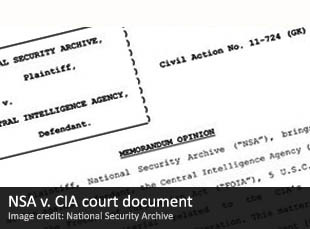
Judge orders CIA to release files on drug kingpin Pablo Escobar
August 24, 2012 by intelNews 1 Comment
In the late 1980s, it was nearly impossible to sit through a primetime news bulletin without coming across the name ‘Pablo Escobar’. Born in 1949 in the town of Rionegro, Colombia, Escobar rose to become the leader of the Medellín cartel, history’s most notorious narcotics smuggling ring. By 1986, the Medellín cartel controlled over 80 percent of the global cocaine market, shipping daily around 15 tons of the drug (worth an estimated street value of $500,000) to the United States. In 1989, Forbes magazine included Escobar on his list of the world’s richest persons, with an estimated net worth of $3 billion. By that time, the Medellín cartel had become powerful enough to directly threaten the very institutional integrity of the Colombian state. At the same time, Escobar carefully cultivated his ‘Robin Hood’ image by regularly building hospitals, schools, and churches in some of Colombia’s most impoverished regions. He was thus able to surround himself with a sea of grateful and devoted supporters, who directly depended on his generosity for their livelihood. They also shielded him from the reach of the Colombian and United States government forces, which repeatedly went after him without success. Eventually, the Colombian government, in association with the US Drug Enforcement Administration and the Central Intelligence Agency, managed to stop Escobar by creating a rival organization called Los PEPES —a Spanish-language acronym that stands for ‘People Persecuted by Pablo Escobar’. Los PEPES, which consisted of members of rival drug smuggling cartels, as well as trained mercenaries belonging to Colombian rightwing militias, went after Escobar’s closest associates with indescribable ruthlessness. They hunted down and eventually tortured and killed several of his relatives, advisors and bodyguards. Ultimately, in 1993, they helped the Colombian National Police corner Escobar and shoot him dead at a Medellín barrio. The celebrations in Washington and Bogotá didn’t last long; as soon as Los PEPES disbanded, many of its leading members regrouped to found the United Self-Defense Forces of Colombia (AUC), a rightwing paramilitary group that has since killed thousands of civilians in Colombia’s bitter civil war. The AUC, which funds its operations through kidnappings and drug trafficking, is today a designated terrorist group by most Western governments, including the United States and the European Union. Read more of this post
Filed under Expert news and commentary on intelligence, espionage, spies and spying Tagged with CIA, Colombia, DEA, declassification, FOIA, government secrecy, Institute for Policy Studies, Judge Royce C. Lamberth, lawsuits, Los PEPES, Medellin (Colombia), Medellin cartel, narcotics trade, News, Pablo Escobar, United Self-Defense Forces of Colombia, United States