News you may have missed #520

  • CIA director returns from Pakistan empty-handed. CIA Director Leon Panetta’s surprise visit to Pakistan last week yielded little, according to US officials. Panetta bypassed the protocol of first meeting with the president and prime minister, and instead met with Pakistan’s military and intelligence directors.
  • Chinese spying devices found in Hong Kong cars. A Hong Kong newspaper has alleged that the Chinese authorities have been secretly installing spy devices on all dual-plate Chinese-Hong Kong vehicles since July of 2007. Photographic evidence is here.
  • NSA releases over 50000 pages of documents. The US National Security Agency has announced that it has declassified and released to the US National Archives and Records Administration over 50,000 pages of historic records, covering a time-frame from before World War I through the 1960s.

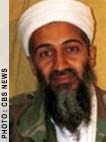
Comment: Bin Laden’s Alleged ‘Magazine Stash’ May be CIA PsyOp

Osama bin Laden

Osama bin Laden

By IAN ALLEN| intelNews.org |
Rumors of an alleged discovery of “a stash of pornography” in Osama bin Laden’s hideout in Pakistan have spread like wildfire since Friday, when Reuters published an “exclusive” report on the subject. The report, written by Mark Hosenball and Tabassum Zakaria, cites “current and former US officials […] who discussed the discovery […] on condition of anonymity”. According to the allegations, “[t]he pornography recovered in bin Laden’s compound in Abbottabad, Pakistan, consists of modern, electronically recorded video and is fairly extensive”. The report was almost immediately picked up by several news outlets, including The New York Times, which notes that the disclosure “will be welcomed by counter-terrorism officials because it could tarnish [the al-Qaeda founder’s] legacy and erode [his] appeal”. Indeed. It appears that only Danger Room‘s Spencer Ackerman thought it wise to air a brief disclaimer to the effect that the “welcomed disclosure” may in fact be “a CIA information operation”. He has a point. Read more of this post

Controversial Swiss master-spy dies in Ireland

Albert Bachmann

Albert Bachmann

By JOSEPH FITSANAKIS | intelNews.org |
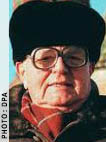
One of Switzerland’s most controversial Cold War figures, who set up a clandestine guerrilla unit to combat a feared Soviet invasion, has died in Cork, Ireland. Swiss newspaper Tages-Anzeiger has said last week that Colonel Albert Bachmann, who headed Switzerland’s military intelligence force, the Untergruppe Nachrichtendienst der Armee (UNA), from 1976 until 1979, died on April 12. Although Bachmann was a communist in his student years, he later headed Projekt-26 (P-26), a clandestine project to set up a ‘left-behind’ force of Swiss guerrillas trained in sharp shooting, bombing and assassination techniques. The guerrilla force was designed to engage the Soviet military if it ever invaded Switzerland. In the late 1970s, Colonel Bachmann also secured government funds to purchase the 200-acre Liss Ard country estate near the Irish town of Skibbereen, in west Cork. The estate was to be used as a base for a Swiss government-in-exile following a feared Soviet invasion of central Europe. Furthermore, the basement of one of the two manors on the estate was designated as a secret depository of Switzerland’s gold reserves, in the event of a Soviet invasion of the Alpine country. Read more of this post

Book claims CIA framed Bulgaria over assassination attempt on Pope

John Paul II

John Paul II

By IAN ALLEN | intelNews.org |
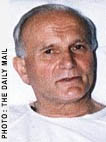
A new book claims that the United States Central Intelligence Agency concocted a link between the Bulgarian intelligence services and the 1981 failed assassination attempt against Pope John Paul II. Entitled Kill the Pope: The Truth About the Assassination Attempt on Pope John Paul II, the book is authored by Italian investigative journalist Marco Insaldo and Turkish researcher Yasemin Taksin. Both say that Kill the Pope is the result of a twenty-year study into the incident. Pope John Paul II was shot four times by a 9mm handgun fired by Turkish citizen Mehmet Ali Ağca, while riding in the back of an open-roof car at the Vatican’s St Peter’s Square. Although Ağca’s motives are shrouded in mystery, many intelligence historians believe that he was operating as an agent for the Bulgarian secret services. It has been speculated that the Soviet KGB instructed Bulgarian intelligence to use Ağca and another Turk, Oral Çelik, to kill the Polish-born Pope, because he had strong ties with Poland’s dissident Solidarność (Solidarity) movement. But Insaldo and Taksin insist that there is no evidence to connect the Bulgarian government to the assassination operation, and that Ağca operated under the command of Turkey’s Grey Wolves, a nationalist, anti-Western paramilitary group, which consists of both secular and Islamist factions. Read more of this post

News you may have missed #500

German spies meddled in ex-Nazi Eichmann’s trial in Israel, records show

Adolf Eichmann

Adolf Eichmann

By JOSEPH FITSANAKIS | intelNews.org |
The West German government instructed its intelligence agency to interfere in the trial of former senior Nazi official Adolf Eichmann in Israel, in order to avert the incrimination of other Germans over the Holocaust. Eichmann, who was Obersturmbahnführer in the German SS from 1940 onwards, was among the chief organizers of the Holocaust and was personally responsible for the extermination of untold numbers of European Jews during World War II. However, in 1946 he managed to escape from American custody and eventually fled to Argentina with the help of a network of Franciscan Catholics in Italy. But in 1960, a ten-member Israeli intelligence team kidnapped Eichmann from his home in Argentina and transported him secretly to Israel, where he would be tried and, eventually, executed by the Israeli government. The public trial attracted the world’s attention, but at least one government was fearful of it, namely that of West Germany. The reason was Bonn’s concern that Eichmann might publicly name as responsible for the Holocaust several other Nazi officials, many of whom were living at the time in West Germany. Read more of this post

News you may have missed #499 (CIA edition)

West German defector dies in Moscow

Hans-Joachim Tiedge

Tiedge

By JOSEPH FITSANAKIS | intelNews.org |
A senior West German counterintelligence official, whose 1985 defection to the Soviet bloc shocked Western intelligence, has died in Moscow. Hans-Joachim Tiedge headed the Cologne office of West Germany’s now-defunct Federal Office for the Protection of the Constitution (BfV). He was also involved in the BfV’s counterintelligence work against East German spy operations on West German soil. But on August 19, 1985, Tiedge boarded a train to East Germany. Once there, he walked over to a branch of the Ministry for State Security (commonly known as the Stasi) and declared his intent to defect. His defection caused disarray in West German intelligence circles, prompting the recall of dozens of West German officers and agents operating in East Germany. It eventually led to the resignation of the Director of the BfV, Heribert Hellenbroich. In his autobiography, published in 1998, Tiedge said he decided to defect “due to personal problems” relating to chronic alcoholism and financial debt. He also said his decision to flee to East Germany was prompted by the fear that he was about to be reassigned to a less desirable post inside the BfV. Read more of this post

News you may have missed #495

Australian Labour Party leader worked for Soviets, claims historian

H.V. Evatt

H.V. Evatt

By IAN ALLEN | intelNews.org |
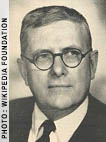
One of Australia’s leading intelligence historians has said that Herbert V. Evatt, who led the Australian Labour Party in the 1950s, operated as a secret agent for the Soviet Union. Dr Desmond Ball, professor at the Australian National University’s Strategic and Defence Studies Centre, made the claim following last week’s release in London of previously classified documents relating to Australian intelligence. The documents, which came from the archives of MI5, Britain’s domestic intelligence agency, reveal that Australian Prime Minister Robert Menzies was convinced that Evatt was a Soviet agent. His fear appears to have culminated two days before the national election of November 22, 1958, when he privately expressed the fear that Evatt would destroy Australian counterintelligence documents on the Soviet Union if the Labour Party was elected to power. With this in mind, he ordered the Australian Security Intelligence Organization (ASIO) to share top-secret documents on the Soviet Union with London and Washington. Following Menzies’ directive, the ASIO provided Britain’s MI5 and MI6, as well as America’s CIA with two sets each of a number of intelligence reports acquired through KGB defector Vladimir Petrov. Read more of this post

News you may have missed #493 (MI6 edition)

  • MI6 scientist’s death questioned by close friend. A close friend of MI6 worker Gareth Williams, whose body was found in a locked bag in a London apartment, has questioned suggestions that his death was linked to his private sex life.
  • Who killed MI6 agent Lionel Crabb? A relative of MI6 agent Lionel Crabb wants to know who killed him. Crabb is thought to have disappeared in a 1956 botched CIA/MI6 attempt to sabotage a Soviet warship docked at Portsmouth harbor. In 2007, Eduard Koltsov, a retired Russian military diver, said he killed a man he thinks was Crabb, as he was “trying to place a mine” on the Soviet ship.
  • Analysis: Libya gives spies a chance to shine. British officers of the Secret Intelligence Service, better known as MI6, are actively operating in Libya. Among their tasks is encouraging senior Libyan officials to defect to the West.

News you may have missed #492 (history edition)

  • Holocaust spy’s memoir gets movie treatment. The extraordinary memoir of Jan Karski, a Polish resistance fighter who gave the first eyewitness report on the Holocaust to the Allies, is to be made into a film by the producer of The King’s Speech. In 1943, Karski escaped from Nazi-occupied Poland and went to London with a hidden microfilm, revealing the persecution of Europe’s Jews by the Third Reich.
  • British spy files shed light on Nazi saboteurs in the US. Declassified British intelligence files describe the activities of Nazi sabotage teams sent to the US in June 1942 to undermine the American war effort. A detailed new account of the German mission, code-named Pastorius, is provided in a report written in 1943 by MI5 intelligence officer Victor Rosthchild.
  • New information on Evdokia Petrova’s defection. New information has emerged on the 1954 defection to Australia of Evdokia Petrova, wife of Vladimir Petrov, who was the most senior Soviet intelligence official to have defected to the West until that time.

MI5 concealed report on Soviet penetration from CIA

Kim Philby

Kim Philby

By IAN ALLEN | intelNews.org |
British counterintelligence officials decided to conceal from their American counterparts a report detailing Soviet spy penetration of the UK, because it showed London’s permissive attitude towards intelligence infiltration. The secret report, entitled “Survey of Russian Espionage in the UK 1935-1955”, was authored by the D Branch of MI5, which was tasked with countering Soviet intelligence operations on British soil. It was declassified on Monday by Britain’s National Archives, 55 years after it was initially authored. The survey was apparently commissioned following the embarrassing defections of Guy Burgess and Donald Maclean, MI5 and MI6 officers respectively, who escaped to Moscow in 1951, after several years of spying for the Soviet Union. Its pages detail the cases of over 50 Soviet intelligence operatives and double agents who were believed at the time to be mostly at large in the UK or abroad. But senior MI5 officials decided to limit the report’s distribution, fearing that it revealed too many weaknesses in Britain’s counterintelligence posture. Instead, they decided to print only about 25 copies of the report, which were to be distributed strictly within MI5. Read more of this post

News you may have missed #485

  • Gaza engineer describes abduction my Mossad. Dirar Abu Sissi, who was abducted by Israeli spy agency Mossad from the Ukraine on February 19, has described details of his abduction in a report issued Monday by the Gaza-based Palestinian Center for Human Rights.
  • Gaddafi regime fed names of jihadists to the CIA and MI6. Diplomatic cables obtained by WikiLeaks paint eastern Libya as a fertile ground for radical extremism. One source told US officials in 2008 that for young men from Derna, a city east of Benghazi, “resistance against coalition forces in Iraq was an important act of ‘jihad’ and a last act of defiance against the Gaddafi regime”.
  • Investigators say secret CIA files could aid Chile. Chile’s truth commission has determined that 3,065 opponents of US-supported Chilean dictator Augusto Pinochet were killed in the 1970s. Most of these cases were investigated, and some 600 military figures and civilian collaborators have been put on trial. Now campaigners are trying to get the CIA to open its files on Pinochet.

News you may have missed #484

  • Analysis: CIA may face reduced role in Pakistan after murder row. People familiar with the views of the Pakistani government say that, as part of the deal for the freeing of CIA operative Raymond Davis, the CIA agreed to give Pakistan more credit for its role in counter-terrorism efforts in Afghanistan, to cut back on US spying in Pakistan and to keep Pakistani authorities better informed of CIA activities.
  • Lebanese Army dismantles Israeli spying device. The Lebanese Army has dismantled an Israeli electronic spy device after receiving a tip-off from members of Hezbollah, according to reports from south Lebanon. This is not the first such reported incident. More pictures of the device are posted here.
  • Exhibition commemorates Soviet spy legend. An exhibition, dedicated to the 100th birth anniversary of legendary Soviet intelligence agent Nikolai Kuznetsov has opened in the Russian city of Yekaterinburg. Kuznetsov uncovered German plans to launch a massive tank attack in Ukraine’s Kursk region, as well as an operation to assassinate Stalin, Roosevelt and Churchill in Tehran in 1943.