News you may have missed #744

Navi PillayBy IAN ALLEN | intelNews.org |
►►Source says Mikhailov ‘will not be exchanged’ with US. There are rumors going around that the US might consider exchanging Russian arms merchant Viktor Bout, who is serving a 25-year sentence in a New York prison, for one or more CIA spies currently being held in Russian prisons. Russian news agency RIA Novosti has cited a “high ranking official in the Russian security services”, who suggests that Bout “might be exchanged”, but not with Valery Mikhailov, a Russian former counterintelligence officer, who was sentenced this week to 18 years in prison for allegedly spying for the CIA.
►►CIA preparing to pull back from Iraq. The US Central Intelligence Agency is preparing to cut its presence in Iraq to less than half of wartime levels, according to The Wall Street Journal, which cites “US officials familiar with the planning”. Under the plans being considered, says the paper, the CIA’s presence in Iraq would be reduced to 40% of wartime levels, when Baghdad was the largest CIA station in the world with more than 700 agency personnel. Interestingly, the plan would also reduce the US intelligence presence in the region as neighboring Syria appears to be verging on civil war.
►►Senior UN official blasts US drone strikes. The United Nations High Commissioner for Human Rights, Navi Pillay, has said US drone attacks in Pakistan “raise serious questions about compliance with international law, in particular the principle of distinction and proportionality”. She also voiced concerns that the strikes were being conducted “beyond effective and transparent mechanisms of civilian or military control”. IntelNews provided this opinion on the matter, in 2009.

Russian colonel was ‘most successful CIA spy’ in recent years

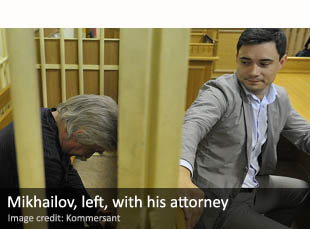
Valery Mikhailov, left, with his attorneyBy JOSEPH FITSANAKIS | intelNews.org |
Before the dust could settle from last month’s closed-door trial of Vladimir Lazar, and the arrest of an unnamed missile engineer on charges of espionage, Russia claims to have exposed yet another spy. Valery Mikhailov, a retired Russian counterintelligence officer, has been given an 18-year prison sentence for allegedly spying on behalf of the United States Central Intelligence Agency. In disclosing Mikhailov’s sentence yesterday, Moscow District Military Court officials were deliberately vague about Mikhailov’s alleged espionage activities, and provided limited information on the precise charges against him. But reporters, who were not allowed to attend Mikhailov’s trial, were told that he voluntarily approached CIA officers in Russia in 2001 and offered to spy on his country on behalf of the US, in exchange for regular payments in cash. Russian government prosecutors said that, from 2001 until 2007, when his activities were detected by Russia’s Federal Security Service (FSB), Mikhailov gave his American handlers access to over a thousand copies of secret or top-secret documents. Most of these, according to reports in the Russian media, had been prepared by FSB analysts for top-level Russian government officials, including the President, Prime Minister, and members of the Security Council of the Russian Federation. Russian government prosecutors say that Mikhailov was arrested following an extensive period of surveillance by the FSB, which allegedly resulted in the capture of an American CIA courier. The latter was apprehended while surreptitiously collecting classified documents copied by Mikhailov. Following his arrest, Mikhailov is said to have admitted that he earned over $2 million from his espionage activities. Read more of this post


Is US considering transferring convicted arms smuggler to Russia?

Viktor BoutBy JOSEPH FITSANAKIS | intelNews.org |
Former Soviet military intelligence officer Viktor Bout is one of the world’s most notorious weapons dealers. In 2008, Bout, known informally as ‘the merchant of death’, was finally arrested in Bangkok by the United States Drug Enforcement Administration, with the cooperation of the Royal Thai Police. He was eventually extradited to the US and convicted to a 25-year prison term, which he is serving at the Brooklyn Metropolitan Detention Center in New York. Last week, it emerged that the US Bureau of Prisons was about to transfer Bout to the Florence Federal Correctional Facility in Colorado. Widely referred to as ‘Supermax’, the Florence facility houses some of America’s most notorious prison inmates. It seems a proper fit for someone like Bout, who for decades supplied weapons to African warlords, who is accused by the United States of having supplied weapons to the Taliban, and who was arrested while trying to sell arms to the Revolutionary Armed Forces of Colombia (FARC). On Tuesday, however, it was suddenly reported that the Bureau had decided to delay Bout’s transfer to Supermax. Bout’s attorney, Albert Y. Dayan, said he had been notified in a letter that the Bureau was “re-evaluating where to send Bout” and that it was “reconsidering its plan” to send the notorious weapons merchant to the Colorado maximum security facility. As might be expected, Dayan called the news “a credit [to] the Bureau of Prisons and the US Attorney’s office”; but the question, of course, is why did the Bureau decide on the delay, and what does the US Department of Justice know about it? The answer could perhaps be found in an interview given on Wednesday by no other than the US Attorney General, Eric Holder. Read more of this post

US denies arms dealer’s release is part of swap deal with Iran

Amir Mirzaei HekmatiBy JOSEPH FITSANAKIS| intelNews.org |
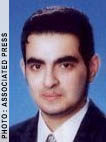
The United States government has denied that the quiet release and deportation of an Iranian arms dealer is part of a secret deal to swap imprisoned agents with Iran. A US State Department spokesman confirmed on Tuesday that Iranian citizen and convicted arms smuggler Amir Hossein Ardebili had been released from US custody and was on his way back to Iran. Ardebili was captured and abducted by US government operatives in the Republic of Georgia in 2007, during a controversial sting operation. His abduction was the culmination of a three-year-long sting operation, during which he allegedly tried to arrange a clandestine shipment of sensitive military technology from the US to Iran. He was eventually extradited to the US in 2008, and sentenced the following year to five years in prison, for operating as an “arms acquisitions agent for the government of Iran”. Last month, however, he was discretely released from prison in Minnesota and handed over to US Immigration and Customs Enforcement for deportation. US State Department spokesman Noel Clay said that Ardebili was on his way to Tehran via Europe, because he had “completed serving his criminal sentence and has no legal immigration status in this country”. The spokesman also pointed out that Ardebili’s five-year prison sentence was meant to include the nearly two years he spent in Georgian and US detention, prior to his 2009 trial. But some observers, including Laura Rozen at Yahoo News, speculate that there might be a connection between Ardebili’s deportation and the reversal earlier this month of a death sentence imposed by a Tehran court on a former US marine captured in Iran on spy charges. Tehran recently announced that Amir Mirzaei Hekmati (pictured), from Arizona, who was captured in Iran while allegedly on a CIA mission, is to have his death sentence voided, and will face a retrial. Read more of this post

News you may have missed #617

Ilan Grapel

Ilan Grapel

►►Analysis: Is the CIA Still an Intelligence Agency? Early September 2011, a former intelligence official commented to The Washington Post that, “The CIA has become one hell of a killing machine”. He then attempted to retract, but his words were on record. But is that really what it should be: a hell of a killing machine?
►►US National Security Agency helps Wall Street battle hackers. The National Security Agency, a secretive arm of the US military, has begun providing Wall Street banks with intelligence on foreign hackers, a sign of growing US fears of financial sabotage. While government and private sector security sources are reluctant to discuss specific lines of investigations, they paint worst-case scenarios of hackers ensconcing themselves inside a bank’s network to disable trading systems for stocks, bonds and currencies, trigger flash crashes, initiate large transfers of funds or turn off all ATM machines.
►►Israel okays deal with Egypt to free alleged spy. Israel’s security cabinet unanimously approved an agreement Tuesday for the release of Israeli-American law student Ilan Grapel (pictured), who has been in jail in Egypt since June 12 on spying allegations that were later reduced to incitement. In exchange, Israel will release 22 Egyptian prisoners, most of them Bedouin from the Sinai jailed for smuggling drugs or weapons.

News you may have missed #609

Ilan Grapel

Ilan Grapel

►►Questions over Chinese spy hang over Putin visit. The arrest of a Chinese spy in Moscow has cast a cloud over Vladimir Putin’s two-day visit to Beijing. Tong Shengyong was arrested last October for allegedly trying to buy plans to the Russian S-300 anti-aircraft missile system. But perplexingly, the news of his arrest only emerged last week, in what appears to have been a deliberate leak by Russia’s Federal Security Service (FSB).
►►Egypt steps up charges against suspected Israel spy. Egypt’s State Security Prosecutor has added additional criminal offenses against alleged Israeli spy Ilan Grapel. Meanwhile, there are indications that Egypt seeks the release of 78 Egyptian prisoners held in Israeli jails in return for Grapel. Israel may agree with the proposal.
►►CIA to be last out of Afghanistan. US Special Forces and the CIA are girding for the moment when Afghanistan’s security rests once again with them, working together with Afghan forces against the Taliban. Recent remarks from the White House suggest the CIA and special operations forces will be hunting al-Qaida and working with local forces long after most US troops have left.

News you may have missed #560 (new books edition)

Khalil al-Balawi

Khalil al-Balawi

►►New book on CIA’s Khost bomb disaster. Washington Post reporter Joby Warrick has authored a new book, examining the December 31, 2009, killing of seven CIA operatives by Jordanian doctor Humam Khalil al-Balawi in Khost, Afghanistan. In the book, entitled The Triple Agent, Warrick quotes several “anonymous” sources from within CIA and Jordan’s General Intelligence Department (GID), which was involved in running al-Balawi. Aside from blaming GID, Warrick says the CIA’s Amman station chief was partly responsible for the botched operation.
►►Hollywood producer was Mossad spy, says new book. The book Confidential: The Life of Secret Agent Turned Hollywood Tycoon Arnon Milchan, says that Milchan was a full-fledged operative for Israel’s now-defunct intelligence agency, Lakam. The agency, which was also known as Israel’s Bureau of Scientific Relations, collected scientific and technical intelligence abroad. It was disbanded in 1986 following the arrest of US Navy analyst Jonathan Pollard for engaging in espionage on behalf of Israel. The book’s authors, Meir Doron and Joseph Gelman, argue that Milchan, who produced such movies as Love and Other Drugs and Knight and Day, worked for Israeli intelligence by supervising government-backed accounts and front companies that financed “the special needs of the entirety of Israel’s intelligence operations outside the country”.
►►Book alleges US-Russian spy swap deal. In 2010 the CIA considered a swap deal that would have delivered to Moscow two Americans currently imprisoned in the US for spying for Russia. This information is included Read more of this post

News you may have missed #521 (Israel edition)

  • Lebanese officer gets 20 years for spying for Israel. Mansour Diab’s sentence marks the first time a Lebanese officer was convicted of spying for Israel. Meanwhile, Lebanon’s militant Shiite group Hezbollah has arrested several of its own members on suspicion of spying for Israel. Last weekend the Kuwaiti daily Al-Rai al-Aam reported that the group “was dumbfounded over the Israeli infiltration”, which appears to have been substantial.
  • Israel pressures US to temporarily release jailed spy. Several Israeli leaders on Sunday urged the United States to allow jailed Jewish-American spy Jonathan Pollard to attend his father’s funeral, after he was not granted permission to join him at his bedside before he died.
  • Israel seeks prisoner exchange for Ilan Grapel. Israel is pursuing a prisoner exchange for Ilan Grapel, a 27-year-old American-Israeli dual citizen, who was arrested by Egyptian state security officers at his downtown Cairo hotel last Sunday on charges of spying for Israeli intelligence. Meanwhile, both the US and Israel insist Grapel is no spy.

News you may have missed #489

  • Russian spies want their stuff back from the FBI. Two of the ten Russians deported from the United States in a spy row last July have demanded that some of the property they were forced to leave behind be returned to them. The claim was lodged on behalf of Vladimir and Lidia Guryev, better known as Richard and Cynthia Murphy.
  • Kuwait sentences three to death for espionage. Two Iranians and a Kuwaiti national, all serving in Kuwait’s army, were condemned to death yesterday for belonging to an Iranian spy ring, which allegedly passed on information to the Iran’s Islamic Revolutionary Guards. A Syrian and a stateless Arab, who are also members of the alleged spy ring, were handed life terms.
  • ‘Foreign spies’ hacked Australian leader’s computer. Chinese hackers seeking information on commercial secrets are suspected of having broken into a computer used by Julia Gillard, the Australian prime minister. Her computer was among 10 machines used by senior government ministers which were compromised by the hackers. According to one source, the Australians were tipped off to the hacking by the CIA and the FBI.

Russia may swap convicted spy for ‘merchant of death’ held in US

Viktor Bout

Viktor Bout

By JOSEPH FITSANAKIS | intelNews.org |
Moscow and Washington may swap a Russian former defense official, convicted for spying for the United States, with notorious Russian weapons dealer Viktor Bout, who is being held in a US prison. Andrei Klychev, 49, who worked at Rosatom Russia’s Nuclear Energy State Corporation, was arrested last year on espionage charges. Last week, he was given an 18-year sentence in a closed-door trial, for spying on behalf of the United States. But Russia’s Interfax news agency reported on Wednesday that Russia is actively considering swapping Klychev with Viktor Bout, history’s most notorious weapons smuggler, whose shady activities inspired the 2005 motion picture Lord of War. Bout, who was born in 1967 in Dushanbe, Soviet Tajikistan, served in the GRU (Soviet military intelligence) until the dissolution of the USSR, at which point he began supplying weapons to groups ranging from Congolese rebels and Angolan paramilitaries to the Taliban and al-Qaeda. In March of 2008, Bout was arrested by the Royal Thai Police, after a tip by US Drug Enforcement Administration (DEA) officers. The latter had managed to lure Bout to Thailand by pretending to be Colombian FARC arms procurers. Read more of this post

News you may have missed #460

News you may have missed #451 (history edition)

News you may have missed #418

  • US military pays for intel widely available online. Experts say that the vast majority of the ‘intelligence’ needed by the United States is freely available on the Internet. But that has not stopped a company called Military Periscope from selling its subscription services to the US government, on things such as updates on foreign militaries, peacekeeping missions, weapons databases and terrorist organizations “via monthly CD-ROM delivery”.
  • Son of Russian spies could return to US for school. Tim Foley, the elder son of Donald Howard Heathfield and Tracey Lee Ann Foley, the two deported US residents who were living a double life as Russian spies, may be trying to return to study in the United States, but his younger brother plans to stay in Moscow.
  • German spy chief notes cyberattack surge. Cyberattacks against German corporate and government computers have been on the rise since 2005, according to Heinz Fromm, Director of Germany’s Federal Office for the Protection of the Constitution. He said the attacks “come mainly from Asia, often from China”, and that often “state agencies are involved”.

News you may have missed #415

  • GCHQ tech arm adopts new personnel evaluation tests. The Communications Electronics Security Group is the information assurance arm of the General Communications Headquarters –Britain’s equivalent of the National Security Agency. CESG has now adopted a new testing method of verifying the competency of its IT security professionals, because apparently there are “not enough security professionals in the public and private sectors to go around”.
  • Swapped Russian insists he was no CIA spy. Of the four jailed Russians the US received from Moscow in exchange for the 11 Russian illegals in July, only one is talking. But Igor Sutyagin, a nuclear proliferation expert, who was convicted of links with a CIA front-company, insists he was no CIA spy. However, if that is so, why was he on Washington’s swap list in the first place?
  • Militants target Yemen spy officials. Two officers in Yemen’s Political Security Organization, Colonel Ali Abdul Kareem al-Ban, and Juman Safian, have been shot dead in recent days. Al-Qaeda militants, who assumed responsibility for the attacks, warned they will be stepping up operations inside neighboring Saudi Arabia.

Bookmark and Share

Russian alleged CIA spy gives interview

Igor Sutyagin

Igor Sutyagin

By IAN ALLEN | intelNews.org |
Of the four Russians alleged spies that the US and the UK received from Moscow in exchange for the 11 Russian illegals in July, only one is talking to the media. The Russian government convicted Igor Sutyagin, a nuclear proliferation expert, of having links with Alternative Futures, a British consulting company alleged by Moscow to be a CIA front. This past weekend, Sutyagin, who now lives in an undisclosed London location, gave a detailed interview to Natalya Golitsyna, a London-based correspondent for US government-owned Radio Liberty’s. As in his previous statements to the press, the Russian scientist rejected he was ever a spy, claiming that “[t]he first thing in my mind […] was doing and thinking for my country”. He also rejected accusations that he provided Alternative Futures with classified information on Russian nuclear weapons policy: “there was no transfer of information”, said Sutyagin, noting that the information he shared with the British-registered company “was just an illustration of the processes that are going on in Russia tasks”. Read more of this post