News you may have missed #704: Caught-red-handed edition

Zbigniew SiemiątkowskiBy IAN ALLEN | intelNews.org |
►►Would be CIA spy uses Tweeter to attack CIA. Lynnae Williams was on track to become a CIA agent. Today, the 35-year-old aspiring journalist and would-be CIA spy uses Twitter to expose what she feels are corrupt and unethical practices by the mysterious organization. In 2009, Williams spent more than three months training to become a CIA spy. She says she was sent to the CIA’s “psychological prison”, a public mental-health hospital in Virginia. There, she says, doctors pushed drugs for schizophrenia and manic depression in a white-walled environment with inedible food. Eventually, the CIA stopped paying her and suspended her security clearance. She’s now looking to sue the agency for wrongful termination. And in the meantime, she’s using BlogSpot and her @wlynnae account to post tweets.
►►US ambassador says Russia is spying on him. US Ambassador to Russia Michael McFaul suggested yesterday that the Russian government is spying on him. “Everywhere I go [Russian television station] NTV is there”, he tweeted. “Wonder who gives them my calendar? They wouldn’t tell me. Wonder what the laws are here for such things? I respect [the] press’ right to go anywhere and ask any question. But do they have a right to read my email and listen to my phone?”. McFaul also posted on his Twitter feed yesterday: “When I asked these ‘reporters’ how they knew my schedule, I got no answer”.
►►Poland ex-spy boss charged over CIA prison. Zbigniew Siemiątkowski, the former head of Poland’s foreign intelligence service faces charges of illegal detention and use of corporal punishment at an alleged secret CIA ‘black site’ used to house high-ranking terrorism suspects. Investigators allege the spy boss exceeded his powers and breached international law through the use of “unlawful deprivation of liberty” and “corporal punishment” against prisoners of war.

News you may have missed #703: US edition

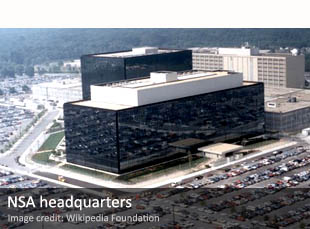
NSA headquartersBy IAN ALLEN | intelNews.org |
►►NSA pressed to reveal details on Google deal. The Electronic Privacy Information Center is locking horns with the National Security Agency over a secret deal the agency cut with Google following an attack on Gmail by Chinese hackers in 2010. The information center has filed a Freedom of Information Act request with the NSA to obtain information about the deal. That request was rejected by a federal court and an appeal process continues.
►►US spy agencies can keep data on Americans longer. Until now, the US National Counterterrorism Center had to immediately destroy information about Americans that was already stored in other government databases when there were no clear ties to terrorism. But it will now be able to store information about Americans with no ties to terrorism for up to five years under new Obama administration guidelines. The new rules replace guidelines issued in 2008 and have privacy advocates concerned about the potential for data-mining information on innocent Americans.
►►Islam convert leads CIA’s Counterterrorism Center. Roger, which is the first name of his cover identity, has been chief of the CIA’s Counterterrorism Center for the past six years. Colleagues describe Roger as a collection of contradictions. A chain-smoker who spends countless hours on a treadmill. Notoriously surly yet able to win over enough support from subordinates and bosses to hold on to his job. He presides over a campaign that has killed thousands of Islamist militants and angered millions of Muslims, but he is himself a convert to Islam. His defenders don’t even try to make him sound likable. Instead, they emphasize his operational talents, encyclopedic understanding of the enemy and tireless work ethic.

News you may have missed #698

Cecilia LooströmBy IAN ALLEN | intelNews.org |
►►Swedish official sent top-secret intel briefing via Hotmail. A high-ranking official at Sweden’s Ministry of Defense sent notes on highly confidential arms trade negotiations with a Saudi Arabian official through a Hotmail email address. The four-page-long email, which details a secret conversation with a Saudi General, was sent in 2008 from assistant Under-Secretary for Defense Cecilia Looström, according to a Swedish newspaper.
►►Russian diplomat won’t deny espionage activity in Canada. Russia’s ambassador to Canada, Georgiy Mamedov, has refused to deny that his country carries out spy activity in Canada. He told a Canadian television reporter that “I am neither denying nor confirming [Russian espionage in Canada]. I would be a fool […] if I would confirm that we are doing as much”. He said Russia conducts intelligence activities in other countries —although he didn’t specify which— but refused to give any details on what activities, if any, are conducted within Canada.
►►New Taiwan spy case raises concerns. A Taiwanese air force captain surnamed Chiang is believed to have passed intelligence to China. Reportedly, Chiang’s uncle, who operates a business in China, helped pass on the information allegedly obtained by Chiang, which is said to have included classified material on Taiwan’s early-warning radar system as well as E-2T/E-2K Hawkeye surveillance aircraft. The case has rocked the Taiwanese military, as it comes a little more than a year after a high-profile spy for China was caught and is now serving a life sentence.

Spies seen behind fake Facebook profile of senior NATO commander

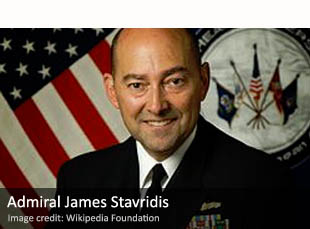
James G. StavridisBy JOSEPH FITSANAKIS| intelNews.org |
A Facebook account bearing the name of a senior commander of the North Atlantic Treaty Organization was set up by Chinese spies to siphon information from unsuspecting Western military officials, according to a British newspaper. The London-based Daily Telegraph said in an article that the fake Facebook account was discovered a year ago by NATO counterintelligence officers. It bore the name of United States Admiral James Stavridis, who serves as Supreme Allied Commander in Europe and currently leads the Organization’s mission in Libya. The account was reportedly used to befriend Western military officials, primarily in Britain and other European countries, probably in an attempt to collect personal information found on their personal pages on the popular social networking site. This sort of practice is known as ‘spear phishing’, and consists of messages sent to carefully targeted individuals, seemingly sent from a trusted source. The operation involving Admiral Stavridis appears to have been purposely targeted at high-ranking Western officials, a technique sometimes known as ‘whaling’. The London-based daily says NATO officials have been “reluctant to say publicly who was behind the attack”. But the paper claims it has been told that declassified briefings from NATO point to a series of Internet protocol addresses belonging to Chinese government facilities. Organization officials insist —correctly— that the individuals or government agencies behind the operation to falsify Stavridis’ social networking identity are unlikely to have acquired any actual military secrets. However, the information collected from Western military officials befriended online by Admiral Stavridis’ fake Facebook account could aid the compilation of personal and psychological profiles of these officials produced by foreign intelligence agencies. Read more of this post

Research: Spies increasingly using Facebook, Twitter to gather data

Spying on social networkingBy JOSEPH FITSANAKIS | intelNews.org |
During the past four years, this blog has reported several incidents pointing to the increasing frequency with which spy agencies of various countries are utilizing social networking media as sources of tactical intelligence. But are we at a point where we can speak of a trend? In other words, is the rapid rise of social networking creating the conditions for the emergence of a new domain in tactical intelligence collection? This past week saw the publication of a new research paper (.pdf), which I co-authored with Micah-Sage Bolden, entitled “Social Networking as a Paradigm Shift in Tactical Intelligence Collection”. In it, we argue that recent case studies point to social networking as the new cutting edge in open-source tactical intelligence collection. We explain that Facebook, Twitter, YouTube, and a host of other social networking platforms are increasingly viewed by intelligence agencies as invaluable channels of information acquisition. We base our findings on three recent case studies, which we believe highlight the intelligence function of social networking. The first case study comes out of the Arab Spring, which, according to one report, “prompted the US government to begin developing guidelines for culling intelligence from social media networks”. We also examine NATO’s operations during the 2011 Libyan civil war (Operation UNIFIED PROTECTOR), when Western military forces systematically resorted to social networking media to gather actionable intelligence, by utilizing open sources like Twitter to pinpoint targets for attack. Finally, we examine the sabotage by Israeli security services of the 2011 “Welcome to Palestine Air Flotilla” initiative, a campaign organized by several European groups aiming to draw worldwide attention to the travel restrictions imposed by Israeli authorities on the Occupied Territories. Read more of this post

US Pentagon computers cannot be protected, says NSA head

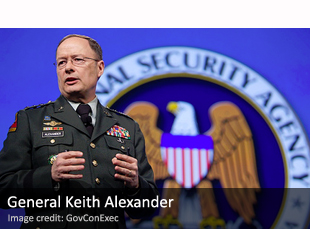
General Keith AlexanderBy JOSEPH FITSANAKIS | intelNews.org |
The man in charge of America’s most powerful intelligence agency says the United States Department of Defense computer network is so disordered and chaotic that it cannot be defended from cyberattacks. General Keith Alexander directs the National Security Agency, America’s wealthiest intelligence institution, which expert James Bamford has described as “the world’s most powerful spy agency”. As America’s foremost signals intelligence agency, the NSA is largely responsible for protecting the integrity, security and cohesion of the country’s public and restricted military communications networks, including computer networks. To do so, it consumes an annual budget that dwarfs those of most other intelligence agencies, and employs entire armies of computer security experts and other professionals. But, according to General Alexander, who also heads the US Pentagon’s new Cyber Command, there is not much his army of cyberwarriors can do to either prevent or repel possible large-scale cyberattacks directed against the DoD’s computer networks. The NSA chief was speaking yesterday at the International Conference on Cyber Security, a high-profile gathering of experts at New York’s Fordham University. He told the conference, which is sponsored by the Federal Bureau of Investigation, that the Pentagon’s computer infrastructure is too anarchic and chaotic to be successfully defended from cyberespionage, cyberterrorism, or cyberwarfare assaults. He said the DoD computer system consists of so many interconnected networks —over 15,000 in all— that the NSA “can’t see them all [let alone] defend them all”. As a result, said Alexander, the DoD’s current communications infrastructure “is indefensible”. Read more of this post

News you may have missed #657

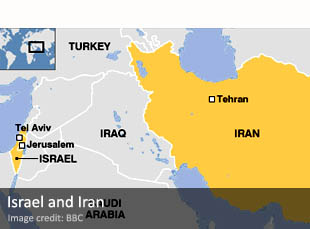
Israel and IranBy IAN ALLEN | intelNews.org |
►►Israeli company exported Internet-monitoring hardware to Iran. Israel bans all trade with its enemy, Iran. It turns out, however, that Israeli Internet-monitoring equipment has been finding its way to Iran for years, through Denmark. An Israeli company shipped the equipment to Denmark, where workers stripped away the packaging and removed the labels, before forwarding it to Iran. Now Israeli trade, customs and defense officials say they “did not know” that the systems were ending up in Iran.
►►Court decision revives NSA lawsuits. The 9th US Circuit Court of Appeals has ruled that the case of Jewel v NSA, which claims that after the 2001 terrorist attacks the NSA began large-scale monitoring of digital traffic, with the assistance of AT&T and others, can proceed. At the same time, the court denied leave to continue on a linked case against AT&T, for aiding and abetting the surveillance. The court upheld the 2008 Foreign Intelligence Surveillance Act (FISA) revision, voted for by the current president, which grants the telecommunications companies retroactive immunity from any actions carried out during the period.
►►Czechs charged with espionage in Zambia sent home. Three Czech citizens, who were detained in Zambia on October 12, 2011, and charged with espionage, have returned home, the Czech Foreign Ministry said Sunday. A ministry spokesman declined to give any details on the return of the three Czechs, who were arrested after they were found taking pictures near military sites.

News you may have missed #628 (analysis edition)

Michael Scheuer

Michael Scheuer

►►Should intelligence agencies chase tax evaders? Three years ago, Germany’s foreign intelligence service, the BND, paid a whistleblower close to $7 million for DVDs containing information on thousands of secret accounts at a leading Liechtenstein bank. The discs contained data on 4,527 Liechtenstein foundations and financial entities, 1,400 of which were owned by Germans. But should a spy agency like the BND take part in the unglamorous and politically charged business of collecting information on tax cheats?
►►UK ex-spy chief says Google makes spies work harder. The rise of the web and Google means Britain’s spies have to work harder to produce genuinely secret intelligence, according to Sir David Pepper, the former director of GCHQ, Britain’s signals intelligence agency. He said “the Google effect” of so much information being readily available online had “very substantially” raised the “threshold for producing intelligence” for MI5, MI6 and GCHQ.
►►Ex-CIA official says America ‘creates its own enemies’. Americans are in the crosshairs of terrorists worldwide purely due to Washington’s policy in the Muslim world, according to former CIA officer Michael Scheuer, who spoke to Russia Today. Scheuer, author of Through Our Enemies’ Eyes, worked for the CIA for over 20 years and at one time was the chief of the agency’s ‘Bin Laden unit’.

Analysis: CIA Open Source Center monitors Facebook, Twitter, blogs

CIA HQ

CIA HQ

By JOSEPH FITSANAKIS | intelNews.org |
The Associated Press has been given unprecedented access to the United States Central Intelligence Agency’s Open Source Center, which is tasked with, among other things, monitoring social networking media. The Center, which was set up in response to the events of 9/11, employs several hundred multilingual analysts. Some are dispatched to US diplomatic missions abroad, but most work out of “an anonymous industrial park” in the US state of Virginia, which the Associated Press agreed not to disclose. The analysts, who are jokingly known in CIA OSINT (open-source intelligence) parlance as “ninja librarians”, engage in constant mining of publicly available information. The latter ranges from articles found in scholarly journals, to civilian television and radio station programs, as well as information available on the Internet. According to the Associated Press report, the Center began paying particular attention to social networking websites in 2009, when Facebook and Twitter emerged as primary organizing instruments in Iran’s so-called “Green Revolution”. The term describes the actions that Iranians opposed to President Mahmoud Ahmadinejad took to protest the disputed election results that kept him in power. Since that time, the CIA’s Open Source Center has acquired the ability to monitor up to five million tweets a day, and produces daily snapshots of global opinion assembled from tweets, Facebook updates and blog posts. Its executive briefings reportedly find their way to President Barack Obama’s Daily Brief on a regular basis. The Associated Press was given access to the Center’s main facility, and interviewed several of its senior staff members, including its Director, Doug Naquin. He told the news agency that the CIA Open Source Center had “predicted that social media in places like Egypt could be a game-changer and a threat to the regime”, but had been unable to foresee the precise development of Internet-based social activism in the Arab world. Read more of this post

News you may have missed #616

CSIS seal

CSIS seal

►►S. Koreans say several N. Korean assassination bids stopped. South Korea has arrested several North Korean agents for plotting to assassinate anti-Pyongyang activists, according to Won Sei-Hoon, head of South Korea’s National Intelligence Service, who spoke to the parliament’s intelligence committee. Earlier this month, Seoul prosecutors charged a North Korean agent with trying to murder Park Sang-Hak, an outspoken activist in Seoul, with a poison-tipped weapon.
►►MI5 inspectors’ website shut down after security blunder. A new website for the former High Court judges responsible for oversight of MI5, MI6 and wiretapping has been shut down after it emerged that anyone could edit any page of it. The security blunder forced the Intelligence Services Commissioner, Sir Mark Waller, and the Interception of Communications Commissioner, Sir Paul Kennedy, to pull the plug on their new website.
►►Report urges Canadian spies to share more info with diplomats. Canada’s spy agency needs to share more information with the Department of Foreign Affairs so the department is better prepared for negative reactions to Canadian intelligence work overseas, according to a new report by Canada’s Security Intelligence Review Committee. The Committee, which reports to Parliament on the work of the Canadian Security Intelligence Service, found the organization had “limited exchanges” with Canada’s diplomats on its operations.

News you may have missed #585 [updated]

GCHQ

GCHQ

►►GCHQ recovers £300m worth of stolen information. Details stolen from more than a million credit cards across Europe, worth an estimated £300 million, have been recovered by Britain’s GCHQ signals intelligence spy agency, according to The Daily Telegraph.
►►Kuwait arrests alleged Iraqi spy. Kuwait security forces have arrested a man of Iraqi origin for alleged intelligence links with Iraq, a Kuwaiti daily said on Sunday. The man, who was arrested on Friday, and is referred to by the media as “Abu Ahmad”, was staying illegally in the country and allegedly provided Iraq with sensitive information about vital facilities in Kuwait. This is the third time in recent months that the government of Kuwait has pressed espionage charges against a spy suspect. [Update: Kuwait denies reports of spy’s arrest]
►►Hackers steal CIA and Mossad SSL certificates. The tally of digital certificates stolen from a Dutch company in July has exploded to more than 500, including ones for intelligence services like the CIA, the UK’s MI6, and Israel’s Mossad, a Mozilla developer said Sunday. According to some sources, the hackers were Iranian.

News you may have missed #544

Google

Google

By IAN ALLEN | intelNews.org |
►►Russia a ‘leading suspect’ in cyberespionage attack on US. I wrote on Monday about the cyberespionage operation that targeted a leading US defense contractor last March, and resulted in the loss of tens of thousands of classified documents. US Deputy Defense Secretary William J. Lynn III, who disclosed the operation, said only that it was conducted by “a foreign intelligence service”. According to the last sentence of this NBC report, US officials see Russian intelligence as “one of the leading suspects” in the attack. ►►Al-Qaeda acquires Pakistani spy service manuals. Jamestown Foundation researcher Abdul Hameed Bakier reports that al-Qaeda operatives have managed to get access to espionage training manuals used by Pakistan’s Inter-Services Intelligence directorate (ISI). Copies of the documents have apparently been posted on Internet forums that are sympathetic to al-Qaeda, and bear the mark of the As-Sahab Foundation, al-Qaeda’s media wing. ►►Google-NSA collaboration documents to remain secret —for now. Even before Google shut down its operations in China, following a massive cyberattack against its servers in early 2010, the company has maintained close contact with American intelligence agencies. But after the 2010 cyberattack, some believe that Google’s relationship with the US intelligence community has become too cozy. In February of 2010, the ACLU said it was concerned about Google’s contacts with the US National Security Agency (NSA). Other groups, including the Electronic Privacy Information Center (EPIC), have filed Freedom of Information Act (FOIA) requests seeking access to the inner workings of Google’s relationship with NSA. Read more of this post

News you may have missed #495

News you may have missed #489

  • Russian spies want their stuff back from the FBI. Two of the ten Russians deported from the United States in a spy row last July have demanded that some of the property they were forced to leave behind be returned to them. The claim was lodged on behalf of Vladimir and Lidia Guryev, better known as Richard and Cynthia Murphy.
  • Kuwait sentences three to death for espionage. Two Iranians and a Kuwaiti national, all serving in Kuwait’s army, were condemned to death yesterday for belonging to an Iranian spy ring, which allegedly passed on information to the Iran’s Islamic Revolutionary Guards. A Syrian and a stateless Arab, who are also members of the alleged spy ring, were handed life terms.
  • ‘Foreign spies’ hacked Australian leader’s computer. Chinese hackers seeking information on commercial secrets are suspected of having broken into a computer used by Julia Gillard, the Australian prime minister. Her computer was among 10 machines used by senior government ministers which were compromised by the hackers. According to one source, the Australians were tipped off to the hacking by the CIA and the FBI.

News you may have missed #481

  • Who brought down the CIA website last Thursday? US Federal officials as of Monday afternoon were still investigating the cause of a Thursday cyber incident that knocked offline the public website of the CIA and its unclassified e-mail system. The interference was isolated to CIA networks. Some cyber experts say the disruption may have been caused by a denial of service attack perpetrated by pranksters to show off their skills, rather than an act committed by a foreign government.
  • Israeli cabinet minister to visit jailed spy in US. Israel’s Communications Minister Moshe Kahlon is to make a visit next week to see Jonathan Pollard, an American serving a life term in a US jail for spying on the US for Israel. Israeli media claim that Kahlon will give Pollard a “verbal message” from Israel’s Prime Minister Benjamin Netanyahu.
  • Egypt’s spies dragged from shadows. New evidence of spying and torture by Egypt’s General Intelligence Services (GIS) has piled pressure on the country’s military rulers to abolish the agency. After breaking into the GIS Cairo headquarters and ransacking archives, activists posted videos showing a torture chamber with a bloodstained floor and equipped with chains.