News you may have missed #609

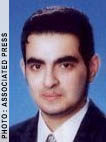
Ilan Grapel

Ilan Grapel

►►Questions over Chinese spy hang over Putin visit. The arrest of a Chinese spy in Moscow has cast a cloud over Vladimir Putin’s two-day visit to Beijing. Tong Shengyong was arrested last October for allegedly trying to buy plans to the Russian S-300 anti-aircraft missile system. But perplexingly, the news of his arrest only emerged last week, in what appears to have been a deliberate leak by Russia’s Federal Security Service (FSB).
►►Egypt steps up charges against suspected Israel spy. Egypt’s State Security Prosecutor has added additional criminal offenses against alleged Israeli spy Ilan Grapel. Meanwhile, there are indications that Egypt seeks the release of 78 Egyptian prisoners held in Israeli jails in return for Grapel. Israel may agree with the proposal.
►►CIA to be last out of Afghanistan. US Special Forces and the CIA are girding for the moment when Afghanistan’s security rests once again with them, working together with Afghan forces against the Taliban. Recent remarks from the White House suggest the CIA and special operations forces will be hunting al-Qaida and working with local forces long after most US troops have left.


News you may have missed #607

Shakil Afridi

Shakil Afridi

►►Ex-worker sues US spy agency for anti-Islamic bias. Mahmoud Hegab, a former employee of the super-secretive US National Geospatial-Intelligence Agency, says he lost his security clearance because his wife attended an Islamic school and worked for a Muslim charity, Alexandria-based Islamic Relief USA.
►►Russia says China still spies the old-fashioned way. Russia’s Federal Security Service (FSB), issued a rare statement last week, claiming it had arrested Tong Shengyong, a Chinese citizen who, posing as a translator for official delegations, was working under the direction of the Chinese government in an attempt to buy state secrets from Russians about Russia’s S-300 missile system. It now says that the Tong case shows that China continues to employ an old standby in the tradecraft playbook: outright bribery.
►►Pakistan panel says doctor who aided CIA should face charges. Pakistani doctor Shakil Afridi, who ran a vaccination program for the CIA to help track down Osama bin Laden, should be put on trial for high treason, a Paksitani government commission said Thursday.

Russia reveals arrest of Chinese national on spy charges

FSB officer

FSB officer

By JOSEPH FITSANAKIS | intelNews.org |
Russian counterintelligence officials have revealed the arrest of an alleged Chinese intelligence operative, who has reportedly been imprisoned in Moscow for nearly a year and is awaiting trial on espionage charges. Russia’s FSB domestic intelligence agency said on Wednesday that it arrested Chinese national Tong Shengyong on October 28 last year. In a press statement, the FSB said that Tong’s professional cover was that of an “interpreter for official delegations”, but that in reality he was operating in Russia on an assignment from China’s Ministry of Public Security. The Ministry is the principal police and security authority of the People’s Republic of China, and is considered one of the world’s largest intelligence organizations. The FSB claims that Tong allegedly used his high-level contacts in Moscow and elsewhere to routinely solicit Russian nationals, offering to purchase from them information relating to Russian missile systems. According to the FSB, Tong was particularly interested in the S-300 long-range surface-to-air missile system, which developed for the Soviet Air Defense Forces as protection against American aircraft and cruise missiles. The Soviet-era system has since been replaced by the more advanced S-400, but China, which has historically been Russia’s largest weapons procurer, is already in possession of several S-300s, which it purchased from Moscow in the 1990s. Beijing is therefore desperate to access classified manuals that would allow it to repair and modify S-300s currently in its possession, without giving in to Russia’s insistence to upgrade to the post-Soviet S-400. Moreover, during the past decade, China has begun developing its own missile system technology, which some say is loosely based on Russian blueprints. Read more of this post

News you may have missed #603

Syed Ghulam Nabi Fai

Syed Fai

►►Turkey has names of Israeli soldiers who attacked Gaza Flotilla. According to Turkish media, government officials succeeded in amassing the list of 174 names of officers and soldiers involved in the 2010 MV Mavi Marmara attack, by planting intelligence agents inside Israel. Turkish government officials have denied the reports.
►►Ex-MI5 chief to hear deportation case of alleged spy. A British judge has ruled that Sir Stephen Lander, former director of MI5, Britain’s domestic intelligence service, can help to decide whether Katia Zatuliveter should be deported from the UK for allegedly spying for Russia. Zatuliveter, a Russian citizen who worked as an assistant to former British Member of Parliament Mike Hancock, may be deported on the basis of espionage evidence gathered by MI5.
►►Analysis: Pakistan’s spy plot to influence Washington. Syed Ghulam Nabi Fai came to the US on Saudi money with hopes of helping people in the disputed Indian territory of Kashmir. But he found himself spending millions on behalf of Pakistan’s notorious Inter-Services Intelligence and, now, under arrest. An excellent article by The Atlantic‘s Kim Barker, Habiba Nosheen, and Raheel Khursheed.

News you may have missed #591

David Irvine

David Irvine

►►UK Prime Minister criticizes Russia over murdered spy. British Prime Minister David Cameron criticized Russia on Monday over its refusal to hand over Andrei Lugovoy, a former KGB agent suspected in the 2006 poisoning death of former Russian spy Alexander Litvinenko in London. He also rejected a call from Russia for the restoration of links between the two countries’ intelligence agencies. But the two sides did “set aside their political differences […] to sign multi-million dollar business deals”. Oh, well.
►►Aussie spy agency investigating more terror threats than ever. The Australian Security Intelligence Organization has trebled in size over the past decade and now has unprecedented powers. In a rare interview, ASIO Director General David Irvine says he is worried about the potential of an attack similar to the recent shootings and bombings in Norway.
►►‘Cuban Five’ spy member seeks return home after prison. Rene Gonzalez, a former Cuban intelligence officer convicted of spying in the US, wants a federal judge to permit his return to Cuba after his release from prison next month. But US government prosecutors say Gonzalez never showed remorse for his crimes and that there’s no justification for him to go to Cuba.

News you may have missed #566 (analysis edition)

Jeffrey Richelson

Jeffrey Richelson

►►Stuxnet virus opens new era of cyberwar. Well-argued article by quality German newsmagazine Der Spiegel on Stuxnet, the sophisticated computer virus that attacked the electronic infrastructure of Iran’s nuclear program last year. The article argues that, in terms of strategic significance, the virus, which is widely considered a creation of Israeli intelligence agency Mossad, is comparable to cracking Germany’s Enigma cipher machine by Polish and British cryptanalists during World War II.
►►The fallout from the Turkish Navy’s recent spy scandal. Recently, the Turkish High Criminal court indicted members of an alleged spy ring operating inside the Turkish Navy. According to the indictment, members of the ring stole more than 165,000 confidential documents and obtained dozens of surveillance records and classified military maps. Its biggest customers were allegedly the intelligence services of Israel, Greece and Russia.
►►New edition of classic intelligence handbook published. A new edition of Jeffrey Richelson’s encyclopedic work on Read more of this post

Did Russian secret services avert military coup in Sverdlovsk?

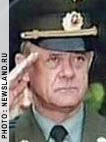
Vladimir Kvachkov

V.V. Kvachkov

By JOSEPH FITSANAKIS | intelNews.org |
The Russian intelligence services arrested members of an illegal paramilitary unit that planned an armed insurrection in one of central Russia’s biggest cities. According to reports from Yekaterinburg, the administrative capital Russia’s Sverdlovsk province, leaders of the alleged paramilitary unit hoped that their action would lead to a nationwide rebellion, eventually resulting in a military coup in Moscow. Several people were arrested by security forces of the FSB, Russia’s Federal Security Service a few days before August 2, the day when the alleged insurrection was to have taken place. Sources from the FSB say that the plotters were working on a four-step plan of action. First, they planned to attack the FSB’s Sverdlovsk district command center, the Russian Ministry of the Interior’s regional headquarters, as well as the offices of Russia’s Ministry of Emergency Situations, and capture or kill all senior staff. They would then blow up key power stations around Yekaterinburg, effectively shutting down the city’s electricity network. Taking advantage of the widespread confusion among the regional security apparatus and the population, they would move to seize local weapons depots. The alleged insurrection plan called for distributing the seized weapons among members of Yekaterinburg’s urban poor, in an attempt to widen the base of the rebellion. The plan’s final step viewed a widening insurrection in Yekaterinburg as a spark that would trigger similar Libya-style uprisings across Russia, resulting in a coup that would depose the current government in Moscow and replace it with a transitional military regime. According to news reports, the FSB arrested several leaders of the alleged insurrection, including former members of the Russian military, who are said to be linked with the People’s Militia, an insurrectionist group composed by former military and intelligence officials, led by Colonel Vladimir Kvachkov. Kvachkov, a retired Colonel in the Russian Military Intelligence Directorate (GRU), was arrested in December of 2010 on charges of planning “an armed rebellion for the forceful seizure of power in Russia”. Read more of this post

News you may have missed #560 (new books edition)

Khalil al-Balawi

Khalil al-Balawi

►►New book on CIA’s Khost bomb disaster. Washington Post reporter Joby Warrick has authored a new book, examining the December 31, 2009, killing of seven CIA operatives by Jordanian doctor Humam Khalil al-Balawi in Khost, Afghanistan. In the book, entitled The Triple Agent, Warrick quotes several “anonymous” sources from within CIA and Jordan’s General Intelligence Department (GID), which was involved in running al-Balawi. Aside from blaming GID, Warrick says the CIA’s Amman station chief was partly responsible for the botched operation.
►►Hollywood producer was Mossad spy, says new book. The book Confidential: The Life of Secret Agent Turned Hollywood Tycoon Arnon Milchan, says that Milchan was a full-fledged operative for Israel’s now-defunct intelligence agency, Lakam. The agency, which was also known as Israel’s Bureau of Scientific Relations, collected scientific and technical intelligence abroad. It was disbanded in 1986 following the arrest of US Navy analyst Jonathan Pollard for engaging in espionage on behalf of Israel. The book’s authors, Meir Doron and Joseph Gelman, argue that Milchan, who produced such movies as Love and Other Drugs and Knight and Day, worked for Israeli intelligence by supervising government-backed accounts and front companies that financed “the special needs of the entirety of Israel’s intelligence operations outside the country”.
►►Book alleges US-Russian spy swap deal. In 2010 the CIA considered a swap deal that would have delivered to Moscow two Americans currently imprisoned in the US for spying for Russia. This information is included Read more of this post

Computer hacking reveals Italian spying on Russia, India

CNAIPIC emblem

CNAIPIC emblem

By JOSEPH FITSANAKIS | intelNews.org |
Documents posted online by an anonymous hacker group point to extensive Italian espionage against Russian and Indian defense and energy deals. The hacked documents contain raw data and intelligence reports authored by officials in Italy’s National Anti-Crime Computer Center for Critical Infrastructure Protection (CNAIPIC), an electronic security outfit operating under the auspices of the Italian National Police. It appears that Italian National Police servers were recently hacked by a group of international hackers calling itself Anonymous Hackers for Antisec Operation. On July 26, the group published over eight gigabytes of hacked CNAIPIC documents on various subjects, ranging from reports on Egypt’s Ministry of Transportation to information about the Vietnam Oil and Gas Group (PetroVietnam). Among the documents are reports that seem to point to systematic intelligence-gathering operations by CNAIPIC against Russia’s government-owned energy and defense industries. Some of the information contained in the reports appears to have been stolen from the embassy of India in Moscow, probably through cyberespionage. The stolen information would suggest that CNAIPIC has had access since late 2009 to confidential correspondence between the Indian embassy and a number of Russian military aircraft industries, including Aviazapchast, Ilyushin Aircraft, and NPO Saturn. Read more of this post

News you may have missed #552

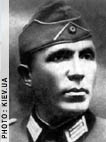
Nikolai Kuznetsov

Nikolai Kuznetsov

►►This just in: South Korea arrests five for spying for North. South Korean prosecutors have arrested five people on charges of “setting up an underground communist group on the instructions of an espionage unit of North Korea’s ruling Workers Party”, a report from South Korea’s Yonhap news agency said on Friday. According to the report, South Korean authorities are “investigating about 20 other people including union activists and opposition party members”. We will publish more information as it comes in.
►►Some US intel analysts believe al-Qaeda near collapse. Citing classified intelligence reports and closed-door Capitol Hill briefings from the CIA, the National Counterterrorism Center and other agencies, some US officials are telling The Washington Post that bin Laden’s death has “pushed al-Qaida to the brink of collapse”. One official told the paper that al-Qaeda is now “largely incapable” of mass-casualty attacks against the United States. Could the ‘Leon Panetta Legacy Committee’ be the source of this report?
►►Russia and Ukraine commemorate legendary Soviet spy. Russia and Ukraine are celebrating 100 years from the birth of legendary Soviet spy Nikolai Kuznetsov. Kuznetsov, who operated in Nazi-occupied Ukraine, uncovered Read more of this post

CIA report sees Russia behind bombing of US embassy in Georgia

GRU emblem

GRU emblem

By JOSEPH FITSANAKIS | intelNews.org |
A classified US intelligence report indicates that Russian intelligence is behind an ongoing string of bombings in the former Soviet republic of Georgia, which have included an attack on the US embassy in Georgian capital Tbilisi. The attack, which took place on September 22, 2010, damaged the embassy’s exterior wall. A subsequent investigation by the Georgian Ministry of the Interior concluded that the bombing was coordinated by the Main Intelligence Directorate of the Russian Armed Forces, also known as GRU. The investigation identified one GRU officer, Major Yevgeny Borisov, as the primary instigator of the attacks. Borisov, who is believed to be operating in Georgia’s breakaway republic of Abkhazia, was tried and convicted in absentia for his alleged role in the bombings. Now an article in The Washington Times says that a US intelligence report compiled last December by the CIA, with input from several US spy agencies, echoes the conclusions of the Georgian investigation into the bombings. The Times quotes “two US officials who have read” the report as saying that “it confirms the Georgian account” and fingers Major Borisov as the one of the main culprits behind the bombings. It also quotes “two Obama administration officials” who say that the US Department of State has taken up the issue with “the most senior levels of Russia’s Foreign Ministry”. Read more of this post

News you may have missed #547

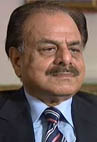
Imtiaz Ahmad

Imtiaz Ahmad

By IAN ALLEN | intelNews.org |
►►Finland cancels visa of ex-KGB general. We reported recently on the case of Mikhail Golovatov, a former commander of the Soviet KGB’s Alpha Group, who is wanted in Lithuania for alleged war crimes against the country’s secession movement in the early 1990s. Last week, Austria arrested Golovatov, but released him 24 hours later, claiming that his Lithuanian-issued European arrest warrant was “too vague” to justify his continued detention. There are now reports that the Finnish embassy in Moscow has annulled the Schengen visa it had previously issued to the former KGB officer. In a statement, Finnish officials said they would not have granted Golovatov a visa in the first place, except there had been “a spelling mistake in Golovatov’s first name”, which made them think he the applicant was not General Golovatov of KGB fame. Hmmm…. ►►Georgian ‘spy photographers’ to be released. In a bizarre twist to the ‘photojournalist spies’ saga in Georgia, the government has announced that the three will be released under an agreed plea-bargain deal, because they had given the authorities “information of particular importance for national security” about Russian intelligence operations in Georgia. The three have allegedly “revealed the identities of Russian spies working in the country as well as the names of their Georgian collaborators and cover organizations operating on behalf of Moscow”. The three, Zurab Kurtsikidze, Irakli Gedenidze and Giorgi Abdaladze, are all professional photojournalists, who are accused by Tbilisi of spying for Moscow. ►►Pakistani ex-spy director says US owes Pakistan. Imtiaz Ahmed (often spelled Ahmad) is the former Director General of Pakistan’s main domestic intelligence agency, the Intelligence Bureau (IB). In a recent interview, he accused the United States of using the ‘war on terrorism’ as a strategic pretext for capturing energy resources and limiting China’s economic growth. He also said that the US owes the Pakistani intelligence agencies, because without them it could not have accomplished its task in the Afghan war against the Soviet Union. IntelNews readers may remember the last time Ahmad had made headlines, when he revealed a series of CIA operations against Pakistan’s nuclear program.

News you may have missed #544

Google

Google

By IAN ALLEN | intelNews.org |
►►Russia a ‘leading suspect’ in cyberespionage attack on US. I wrote on Monday about the cyberespionage operation that targeted a leading US defense contractor last March, and resulted in the loss of tens of thousands of classified documents. US Deputy Defense Secretary William J. Lynn III, who disclosed the operation, said only that it was conducted by “a foreign intelligence service”. According to the last sentence of this NBC report, US officials see Russian intelligence as “one of the leading suspects” in the attack. ►►Al-Qaeda acquires Pakistani spy service manuals. Jamestown Foundation researcher Abdul Hameed Bakier reports that al-Qaeda operatives have managed to get access to espionage training manuals used by Pakistan’s Inter-Services Intelligence directorate (ISI). Copies of the documents have apparently been posted on Internet forums that are sympathetic to al-Qaeda, and bear the mark of the As-Sahab Foundation, al-Qaeda’s media wing. ►►Google-NSA collaboration documents to remain secret —for now. Even before Google shut down its operations in China, following a massive cyberattack against its servers in early 2010, the company has maintained close contact with American intelligence agencies. But after the 2010 cyberattack, some believe that Google’s relationship with the US intelligence community has become too cozy. In February of 2010, the ACLU said it was concerned about Google’s contacts with the US National Security Agency (NSA). Other groups, including the Electronic Privacy Information Center (EPIC), have filed Freedom of Information Act (FOIA) requests seeking access to the inner workings of Google’s relationship with NSA. Read more of this post

Lithuania recalls Austria ambassador over ex-KGB general’s release

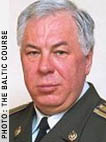
Mikhail Golovatov

Mikhail Golovatov

By JOSEPH FITSANAKIS | intelNews.org |
The government of Lithuania has recalled its ambassador to Vienna, in protest over the release by Austria of a former Soviet intelligence official, who is wanted in Vilnius for war crimes. Last Thursday, Austrian authorities arrested Russian citizen Mikhail Golovatov, a former general of the KGB, who was stationed in Lithuania during the final years of the Soviet Union. Golovatov’s detention was facilitated by a European arrest warrant issued by the office of the Lithuanian prosecutor. The latter accuses Golovatov of authorizing crimes of war as head of Alpha Group —also known as Spetsnaz Grupp Alfa— a special forces unit within the KGB’s First Chief Directorate. On January 13, 1991, Alpha Group forces spearheaded a counterinsurgency attack on the State Radio and Television Building and the Vilnius TV Tower in the Lithuanian capital, in an attempt to quash the Soviet Republic’s growing secessionist movement. The latter had unilaterally declared Lithuania’s independence on March 11, 1990. The attack resulted in the death of 14 and the injury of over 700 people. During the past two decades, the Lithuanian state has sponsored an international campaign for the arrest of numerous officials who represented the Soviet security apparatus in Lithuania during the final months of the USSR’s existence. But, to Vilnius’ shock, Austrian authorities released Golovatov 24 hours after arresting him, arguing that the European arrest warrant issued by the Lithuanian prosecutor’s office was “too vague” to justify the former KGB general’s continued detention. Read more of this post

CIA bank accounts used to funnel oil deal money, court documents claim

CIA HQ

CIA HQ

By JOSEPH FITSANAKIS | intelNews.org |
Court papers in a bizarre lawsuit involving $258 million in missing funds from an international oil deal, appear to show that the funds were channeled to dormant CIA bank accounts with the help of an Agency employee. The case is being ignored by US media, but has attracted attention in the Irish press, because an Irishman, Ed O’Neill, is the primary defendant in the lawsuit. O’Neil was the main consultant broker who helped facilitate a 2008 oil deal between involving NIB Petroleum of Venezuela and Russia’s Gazprom, both of which sold oil to Turkey’s UP Petroleum. Among O’Neil’s tasks was ensuring that six consulting companies were paid a total of $258 million for helping facilitate the complex deal. The Turkish company, UP, paid the funds to O’Neil, but they never arrived to the six companies. The latter are now suing O’Neil for the missing money. But Irish quality broadsheet The Independent, says it has seen copies of the court papers, filed in the US state of Illinois. According to the documents, O’Neil told his clients, who were awaiting the money, that he was having trouble wiring it to them, and that he had enlisted the assistance of a friend of his, by the name of Carlos Jesus Navarro, who was a CIA operative. According to the testimony of the plaintiffs, O’Neil told them that Navarro had access to several dormant CIA bank accounts, which could be used to wire the money around the world. With Navarro’s alleged help, the funds were then transferred to banks in Luxembourg, Lichtenstein and the island of Guernsey, before making their way to the Cayman Islands. From there they were transferred to Germany’s Commerzbank, and finally to a Bank of America branch in New York City. The money was supposed to be transferred one last time to the plaintiffs’ bank accounts in Chicago; but this last transfer never took place. Read more of this post