CIA Director reportedly in Turkey for secret talks

David PetraeusBy JOSEPH FITSANAKIS | intelNews.org |
Turkish and American authorities have refused comment on persistent reports that the Director of the Central Intelligence Agency is currently on a secret visit to Turkey. News of the alleged trip was first reported on Monday by Turkish tabloid daily Akşam. The newspaper said David Petraeus, who heads the United States’ foremost civilian intelligence agency, had arrived earlier that day in Istanbul’s Atatürk International Airport, on his private plane. According to the article, the CIA chief decided to embark on the unannounced trip in order to discuss “counterterrorism and the situation in Syria” with senior Turkish officials. Several hours later, French news agency Agence France Presse reported that, according to “a US official”, the CIA Director was indeed in Turkey, holding secret “meetings on regional issues”. However, the unnamed US source would not provide specific information about Petreaeus’ meeting arrangements while in Turkey, nor would (s)he divulge the names of the Turkish officials that were scheduled to meet with him. Another Turkish daily, Hürriyet, said the CIA Director would probably meet with his Turkish counterpart, MİT chief Hakan Fidan, as well as with Turkey’s Prime Minister Recep Tayyip Erdoğan . But repeated efforts by the paper to confirm this were rebuffed by representatives of the US embassy in Ankara, as well as Turkish officials. Read more of this post

News you may have missed #749

Mohammed DahabiBy IAN ALLEN | intelNews.org |
►►Why did CIA Director secretly visit Czech Republic? The CIA Director, David Petraeus, is known to make frequent secret trips to places like Pakistan, Afghanistan, or Iraq. But why was his recent trip to the Czech Republic kept secret? Photographs published in a Czech daily paper showed the CIA director and his team boarding a military plane at Prague’s Ruzyne Airport, headed for their next destination, Sofia, Bulgaria. But neither the US Embassy in Prague, nor the CIA will respond to questions by Czech media about Petraeus’ secretive visit to the former Soviet Bloc nation.
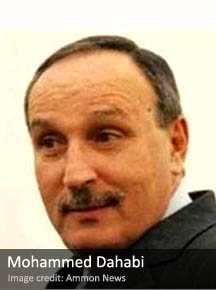
►►Jordan’s ex-spy chief on trial for corruption. Jordan’s former spy chief, General , who headed the General Intelligence Department (GID) from 2005 to 2009, has gone on trial in Amman on charges of corruption, which carry a maximum sentence of life imprisonment. In a case highlighting corruption in the country’s vaunted intelligence community, the prosecutor said Dahabi’s wealth had quadrupled during his years in office, reaching almost $40 million by the end of 2011. The money, he said, was held in several foreign currency accounts in a leading domestic bank.
►►CIA still refuses to comment on Predator drone attacks. The Central Intelligence Agency continues to refuse to confirm or deny the covert military use of drones to kill suspected terrorists overseas. This is despite numerous public comments on the CIA’s drone attacks in far-flung locales such as Yemen from various government officials, including former CIA Director Leon Panetta and US President Barack Obama. The development comes as 26 members of Congress asked Obama, in a letter, to consider the consequences of drone killing and to explain the necessity of the program.
News you may have missed #734

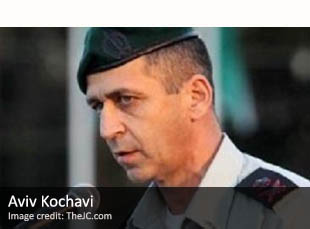
Aviv KochaviBy IAN ALLEN | intelNews.org |
►►Australian spy agency in rent dispute. The Australian government insists there is no dispute over the lease of the new, state-of-the-art headquarters of the Australian Security Intelligence Organisation, which cost nearly A$589 to build. But according to a number of government sources, the property has become the subject of a standoff between the ASIO and Australia’s Department of Finance and Deregulation. The Canberra Times reports that the Finance Department has told ASIO it will have to hand over more money than anticipated because of a blowout to building costs and timing. But the ASIO is refusing to pay more than initially agreed.
►►US unveils spy model of bin Laden compound. The United States intelligence community has unveiled a scale model of the compound in Abbottabad, Pakistan, where Osama bin Laden spent the last few years of his life in hiding. The model was built by the National Geospatial-Intelligence Agency (NGIA) and used by military and intelligence leaders to plan the daring night raid on May 2, 2011, that killed the al Qaeda founder. Its scale is an exact 1:84; every tree, bush, wall, animal pen, trash can and physical structure in the model existed at one time at the original compound in Abbottabad.
►►Israel military intelligence head in secret US visit. Israeli military intelligence chief Aviv Kochavi made a “secret visit” to Washington earlier this month to discuss the upcoming talks between world powers and Iran. An Israeli security official confirmed the visit, which was reported in Israel’s Haaretz newspaper, but could not provide further details. Meanwhile, three senior IDF intelligence officers resigned recently, following what they called “questionable” appointments to key positions. The three colonels held some of the most senior and classified positions in the Israeli military intelligence community.

US Senate hearing accidentally reveals Mossad director’s secret visit

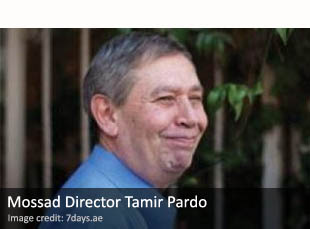
Tamir PardoBy JOSEPH FITSANAKIS | intelNews.org |
The chairwoman of a public hearing at the United States Senate, which was televised live across America, accidentally revealed that the Director of Israeli intelligence service Mossad secretly visited the US for talks last week. The revelation took place on Tuesday at a high-profile hearing conducted by the Senate Select Committee on Intelligence, with the participation of the Director of National Intelligence James Clapper and Central Intelligence Agency Director David Petraeus. While addressing the latter, Committee chairwoman Dianne Feinstein mentioned in passing that “the vice chairman [of the Committee] and I have just met this past week with the director of Mossad”, and that the meeting was classified. She was referring to Tamir Pardo, the newly installed head of Israel’s foremost external intelligence agency. Without blinking an eye, Petraeus responded saying: “Like you, obviously, I met with the head of Mossad when he was here”. Subsequent discussion during the hearing appeared to establish that Pardo visited the United States specifically to discuss the possibility of an Israeli attack on Iran’s known nuclear installations. In responding to Senator Feinstein’s comment, the CIA Director said that Pardo’s secret visit was “part of an ongoing dialogue that has also included conversations that I’ve had with [Israeli] Prime Minister [Benjamin] Netanyahu and with [Defense] Minister [Ehud] Barak”. No further information was shard on the Mossad official’s visit, and US government representatives refused to elaborate, when asked about it later. Read more of this post

Turkish spy agency in secret Oslo talks with Kurdish PKK

PKK banner

PKK banner

By JOSEPH FITSANAKIS | intelNews.org |
The war between the Turkish state and the Kurdistan Workers’ Party (PKK), which culminated in the early 1990s, has flared up again, ever since the creation of the US-protected Kurdish autonomous zone in northern Iraq. Currently, the Turkish military is technically at war with the PKK, a leftist secessionist movement that aspires to create a Kurdish homeland comprising mostly of territories in Turkey’s Anatolia region. But a leaked audio recording posted on the Internet last week shows that senior Turkish intelligence officials have been participating in secret talks with the leadership of the PKK, since at least 2010. Several Kurdish news agencies published the recording of one such secret meeting, involving the leadership of Turkey’s National Intelligence Organization (MİT). The recording features a frank discussion between, on the one side, the head of MİT, Hakan Fidan, and its deputy director, Afet Güneş; the two are heard deliberating with Sabit Ok, Zübeyr Aydar and Mustafa Karasu, all of whom are senior PKK officials and wanted dead or alive by the Turkish state. A voice of an apparent mediator —marked by a distinct Scandinavian accent— can be heard speaking at the beginning. The mediator mentions that the meeting is the fifth installment of a series of encounters called “The Oslo Talks”. According to Turkish daily Hürriyet, the mediator appears to be a government official from Norway, which probably hosted the secret meeting(s) somewhere in its capital city. Shortly following the mediator’s introduction, Fidan is heard saying that he is acting as a “special envoy of […] prime minister” Recep Tayyip Erdoğan. The leaked recording disappeared from Kurdish websites soon after it was posted, and some Kurdish media sources said that it had been aired by “anonymous hackers”. Read more of this post

News you may have missed #558

Amrullah Saleh

Amrullah Saleh

►► US government says Iran aids al-Qaeda. The US Treasury Department has accused the Iranian authorities of aiding al-Qaeda, saying Tehran had entered into financial agreements with six people believed to be al-Qaeda operatives in Iran, Kuwait, Qatar and Pakistan. According to Treasury officials, one of the six “is believed to have recently ascended to the No. 2 position in Al Qaeda, reporting directly to the organization’s new leader, Ayman al-Zawahri”.
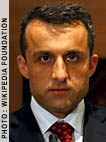
►►Interview with Afghan spy chief. CNN has an exclusive interview with Amrullah Saleh, the –usually media-shy– former head of Afghanistan’s National Directorate for Security. The interview is essentially one long attack on Pakistan, which Saleh blames for destabilizing Afghanistan, hiding and sheltering al-Qaeda members, and providing funding and arms to the Taliban.
►►Sudan’s spy chief secretly visited France in June. The director of Sudan’s National Security and Intelligence Services (NISS), Mohamed Atta al-Moula Abbas, secretly traveled to Paris last June. He held talks there with Read more of this post

News you may have missed #520

  • CIA director returns from Pakistan empty-handed. CIA Director Leon Panetta’s surprise visit to Pakistan last week yielded little, according to US officials. Panetta bypassed the protocol of first meeting with the president and prime minister, and instead met with Pakistan’s military and intelligence directors.
  • Chinese spying devices found in Hong Kong cars. A Hong Kong newspaper has alleged that the Chinese authorities have been secretly installing spy devices on all dual-plate Chinese-Hong Kong vehicles since July of 2007. Photographic evidence is here.
  • NSA releases over 50000 pages of documents. The US National Security Agency has announced that it has declassified and released to the US National Archives and Records Administration over 50,000 pages of historic records, covering a time-frame from before World War I through the 1960s.

News you may have missed #496

  • US secretly collaborating with Chinese spies on North Korea. Leaked records of highly sensitive US-China defense consultations reveal that the CIA, the US Office of the Director of National Intelligence, and the US Defense Department, have all held secret discussions on North Korea with Chinese military intelligence.
  • Cuba denounces acquittal of ex-CIA agent. Cuba has denounced as a ‘farce’ the acquittal in the United States of Luis Posada Carriles, a former CIA agent who Havana says participated in terrorist attacks against the island. Carriles was accused of lying to US immigration officials.
  • Analysis: US spy agencies struggling to adjust to Middle East changes. With popular protests toppling rulers in Tunisia and Egypt and threatening leaders in Yemen and elsewhere, US intelligence agencies are struggling to adjust to a radically changed landscape, US officials, former intelligence officers and experts say.

More underreported WikiLeaks revelations

Julian Assange

Julian Assange

By JOSEPH FITSANAKIS | intelNews.org |
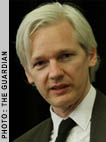
As the world’s media shift their attention to the consequences of the WikiLeaks revelations for its founder Julian Assange, as well as the reactions of American officials, the leaked diplomatic cables keep coming in, almost on an hourly basis. Some of the least noticed revelations include a 2009 dispatch from a US diplomat in Tel Aviv, which appears to confirm the close secret relations between Israel and the United Arab Emirates, despite the fact that these two countries have no official diplomatic connections. Another diplomatic cable reveals that Iranian intelligence officials approached their Canadian counterparts in 2008 and offered to share with them “information on potential attacks in Afghanistan”. Perhaps not surprisingly, the Canadians reacted guardedly, with Canadian Security Intelligence Service Director Jim Judd stating that his agency had “not figured out what they [the Iranians] are up to”. Read more of this post

Some underreported WikiLeaks revelations

WikiLeaks

WikiLeaks

By JOSEPH FITSANAKIS | intelNews.org |
There is little point in recapping here the bulk of disclosures contained in the ongoing WikiLeaks revelations. The news sphere is jam-packed with them —and perhaps this is the real story in the WikiLeaks revelations, namely the fact that espionage and intelligence issues have near-monopolized the global news cycle for the first time since the post-Watergate Congressional investigations of the 1970s. But it is worth pointing out a handful of news stories on the WikiLeaks revelations that have arguably not received the media coverage that they deserve. Undoubtedly the most underreported disclosure concerns a 2007 meeting between US officials and Meir Dagan, the then Director of Israel’s Mossad intelligence agency. During the meeting, Dagan apparently “presented US with five-step program to perform a coup in Iran“.  But there are other underreported disclosures. Take for instance the revelation that US Secretary of State Hillary Clinton personally authorized US diplomats to engage in all-out and indiscriminate spying on senior United Nations officials. Although there is nothing here that will surprise seasoned intelligence observers, the breadth of intelligence collection that US diplomats are instructed to engage in (which includes collecting credit card numbers and biometric data of UN officials) is astonishing and certainly unprecedented. Moreover, it should be noted that many senior UN officials are in fact American, which leads to the intriguing question of whether US diplomats are routinely required to engage in intelligence collection against American UN officials. Read more of this post

Israel offers settlement freeze in exchange for US spy’s release

Jonathan Pollard

Jonathan Pollard

By JOSEPH FITSANAKIS | intelNews.org |
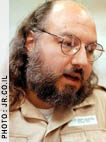
Israeli government officials are considering extending a settlement freeze in Israeli-occupied territories in exchange for the release of an American citizen serving a life sentence for spying on the US for Israel. Laura Rozen over at Politico reports that a representative of the embassy of Israel in Washington DC has denied knowledge of the rumored deal. But according to Israel Army Radio, an envoy of Israeli Prime Minister Benjamin Netanyahu has already “unofficially” passed the proposal along to US government officials. If accepted by the White House, the deal would involve the freezing of all new construction of illegal Israeli settlements in the West Bank, in exchange for the release of Jonathan Jay Pollard, a US Navy intelligence analyst who in 1987 was sentenced to life imprisonment for spying on the US on behalf of Israel. Pollard, who has since been awarded honorary Israeli citizenship, and is considered a hero in Israel, has so far served 25 years in prison. Read more of this post

News you may have missed #386 (Israel edition)

Bookmark and Share

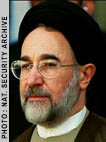
Documents reveal Bill Clinton’s secret contact with Iran

Mohammad Khatami

M. Khatami

By IAN ALLEN | intelNews.org |
Two newly declassified high-level documents reveal a short-lived overture between Washington and Tehran, initiated in 1999 by the Bill Clinton administration. The US President resorted to the secret communication with Iran in an attempt to preempt several hawkish policy planners in his administration. The latter pressed for strong American military retaliation against Iran, in response to the latter’s alleged involvement in the 1996 Khobar Towers bombing. The bombing, which targeted a US Air Force base in the suburbs of Dhahran, Saudi Arabia, killed 19 and wounded 400 American servicemen and women. By 1999, US intelligence agencies were convinced that the bombing had been financed and orchestrated by members of the Islamic Revolutionary Guards Corps (IRGC), an independent administrative and paramilitary institution tasked with –among other things– exporting the Iranian Revolution abroad. But the Clinton Administration decided to contact the then newly elected reformist Iranian President Mohammad Khatami, and sternly inform him of the evidence against the IRGC. Read more of this post

News you may have missed #0276

  • CIA mum on Panetta’s trip to Israel. Politico’s Laura Rozen reports that the CIA director met with Israeli Prime Minister Benjamin Netanyahu, Defense Minister Ehud Barak, and Mossad chief Meir Dagan. But nobody in Washington or Jerusalem will say precisely what was discussed. Why is it that every time Panetta flies to Israel, it has to be a covert visit?
  • CIA raises language requirements for senior staff. “Under the new policy”, said CIA director Leon Panetta, “promotions to SIS [Senior Intelligence Service] for most analysts and operations officers will be contingent on demonstrating foreign language competency. If an officer is promoted to SIS and does not meet the foreign language requirement within one year, he or she will return to their previous, lower grade”.

Bookmark and Share

Secret UK envoy convinced Iran Shah to stay away in 1979

Sir Denis Wright

Sir Denis Wright

By JOSEPH FITSANAKIS | intelNews.org |
The British government sent a former diplomat, disguised as an old friend of the Iranian Shah, to convince the deposed monarch to stay away from the UK, after he was forced to abandon Iran in 1979. The information has been made available in a series of official government documents recently declassified by Britain’s Foreign Office. Following the 1979 Iranian Revolution, the US-backed Shah of Iran, Mohammad Reza Pahlavi, abandoned his throne and ended up in the Bahamas, a former British colony which had gained its independence in 1973. But Britain’s Labour government feared that the deposed monarch aimed to live in England, something that Prime Minister James Callaghan considered a potentially damaging decision by “an immensely controversial figure in Iran”. Read more of this post