Canadian spy compromised Australian, British intelligence

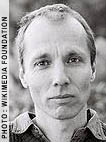
Jeffrey Paul DelisleBy JOSEPH FITSANAKIS | intelNews.org |
Most regular readers of this blog are undoubtedly familiar with the case of Jeffrey Paul Delisle, a Sub-Lieutenant in the Royal Canadian Navy, who until recently was employed at Canada’s ultra-secure TRINITY communications center in Halifax. Delisle was arrested in January on suspicion of passing information gathered from radio and radar signal interceptions to a foreign power, most likely Russia. Back in May, when it was disclosed that the United States helped Canadian counterintelligence investigators build their case against Delisle, we warned that “a far more important subject concerns the degree in which [Delisle’s] penetration has affected Canada’s intelligence-sharing relationship with its […] partners”. Now a new report in The Sydney Morning Herald reveals that Delisle’s espionage activities compromised Australian secrets that had been shared with Canada under longstanding intelligence cooperation arrangements. Citing “Australian security sources”, the paper said that the Delisle case “has sent shock waves through Western security agencies” due to the volume of compromised information. The Herald claims that the stolen intelligence is “on a scale comparable to the alleged handover to WikiLeaks of US military and diplomatic reports by US Army private Bradley Manning”. An unnamed “Australian security source” told the paper that Delisle’s access to classified information was “apparently very wide” and that Australian intercepts were “inevitably compromised”. Read more of this post
Comment: US helped Canada nab accused spy Jeff Delisle

Jeffrey Paul DelisleBy JOSEPH FITSANAKIS | intelNews.org |
Back in January of this year, when the Jeffrey Delisle spy affair made headlines around the world, I spoke with several journalists from The Globe & Mail, The Canadian Press, and other Canadian news outlets. Most of them were –rightly– curious about the role of the United States in the affair, in which Sub-Lieutenant Delisle, who had been employed at Canada’s ultra-secure TRINITY communications center in Halifax, was accused of spying for a foreign power. I told them that, given that Trinity handled –aside from Canadian– NATO communications, Canada was in fact obligated to notify all of its NATO partners about the suspected penetration. That aside, I said that it could be “safely assumed” that US counterintelligence agencies were “fully involved in the Delisle case, and probably ha[d] been for several months”. By the latter phrase, I implied that US counterintelligence agencies had been closely involved in helping their Canadian counterparts build their case against Delisle. Now a new report in The Globe & Mail suggests that US counterintelligence officials “supplied vital information” to their Canadian colleagues during “the early days of the investigation” into the Delisle affair. The article says that the full extent of what the Americans told Canadian authorities remains unclear; but it quotes “a source familiar with the matter”, who claims that the US “helped Canada build its investigation”, not necessarily by providing a single tipoff clue, but through “an accumulation of information”. The paper adds that Washington’s involvement in the investigation from an early stage “adds a key new detail to [the] story”. Not necessarily, I would argue. Read more of this post

News you may have missed #730

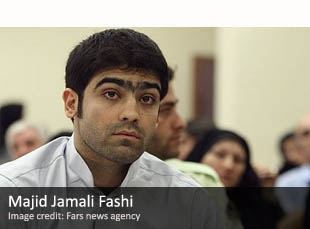
Majid Jamali FashiBy IAN ALLEN | intelNews.org |
►►Iran executes man convicted of killing nuclear physicist. Iran on Tuesday hanged Majid Jamali Fashi, convicted of playing a key role in the 2010 murder of Iranian nuclear scientist Masoud Ali Mohammadi, and of spying for Israel. Mohammadi, a particle physics professor at Tehran University who was killed in a bomb attack outside his home in January 2010.
►►Bahrain sentences man accused of spying for Iran. Bahraini authorities accused the unnamed 47-year-old man of having leaked high-level information on Bahrain’s military, Interior Ministry and US Naval Base. He was allegedly paid more than BD27,000 on behalf of Iran’s Revolutionary Guard by two Iranians who lived in Kuwait. The two Iranians, who worked as diplomats in the Iranian Embassy in Kuwait, were convicted in absentia for selling military, industrial and economic information to Iran between 2002 and last April.
►►NSA declassifies document after publishing it. The National Security Agency last week invoked a rarely-used authority in order to declassify a secret document that was mistakenly posted on the NSA website with all of its classified passages intact. The article (.pdf) is a historical study entitled Maybe You Had to Be There: The SIGINT on Thirteen Soviet Shootdowns of US Reconnaissance Aircraft. It was written by Michael L. Peterson and was originally published in the classified journal Cryptologic Quarterly in 1993.

News you may have missed #718 (GCHQ edition)

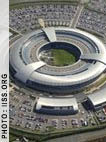
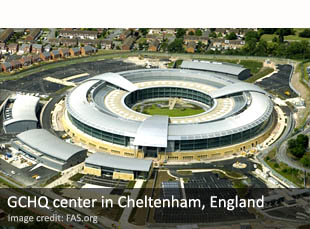
GCHQ center in Cheltenham, EnglandBy IAN ALLEN | intelNews.org |
►►GCHQ releases Alan Turing papers. Britain’s signals intelligence agency, GCHQ has released two mathematical papers written by cryptographer Alan Turing after keeping the works secret for over half a century. The intelligence agency believes the handwritten papers were produced by Turing during his time at Bletchley Park, the World War II code-breaking center. The year 2012 marks the centenary of Alan Turing’s birth. Turing, whose work heavily contributing to the Allied war effort, committed suicide in 1954 by taking cyanide. Turing had been convicted of homosexuality, which was then a crime, and was given the choice between prison or chemical castration. The UK government officially apologized over Turing’s treatment in 2009, over 50 years after his death.
►►Britain’s GCHQ sued for ‘racism’. Alfred Bacchus, 42, claims he was bullied by bosses while he was a senior press officer at the Government Communications Headquarters in Cheltenham. He says he wanted to publish an official report in 2010 into race bias inside GCHQ which warned that not enough ethnic minority staff were being recruited to help fight terrorism. It found that black and Asian intelligence officers at GCHQ complained of a racist culture in which they were insulted by white colleagues and challenged over their loyalty to Britain.
►►Ex-GCHQ chief wants more surveillance of Facebook and Twitter. Sir David Omand, an ex-Cabinet Office security chief and former director of Britain’s GCHQ electronic eavesdropping agency, said it was essential that monitoring of social media was put on a proper legal footing. A report by the think-tank Demos, which Sir David co-authored, said existing laws regulating the interception of communications by police and intelligence agencies needed to be overhauled to meet the complexities of social media. However, the ability of state security agencies and the police to intercept social network communications such as tweets must be placed on a clear legal footing, the report says.

News you may have missed #696

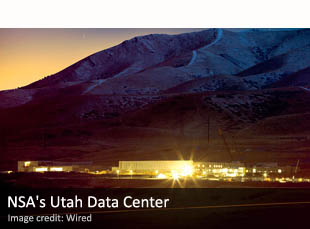
NSA's Utah Data CenterBy IAN ALLEN| intelNews.org |
►►French spies to stage labor protest. The main union representing French domestic intelligence officers, those charged with counter-espionage and anti-terror investigations, called Wednesday on its members to stage a protest. The head of the SNOP union, which represents senior police officers and is the main labor body for members of the DCRI security agency, said his members planned a “gathering” at their Paris headquarters. A smaller union said it wanted no part in the protest, and it was not clear how many of the agency’s 4,000 intelligence officers planned to take part.
►►James Bamford on the NSA’s new spy center in Utah. Under construction by contractors with top-secret clearances, the blandly named Utah Data Center is being built in Bluffdale for the National Security Agency. A project of immense secrecy, it is the final piece in a complex puzzle assembled over the past decade. Its purpose: to intercept, decipher, analyze, and store vast swaths of the world’s communications as they zap down from satellites and zip through the underground and undersea cables of international, foreign, and domestic networks. The heavily fortified $2 billion center should be up and running in September 2013.
►►Author of unauthorized CIA book gave proceeds to charity. After former CIA officer Ishmael Jones wrote a book about the CIA without gaining prior approval from the Agency, the government sought and won a judicial ruling that Jones had acted in violation of his CIA secrecy agreement, and that he could be held liable for the breach. But the government’s current efforts to seize the financial proceeds from Jones’ 2010 book, The Human Factor: Inside the CIA’s Dysfunctional Intelligence Culture, have been frustrated by the fact that the author has already given the proceeds away to charity.

News you may have missed #694

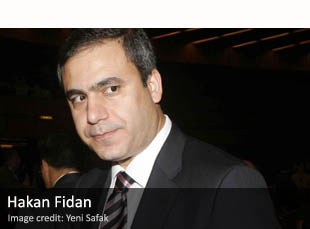
Hakan FidanBy IAN ALLEN| intelNews.org |
►►India’s spy satellite to be launched in April. The Radar Imaging Satellite, or RISAT-1, is a wholly Indian-built spy-surveillance satellite that can see through clouds and fog and has very high-resolution imaging. The Indian Space Research Organisation (ISRO) has said that RISAT-1 is slated for launch in April. The satellite would be used for disaster prediction and agriculture forestry, and the high-resolution pictures and microwave imaging “could also be used for defense purposes”.
►►GCHQ staff could risk prosecution for war crimes. British law firm Leigh Day & Co. and the legal action charity Reprieve are launching the action against Britain’s foreign secretary William Hague, accusing him of passing on intelligence to assist US covert drone attacks in Pakistan. Human rights lawyers have said that civilian staff at GCHQ, Britain’s signals intelligence agency, could also be at risk of being prosecuted for war crimes.
►►Turf war between Turkey’s top spy and police commander? A news report appeared yesterday, which claimed that there was a rift between Turkish intelligence agency MİT Undersecretary Hakan Fidan and National Police Chief Mehmet Kılıçlar, over intelligence sharing in the fight against the terrorist Kurdistan Workers’ Party (PKK). But the two agencies issued a rare joint statement calling media reports “unsubstantiated”.

Analysis: How serious a blow did the CIA suffer in Lebanon?

Lebanon

Lebanon

By JOSEPH FITSANAKIS | intelNews.org |
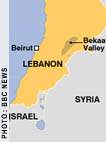
Late last month, the Central Intelligence Agency admitted that a number of its agents in Lebanon had been captured by Hezbollah, the Shiite militant group that controls large parts of the country. The group announced the arrests in the summer, but in was only on November 21 that the Associated Press confirmed the accuracy of Hezbollah’s claims from a US intelligence source. Neither Hezbollah nor the CIA have offered details of the arrests, but it is generally assumed that the captured agents were not officers of the CIA, but rather Lebanese or Iranian citizens who had been recruited as assets by CIA case officers. Regardless, the incident has undoubtedly directly impacted the Agency’s operations in Lebanon, and maybe Iran. The question is, how much? Former CIA operations officer Robert Baer, who spent several years in Lebanon in the 1980s, has penned an analysis article in Time magazine, in which he says that his sources tell him the arrests of the CIA agents represent “a serious compromise”, and that the Agency is “still trying to get to the bottom of [it]”. Baer also provides some new information about the method used by Hezbollah counterintelligence to capture the CIA agents. Last week, ABC News reported that the arrests were caused by careless spy tradecraft on behalf of the CIA. Specifically, according to ABC, “Hezbollah operatives figured out that CIA informants, who had infiltrated the Iranian proxy group, were meeting with their agency handlers at a Beirut Pizza Hut. How could Hezbollah deduce that location? The CIA used the codeword ‘PIZZA’ when discussing where to meet with the agents”. But Baer says that the arrests were not necessarily caused by CIA errors; rather it may have been advanced counterintelligence analysis by Hezbollah that compromised the agents. He claims that Hezbollah is using telephone link analysis, a type of signals intelligence testing that utilizes advanced software “capable of combing through trillions of gigabytes of phone-call data”. The aim of telephone link analysis is to search for unusual communications patterns —such as too many brief calls, or heavy reliance on prepaid cell phones that seem to become disused after only a few calls. Read more of this post

News you may have missed #639

GCHQ

GCHQ

►►GCHQ will sell cyberdefense tech to private firms. The GCHQ, Britain’s signals intelligence agency, is to market some of its security technologies to companies in the private sector, in an attempt to bolster defenses against the foreboding threat of cyberwarfare. The UK government’s “cyber security strategy”, which was unveiled this month, has earmarked £650 million in public funding to set up a four-year National Cyber Security Program, a percentage of which will be used to collaborate with private companies. Click here for an excellent analysis on the public-private cybersecurity collaboration in Britain.
►►Was there a coup attempt in Trinidad? Many in Trinidad and Tobago were expressing skepticism yesterday about an alleged assassination plot, which Prime Minister Kamla Persad-Bissessar said had been uncovered against her and several of her ministers. Police said nearly a dozen people had been arrested, including members of the army and police, but authorities have not given more details, citing the need to maintain security in operations to dismantle the plot.
►►US Senators resist $7 Billion in spending cuts for spy satellites. The Obama Administration wants to stop incessant spending by Defense Department contractors, especially those who have wasted billions of US taxpayers’ money in failed spy satellite projects. But the contractors’ friends in Congress, including lawmakers on the US Senate Intelligence Committee, are trying to stop the White House from cutting a $7 billion commercial satellite program being developed by GeoEye Inc. and DigitalGlobe Inc. What else is new?

News you may have missed #581

Jin Yinan

Jin Yinan

►►CIA wants to censor book by ex-FBI agent. The agent, Ali H. Soufan, argues in the book that the CIA missed a chance to derail the 9/11 plot by withholding from the FBI information about two future 9/11 hijackers living in San Diego. He also says that torture interrogation methods against terrorism detainees were unnecessary and, ultimately, counterproductive. Both these things are known and have been publicly discussed. As The Independent correctly notes, the CIA’s objections are “less for national security reasons than out of a desire to avoid re-airing incidents that show the Agency in an unflattering light”.
►►New scandal at India’s SIGINT agency. The Indian government founded the National Technical Research Organisation (NTRO) in 2004, as a potential communications nerve center for all of India’s intelligence agencies. But the SIGINT agency has been involved in one financial scandal after the other, most recently relating to an elaborate procurement scam.
►►China silent about spy lecture leak. China has remained quiet as a recently leaked video of a Chinese general’s candid remarks on sensitive spying cases continued to draw international attention. The ministries of defense and foreign affairs have not responded to media inquiries, and numerous phone calls to National Defense University, where the general, Jin Yinan (pictured), teaches, went unanswered. State media made no mention of the story.

News you may have missed #576 (Europe edition)

GCHQ

GCHQ

►►Inside Britain’s signals intelligence agency. This account of the work of Britain’s General Communications Headquarters is a bit basic, but it’s not every day that the GCHQ grants access to a journalist to its Cheltenham base.
►►Czech telecoms to share data with intel services. The Czech Interior Ministry has placed a clause in the planned amendment to the electronic communications law, under which operators of communication networks will have to provide data on cell phones and the Internet to the civilian and military counterintelligence.
►►Dutch F-16 pilot suspected of espionage. A Dutch former F-16 pilot suspected of espionage, identified only as Chris V., had more state secrets in his possession than he previously admitted to, according to public prosecutors in The Hague. The pilot was arrested last April and stands accused of leaking state secrets to a colonel from Belarus.

News you may have missed #526

  • Russia convicts colonel of exposing US spy ring. Colonel Alexander Poteyev has received a (relatively lenient) 25-year sentence for exposing a Russian ‘sleeper cell’ network in the United States. The sentence was delivered in absentia, as Poteyev is believed to have defected to the US, where he probably lives under an assumed identity. As he was fleeing Russia in June 2010, he texted his wife: “try to take this calmly: I am leaving not for a short time but forever. I am starting a new life. I shall try to help the children”. Here is the most detailed recent account the Poteyev’s case in English.
  • Libyan defector holed up in luxury hotel. Moussa Koussa, Libya’s former intelligence chief and foreign minister, faced calls last night to return to Britain for prosecution after he was tracked down to a penthouse suite at the Four Seasons Hotel in Doha, the capital of Qatar, where he has been living under the protection of the Qatari security services.
  • New NZ SIGINT spy agency boss named. The government of New Zealand has appointed Simon Murdoch as the acting chief executive and director of the Government Communications Security Bureau (GCSB) intelligence agency.

News you may have missed #525

  • Hacker group LulzSec to disband after attacks on CIA. The publicity-seeking hacker group that has left a trail of sabotaged websites over the last two months, including attacks on law enforcement and releases of private data, said unexpectedly on Saturday it is dissolving itself.
  • NSA veteran publishes book on secretive listening base. Good book review of Inside Pine Gap: The Spy Who Came in From the Desert, written by 23-year US National Security Agency veteran David Rosenberg, who worked for 18 years at the joint US-Australian intelligence facility at Pine Gap, a small technical encampment outside Alice Springs in the Australian outback.
  • Aussie spy agencies feeling budget cuts effect. Australia’s Federal Government has been urged, in a report by the Parliamentary Joint Committee on Intelligence and Security, to review the effects of its cost-saving drive on the country’s intelligence community.

Location of massive Israeli eavesdropping site uncovered

Nicky Hager

Nicky Hager

By JOSEPH FITSANAKIS | intelNews.org |
An author and investigative journalist from New Zealand has uncovered one of the world’s biggest government-sponsored eavesdropping sites in a desert in Israel. Writing in French monthly review Le Monde Diplomatique, Nicky Hager reveals that the site acts as a base for the Israel Defense Forces (IDF) Central Collection Unit of the Intelligence Corps, also known as Unit 8200, which is responsible for collecting and decrypting signals intelligence. In his article, written in French, Hager describes the base as one of the world’s largest, and says it is located near the Urim kibbutz, about 30 kilometers west of Beersheba, in Israel’s Negev desert region. Read more of this post

Did missing Polish intel officer defect to Russia?

Stefan Zielonka

Stefan Zielonka

By JOSEPH FITSANAKIS | intelNews.org |
We have been keeping an eye on the mysterious case of Stefan Zielonka, a senior SIGINT officer with Poland’s Military Intelligence Services (SWW), who disappeared without trace in early May of 2009. The seriousness of Zielonka’s disappearance stems from his extensive knowledge of Polish undercover intelligence networks operating overseas, including names and contacts of illegals –i.e. agents operating without diplomatic cover. Consequently, Polish intelligence officials have expressed fears that, if Zielonka defected, or was kidnapped by foreign intelligence agents, “much of the country’s intelligence network could be compromised”. The possibility that Zielonka actually defected increased after it became known that his wife and young child also disappeared. In December, a report in Poland’s Dziennik Gazeta Prawna claimed that the signals intelligence officer’s mysterious disappearance is connected with a “trail leading to the Far East”, with “all clues lead[ing] to China”. Earlier this week, however, Russian weekly Argumenti Niedieli suggested that Zielonka was in fact recruited by Russian military intelligence. Read more of this post

News you may have missed #0284

  • Real IRA faction killed MI5 informant, says Irish police. The Gardai have concluded that a Real IRA faction executed Denis Donaldson, a former Sinn Fein official who turned informer for MI5 and the Police Service of Northern Ireland. Last year, the Real IRA took responsibility for the 2007 killing.
  • NATO spy station up for sale. A Canadian NATO spy station in Nova Scotia that operated between 1983 and 2006 is for sale for US$1.4 million. It appears that the site’s current owner, who doesn’t want to be identified, bought it from the Canadian Defense Department after the base was closed down.
  • Analysis on the Binyam Mohamed disclosures and UK-US spy cooperation. This analysis, by Michael Clarke, director of Britain’s Royal United Services Institute, is probably the best synopsis of the meaning of the recent court order to disclose Binyam Mohamed’s torture records, which has complicated US-UK spy relations.

Bookmark and Share