News you may have missed #781

Bahri ShaqirinBy IAN ALLEN | intelNews.org |
►►Syria denies Vice-President has defected. Syria denied reports over weekend that President Bashar al-Assad’s deputy had defected. Vice-President Farouq al-Shara “never thought for a moment about leaving the country”, said a statement from his office, broadcast on state television and issued in response to reports that the veteran Ba’ath Party loyalist had tried to defect to Jordan. Al-Sharaa’s office said the vice-president “supports get[ting] united support from the [United Nations] Security Council to carry out his mission without obstacles”.
►►What is inside the CIA’s Polish prison? A major political scandal erupted in Poland this year, over an alleged secret CIA ‘black site’ used to house high-ranking terrorism suspects. But exactly was in this prison? In this interview, aired yesterday on Washington DC-based National Public Radio’s Weekend Edition program, host Linda Wertheimer speaks to journalist and author Roy Gutman about his recent trip to Poland, to cover an investigation into the CIA interrogation facilities.
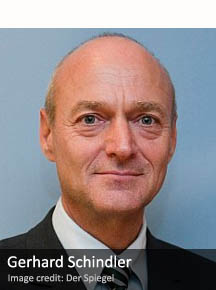
►►US ‘surprised’ after Albania replaces spy chief. Little more than a month after taking office, Albanian President Bujar Nishani has discharged the Director of the country’s State Security Agency, SHISH, Bahri Shaqirin. The move follows a request by Albanian Prime Minister Sali Berisha, who first proposed that Shaqirin should be removed. His replacement is Visho Ajazi Lika, currently Deputy Minister for Technology and Information. Some analysts note that Shaqirin enjoyed the support of the US Embassy in Tirana. One of its spokespersons said that “the US had not been informed about Shaqiri’s discharge and [Washington was] surprised by this fast and unexpected decision”.

Germany, UK, share intelligence with Free Syrian Army [updated]

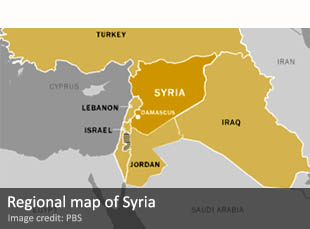
Regional map of SyriaBy JOSEPH FITSANAKIS | intelNews.org |
Two newspapers alleged over the weekend that German and British spy services routinely share critical intelligence on Syrian government troops with rebel forces in the country. In a leading article, German newspaper Bild am Sonntag claimed yesterday that Germany’s intelligence activities in Syria were far broader than officially acknowledged. The paper quoted an unnamed official from Germany’s Federal Intelligence Service (BND), who said that the country “can be proud of the significant contribution we are making to the fall of the Assad regime”. Also quoted in the article was an unidentified American intelligence official, who claimed that “no Western intelligence service has such good sources inside Syria as Germany’s BND”. According to Bild, the BND collects most of its intelligence on Syria through a number of ships, equipped with signals intelligence platforms, stationed in international waters off the Syrian coast. These ships can collect data on Syrian troop movements as far inland as 600 kilometers, or 400 miles. The collected data is then forwarded to BND officers stationed at the North Atlantic Treaty Organization base in Adana, Turkey, who are also tasked with intercepting radio messages and telephone exchanges between members of the Syrian government and/or military. The information is then passed on to members of the Free Syrian Army (FSA), the primary armed force engaged in a fierce civil war against the Syrian regime of Bashar al-Assad. Also on Sunday, the London-based Times newspaper quoted an unnamed FSA official as saying that the rebel forces are routinely given intelligence by British spy agencies. The official told the paper that “the British are giving the information to the Turks and the Americans and we are getting it from the Turks”. Read more of this post

News you may have missed #780

Syrian rebel video of downed dronesBy IAN ALLEN | intelNews.org |
►►Israeli Prime Minister rebukes President’s Iran comments. Aides to Israeli Prime Minister Benjamin Netanyahu launched a stinging rebuke to the country’s president, Shimon Peres, after he said that Israel should not act alone in launching military action against Iran’s nuclear program. In an interview on Israeli television, Peres said: “It is clear to us we cannot do it on our own. We can only delay [Iran’s progress]. Thus it’s clear to us that we need to go together with America”. Officials from Netanyahu’s office were quoted in the Israeli media as saying: “Shimon Peres forgets what the role of the president of Israel is”. The row is a stark example of the sharp differences at the heart of Israel’s political, military and intelligence establishment over the merits and dangers of an early unilateral military strike on Iran.
►►Russian embassy in UK alleges attack by Syrian activists. Russia’s embassy in London accused British police on Friday of taking no action to prevent an attack on its building by a group of activists protesting Moscow’s support for Syrian President Bashar al-Assad. It made the accusation as about 40 protesters clad in balaclavas demonstrated outside the embassy, located in an upscale part of London, against the verdict in a trial of the Russian feminist punk band Pussy Riot in Moscow. An embassy spokesman said a group of protesters chanting anti-Assad slogans attacked the building overnight, throwing stones and smashing windows.
►►Syrian rebels put captured Iranian drones on YouTube. The opposition to Bashar al-Assad says it’s captured spy drones made by Assad’s patron, Iran. And it’s put the evidence on YouTube. In the video, Syrian rebels show off three smallish, unarmed surveillance drones they say they downed. The two larger drones appear to be variants of Iran’s homemade Ababil, or Swallow, surveillance aircraft. All three show signs of damage, with the tiny drone’s nose cone looking to have taken the worst, and alongside the drones are pamphlets displaying the face of the dead Iranian ayatollah Ruhollah Khomeini. It’s yet more evidence that Iran considers Syria’s civil war to be a proxy contest with much at stake for their influence in the region.

News you may have missed #778 (analysis edition)

Lieutenant-General Zahir ul-IslamBy IAN ALLEN | intelNews.org |

►►Some rules restrain Mossad’s work in Iran. It is widely believed that at least four assassinations of Iranian nuclear scientists in Tehran were carried out in recent years by Mossad operatives. The perpetrators were part of an elite unit within Israeli intelligence, called Kidon, founded in 1972 to avenge the killing of 11 Israeli athletes at the Munich Olympics, by any means necessary. But veteran Israeli intelligence correspondents Dan Raviv and Yossi Melman argue that the Kidon is not technically a ‘lawless’ organization; it has to comply with a set of “unwritten regulations” adopted by Israel’s secret agencies fifty years ago.
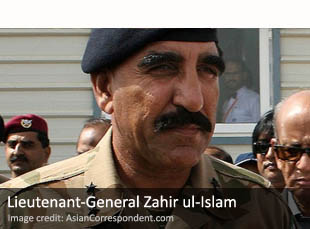
►►Are US and Pakistani spy agencies starting to get along? The relationship between the CIA and Pakistan’s Inter-Services Intelligence (ISI) agency has been at the core of Washington and Islamabad’s alliance for over a decade now. But over the past two years, as suspicions have grown, the two sides had become near adversaries. After months of relations languishing at an all-time low, Pakistan and the US may now be opening up a fresh phase of engagement. Following US Secretary of State Hillary Clinton’s recent apology for the loss of 24 Pakistani soldiers at a border checkpoint last November, NATO supplies are rumbling through again. Washington has also released funds for Pakistani military operations it had previously withheld. And, perhaps most crucially, the two fractious allies’ top spies are said to be talking again. New ISI Director Zahir ul-Islam (pictured) visited Washington for talks earlier this month.
►►Why the US isn’t arming Syria’s opposition –yet. Up until this point, the only thing the US has owned up to is providing humanitarian assistance and communications equipment to Syrian opposition groups. A report earlier this month revealed that US President Barack Obama signed a secret “finding” in July, which allows the CIA to take action in Syria, but does not include lethal support. In other words, the US won’t be sending in Seal Team Six to take down Assad any time soon, but it is training certain groups to handle and gather intelligence. Why is that?

News you may have missed #774 (lawsuit edition)

NSA headquartersBy IAN ALLEN | intelNews.org |
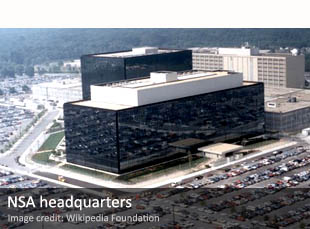
►►NSA whistleblower sues over property seized in leak raid. Diane Roark, a former staffer for the US House of Representatives Permanent Select Committee on Intelligence, has filed a lawsuit to seek return of computers, electronic devices and papers seized from her home in 2007. Roark, who handled the House’s oversight of the National Security Agency from 1997 to 2002, was suspected by the FBI of being a source for The New York Times‘ disclosure of the NSA’s warrantless wiretapping program STELLAR WIND, which she denies.
►►Lawsuit forces US agency to disclose CIA files. The US Veterans Administration has been ordered to disclose documents relating to the CIA’s Cold War-era experimentation on American soldiers. Beginning in the 1950s, the military and CIA utilized former Nazi scientists to test the effects of 400 types of drugs and chemicals, including mescaline, LSD, amphetamines, mustard gas, and nerve agents, on US soldiers, according to a lawsuit brought by the Vietnam Veterans of America and individual soldiers. Under the lawsuit, a judge in California has ruled the VA must hand over documents pertaining to the use of at least 7,800 service personnel as “human guinea pigs” by the US Army and the CIA.
►►Syrian spy tried to infiltrate German intelligence. A suspected Syrian spy who was arrested in Germany earlier this year and has now been charged with espionage, once tried to infiltrate the country’s intelligence services, according to German officials. The man, identified only as Akram O., was employed by Syria’s embassy in Berlin, and tasked with keeping tabs on Syrian opposition activists living in Germany. His application to work for the German federal government was made “at the behest of his intelligence agency handlers”, according to prosecutors. His application was turned down, however. The Syrian national applied for German citizenship in 2009, which was also denied.

Obama authorizes CIA to conduct ‘non-lethal covert action’ in Syria

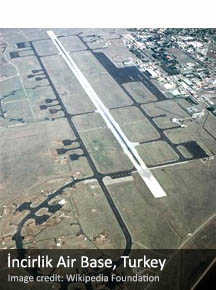
İncirlik Air Base, TurkeyBy JOSEPH FITSANAKIS | intelNews.org |
United States President Barack Obama has officially authorized the Central Intelligence Agency to assist anti-government rebels in Syria, according to a new report by the Reuters news agency. That the US Intelligence Community is operating on the side of the Syrian rebels has been known for quite some time. British media reported in as early as June of this year that American and other Western spy agencies were sharing intelligence with the Syrian Free Army. Later in the same month, The New York Times revealed that “a growing team” of CIA operatives was participating in a multinational effort to smuggle Turkish- and Saudi-supplied weapons into Syria for use by anti-government militias. And in July we explained that, according to American media reports, the CIA’s chronic shortage of reliable agents inside Syria had led the Agency to lend its weight to several existing operations led by Turkish, Jordanian, Israeli, and other intelligence organizations in Syria. Now a new report by Reuters claims that the CIA’s activities in support of the Syrian Free Army are part of an executive order handed to the Agency by the US President earlier this year. The order, formalized through what is commonly known as a ‘Presidential Finding’, effectively authorized the CIA —America’s only government agency allowed to engage in covert action— to prioritize and concentrate its resources on the ongoing Syrian uprising. Several other US government agencies are openly backing the Syrian rebels, mostly through financial support in the form of “humanitarian assistance”. But Obama’s Presidential Finding is the first indication that the US government is engaged in covert action in Syria. The Reuters report confirms earlier indications that the ‘nerve center’ of the CIA’s operations in and around Syria is located in the southern Turkish city of Adana, home of the US-run İncirlik NATO Air Base. Read more of this post

Opposition fighters leave Syrian Free Army to fight for al-Qaeda

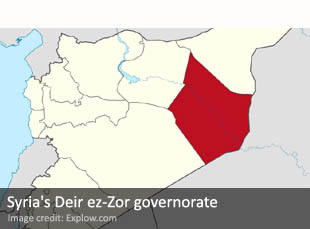
Syria's Deir ez-Zor governorateBy JOSEPH FITSANAKIS | intelNews.org |
Few outside Syria’s pro-government Alawite and Christian communities share the regime’s claim that it is fighting a war against Islamist terrorists. Clearly, the core membership of the Free Syrian Army consists of rebels whose grievances against the brutal rule of Bashar al-Assad are primarily ethnic and political, not religious. At the same time, it would be equally naïve to disregard the documented existence of several armed Islamist groups currently operating all over Syria. A case in point is the Deir al-Zour governorate, one of Syria’s largest provinces, which borders Iraq. Al-Qaeda-linked groups have operated in that region for at least a decade, far from the reach of the government in Damascus or the United States military stationed across the border in Iraq. The Syrian uprising has breathed new life to the al-Qaeda-linked groups in Eastern Syria. One of the most active such groups is  Jabhat al-Nusra, which translates into English as “Front for the Protection of the People of the Levant”. Al-Nusra, known informally as “Solidarity Front”, is widely considered al-Qaeda’s main branch in Syria. It has hundreds of members in Deir al-Zour’s towns and cities, including in Mohassan, where Solidarity Front vehicles can currently be observed patrolling the streets while bearing the black banners of al-Qaeda. British newspaper The Guardian, whose editorial position is unreservedly in support of the Syrian uprising, has managed to place one of its special correspondents, Iraqi-born Ghaith Abdul-Ahad, inside Deir al-Zour. While there, the journalist met a senior Jabhat al-Nusra commander who goes by the name Abu Khuder. A former Syrian army officer, Abu Khuder was one of the first Syrians in Deir ez-Zor province to join the Free Syrian Army. He soon quit, however, accusing the Free Syrian Army of operational ineptness and amateurism. He soon joined Jabhat al-Nusra, whose core leadership consists of hardened veterans of the Iraqi insurgency against the US military. According to Abdul-Ahad’s report, Abu Khuder now leads a Jabhat al-Nusra battalion calling itself “the strangers”, after a well-known Islamist madih (poetic eulogy) that celebrates al-Qaeda founder Osama bin Laden’s operations in the mountain ranges of Afghanistan. He told The Guardian that his “clear instructions” from the al-Nusra leadership are to actively assist the regional command of the Free Syrian Army, whose members he meets “almost every day”. Read more of this post

News you may have missed #771

Shawn HenryBy IAN ALLEN | intelNews.org |

►►Analysis: Ex FBI official says foreign spies biggest online threat. Former FBI executive assistant director Shawn Henry has warned that the biggest threat online comes not from terrorists or hackers, but from foreign intelligence organizations looking to steal intellectual property. “The threat from computer attack is the most significant threat we face as a society, other than a weapon of mass destruction”, he said in his opening keynote at the Black Hat 2012 conference in Las Vegas. “Everything we do —R&D, intellectual property, and corporate strategies— is stored or transmitted electronically. The DNA of companies is available to bad guys”.
►►Taiwanese officials jailed for espionage. Two Taiwanese former officials have been sent to prison by the Taiwan High Court for leaking state secrets to China. Presidential Office official Wang Ren-bing was jailed for two years after being found guilty of passing confidential information about President Ma Ying-jeou’s May 2008 inauguration to Chinese intelligence operatives. Chen Pin-jen, a former aide of Chinese Nationalist Party (KMT) Legislator Liao Kuo-tung, was sentenced to eight months in prison for delivering the confidential information Wang gave him to China. The two were arrested in 2009.
►►Germany charges suspected Syrian spy. A spokeswoman for federal prosecutors in Germany said Sunday that they have filed charges against suspected Syrian spy Akram O., one of two men arrested on suspicion of having spied on Syrian opposition activists in Germany for several years. The two were arrested in February during a sting operation involving over 70 German counterintelligence operatives, who searched the suspects’ apartments. The spokeswoman said she could not give further details before an official confirmation is issued that the suspect and the defense team have received the indictment.

News you may have missed #769 (analysis edition)

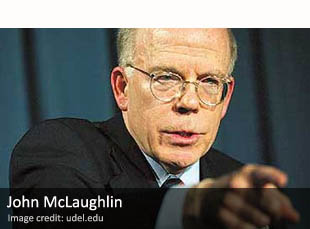
John McLaughlinBy IAN ALLEN | intelNews.org |

►►Is S. Korea’s spy agency losing its capabilities? The National Intelligence Service, South Korea’s primary external intelligence agency, is presumed to spend around US $1 billion a year, most of which it uses to spy on its northern neighbor. But when asked about the identity of the young woman who frequently accompanies new North Korean leader Kim Jong Un in his public appearances, the state intelligence agency offers no clear answer. Although it was seven months ago, at the time of Kim Jong-il’s funeral, that the woman was first spotted, the agency still does not know who she is. In the past 20 years, NIS has undergone a process of transformation to rid it of political functions. But the lingering question is: have the changes compromised the overall capabilities of the giant organization?
►►How 10 years of war has changed US spies. John McLaughlin, who was a CIA officer for 32 years and served as Deputy Director and Acting Director from 2000-2004, says he is often asked how American intelligence has changed in the 11 years since 9/11. His answer is that the changes are profound and have been transformative. Perhaps the most important thing to realize about American intelligence officers in 2012, he says, is that this is the first generation since Vietnam to have been “socialized” –that is hired, trained, and initiated– in wartime. And to a greater degree than even the Vietnam generation, their experience approximates that of their World War II forbears in the Office of Strategic Services (OSS) –the organization to which most American intelligence officers trace their professional roots.
►►Assessing the Social Media Battlefield in Syria. While the numerous insurgent factions and the Syrian security forces engage each other in combat in towns and cities to secure tangible battlefield gains, the warring parties are also waging a contentious information war in cyberspace, specifically within the virtual arena of online social media. The various strands of the opposition in Syria —political and violent— have taken to social media since the earliest stages of the uprising to advance their agendas. Analogous to their role in facilitating communication and information exchange during the wave of revolts that have been sweeping the Arab world since 2011, new media platforms such as the array of social media websites and related technologies that are available to the public at virtually little or no cost have become crucial to shaping how the crisis in Syria is portrayed and perceived.

US spy agencies turn to Israel, Turkey, for help in Syria war

Regional map of SyriaBy JOSEPH FITSANAKIS | intelNews.org |
Just days after a senior United States defense official admitted Pentagon intelligence analysts missed early signs of the Arab Spring, a new report claims that Washington is still “struggling to understand” the Syrian situation, sixteen months into the uprising. Citing “interviews with US and foreign intelligence officials”, The Washington Post says that the US Intelligence Community has yet to develop a clear understanding of the intentions of the regime of Syrian President Bashar al-Assad. Nor have American analysts been able to draw a lucid picture of the fragmented opposition forces in the country. The paper says that, even though US spy agencies have intensified their intelligence-gathering efforts targeting all sides of the civil war, they have been unable to establish a physical presence inside Syria. This, according to The Post, is partly due to Washington’s decision, back in February of this year, to shut down the US embassy in Damascus, which has traditionally served as staging ground for Central Intelligence Agency operations inside Syria. This latest article confirms previous reports in The New York Times and elsewhere, of a small CIA team operating along the Syrian-Turkish border, with the task of overseeing a multinational effort to secretly deliver weapons, communications equipment and medical supplies to Syrian opposition forces. But this is about as close as the CIA has managed to get to Syria; for the most part, like its partner agencies in the US Intelligence Community, the Agency is “still largely confined to monitoring intercepted communications and observing the conflict from a distance”, says The Washington Post. As a result, US intelligence agencies are becoming increasingly dependent on their counterparts in Turkey, Jordan, and —most of all— Israel for reliable ground intelligence from inside Syria. Read more of this post

News you may have missed #762

Danni YatomBy IAN ALLEN | intelNews.org |

►►Italy postpones court decision on wanted CIA operatives. The Washington Post has published a useful update on Sabrina De Sousa, one of nearly two-dozen CIA operatives who were convicted in Italy in 2007 for the kidnapping four years earlier of Egyptian cleric Hassan Mustafa Osama Nasr. The Americans kidnapped Nasr, known as Abu Omar, from the streets of Milan without the consent of Italian authorities. The Italians, who were themselves carefully monitoring Nasr, responded by convicting all members of the CIA team in absentia, and notifying INTERPOL. But last Friday, the Supreme Court of Cassation in Rome postponed its verdict after a two-day hearing aimed at deciding whether to uphold or overturn the Americans’ convictions.
►►Ex-Mossad chief urges Israel to prepare for military action in Syria. In an interview with British news network Sky News, former Mossad Chief Danni Yatom said last week that Israel must be prepared for the possibility of military attacks on Syria, which may deteriorate into war.  He said his warning stems from the fear that Syria’s hundreds of tons of chemical weapons will fall into the hands of terrorists. “We would have to pre-empt in order to prevent it. We need to be prepared to launch even military attacks […] and military attacks mean maybe a deterioration to war”, said the former Mossad Director.
►►British spy agencies failed to predict Arab Spring. The Intelligence and Security Committee of the British Houses of Parliament has said in its annual report that British spy agencies had been surprised by the spread of unrest during the Arab Spring and failed to predict the dramatic uprisings that swept the region. The report also noted that the Arab Spring had exposed Britain’s decision to scale back intelligence assets in much of the Arab world, in favor of monitoring Iran and al-Qaeda. We at intelNews wrote about this in 2011.

Comment: Did Israel assassinate senior Hamas official in Syria?

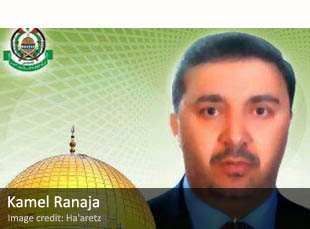
Kamel RanajaBy JOSEPH FITSANAKIS | intelNews.org |
The leadership of Hamas has accused Israel of assassinating one of its senior officials in Syria last Wednesday. The Palestinian militant group, which controls the Gaza Strip, announced late last week that the charred body of Kamel Ranaja had been found in his half-burned apartment in Syrian capital Damascus. Ranaja, known informally as Nizar Abu Mujhad, was said to have replaced the post of the late Hamas weapons procurer Mahmoud al-Mabhouh. Al-Mabhouh was killed in 2010 in Dubai, United Arab Emirates, most likely by Israeli intelligence agency Mossad. Citing French news agency Agence France Presse, Israeli newspaper Ha’aretz quoted an unnamed Hamas official as saying that “a group of people entered [Ranaja’s] home […] and killed him”, adding that “according to the information that we have gathered, the Mossad is behind the attack”. Reports from Reuters published in the British press suggest that Ranaja’s charred body “bore signs of torture” and that it had been dismembered. There are also suggestions that the group that attacked the Hamas official’s apartment took with them an unspecified volume of documents and computer files before setting the place on fire.

Read more of this post

News you may have missed #756 (analysis edition)

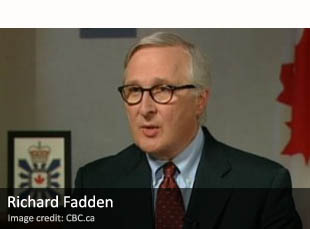
Richard FaddenBy IAN ALLEN | intelNews.org |
►►Intel analysts taking over leading role in spy game. In a recent speech obtained by the Canadian press under Canada’s access-to-information laws, Richard Fadden, Director of the Canadian Security Intelligence Service, said that the role of the undercover operative is starting to take a back seat to the job of the behind-the-scenes intelligence analyst. Speaking at a conference of the Canadian Association of Professional Intelligence Analysts in November 2011, Fadden said that, “suddenly the ability to make sense of information is as valued a skill as collecting it”.
►►US intel doesn’t see Syrian regime cracking. Despite major defections and an increasingly tough and brutal resistance, intelligence officials in the United States say that Syria’s government is unlikely to fall anytime soon. A report from Reuters quotes members of the intelligence community who say that Bashar al-Assad’s inner circle is showing no signs of cracking, and without a wide international consensus to intervene militarily —a consensus that does not exist— the ongoing conflict has no end in sight. Officials also describe the war as a “see-saw” battle with rebel forces gaining strength and improving tactics, only to see the military escalate the size and intensity of it own response, with neither side maintaining a decisive edge.
►►Arrests of Iranians in Kenya spark fears of plot. The recent arrest of two Iranians in Kenya on suspicion of plotting bomb attacks has heightened fears that Tehran is widening its covert war against Israel and the United States, as Washington expands its secret intelligence operations across Africa. Kenya security authorities, aided by US and British agents, arrested the two Iranians June 20 in Nairobi, the West African country’s capital. The men reportedly led authorities to a cache of 33 pounds of military-grade explosive, believed to be RDX.

News you may have missed #753

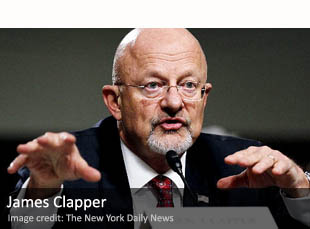
James ClapperBy IAN ALLEN | intelNews.org |
►►US spy agencies consider new polygraph questions. The US Director of National Intelligence, James Clapper, is considering a proposal to force intelligence agency employees to answer a direct question in their polygraph examinations about whether they have disclosed information to reporters. The Los Angeles Times quotes “officials familiar with the matter”, who say that Clapper is preparing “changes to the counterintelligence polygraph policy”, though “no final decisions have been made”.
►►Ex-“New Republic” editor speaks out against Pollard release. Few American journals can claim to have stood more staunchly by Israel than The New Republic. So we should be paying attention when Martin Peretz, who edited the magazine from 1974 until 2011, comes out against the proposed release of Jonathan Jay Pollard. Pollard is a former US Navy analyst, who is serving a life sentence for spying on the US for Israel. Peretz calls Pollard “a scoundrel spy” and reminds his readers that “before he decided to deliver reams of sensitive [US] intelligence and defense documents to Israel’s security apparatus, [Pollard] was negotiating with Pakistan […] to do similar chores for it”.
►►UK leader considered using special forces to seize Russian ship. British Prime Minister David Cameron considered ordering British special forces to board and impound a Russian ship suspected of carrying arms to Russian ally Syria, it has emerged. The ship, MV Alaed, was sailing in British waters when the US placed pressure on Britain to halt it. But the Russian ship suddenly changed course about 50 miles off the north coast of Scotland and it is showing that its next port of call is Murmansk, in Russia.