White House review ‘found no evidence’ of Huawei spying for China
October 18, 2012 2 Comments
 By JOSEPH FITSANAKIS | intelNews.org |
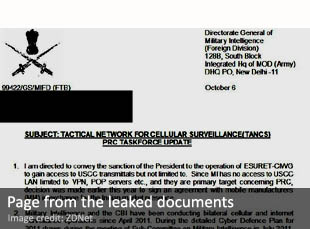
A review commissioned by the government of the United States has reportedly found no evidence that Chinese telecommunications hardware manufacturer Huawei Technologies spied for the Chinese government. The 18-month-long review, which was ordered directly by the White House, examined the question of security vulnerabilities posed by telecommunications hardware suppliers, which could theoretically harm US service providers and pose a danger to US national security. The report, which was allegedly aided by several US intelligence agencies and other federal government departments, was based on detailed interviews with nearly 1,000 telecommunications equipment consumers across the United States. It was concluded at the start of 2012, but remains largely classified. However, Reuters news agency cites “two people familiar with the probe”, who claim that the probe contains “no clear evidence” that Huawei spied for the government of China. At the same time, however, the probe concluded that Huawei telecommunications hardware contains numerous structural vulnerabilities which could help hackers exploit telecommunications networks supported by the Chinese company. According to one source quoted by Reuters, the White House report found that the telecommunications hardware sold by Huawei was “riddled with holes”. Read more of this post


















 intelNews.org
Islamic State shuts down phones in Mosul to stop informants
December 1, 2014 by Joseph Fitsanakis 1 Comment
The Islamic State has cut off all telephone service provision in the largest city under its control, reportedly in an effort to stop spies from passing information to Syrian, Iraqi and American intelligence services. Militants from the Islamic State, also known as the Islamic State of Iraq and al-Sham (ISIS), conquered the northern Iraqi city of Mosul in June. They encountered almost no resistance upon entering the Sunni city of over a million inhabitants, as the crumbling Iraqi military kept hastily retreating south. Today Mosul is the most populous urban center under direct Islamic State rule. In July, the group’s seldom-seen leader, Abu Bakr al-Baghdadi, used Mosul as the backdrop of his propaganda video, in which he announced the official establishment of the Islamic State, a militant Sunni caliphate that is administered strictly through sharia law. Just weeks later, on August 8, the United States military began conducting airstrikes in Mosul, targeting senior Islamic State personnel there. The precise effects of these airstrikes are under debate in strategy circles in Washington, Baghdad and elsewhere. Last Thursday, however, residents of Mosul told the Associated Press news agency that Islamic State authorities had decreed the temporary termination of all telephone provision in the city. The measure was allegedly taken in order to prevent informants in and around Mosul from tipping off adversary intelligence agencies as to the physical whereabouts of senior Islamic State commanders. The measure was reportedly announced in the evening of Wednesday, November 26, through a radio station in Mosul that acts as the official news organ of the Islamic State in the Iraqi city. The Associated Press reported scenes of “chaos” and “paralysis” in the streets of Mosul on Thursday, as businesses came to a virtual standstill following the decision by the Islamic State to terminate telephone provision throughout the city. Some observers note that this move by the Islamic State constitutes a drastic change from the group’s standard tactic so far, which has centered in the efficient provision of basic services to the Sunni populations under its control, in an effort to win over their ideological support and political allegiance. Moreover, Mosul, whose population is almost uniformly Sunni, and is viscerally opposed to the Shiite-dominated government in Baghdad, is generally believed to be an Islamic State stronghold. If the militant group is finding it difficult to ensure the allegiance of Mosul’s population, then this could be a sign of fragmentation within the ranks of its supporters in all of northern Iraq. The Associated Press said some residents of Mosul are reportedly still able to access the Internet, which operates through a network that is separate from that of the telephone system.
Filed under Expert news and commentary on intelligence, espionage, spies and spying Tagged with Iraq, Islamic State, Islamic State of Iraq and al-Sham, Mosul (Iraq), News, telephony