News you may have missed #0118

  • Second spy operation against media revealed in Bulgaria. A few months ago, Bulgarian public opinion was shocked by revelations about Operation GALLERY (a.k.a. Operation GALERIA), a project by Bulgarian State Agency for National Security (DANS) aimed to intimidate the country’s press. Now a second domestic spying program has been discovered by the appropriately named Bulgarian Parliamentary Committee for Controlling DANS.
  • US military cannot analyze surveillance footage influx. The heaps of intelligence footage gathered by US military spy drones and surveillance cameras are already more than analysts can handle. So DARPA, the US military’s research arm, is looking for a software program that will automate the analysis process.

Bookmark and Share

News you may have missed #0117

Bookmark and Share

Chechnya President says US, UK spies active in region

Ramzan Kadyrov

Ramzan Kadyrov

By JOSEPH FITSANAKIS | intelNews.org |
The pro-Moscow President of Russia’s Chechen Republic has accused American and British intelligence services of collaborating with Muslim separatists in the region, in order to “split [Russia] apart”. Speaking to conservative newspaper Zavtra, President Ramzan Kadyrov said Russian government forces are “fighting in the mountains [against] the American and English intelligence agencies”. Asked to elaborate, Kadyrov alleged he had personally seen the US driver license of a CIA operative who was shot dead during a security operation he led. Kadyrov’s comments mark the first public allegation by a Russian government official of Western intelligence activity in the Russian Caucasus. Read more of this post

CIA using US consulate in Dubai to recruit Iranian spies: book

Dubai

Dubai

By JOSEPH FITSANAKIS | intelNews.org |
The CIA routinely uses the US consulate in Dubai, United Arab Emirates, to recruit Iranian spies, according to a new book. In Dubai: The World’s Fastest City, author Jim Krane quotes two unnamed American diplomats who say that US consular employees in Dubai issue travel visas to the thousands of Iranians who request them “only in exchange for inside information on the country”. Washington has no formal diplomatic relations with Tehran, and so Iranians use instead the US consular office in Dubai, which is situated right across from Iran in the Persian Gulf. Read more of this post

News you may have missed #0115

  • China says US intelligence report shows Cold War prejudice. The 2009 US National Intelligence Strategy (.pdf) report singles out Iran, North Korea, China and Russia as nations with the ability to challenge US interests. But government-owned China Daily newspaper says the report is “stuffed with outdated pride and prejudice” and “reflects typical Cold War and power politics mentality”.
  • Somali suicide bomber lived in the US. After Shirwa Ahmed, a US citizen of Somali descent who last October became history’s first known US-born suicide bomber, another Somali-American, who lived in Seattle, has been identified as one of the participants of a suicide bombing that killed 21 peacekeepers in Mogadishu last week. US officials have been warning for almost a year about the strange phenomenon of the “disappearing Somali youths” from their US homes.
  • UK spies used Monopoly sets to help WWII prisoners escape. British secret services embedded escape tools and maps in Monopoly game sets distributed by humanitarian groups in care packages to imprisoned British soldiers during World War II. The article contains some interesting photographs.

Bookmark and Share

News you may have missed #0114

Bookmark and Share

News you may have missed #0113

  • US intelligence caused change in missile shield plans, says Gates. US Defense Secretary Robert Gates said that the Obama administration’s decision to abandon the previous administration’s plans for a land-based missile defense system in Eastern Europe came about because of a change of the alleged threat posed by Iran in US intelligence reports. But he also said that the Bush administration plans will not be scrapped. The land-based missiles in Poland and the Czech Republic will be replaced by missile interceptors aboard US naval ships.
  • Canada preparing big balloon (?) to spy on Taliban. The Canadian armed forces are testing a large white balloon equipped with an on-board spy camera, which will be used in Afghanistan to detect improvised explosive devices. Depending on the exact camera used, the system could have a surveillance range of five to twenty kilometers.
  • Portugal’s secret services deny spying on president. Portugal’s SIS secret service agency was forced to issue a rare public statement last week, denying having spied on the country’s president, Anibal Cavaco Silva, of the Social Democratic Party, just 10 days before a closely-fought parliamentary election. Silva is Portugal’s first right-wing head of state since the end of the dictatorship in April 1974.

Bookmark and Share

Analysis: Is Afghanistan really important in the “war on terrorism”?

Paul P. Pillar

Paul P. Pillar

By JOSEPH FITSANAKIS | intelNews.org |
The Deputy Chief of the CIA’s Counterterrorism Center from 1997 to 1999, Paul Pillar, has authored an interesting editorial in which he asks “how important are physical havens to terrorist groups, such as al-Qaeda?”. The answer: not very. Writing in The Washington Post, Pillar points out that the main unstated assumption behind the US invasion of Afghanistan, namely that the country must not be allowed to again become a haven for terrorist groups, is incompatible with what we know about how such groups organize. If they are offered a haven, groups such as al-Qaeda will use it for basic training of recruits, says Pillar. But operations planning and training does not require such a base, nor is such a center crucial for successful execution of operations. Read more of this post

News you may have missed #0112

  • Obama refuses to halt CIA probe. Arguing that “nobody’s above the law”, the US President has rejected a request by seven former heads of the CIA to end the inquiry into abuse of suspects held by the Agency.
  • Naval intel agent caught spying on famous Philippine artist. Philippine prizewinning poet, critic and dramatist Bienvenido Lumbera says he will file a complaint against the Philippines armed forces over the apprehension of a Naval Intelligence Security Force agent, who was caught spying outside his home. The country’s government is supposedly concentrating (with US logistical, intelligence and combat assistance) on fighting the Muslim separatist Moro ethnic group (including the Abu Sayyaf Group) in the south, but it is apparently spying on artists and intellectuals on the side.

Bookmark and Share

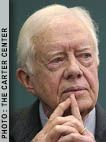
Ex-President Carter says US knew about 2002 Venezuela coup

Jimmy Carter

Jimmy Carter

By JOSEPH FITSANAKIS | intelNews.org |
Former US President Jimmy Carter has said that the US was aware of plans for a 2002 military-civilian coup against the government of Venezuelan leader Hugo Chávez, and that it may have even provided assistance to the coup plotters. In an interview to Colombian newspaper El Tiempo, published yesterday, Carter said there was “no doubt that in 2002 the United States had at the very least full knowledge about the coup, and could even have been directly involved”. The coup attempt took place on April 11, 2002, when President Chávez was illegally detained by the coup plotters, who also dissolved the Venezuelan National Assembly and the Supreme Court, and voided the country’s Constitution. But the move ended in failure 47 hours later, after key sectors of the military and parts of the anti-government opposition refused to side with the coup leaders. Read more of this post

CIA to deploy in record numbers in Afghanistan

CIA HQ

CIA HQ

By JOSEPH FITSANAKIS | intelNews.org |
The CIA is preparing to deploy record numbers of operatives and analysts to Afghanistan, according to US officials with access to classified documents, who spoke on condition of anonymity to The Los Angeles Times. Some said that once the intelligence surge is over the CIA’s station at the US embassy in Kabul, Afghanistan, which coordinates CIA activity in the country, will be “among the largest in the agency’s history”, rivaling and perhaps even surpassing those in Iraq, and even in Vietnam in the late 1960s. By the end of 2001, the Agency’s presence in Afghanistan was limited to about 150 agents. This number had doubled by 2005, and current estimates place the CIA’s force in the country to about 700, a number which may double again, once the intelligence surge has reached its peak. Read more of this post

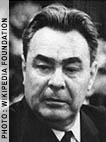
Declassified study sheds new light on Soviet nuclear war thinking

Brezhnev

Brezhnev

By JOSEPH FITSANAKIS | intelNews.org |
US defense analysts exaggerated Soviet aggressiveness and understated Moscow’s fears of a US first nuclear strike, according to a recently released study on Soviet Intentions: 1965-1985, prepared in 1995 by the Pentagon contractor BDM Corporation. The two-volume report, published earlier this week for the first time by the National Security Archive, is based on an extraordinarily revealing series of interviews with former senior Soviet defense officials, conducted during the final days of the Soviet Union. Read more of this post

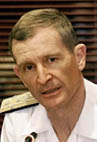
Total US intelligence budget revealed for the first time

Dennis Blair

Dennis Blair

By IAN ALLEN | intelNews.org |
The US Director of National Intelligence, Admiral Dennis Blair, has revealed the total amount of America’s military and civilian intelligence budget for the first time in history. Blair, who oversees all 16 American intelligence agencies, said the country’s intelligence program costs $75 billion annually. This number includes funds for military intelligence agencies, which have previously been classified. Speaking to reporters on Tuesday, Blair argued that the “old distinction between military and non-military intelligence is no longer relevant”. The DNI was referring to the traditional budgetary distinction between the Military Intelligence Program (MIP) and the National (civilian) Intelligence Program (NIP), which make up the US intelligence budget. Read more of this post

French former spy wanted in Dubai to be tried in Florida

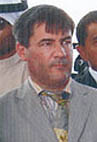
Herve Jaubert

Herve Jaubert

By JOSEPH FITSANAKIS | intelNews.org |
A French former spy who escaped secretly from the United Arab Emirates, where he is wanted for fraud and embezzlement, will face trial in the US, where he currently resides. Herve Jaubert left Direction Générale de la Sécurité Extérieure (DGSE), France’s foreign intelligence agency, in 1993, to pursue a career in the luxury tourist market, first in Florida and then in Dubai. But less than a year ago, Emirates authorities accused the Frenchman of embezzling nearly $4 million from Dubai World, a company he helped found in the country. Jaubert says he was threatened with torture by Emirates authorities and decided to escape, despite having been forced to surrender his French passport. He allegedly left the country using an inflatable rubber dinghy to reach a sailboat located just outside UAE territorial waters, which he then used to sail to India. Read more of this post

News you may have missed #0107

  • CIA invests with low-power Wi-Fi company. The CIA’s investment arm, In-Q-Tel, has announced a strategic investment and technology development agreement with GainSpan. The company makes single-chip wireless sensor networks and other embedded applications, with the aim of enabling portable devices to run for up to 10 years on a single AA battery. In-Q-Tel has invested with more than 140 companies in recent years, including relatively unknown software startups Lingotek and Lucid Imagination.
  • Indian spies released from Pakistani prison seek compensation. Three Indian intelligence agents, who were in recent years released from captivity in Pakistani jails, have said that the Indian government has not honored its commitment to take care of them and their families.

Bookmark and Share