Comment: Drawing Careful Conclusions from the Iran Assassination

Mostafa Ahmadi-Roshan's carBy JOSEPH FITSANAKIS* | intelNews.org |
The body of Iranian academic Mostafa Ahmadi-Roshan was still warm when officials in Tehran began accusing Israel and the United States of having planned his assassination. Leveling such accusations without offering adequate proof is certainly unstatesmanlike; but even hasty conclusions can be logical, and even sworn enemies of the Iranian government would find it difficult to point at other possible culprits. Keeping in mind that, at this early stage, publicly available information about the assassination remains limited, are there conclusions that can be drawn with relative safety by intelligence observers? The answer is yes. Roshan, 32, was a supervisor at Iran’s top-secret Natanz fuel enrichment plant. His scientific specialty was in the technology of gas separation, the primary method used to enrich uranium in Iran’s nuclear energy program. His assassination, which took place in broad daylight amidst Tehran’s insufferable morning traffic, was a faithful reenactment of the attacks that killed two other Iranian nuclear scientists in November of 2010. A motorcycle, practically indistinguishable from the thousands of others that slide maniacally between cars in the busy streets of the Iranian capital, made its way to the car carrying Ahmadi-Roshan. As the driver kept his eyes on the road, the passenger skillfully affixed a magnetic explosive device to the outside surface of the targeted vehicle, next to where Ahmadi-Roshan was sitting. By the time the blast killed the scientist, as well as the car’s driver, and injured a third passenger, the motorcyclists were nowhere to be found. Two-and-a-half hours later, when the report of Ahmadi-Roshan’s assassination was making its way through the newsroom of Iran’s state-owned Fars news agency, the assassins were making their way to Dubai, Oman, Qatar, or various other destinations around the Middle East. Read more of this post
News you may have missed #664

Hakan FidanBy IAN ALLEN | intelNews.org |
►►Iran nuclear defector’s family spared deportation from Canada. Family members of a top defector who worked for Iran’s nuclear energy program have been temporarily spared deportation from Canada, after claiming they will be tortured by Iran’s secret police. The defector, his daughter and mother, have not been identified in media reports. The names of their lawyers were not made public either.
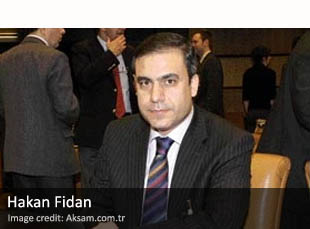
►►Turkish spy services to be “among world’s largest”. Turkey commemorates the 85th anniversary of its National Intelligence Organization, known as MİT. The agency’s undersecretary, Hakan Fidan (pictured), told Turkish media that within the next two to three years, they aim to become one of the largest intelligence services in the world, and that they are “synthesizing the CIA-FBI model”.
►►Analysis: New rules for CIA drones in Pakistan. The current pause in CIA drone strikes in Pakistan (55 days and counting) is now the longest during Barack Obama’s presidency. The break in drone strikes was enforced by Islamabad after NATO killed 24 Pakistani soldiers in November. The break coincided with a major policy reappraisal by Washington, and it has given Islamabad room to refocus on its own strategic needs. In the coming weeks CIA drone attacks are expected to resume in Pakistan. But according to leaks and hints, there are likely to be far fewer strikes, and far fewer casualties.

US expels Venezuelan diplomat over cyberespionage allegations

Livia Acosta NogueraBy JOSEPH FITSANAKIS | intelNews.org |
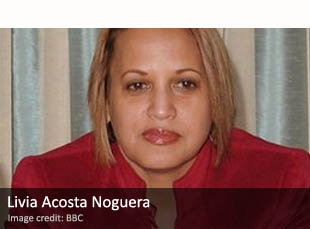
The United States has ordered the immediate expulsion of the head of the Venezuelan consulate in Miami, over allegations that she helped coordinate a cyberattack against US government targets in 2008. The diplomat, Livia Acosta Noguera, was declared “persona non grata” (an unwelcome person) by the US Department of State last Friday, and was given 72 hours to leave the country. State Department officials refused to discuss the reasons for Acosta’s expulsion. But the BBC said that the expulsion order was prompted by a letter sent last month to US Secretary of State Hillary Clinton by four members of the US Congress. The letter’s authors reportedly raised concerns about a documentary aired in December by Univision, a US-based Spanish-language broadcaster, titled “The Iranian Threat”. According to reports, the documentary alleged that Acosta was part of a multinational team of diplomats from Venezuela, Iran and Cuba, who, while stationed in Mexico in 2008, helped orchestrate a cyberespionage operation against US targets. The alleged operation was aimed at computer servers belonging to the US government computer, including some at the Department of Defense, the National Security Agency, the Central Intelligence Agency, and the White House. Computer servers at several nuclear power plants across the US were also reportedly targeted. The documentary exposé, which later appeared in print in US-based Spanish-language newspaper El Nuevo Herald, included allegations that Acosta is in fact a member of the Bolivarian Intelligence Service, Venezuela’s foremost external intelligence agency. Read more of this post

Did cell phone companies help India spy on the United States?

Page from the Lords of Dharamraja document leakBy JOSEPH FITSANAKIS | intelNews.org |
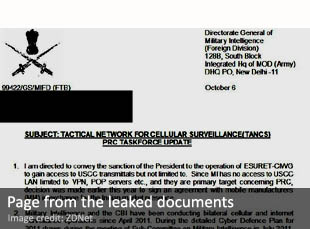
Leaked documents acquired by a computer hacker collective appear to show that international cell phone manufacturers helped Indian intelligence agencies spy on the United States, in return for access to the Indian cellular phone market. The documents, which are written in English, were posted online on Saturday by a group of Indian hackers calling themselves Lords of Dharamraja. In a statement, the group said they obtained the documents by breaking into the computer servers of Indian Military Intelligence, after managing to acquire the source code of Symantec Corporation, makers of Norton antivirus software. According to the documents, the companies arm-twisted to assist Indian intelligence agencies to spy on the US included Apple, Nokia, and Research in Motion, the company that builds BlackBerry devices. The documents also appear to show that Indian intelligence agencies were particularly eager to spy on the United States-China Economic and Security Review Commission. Established by the US Congress in 2000, the Commission is tasked with researching and reporting on the national security implications of bilateral trade between the US and China. Allegedly, the cellular telephone makers provided Indian intelligence agencies with backdoor access to personal phones used by Commission members. These back doors allegedly allowed the Indian Military Intelligence Directorate and India’s Central Bureau of Investigation to spy on Commission members beginning in April of 2011. Read more of this post

News you may have missed #661

Reza KahliliBy IAN ALLEN | intelNews.org |
►►Britain increases pay for key intelligence staff. Having seen many of its key intelligence staff lured away by tech heavyweights like Google and Microsoft, the UK government is apparently offering bonuses and payouts to key intelligence staff to ensure they don’t leave their jobs at the Government Communication Headquarters (GCHQ). The UK Cabinet Office has stated that the bonuses to be paid to its key staff have been already given the green light.
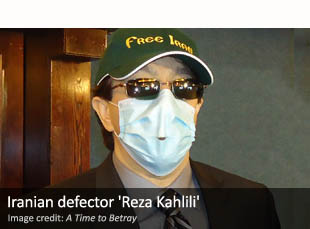
►►Ex-CIA spy sees split in Iran’s Revolutionary Guards. Reza Kahlili (codenamy WALLY) is the pseudonym used by an Iranian defector to the US, who claims to have worked as a CIA agent in the 1980s and early 1990s. Kahlili (pictured), who says he was a member of the Islamic Revolutionary Guard Corps (IRGC), the ideological protectors of Iran’s 1979 Islamic Revolution, argues that a serious split is developing within the IRGC, with one faction favoring the overthrow of the government.
►►A rare look at Fort Bragg’s Special Warfare Center. The US Special Warfare Center at Fort Bragg is a CIA-approved paramilitary training facility, aimed at members of the US Army Green Berets, Navy SEALs and Marine Corps special operators. The piece claims –rather unconvincingly– that the Center is “an illustration of how special operations and intelligence forces have reached an easier coexistence, after early clashes where CIA officers accused the military operators of ineptly trying to run their own spy rings overseas without State Department or CIA knowledge”.

News you may have missed #659

China and PakistanBy IAN ALLEN | intelNews.org |
►►China wants military bases in Pakistan. An Indian intelligence report leaked in the country’s press appears to reveal that China and Pakistan are in secret negotiations to allow Beijing to build military bases on Pakistani soil. The report states that “China’s desire for a military presence in Pakistan has been discussed by the political and military leadership of that country in the recent months. China’s deepening strategic penetration of Pakistan and joint plans to set up […] oil pipelines/rail/roads as well as naval and military bases are a matter of concern”.
►►Turkey ‘almost shot down’ Israeli spy drone. An Israeli drone flying over Turkey was nearly intercepted by Turkish aerial defense forces, an Istanbul-based media outlet reported on Tuesday. According to the report, “by the time the order [to shoot down the Israeli drone] was given, [it] had already left the area”. A spokesperson for the Israel Defense Forces refused to comment on the Turkish report.
►►Analysis: Global apparatus for drone killing emerges under Obama. “The Obama administration’s counterterrorism accomplishments are most apparent in what it has been able to dismantle, including CIA prisons and entire tiers of al-Qaeda’s leadership. But what the administration has assembled, hidden from public view, may be equally consequential”. Excellent analysis by Greg Miller, who argues that “the rapid expansion of the drone program has blurred long-standing boundaries between the CIA and the military”.

US gave N. Ireland police weapons, spy equipment, despite Congress ban

Royal Ulster Constabulary forces in the 1980sBy JOSEPH FITSANAKIS | intelNews.org |
Declassified documents show that thousands of American-made weapons, as well as spy equipment, ended up in the hands of Northern Ireland’s police force in the 1980s, despite a strict ban enacted by Congress. The ban was passed in 1979, following strong pressure by organized groups in the Irish-American community. The latter accused Northern Ireland’s police, known as the Royal Ulster Constabulary (RUC), of severe human rights violations and systematically excluding Catholic recruits. But internal government documents released in Northern Ireland this week, reveal that thousands of pieces of American-made weaponry, as well as surveillance equipment, continued to get into the hands of the RUC, despite the official ban. According to the documents, which were released under the UK’s 30-year declassification rule, the RUC eventually managed to collect all 6,000 Ruger revolvers it had ordered from American manufacturers before 1979, when the Congressional ban was enacted. The weapons continued to be shipped to Northern Ireland by way of “third-party suppliers”, who sent them secretly and in small quantities, so as not to arouse suspicion. The documents also state that the RUC was able to “receive [from the United States] some US equipment for surveillance work which is arguably more sensitive than guns”. The documents do not specify if the White House was aware that the Congressional ban against selling weapons to the RUC was being broken, or if the weapons were being surreptitiously smuggled by the British government, which hid the shipments from Washington. But The Belfast News Letter, which accessed the declassified documents, said it spoke to “one former senior RUC officer” who said that “the Reagan Administration was aware of the shipments” and had “turned a blind eye to the issue”. Read more of this post

News you may have missed #657

Israel and IranBy IAN ALLEN | intelNews.org |
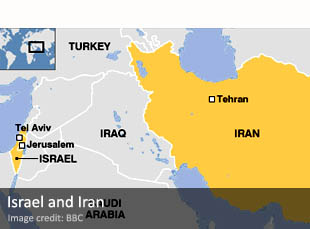
►►Israeli company exported Internet-monitoring hardware to Iran. Israel bans all trade with its enemy, Iran. It turns out, however, that Israeli Internet-monitoring equipment has been finding its way to Iran for years, through Denmark. An Israeli company shipped the equipment to Denmark, where workers stripped away the packaging and removed the labels, before forwarding it to Iran. Now Israeli trade, customs and defense officials say they “did not know” that the systems were ending up in Iran.
►►Court decision revives NSA lawsuits. The 9th US Circuit Court of Appeals has ruled that the case of Jewel v NSA, which claims that after the 2001 terrorist attacks the NSA began large-scale monitoring of digital traffic, with the assistance of AT&T and others, can proceed. At the same time, the court denied leave to continue on a linked case against AT&T, for aiding and abetting the surveillance. The court upheld the 2008 Foreign Intelligence Surveillance Act (FISA) revision, voted for by the current president, which grants the telecommunications companies retroactive immunity from any actions carried out during the period.
►►Czechs charged with espionage in Zambia sent home. Three Czech citizens, who were detained in Zambia on October 12, 2011, and charged with espionage, have returned home, the Czech Foreign Ministry said Sunday. A ministry spokesman declined to give any details on the return of the three Czechs, who were arrested after they were found taking pictures near military sites.

CIA installed nuclear surveillance device atop Himalayas mountains

Nanda DeviBy JOSEPH FITSANAKIS | intelNews.org |
The United States Central Intelligence Agency tried at least twice to install a nuclear-powered surveillance device atop the Indian Himalayas, in an effort to spy on China. The decision to plant the device was taken in 1964, soon after communist China detonated its first nuclear bomb. In 1965, a team of CIA operatives attempted to climb Nanda Devi in the Garhwal Himalayas, which, at 25,645 feet (7,816 meters), is the highest mountain peak located entirely within Indian territory. But the top-secret mission failed miserably after adverse weather forced the CIA team to give up its effort approximately 2,000 feet below the summit. Battling against a heavy snowstorm, the CIA officers abandoned the 125-pound device, which was eventually swept away (.pdf document) by an avalanche. Incredibly, the team members deserted the surveillance device even though they knew it contained plutonium 238, which can emit radioactivity for over 500 years. In 1966, the same CIA team returned to Nanda Devi, in an effort to recover the complex surveillance instrument, but failed to locate it. In response to the second failed mission, the Agency decided to close the book on Nanda Devi, and instead constructed an identical surveillance device, which was transported and installed on Nanda Kot, a mountain peak located about nine miles (15 km) southeast of Nanda Devi. At 6,861 meters, Nanda Kot is about 3,000 feet shorter and far less steep than Nanda Devi. In 1967, a successful CIA attempt was made to reach the peak of Nakda Kot, where the radioactive surveillance device was installed. It is believed that it served its purpose before being abandoned there in 1968. Ten years later, in 1978, both operations were revealed in an article published in US-based Outside magazine. The revelation caused a major political uproar in India, as many Indians consider the Himalayas ‘sacred’ ground. Now the National Archives of India has released a batch of previously classified internal documents from India’s Ministry of External Affairs. Read more of this post

News you may have missed #656: Outed spies edition

Alexander LennikovBy IAN ALLEN | intelNews.org |
►►Iran seeks death penalty for alleged CIA spy. Iran is seeking the death penalty for an American man accused of working for the U.S. Central Intelligence Agency, officials said. At his trial Tuesday, Amir Mizraei Hekmati said the CIA sent him to Iran to infiltrate Iran’s intelligence systems, Iran’s Fars News Agency reported. Sources in America deny Hekmati’s intelligence connections and say the confession was coerced. Washington has also accused Iran of denying Hekmati access to Swiss consular officials.
►►North Korean alleged spy ‘kills self’ in South. A man who claimed to be a North Korean defector has reportedly committed suicide after allegedly confessing that he was sent to spy on the South. During questioning, the unnamed man, who was in his 30s, said he had received orders from Pyongyang to report on a South Korean organization that helps defectors from the North.
►►Ex-KGB spy spends third Christmas in Vancouver church. Ex-KGB spy Alexander Lennikov (pictured) has been living in Canada with his wife and teenage son since 1992. But in 2009, the Canadian government ordered him to leave the country, under a law which dictates that any former member of a spy agency that spies on democratic governments is inadmissible to Canada. Since then, he has taken sanctuary at the First Lutheran Church in Vancouver, and has not left the building. For previous intelNews coverage of this story see here.

News you may have missed #655

DARPA logoBy IAN ALLEN | intelNews.org |
►►DARPA awards team that reassembled shredded documents. The Defense Advanced Research Projects Agency (DARPA), a US government group that funds high-tech military research, has awarded $50,000 to a group of programmers that came up with a way to quickly and effectively piece together shredded documents.
►►Europeans refuse to disclose CIA flight data. A majority of 28 mostly-European countries have failed to comply with freedom of information requests about their involvement in secret CIA flights carrying suspected terrorists, two human rights groups say. London-based Reprieve and Madrid-based Access Info Europe accuse European nations of covering up their complicity in the so-called ‘extraordinary rendition’ program by failing to release flight-traffic data that could show the paths of the planes.
►►Final look at GCHQ’s Cheltenham site. The Oakley site of Government Communications Headquarters (GCHQ), Britain’s signals intelligence agency, is being decommissioned with the last few staff members leaving for the nearby Benhall site, nicknamed ‘the doughnut’. The BBC published an interesting tour of the site, which opened in 1951.

News you may have missed #654

Aleksandr ShlyakhturovBy IAN ALLEN | intelNews.org |
►►Anonymous hacks intel analysis firm StratFor. The loose-knit hacking movement Anonymous claimed Sunday via Twitter that it had stolen thousands of credit card numbers and other personal information belonging to clients of intelligence analysis firm Stratfor. The company had apparently failed to encrypt its customers’ credit card account information. The hackers announced their intention to use the credit cards for charitable donations.
►►CIA Inspector General clears assistance with NYPD. Back in August, The CIA denied allegations by the Associated Press that it helped the New York Police Department conduct covert surveillance on New York Muslims. The agency said the report “mischaracterized the nature and scope” of the CIA’s support for the NYPD. Now a report by the office of the CIA Inspector General, the CIA’s internal watchdog, has concluded that there was “no evidence that any part of the agency’s support to the NYPD constituted ‘domestic spying’”. The Associated Press notes that it is not clear if this report opens the door for other municipal police departments nationwide to work closely with the CIA in the war on terrorism.
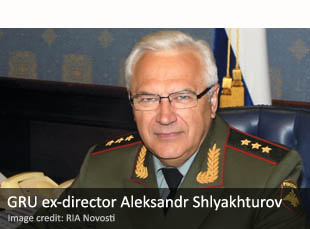
►►Russia replaces head of military spy agency. After denying initial rumors, Russia’s Defense Ministry said on Monday that “Major General Igor Sergun has been appointed head of the GRU [Russia’s Main Intelligence Directorate] through a Kremlin decree”. Sergun replaces Aleksandr Shlyakhturov, who had spearheaded a shake-up of the service since his appointment in 2009. The state RIA Novosti news agency quoted a ministry spokesman suggesting that Shlyakhturov had reached retirement age. No other reason was given for the move. Incidentally, if you are wondering how spies are faring in Dmitri Medvedev’s and Vladimir Putin’s administration, read this enlightening analysis by Mark Galeotti, Professor of Global Affairs at New York University.

South Korea to buy from France, after US delays sale of spy planes

RQ-4 Global HawkBy JOSEPH FITSANAKIS | intelNews.org |
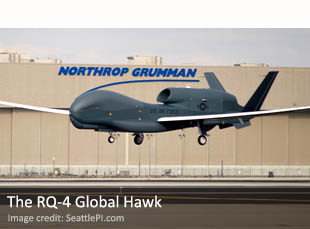
The United States has unexpectedly delayed a previously agreed sale of spy drones to South Korea, prompting the Asian country to announce it will begin purchasing spy planes from France. The South Korean military has been under increasing pressure to improve its intelligence reconnaissance capabilities since last year, when North Korean forces opened fire at South Korea’s Big Yeonpyeong island, killing four and injuring over a dozen people. But an earlier agreement with Washington to supply Seoul with RQ-4 Global Hawk high-altitude surveillance spy planes, appears to have been derailed, after the Pentagon failed to approve the sale. South Korea’s state-run Yonhap news agency quoted an anonymous “government source” who said that Seoul had expected to receive the unmanned drones, built by US defense contractor Northrop Grumman, by 2015. But the sale cannot be completed without official approval by the US Department of Defense, which “has yet to send a letter of agreement” for the planned transaction. The South Korean government source did not explain why the US government appears to be backing out of the deal. But US sources tell intelNews that Washington’s move may be “of a punitive nature”, intended to penalize South Korea for challenging Northrop Grumman’s actions in the Korean Peninsula. IntelNews readers may remember a little-reported incident in November of 2009, when the government in Seoul ordered the arrest of two former South Korean army colonels, identified only as “Hwang” and “Ryu”, for allegedly leaking South Korean defense secrets to Northrop Grumman. The two worked for the Security Management Institute, a Seoul-based intelligence think-tank with strong connections to South Korea’s armed forces. According to the indictment by the prosecutor, Hwang and Ryu gave Northrop Grumman classified information on hardware purchase plans and operations of South Korea’s navy and coast guard. Read more of this post

News you may have missed #654

Abdel Hakim Belhaj►►Libyan military commander sues British intelligence. Just as he said he would, Abdel Hakim Belhaj, who commands the new Libyan military forces in Tripoli, has sued Britain for its role in his rendition into imprisonment and torture at the hands of Muammar Gaddafi’s regime. He said he resorted to legal action after waiting in vain for the British government to offer an apology for his seven years spent in the jails of the secret police.
►►Argentine Admiral fired over espionage scandal. The head of the Argentine Navy, Admiral Jorge Godoy, has stepped down after being accused of illegal espionage. He has been indicted for alleged practices of “domestic intelligence” –which are prohibited by Argentina’s laws– against political leaders and of human rights activists, in the years between 2003 and 2006.
►►US intelligence warned of strive after US Iraq pullout. This is what Reuters news agency reports, citing anonymous sources inside the US government. Then again, US intelligence agencies warned in 2002 of increasing strife in case of a US invasion in Iraq, and nobody in government listened to them. So why would anyone listen to them now?

News you may have missed #652

Amir Mirzaei HekmatiBy IAN ALLEN | intelNews.org |
►►Kremlin accused of covert tactics against opposition. The Kremlin says it will allow opposition groups to hold rallies, but cases of alleged preemptive arrests and phone-tapping show that it may be still seeking to defeat the protest movement. For previous intelNews coverage of civil liberties in Russia see here.
►►Iran releases two Kuwaitis accused of spying. Iran’s semi-official Mehr news agency says that two Kuwaitis detained In Iran for spying last month have been cleared of their charges and released. The report quoted Iran’s ambassador to Kuwait, Ruhollah Qahremani, as saying the men had illegally worked as journalists in Iran while traveling on tourist visas, but initial speculation that they were spies “had been wrong”.
►►US sources deny spy charges for American detained in Iran. Amir Mirzaei Hekmati (pictured), from Arizona, who has been captured in Iran allegedly on a CIA mission, has not received any intelligence training from the US military, according to Pentagon sources. Also, one of Hekmati’s colleagues claims the Iranian-American helped develop an electronic translator for US troops but “wouldn’t have been involved in espionage”.