‘We killed Iranian scientist’ claims Israel intel source

Daryoush Rezaei

Daryoush Rezaei

By JOSEPH FITSANAKIS | intelNews.org |
A source in Israeli intelligence has told a quality German newsmagazine that Israel was behind the recent killing of an Iranian physicist in Tehran. The 35-year-old physicist, Darioush Rezaei, was shot twice in the throat on July 23, by two men on a motorcycle, as he and his wife were picking up their four-year-old daughter from kindergarten. Iranian authorities dismissed early reports that Rezaei was a nuclear academic, saying that there had been “some confusion” about the dead man’s identity, and that Rezaei was simply studying for a masters’ degree in electronics. It later became clear, however, that Rezaei’s electronics expertise was in the use of high-voltage switching systems for triggering nuclear warheads explosions. Rezaei was the fourth Iranian physicist or nuclear expert to be assassinated since 2007, after Ardeshire Hassanpour,  Masoud Ali Mohammadi and Majid Shahriari. Another nuclear scientist, Fereydoon Abbasi, who was injured in a separate bomb attack on the same day Dr Shahriari was killed, now heads Iran’s Atomic Energy Organization. There is little doubt in intelligence circles that the attacks on the Iranian researchers are part of a wider Western and Israeli covert action program that includes —apart from assassinations— sabotage and cyberwarfare. Now an article in German quality newsmagazine Der Spiegel quotes an unnamed “Israeli intelligence source” as saying that Rezaei’s July 23 assassination “was the first serious action taken by the new Mossad chief Tamir Pardo”. Read more of this post

News you may have missed #556

David Irvine

David Irvine

►►Australian computer networks spied ‘massively’. Cyberespionage is being used against Australia on a “massive scale” and some foreign spies are using Australian government networks to penetrate the cyberdefenses of allies such as the United States. This according to the Director of the Australian Security Intelligence Organisation (ASIO) David Irvine. Speaking at a business forum, Mr. Irvine said that “it seems the more rocks we turn over in cyberspace, the more [cyberespionage] we find”.
►►US to give Iraq wiretapping system. The US will give the government of Iraq a wiretapping system that will allow it to monitor and store voice calls, data transmissions and text messages from up to 5,000 devices simultaneously. The system is to be installed with the acquiescence of the three current cellular communications providers in Iraq, according to the US Air Force. A similar system was set up by a US contractor three years ago in Afghanistan.
►►Judge says NSA whistleblower faced ‘tyrannical’ US government. This blog has kept an eye on the case of Thoma Drake, a former US National Security Agency employee  who was taken to court for leaking secrets about the agency to a journalist. But the judge in his case, Richard D. Bennett, refused Read more of this post

Former US spy chief questions ‘war on terrorism’ logic, tactics

Dennis Blair

Dennis Blair

By JOSEPH FITSANAKIS | intelNews.org |
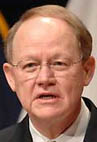
America’s former top intelligence official has publicly questioned the logic and methods informing Washington’s “war on terrorism”, and called for the CIA unmanned drone assassination program in Afghanistan and Pakistan to be grounded. Dennis C. Blair, who was Director of National Intelligence (DNI) until May of 2010, was speaking last week at the Aspen Security Forum in Colorado.  In an hour-long forum conversation with television journalist Leslie Stahl, Blair —a retired Admiral— explained that, in his view, America’s “war on terrorism” is misconceived, strategically counterproductive and ludicrously expensive. Speaking on the CIA’s unmanned drone war in Afghanistan and Pakistan, Admiral Blair agreed that the drone attacks have killed some “mid-level” Taliban or al-Qaeda operatives, but said that the strikes have had a negligible overall impact on American security. As a terrorist outfit, al-Qaeda has shown that it is able to easily “sustain its level of resistance to an air-only campaign”, said Blair. Additionally, the former DNI said that unilateral air strikes are legally questionable and have proven strategically damaging, by “alienating the countries concerned” and dominating Washington’s relations with key nations such as Pakistan, Yemen and Somalia (click here to read intelNews’ criticism of American raids in Somalia). In doing so, the drone attacks tend to “threaten the prospects of long-term reform” in those countries, said the retired Admiral. Earlier in the conversation, Blair had questioned the economic basis of America’s “war on terrorism”, telling his audience that the US intelligence and security establishment currently spends around $20 million a year for each member of al-Qaeda scattered around the world. Read more of this post

News you may have missed #555

IARPA logo

IARPA logo

►►US spy agencies want to use photos to trace people. In announcement for its new Finder research program, IARPA, the US intelligence community’s research arm, says that it is looking for ways to “geolocate images” by extracting data and metadata from the images themselves and using this to make guesses about where they were taken.
►►Norway to reassess domestic intelligence gathering. Norway’s main domestic intelligence agency, the Police Security Service (PST), is facing questions over whether its focus on Islamic radicalism caused it to miss a rising threat from far-right extremists, such as Anders Behring Breivik, who killed 77 people on July 22. But PST Director Janne Kristiansen says it would have been hard to stop Breivik even if more attention had been focused on far-right groups.
►►CIA pulls second station chief from Pakistan. For the second time in seven months, the CIA is replacing its station chief in the Pakistani capital of Islamabad, citing “medical reasons” for the move. Last time this happened, Read more of this post

Computer hacking reveals Italian spying on Russia, India

CNAIPIC emblem

CNAIPIC emblem

By JOSEPH FITSANAKIS | intelNews.org |
Documents posted online by an anonymous hacker group point to extensive Italian espionage against Russian and Indian defense and energy deals. The hacked documents contain raw data and intelligence reports authored by officials in Italy’s National Anti-Crime Computer Center for Critical Infrastructure Protection (CNAIPIC), an electronic security outfit operating under the auspices of the Italian National Police. It appears that Italian National Police servers were recently hacked by a group of international hackers calling itself Anonymous Hackers for Antisec Operation. On July 26, the group published over eight gigabytes of hacked CNAIPIC documents on various subjects, ranging from reports on Egypt’s Ministry of Transportation to information about the Vietnam Oil and Gas Group (PetroVietnam). Among the documents are reports that seem to point to systematic intelligence-gathering operations by CNAIPIC against Russia’s government-owned energy and defense industries. Some of the information contained in the reports appears to have been stolen from the embassy of India in Moscow, probably through cyberespionage. The stolen information would suggest that CNAIPIC has had access since late 2009 to confidential correspondence between the Indian embassy and a number of Russian military aircraft industries, including Aviazapchast, Ilyushin Aircraft, and NPO Saturn. Read more of this post

News you may have missed #554

Bat Khurts

Bat Khurts

►►UK and US tried to delay Pakistan nuclear weapons program. We have written before about attempts by the CIA to delay or stop Pakistan’s nuclear program. Now newly declassified documents show that the United States and Great Britain undertook a coordinated secret diplomatic campaign between 1978 and 1981 to prevent Pakistan’s attempted covert purchasing of “gray area” technology for its nuclear weapons program.
►►FBI monitoring new phone technologies. According to an internal FBI document, obtained by the Federation of American Scientists through a FOIA request, the FBI continuously monitors the surveillance challenges posed by new mobile phone technologies. The document highlights the Bureau’s concerns that that 4G will require agencies to “deal with significantly higher data rates than in current wireless network intercepts”.
►►Mongolian ex-spy chief to be extradited to Germany. Britain has decided to extradite Bat Khurts, former director of the General Intelligence Agency of Mongolia, to Germany. Read more of this post

News you may have missed #553 (Canada edition)

Northrop Frye

Northrop Frye

►►Analysis: Are Chinese spies getting an easy ride in Canada? Carl Meyer, of Embassy magazine, asks why Canada’s counterintelligence agencies are unwilling or unable to bring Chinese spies to court in recent years. Readers of this blog may recall controversial comments made last year by the director of CSIS, Richard Fadden, who claimed that some Canadian politicians work for foreign powers.
►►Canadian agency ‘illegally spying on Canadians’. Canada’s ultra-secret Communications Security Establishment, which engages in electronic communications interception, is prohibited from spying on Canadian citizens. But a new Canadian government report appears to instruct it to engage in mining ‘metadata’ from digital communications of Canadians. Readers of this blog may remember that, in 2009, a court permitted for the first time the CSE and the Canadian Security Intelligence Service to eavesdrop on Canadian nationals traveling overseas.
►►RCMP spied on Canadian academic Northrop Frye. Speaking on spying on Canadians… Read more of this post

News you may have missed #552

Nikolai Kuznetsov

Nikolai Kuznetsov

►►This just in: South Korea arrests five for spying for North. South Korean prosecutors have arrested five people on charges of “setting up an underground communist group on the instructions of an espionage unit of North Korea’s ruling Workers Party”, a report from South Korea’s Yonhap news agency said on Friday. According to the report, South Korean authorities are “investigating about 20 other people including union activists and opposition party members”. We will publish more information as it comes in.
►►Some US intel analysts believe al-Qaeda near collapse. Citing classified intelligence reports and closed-door Capitol Hill briefings from the CIA, the National Counterterrorism Center and other agencies, some US officials are telling The Washington Post that bin Laden’s death has “pushed al-Qaida to the brink of collapse”. One official told the paper that al-Qaeda is now “largely incapable” of mass-casualty attacks against the United States. Could the ‘Leon Panetta Legacy Committee’ be the source of this report?
►►Russia and Ukraine commemorate legendary Soviet spy. Russia and Ukraine are celebrating 100 years from the birth of legendary Soviet spy Nikolai Kuznetsov. Kuznetsov, who operated in Nazi-occupied Ukraine, uncovered Read more of this post

Nixon White House may have bugged Pentagon leadership

Richard Nixon

Richard Nixon

By JOSEPH FITSANAKIS | intelNews.org |
Everyone familiar with American political history knows about the ‘White House Plumbers’, a covert special investigations unit established during the Presidency of Richard Nixon, and tasked with spying on his political opponents. The unit’s bungled attempt to burgle the Watergate offices of the Democratic National Committee, in 1972, eventually led to Nixon’s resignation. But the Watergate burglary was but one of many operations conducted by the ‘Plumbers’, who were one of several ‘dirty tricks’ units managed by the Nixon White House. Now, nearly 40 years after the Watergate scandal erupted, veteran intelligence correspondent Jeff Stein provides new information that suggests the Nixon White House may have bugged the Pentagon telephones of senior American military officials. Stein managed to track down Dave Mann, a former member of the Pentagon’s Counterintelligence Force, who in 1971 stumbled upon a classified report claiming that listening bug signals had been detected emanating from offices in the Joint Chiefs of Staff. The signals had been picked up by a technical surveillance countermeasures (TSCM) team during a routine sweep of the Pentagon, in search of unauthorized interception devices. Mann run some tests to verify the TCM team’s report, and discovered that the bug signals originated from the personal office telephone line of General William Westmoreland, who was then the US Army’s Chief of Staff. He also discovered that the telephone of his assistant had been compromised, as well as the telephone lines belonging to the US Army’s assistant secretary, its logistics director, and at least one general. Mann’s personal conclusion was that the phone lines were most likely bugged with the cooperation of the Chesapeake and Potomac Telephone Company, which was at that the time considered an operational wing of the FBI, under Director J. Edgar Hoover. Read more of this post

News you may have missed #551

Salva Kiir Mayardit

Salva Kiir

►►Analysis: The fallout from the CIA’s vaccination ploy in Pakistan. We wrote earlier this month that not everyone is amused by news that the CIA tried to collect DNA evidence on Osama bin Laden by running a phony vaccination program in Pakistan. In an editorial published in The Washington Post on July 15, two American public health professionals argued that the CIA’s DNA-collection operation “destroyed credibility that wasn’t its to erode” and “burned bridges that took years for health workers to build”. The issue is developing into a very interesting case study in intelligence ethics, as two new articles on the subject were published this week. One is by Jack C. Chow formerly US ambassador on global HIV/AIDS and ex-assistant director-general of the World Health Organization on HIV/AIDS. The other, by Slate magazine columnist Tom Scocca, argues that the the CIA vaccination scheme “reveals the moral bankruptcy of American spooks”.
►►South Sudan dissolves intelligence and security bodies. The president of the newly established Republic of South Sudan, Salva Kiir Mayardit, has issued an order dissolving the country’s national security and intelligence organs. There are at least two intelligence agencies in existence in the new nation, both of which were illegally formed in 2006, before South Sudan’s independence.
►►China warns US to halt spy plane flights. China has demanded that the United States stops spy plane flights near the Chinese coast, saying they have “severely harmed” trust between the two countries, state-run media reported Wednesday. The warning comes a month after two Chinese fighter jets chased an American U-2 reconnaissance plane into Taiwanese airspace.

CIA report sees Russia behind bombing of US embassy in Georgia

GRU emblem

GRU emblem

By JOSEPH FITSANAKIS | intelNews.org |
A classified US intelligence report indicates that Russian intelligence is behind an ongoing string of bombings in the former Soviet republic of Georgia, which have included an attack on the US embassy in Georgian capital Tbilisi. The attack, which took place on September 22, 2010, damaged the embassy’s exterior wall. A subsequent investigation by the Georgian Ministry of the Interior concluded that the bombing was coordinated by the Main Intelligence Directorate of the Russian Armed Forces, also known as GRU. The investigation identified one GRU officer, Major Yevgeny Borisov, as the primary instigator of the attacks. Borisov, who is believed to be operating in Georgia’s breakaway republic of Abkhazia, was tried and convicted in absentia for his alleged role in the bombings. Now an article in The Washington Times says that a US intelligence report compiled last December by the CIA, with input from several US spy agencies, echoes the conclusions of the Georgian investigation into the bombings. The Times quotes “two US officials who have read” the report as saying that “it confirms the Georgian account” and fingers Major Borisov as the one of the main culprits behind the bombings. It also quotes “two Obama administration officials” who say that the US Department of State has taken up the issue with “the most senior levels of Russia’s Foreign Ministry”. Read more of this post

News you may have missed #550

Sukhoi-27 jets

Sukhoi-27 jets

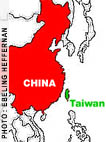
►►Chinese fighters chased US spy plane into Taiwan. It has been revealed that, late last June, The Taiwanese Ministry of National Defense sent two F-16 fighters to intercept a two Chinese Sukhoi-27 jets that crossed into its airspace, while pursuing an American U-2 reconnaissance plane. It was the first time that Chinese jets breached Taiwan’s airspace since 1999. The Pentagon declined to confirm the report, but some in Washington must have had flashbacks of the 2001 Hainan Island incident.
►►Israel arrests four of its soldiers for sabotaging spy gear. This story is interesting on numerous levels: according to a statement by the IDF’s Northern Command, Israeli military authorities plan to prosecute four Israeli female soldiers for repeatedly shutting off unspecified surveillance equipment designed to collect intelligence from neighboring Lebanon. When faced with the accusations, the soldiers apparently told their commanders that “they worked under very difficult conditions and couldn’t bear the pressure”.
►►Turkish national convicted for spying in Ukraine. Ukrainian prosecutors say Read more of this post

Pakistan removed spy from US at CIA’s request

ISI HQ

ISI HQ

By JOSEPH FITSANAKIS | intelNews.org |
A Pakistani intelligence officer was quietly removed from the United States last April, after the director of the CIA complained about him to his Pakistani counterpart. According to The New York Times, which aired the revelation last weekend, the then Director of the CIA, Leon Panetta, had “a tense conversation” with Lt. Gen. Ahmed Shuja Pasha, head of Pakistan’s Inter-Services Intelligence directorate (ISI), which led to the removal “within days” of the ISI officer. The officer in question is Mohammed Tasleem, whose diplomatic cover was that of attaché in the Pakistani Consulate in New York, but whose actual task was monitoring the political activities of the sizeable Pakistani diaspora in the United States. According to the FBI, which briefed the CIA about Tasleem earlier this year, his intelligence activities centered on pressuring politically active Pakistanis in the United States to refrain from speaking publicly on ‘controversial issues’. FBI counterintelligence reports claim that, on at least one occasion, Tasleem posed as an FBI agent, in order to extract intelligence from a member of the Pakistani community in the United States. The Times spoke to members of Pakistan’s ex-pat community who allege that the ISI systematically approaches Pakistanis speaking openly about ‘national issues’, such as the indigenous insurgency in Pakistan’s Baluchistan province, the disputed Indian region of Kashmir, or Pakistan’s appalling human rights record. Read more of this post

News you may have missed #549

Lo Hsien-che

Lo Hsien-che

►►Taiwan general who spied for China gets life. A court in Taiwan has sentenced Lo Hsien-che to life imprisonment, for spying for the People’s Republic of China. As intelNews reported before, Major General Lo gave national secrets to his mistress, a “tall, beautiful and chic” Chinese female operative, who held an Australian passport. Taiwanese counterintelligence investigators said this was Taiwan’s most serious espionage scandal in almost fifty years.
►►Did German intelligence protect world’s most wanted Nazi criminal? The German intelligence service, the BND, destroyed the file of the world’s most-wanted Nazi criminal, Alois Brunner, and may have tried to recruit him into its ranks, German newsmagazine Der Spiegel reported over the weekend. The order to destroy Brunner’s file came “at some point between 1994 and 1997”, according to the magazine. Few of those knowledgeable of BND’s history will be surprised. Incidentally, intelligence observers may remember that, in 1961 and 1980, Brunner, who lived in Syria, was injured by postal bombs sent by Mossad agents.
►►Analysis: New Czech spy law will not curtail abuse. Authorities in the Czech Republic have drafted a new law aimed, partly, at limiting the mandates of the country’s domestic Security and Information Service (BIS) and the Office of Foreign Relations and Information (ÚZSI) –the Czech foreign espionage agency. Read more of this post

IT worker gave secrets to FBI agent posing as Israeli spy

Akamai logo

Akamai logo

By JOSEPH FITSANAKIS | intelNews.org |
An American employee of a major information technology firm has pled guilty to providing inside economic information about his employer to an undercover FBI agent posing as an Israeli intelligence officer. Federal prosecutors at the Office for the US Attorney in the state of Massachusetts have indicted Elliot Doxer, 42, from Brooklyn, New York (see previous intelNews coverage here). Until last August, Doxer worked in the finance department of Akamai Technologies, Inc., an Internet content delivery company based in Cambridge, Massachusetts. According to the indictment, in June of 2006, Doxer voluntarily contacted the consulate of Israel in Boston via email, offering to provide Israeli intelligence officers with inside information about Akamai. He offered to do this, he said, in order “to help our homeland [presumably Israel] and our war against our enemies”. He also requested a $3,000 compensation for his services. But Israeli consular officials forwarded his email to the FBI. The latter sent an undercover agent to contact Doxer, posing as an Israeli intelligence operative. Believing that the FBI agent was a spy for Israel, Doxer began giving him classified information on a routine basis, an arrangement that lasted until March of 2009. During these 18 months, Doxer gave inside information —including details of Akamai’s computer and physical security systems— to his FBI handler at least 62 times, according to prosecutors. Read more of this post