Suicide bomb threat reportedly leads to evacuation of Iranian envoy to Turkey
October 16, 2018 Leave a comment
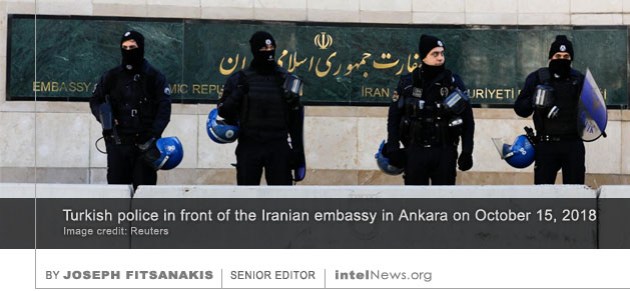 There were conflicting reports yesterday in Ankara of an alleged evacuation of Iran’s ambassador to Turkey, following credible reports of a suicide bomb attack, possibly by the Islamic State. Several Turkish media outlets reported on Monday afternoon that authorities in Ankara had communicated an urgent intelligence warning to the Iranian embassy there of a possible suicide bomb attack. According to the reports, members of the Sunni militant group Islamic State of Iraq and Syria (ISIS) were behind the planned attack.
At 2 pm local time, reports stated that Iran’s ambassador to Turkey, Mohammad Ebrahim Taherian Fard, had been hurriedly evacuated from the Iranian embassy by Turkish security forces. By that time, all roads leading to the Iranian embassy, located next to the Ankara Hilton in one of the Turkish capital’s leafiest areas, had been cordoned off. Reporters from the Reuters news agency and Agence France Presse said that Turkish police and special forces had shut down Tahran Road, where the Iranian embassy is located, and were searching cars. Armed security forces had also surrounded the Iranian embassy, according to Reuters.
Strangely, however, reports of a possible bomb attack and of the ambassador’s evacuation were strongly refuted by the Iranian government, which denounced them as “sheer lies” and “complete fabrications”. In a statement published online on Monday afternoon, Iran’s Ministry of Foreign Affairs said that its diplomats in Ankara had noticed “an increased Turkish security presence” around the Iranian embassy. However, they continued working normally, as they were unaware of the reasons for the heightened security. They assumed that Turkish President Recep Tayyip Erdoğan was appearing nearby, said the statement. A statement by the Iranian embassy in Ankara said that consular employees were present at the embassy and that all scheduled services were being offered without interruption.
In the past month, the embassies of Iran in Paris and Athens have come under attack by Kurdish separatists and leftwing groups protesting against Tehran’s alleged oppression of ethnic minorities in the country. In the past, the Islamic Republic has been rarely targeted by ISIS, whose members dismiss Shiite Islam as a heresy. In June 2017, two attacks were carried out simultaneously in Tehran, targeting the Iranian parliament and the Mausoleum of Ruhollah Khomeini, founder of post-1979 Iran. In September of this year, ISIS claimed responsibility for an attack in Iran’s southwestern city of Ahvaz, which killed 25 soldiers and civilians during a military parade.
► Author: Joseph Fitsanakis | Date: 16 October 2018 | Permalink
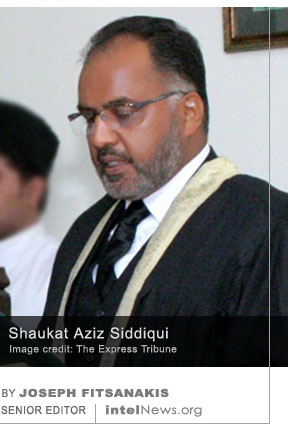 The government of Pakistan has dismissed a High Court judge who accused the country’s powerful intelligence agency of interfering with the judicial process in order to rig the outcome of last July’s general election. On July 25, the governing center-right Pakistan Muslim League – Nawaz (PML-N) was unseated by the conservative-centrist Pakistan Tehreek-e-Insaf, headed by former cricket star Imran Khan. The elections took place amidst a corruption scandal that saw Nawaz Sharif, former prime minister of Pakistan and leading member of PML-N, arrested on charges of fraud. Sharif was charged following the release of the so-called
 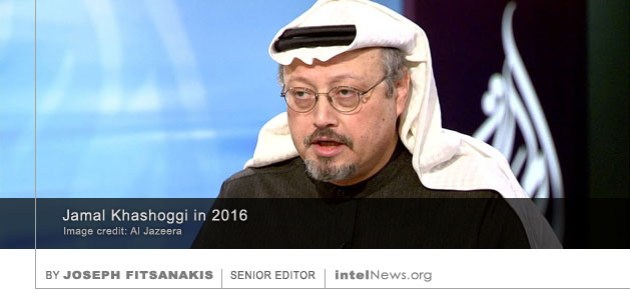 American intelligence agencies have evidence that the Saudi royal family tried to lure The Washington Post journalist Jamal Khashoggi back to Saudi Arabia, in order to capture him, according to sources. Khashoggi, 59, is a Saudi government adviser who in 2015 became a critic of the kingdom’s style of governance. He moved to the United States, from where he began to criticize Saudi Arabia’s involvement in the civil war in Yemen, its support for the repression of political freedoms in Egypt, and other issues. He also joined the staff of The Washington Post and penned columns in which he criticized Saudi policies. He has been missing since Tuesday, when he visited the Saudi consulate in Istanbul. He went there for a scheduled appointment in order to be issued a document certifying his divorce from his former wife in Saudi Arabia.
 A leading suspect in a failed attempt to kill Venezuelan President Nicolas Maduro using drones, has died in mysterious circumstances while being held by the country’s intelligence agency. The
 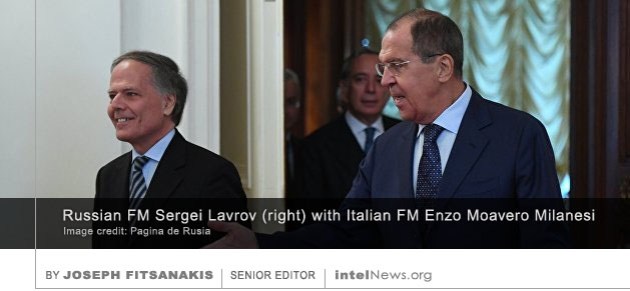 Russia’s minister of foreign affairs has downplayed the arrest and expulsion of four Russian military intelligence officers in Holland last April, saying that the incident was caused by a “misunderstanding”. Last Thursday, the US government named and indicted seven officers of the Main Directorate of the General Staff of Russia’s Armed Forces, known as GRU. The seven are
 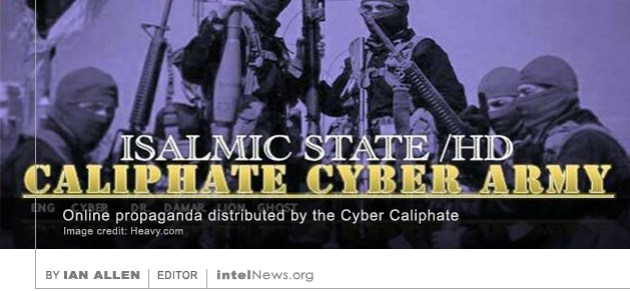 A new report by the British government alleges that the so-called ‘Cyber Caliphate’, the online hacker wing of the Islamic State, is one of several supposedly non-state groups that are in fact operated by the Russian state. The group calling itself Cyber Caliphate first appeared in early 2014, purporting to operate as the online wing of the Islamic State of Iraq and Syria (ISIS), which was later renamed Islamic State. Today the Cyber Caliphate boasts a virtual army of hackers from dozens of countries, who are ostensibly operating as the online arm of the Islamic State. Their known activities include a strong and often concentrated social media presence, as well as computer hacking, primarily in the form of cyber espionage and cyber sabotage.
 France has seized the financial assets of two Iranian spies and frozen all assets belonging to the Iranian Ministry of Intelligence, in response to a foiled bomb attack in Paris, which the French government has blamed on Tehran. The alleged bomb attack was
  An investigation was opened in the United States on Tuesday, after two envelopes containing the deadly poison ricin were intercepted at the Pentagon. The envelopes were
 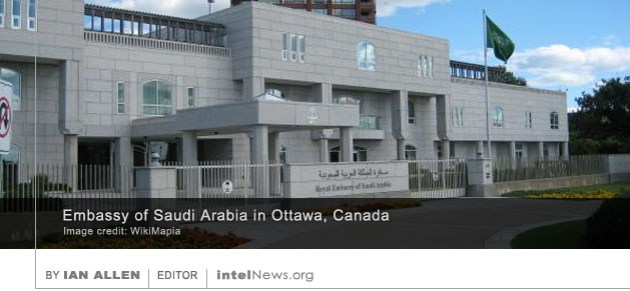 The government of Saudi Arabia is spying on expatriate dissidents in Canada using commercially available software designed by an Israeli company, according to researchers at the University of Toronto. This is alleged in a
 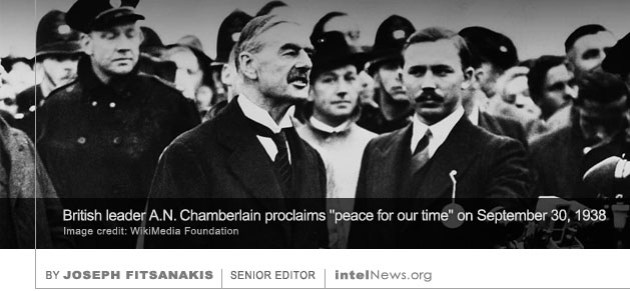 Nearly 2,000 missing British intelligence files relating to the so-called Munich Agreement, a failed attempt by Britain, France and Italy to appease Adolf Hitler in 1938, may not have been destroyed, according to historians. On September 30, 1938, the leaders of France, Britain and Italy signed a peace treaty with the Nazi government of German Chancellor Adolf Hitler. The treaty, which became known as the Munich Agreement, gave Hitler de facto control of Czechoslovakia’s German-speaking areas, in return for him promising to resign from territorial claims against other countries, such as Poland and Hungary. Hours after the treaty was formalized, British Prime Minister Neville Chamberlain arrived by airplane at an airport near London, and boldly proclaimed that he had secured “peace for our time” (pictured above). Contrary to Chamberlain’s expectations, however, the German government was emboldened by what it saw as attempts to appease it, and promptly proceeded to invade Poland, thus firing the opening shots of World War II in Europe.
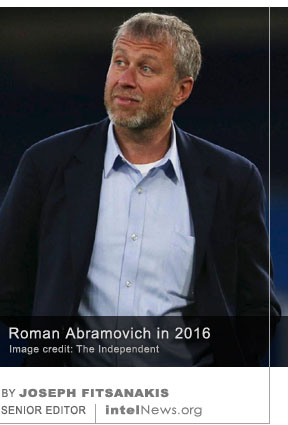 Police in Switzerland cautioned that allowing the Russian billionaire Roman Abramovich to live there would threaten public security and damage the country’s reputation, according to files released this week. The Soviet-born Abramovich took advantage of Russia’s privatization laws in the early 1990s to gain considerable financial and political influence there. His friendship with Russia’s first post-Soviet President, Boris Yeltsin, was instrumental in his business career, and eventually placed him in close proximity to Russia’s current President, Vladimir Putin. Unlike many other oligarchs, Abramovich is believed to have remained close to Putin, despite living mostly in the United Kingdom in the past decade. The Russian oligarch has been staying in a mansion valued at close to $120 million in London’s exclusive suburb of Kensington. His lawyers have been renewing his British residence visa every six months.
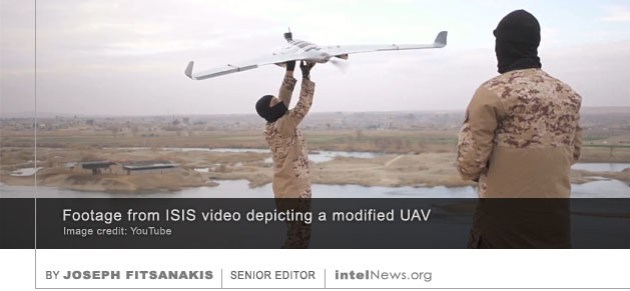 Danish Police have announced the arrest of two men who attempted to procure unmanned aerial vehicles (UAVs) —commonly known as drones— on behalf of the Islamic State in Syria. In a press statement issued on Wednesday, Denmark’s State Police
 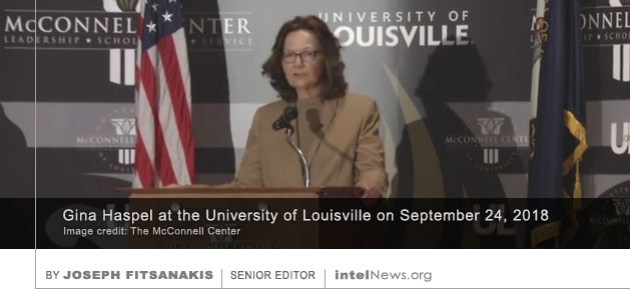 The United States Central Intelligence Agency will return to traditional espionage against foreign states and focus less on counterterrorism against non-state actors, said its new director in her first public appearance. Gina Haspel joined the CIA in 1985 as a reports officer and completed several undercover tours overseas before serving as chief of station. She rose through the ranks to become deputy director of the National Clandestine Service and was appointed deputy director of the CIA in 2017. In May of this year, she became the Agency’s first female director, despite some controversy that arose from her role as chief of a CIA undercover facility (so-called “black site”) in Thailand. Critics






 intelNews.org
Czech spy agency says it neutralized Hezbollah cyberespionage network
October 17, 2018 by Joseph Fitsanakis Leave a comment
According to the BIS, its cyber security force discovered a number of servers located on Czech soil, which were “almost certainly” used by Hezbollah, the Shiite militant group that controls large swathes of territory in Lebanon. The servers were allegedly used in a wide-range cyberespionage operation that began in 2017 by a group of Hezbollah hackers based in Lebanon. It was there, said the BIS, where the command-and-control facilities of the operation were located. The servers located on Czech soil were used to download phone apps that contained malicious software. The hackers targeted individual phone users located mainly in the Middle East, according to the BIS, but other targets were in eastern and central Europe. It is believed that the majority of targets were Israeli citizens. Invariably, targeted individuals were approached online, mostly through fake Facebook profiles. Most of the targets were men, and the fake Facebook profiles featured pictures of attractive young women. After initial messages were exchanged via Facebook, the targets were convinced to download phone applications that would allow them to continue communicating with the ‘women’. These applications would install spyware on their phones, thus allowing Hezbollah hackers to capture the content of messages and calls made on the phones. The latter could also be used as eavesdropping devices.
According to BIS Director Michal Koudelka, the spy agency “played a significant role in identifying and uncovering the hackers’ system. We identified the victims and traced the attack to its source facilities. Hacker servers have been shut down”, he said. Koudelka added that some of the servers used by Hezbollah were located in other European Union countries and in the United States. These were shut down following a joint cyber operation by BIS and “partners”, said Koudelka, though he did not identify them.
► Author: Joseph Fitsanakis | Date: 17 October 2018 | Permalink
Filed under Expert news and commentary on intelligence, espionage, spies and spying Tagged with counterintelligence, cyberespionage, Czech Republic, Czech Security Information Service (BIS), Facebook, Hezbollah, Michal Koudelka, News