Extraordinary lecture by Soviet spy Kim Philby surfaces on videotape
April 5, 2016 Leave a comment
 A videotaped lecture by Kim Philby, one of the Cold War’s most recognizable espionage figures, has been unearthed in the archives of the Stasi, the Ministry of State Security of the former East Germany. During the one-hour lecture, filmed in 1981, Philby addresses a select audience of Stasi operations officers and offers them advice on espionage, drawn from his own career. While working as a senior member of British intelligence, Harold Adrian Russell Philby, known as ‘Kim’ to his friends, spied on behalf of the Soviet NKVD and KGB from the early 1930s until 1963, when he secretly defected to the USSR from his home in Beirut, Lebanon. Philby’s defection sent ripples of shock across Western intelligence and is often seen as one of the most dramatic moments of the Cold War.
The videotaped lecture, which was never intended for public consumption, was found recently by the BBC in the archives of the BStU, the Federal Commissioner for Stasi Records in Berlin, Germany. Excerpts can now be viewed publicly for the first time.
The recording begins with an introduction by Markus Wolf, one of the most high-profile intelligence operatives of the Cold War, who was head of East Germany’s Main Directorate for Reconnaissance, the foreign intelligence division of the Stasi. Then Philby takes the stand and for about 15 minutes recounts his recruitment by the Soviet NKVD, the forerunner of the KGB. He tells his audience that the Soviets recruited him despite his extremely young age and joblessness, seeing him as “a long range project”. They did so, he says, because they knew he was part of “the ruling class of the British Empire” and was thus bound to end up in a position of power. His NKVD handler was clear as to his agent’s task, says Philby: his mission was to join the Secret Intelligence Service, known as MI6, Britain’s external intelligence agency. The young Philby then spent years trying to work his way into the intelligence agency, and did so successfully.
With extreme candidness, Philby proceeds to tell his East German audience about his mission, given to him by his NKVD handler in the late 1940s. It was to unseat Felix Cowgill, his boss in MI6’s Soviet counterespionage division, and take his place. He achieved that, he says, even though Cowgill was a man he “rather liked and admired. It was a very dirty story”, admits Philby, “but after all our work does imply getting dirty hands form time to time, but we do it for a cause that is not dirty in a way”.
Of particular interest to intelligence observers is Philby’s justification of his role in Operation VALUABLE/FIEND, in which the Central Intelligence Agency, in association with MI6 and other Western European intelligence agencies, secretly sent Western-trained Albanian agents into communist-controlled Albania. The agents were tasked with organizing an armed popular revolt against Albania’s communist rulers. But Philby, who had been given the job of overseeing the operation on behalf of MI6, betrayed the entire program to the Soviets, thus ensuring its complete failure. In his lecture, he justifies his betrayal by arguing that it helped prevent World War III. Had VALUABLE/FIEND succeeded, claims Philby, it would have been expanded to Bulgaria, at which point the USSR would have intervened, causing World War III.
Following the end of his prepared remarks, Philby takes a series of questions from his audience, including one about how he managed to “stay ideologically pure” while living in a capitalist society. In responding, the British defector praises his Soviet handler, who looked after his “political as well as physical health”, and advised his audience, which presumably included dozens of Stasi case officers, to do the same. A summary report of the recently unearthed videotape can be read on the BBC’s website, here. There is also an audio podcast on Philby’s lecture, which includes commentary from Professor Christopher Andrew, of Cambridge University, and Hayden B. Peake, most recently curator of the CIA’s Historical Intelligence Collection.
► Author: Ian Allen and Joseph Fitsanakis | Date: 05 April 2016 | Permalink
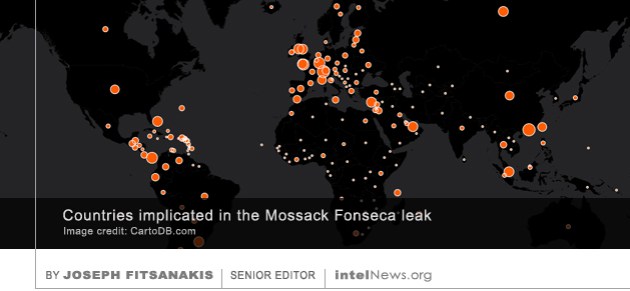 Aside from their immediate shock value, the Panama Papers reveal the enormous extent of tax evasion on a worldwide scale. This unprecedented phenomenon is inextricably tied with broader trends in globalized finance-capitalism that directly threaten the very survival of the postwar welfare state. National intelligence agencies must begin to view offshore tax evasion as an existential threat to the security of organized government and need to augment their economic role as part of their overall mission to protect and secure law-abiding citizens.
 countries. On Sunday, following a year-long analysis of the data, the reporting partners began publishing revelations from the Panama Papers, and say they will continue to do so for several days to come.
 statements, which means they have not been paying taxes in their country of citizenship or residency. Thus, there are now thousands of Mossack Fonseca clients in
  The Russian government says it has arrested a senior Ukrainian intelligence officer, who was allegedly trained by the United States Central Intelligence Agency and tasked with infiltrating the Russian secret services. In a
 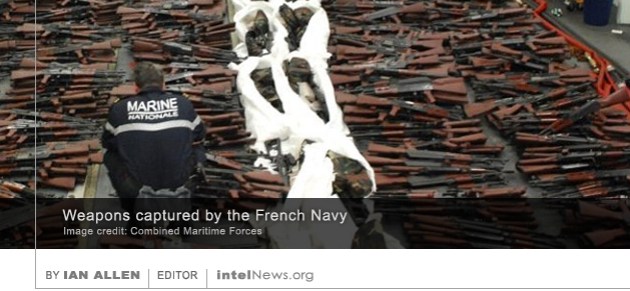 The United States says a ship carrying hundreds of weapons, which was captured by the French Navy in the Indian Ocean, originated from Iran, and that the cargo was destined for Yemeni rebels through Somalia. The ship was seized on March 20 by a French warship patrolling the Indian Ocean as part of the Combined Maritime Forces (CMF). The CMF is a multinational naval fleet that aims to implement United Nations sanctions on Somalia. The sanctions are designed to frustrate the activities of al-Shabaab, an al-Qaeda-linked Somali militant group, and to put an end to maritime piracy in the Horn of Africa.
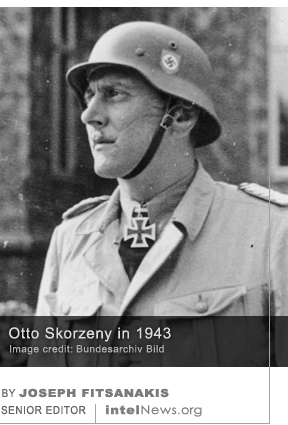 A notorious lieutenant colonel in the Waffen SS, who served in Adolf Hitler’s personal bodyguard unit, worked as a hitman for the Israeli intelligence agency Mossad after World War II, it has been revealed. Austrian-born Otto Skorzeny became known as the most ruthless special-forces commander in the Third Reich. Having joined the Austrian branch of the National Socialist German Workers’ Party at 19, at age 23 Skorzeny began serving in the Waffen SS, Nazi Germany’s conscript army that consisted largely of foreign-born fighters. In 1943, Hitler himself decorated Skorzeny with the Knight’s Cross of the Iron Cross, in recognition of his leadership in Operation EICHE, the rescue by German commandos of Italian fascist dictator Benito Mussolini, who had been imprisoned at a ski resort in the Apennine Mountains following a coup against his government.
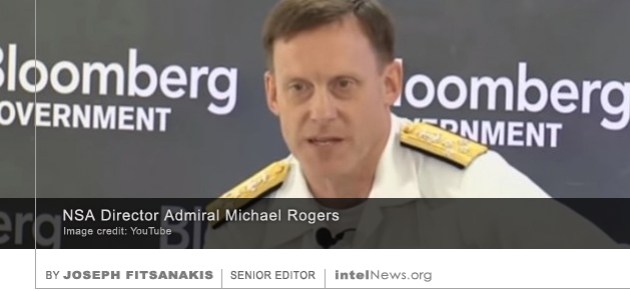 The head of the United States’ largest intelligence agency secretly visited Israel last week, reportedly in order to explore forging closer ties between American and Israeli cyber intelligence experts. Israeli newspaper Ha’aretz
 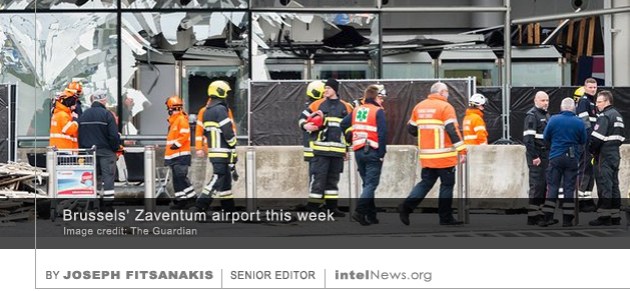 In the past year, the Islamic State has claimed responsibility for at least nine terrorist attacks on foreign capitals. The growing list, which features Jakarta, Tunis, Paris, Beirut, Ankara, and Kuwait City, now includes the Belgian capital, Brussels. At least 34 people died in the attacks that rocked Brussels’ Zaventum airport and Maelbeek metro station on March 22, while another 300 were injured, 60 of them critically. This week’s bombings officially constitute the bloodiest terrorist attacks in Belgium’s history, prompting the country’s government to declare three days of national mourning.
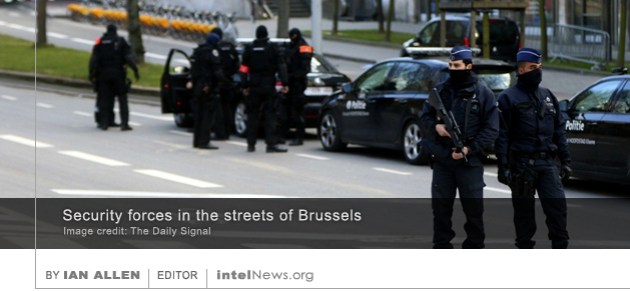 Belgian Intelligence Services ‘Overwhelmed and Outnumbered’
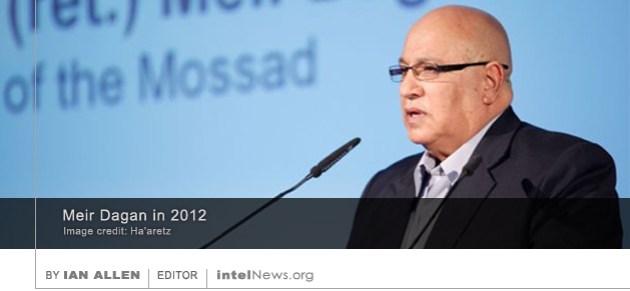 Meir Dagan, who directed the Israeli intelligence agency Mossad for a decade and emerged as a vocal critic of the Israeli government after his retirement, has died. A statement from his family said he died of liver cancer, a disease that prompted him to undergo a complex
  A court in Germany has sentenced a former officer of the country’s intelligence agency, who spied for the United States and Russia from 2008 to 2014. Regular readers of this website will recall the case of ‘Markus R.’, a clerk at the Bundesnachrichtendienst, or BND, Germany’s external intelligence agency. The 32-year-old was
  Authorities in Malaysia said they managed to foil a plan by the Islamic State to kidnap the country’s prime minister and two other senior cabinet officials, in exchange for ransom. According to the government of Malaysia, the Islamic State also planned to stage armed attacks throughout the country, including in major urban centers, such as Kuala Lumpur, the nation’s capital. News of the alleged plot was revealed in the Dewan Rakyat, the lower house of the Malaysian parliament, by Ahmad Zahid Hamid, the country’s deputy prime minister. He told members of parliament that Malaysian intelligence had managed to detect the plot, which had been planned for January 30, 2015, but that the government did not believe it was prudent to alarm the country until the investigation of the alleged plot had been finalized.
 Tens of thousands of classified documents belonging to the Islamic State have been released by a disillusioned former member of the organization, who says that the group has been taken over by secularists.
 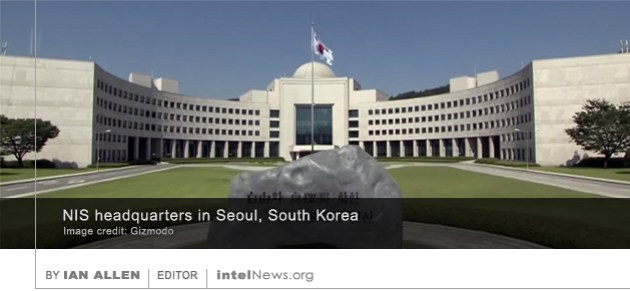 Dozens of cell phones belonging to senior government officials in South Korea were compromised by North Korean hackers who systematically targeted them with texts containing malicious codes, according to reports. The National Intelligence Service (NIS), South Korea’s primary intelligence agency, said the cell phone penetrations were part of a concerted campaign by North Korea to target smart phones belonging to South Korean senior government officials. Once they managed to compromise a cell phone, the hackers were able to access the call history stored on the device, the content of text messages exchanged with other users and, in some cases, the content of telephone calls placed on the compromised device. Moreover, according to the NIS, the hackers were able to access the contact lists stored on compromised cell phones, which means that more attacks may be taking place against cell phones belonging to South Korean government officials.
 Authorities in a northern German town have called on the Israeli embassy in Berlin to pay for the cost of extricating a car belonging to two Israeli spies, which was stuck in a mud pit in a restricted area. According to the Hamburg-based television station NDR, the






 intelNews.org
Romania arrests four Israelis on espionage charges
April 7, 2016 by Ian Allen 2 Comments
Reports in the Romanian press have named two of the four Israeli citizens as Avi Yanus and Dan Zorella, both former members of the Israeli intelligence community, who are believed to be the founders of Black Cube. Two other Israelis, David Geclowicz and Ron Weiner, are accused of having hacked three email accounts belonging to a high-profile Romanian government agency tasked with anti-corruption efforts. Romanian media claim that the primary target of the Black Cube employees was Laura Codruta Kovesi, director of Romania’s National Anticorruption Directorate. Referred to as DNA, the agency was created in 2003 with the aim of combating serious organized crime and corruption in Romanian politics. The latter is seen by many in Romania as endemic and harmful to the country’s efforts to integrate fully into the European Union.
According to DIICOT, the arrests of the four Israelis were “preventive” and were prompted by an initial complaint filed against them by a former public prosecutor, Ion Lascu, who is Kovesi’s father. When approached by Israeli media, Black Cube confirmed that four of its employees had been arrested in Romania. However, it said its employees were careful to follow Romanian law and dismissed the espionage allegations against them as “unfounded and untrue”. In a statement, the company said it was recently hired to work on a project to collect intelligence on large-scale corruption in Romanian politics. The statement added that Black Cube employees were arrested “after having made significant discoveries” relating to the aforementioned project.
Late on Thursday, Romanian investigators said they were still trying to find out who hired Black Cube to work in Romania.
► Author: Ian Allen | Date: 07 April 2016 | Permalink
Filed under Expert news and commentary on intelligence, espionage, spies and spying Tagged with Avi Yanus, Black Cube, Dan Zorella, Daniel Horodniceanu, David Geclowicz, DIICOT (Romania), DNA (Romania), Ion Lascu, Israel, Laura Codruta Kovesi, News, private security firms, Romania, Ron Weiner