Analysis: Canada becoming a heaven for spies claims ex-CSIS agent

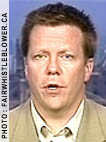
Michel Juneau-Katsuya

Juneau-Katsuya

By IAN ALLEN | intelNews.org |
Canada is today one of the world’s safest and most attractive environments for international spies, according to a former officer in the Canadian Security Intelligence Service (CSIS). Michel Juneau-Katsuya, who last September co-authored Nest of Spies with Montreal-based journalist Fabrice de Pierrebourg, says that Canada is doing little to combat increasing espionage activity within its borders by agents of friendly and adversary nations alike, including China, Iran, Israel, the United States, and France. Juneau-Katsuya suggests that international spying within Canada is encouraged by the country’s prosperity, its multicultural urban environment, advanced telecommunications infrastructure, as well as by its political or geographical proximity to major world powers, such as Russia and the United States. Read more of this post

Analysis: Can the CIA sabotage the Iranian nuclear weapons program?

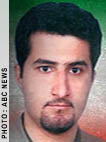
Shahram Amiri

Shahram Amiri

By JOSEPH FITSANAKIS | intelNews.org |
There is no doubt that the CIA has been actively trying to sabotage Iran’s nuclear weapons program since at least February of 2008, when US President George W. Bush authorized Langley to intensify its covert efforts against Tehran. It is also true that the US was able to partially sabotage Iran’s nuclear program by eliminating the A.Q. Khan nuclear proliferation network, and by employing scientific front companies and cooperative suppliers, who gave the Iranians faulty hardware. The defection to Washington of senior Iranian nuclear scientist Shahram Amiri provides recent evidence of the existence of a covert US project to “decapitate” the Iranian nuclear weapons program, by luring away leading Iranian researchers. On the other hand, it is worth wondering why the CIA chose to remove Amiri from the Iranian nuclear program, instead of asking him to remain an agent-in-place, which would have been far more beneficial for Langley. Read more of this post

Analysis: The limits of Israeli espionage

Ronen Bergman

Ronen Bergman

By JOSEPH FITSANAKIS| intelNews.org |
Israeli investigative journalist Ronen Bergman (The Secret War with Iran) has written an editorial in Yedioth Ahronoth, in which he argues that Israel’s espionage successes in recent years have failed to bring about significant changes on the strategic level. Bergman briefly recounts the significant post-9/11 reforms in Israeli intelligence, most notably the appointment of Meir Dagan as the director of the Mossad, Israel’s national intelligence agency. Dagan has “created a new Mossad”, argues Bergman, one that is more narrowly focused in its operations, and more collaborative with foreign intelligence agencies –notably American, Jordanian, Turkish and Indian. This shift in focus and tactics has undeniably helped Israel score some significant espionage victories, including the 2008 assassination of Hezbollah commander Imad Mughniyah in Beirut, Lebanon; the seizure of several ships carrying Iranian and Syrian weapons to Hezbollah; as well as the more recent assassination of Hamas military official Mahmoud al-Mabhouh in Dubai. Read more of this post

Analysis: US commentator argues in favor of breaking up NSA

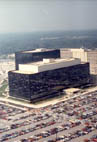
NSA Headquarters

NSA HQ

By IAN ALLEN| intelNews.org |
The US National Security Agency (NSA) is a gigantic intelligence organization –the world’s largest– which is tasked by the US government with worldwide communications surveillance, as well as communications security. But Wired magazine’s Noah Shachtman explains that the NSA’s two-fold mission forces two essentially distinct agencies to coexist under one roof. There’s the signals-intelligence directorate, the Big Brothers who, it is said, can tap into any electronic communication. And there’s the information-assurance directorate, the cybersecurity nerds whose job is to make sure the US government’s computers and telecommunications systems are hacker- and eavesdropper-free. Read more of this post

News you may have missed #315

  • Nuclear bunker spy comes out of hiding. A British retiree named Mike Lesser has revealed he was one of the so-called “spies for peace”, a group of peace activists who in the 1960s helped uncover Britain’s secret network of underground bunkers built to protect the government in case of nuclear war.
  • Aussie spy agency spied on little girls. Secret files kept by the Australian Security Intelligence Organisation reveal spooks tailed the teenage children of suspected socialists and communist sympathizers during the late 1960s, and anyone with whom they associated, including school friends and boyfriends.
  • Analysis: Under Panetta, a more aggressive CIA. Expectations among CIA hardliners were low when Leon Panetta arrived at the Agency’s headquarters in February 2009. But almost from the first week, Panetta positioned himself as a strong advocate for the CIA, to the extent that critics worry that Panetta has become a captive of the agency he leads.

Bookmark and Share

News you may have missed #310

  • Analysis: Outsourcing Intelligence. David Ignatius points out that the latest rogue operation of the US Defense Department, revealed last weekend by The New York Times, points to the increasing irrelevance of the CIA in the so-called “global war on terrorism”: “by using contractors who operate ‘outside the wire’ in Afghanistan and Pakistan, the [US] military has gotten information that is sometimes better than what the CIA is offering”, says Ignatius.
  • White House threatens veto on intelligence bill. The White House has renewed its threat to veto the fiscal 2010 intelligence authorization bill over a provision that would force the administration to widen the circle of US lawmakers who are informed about covert operations and other sensitive activities.
  • CIA’s Kiriakou authors new book. John Kiriakou, who spent 14 years working for the CIA, and has made headlines in the past for defending the practice of waterboarding in interrogations, while recognizing it is torture, has a new book out, entitled The Reluctant Spy.

Analysis: Forged Irish passports have long history

Passports

Passports

By IAN ALLEN | intelNews.org |
At least six of the nearly 30 Mossad assassins who killed Hamas military official Mahmoud al-Mabhouh last January in Dubai, used forged Irish passports to enter and leave the United Arab Emirates. This upset the Irish government, but did not surprise intelligence observers familiar with the long history of forged Irish passports in the international espionage and smuggling worlds. The Mossad and the CIA are among several intelligence agencies known to routinely rely on cloned Irish passports to enable their agents to move around the world undetected. In 1986, several Iran-Contra affair insiders, including US National Security Council member Oliver North, covertly traveled to Iran using forged Irish passports. The Provisional Irish Republican Army is also known to possess significant quantities of false Irish passports, which it uses to enable its senior members to network with supporters abroad. Read more of this post

Analysis: Iranian spymaster a major player in Iraq

Suleimani

Qassem Suleimani

By JOSEPH FITSANAKIS | intelNews.org |
Newsweek’s Chris Dickey has penned an accurate analysis on Qassem Suleimani, leader of the mighty Quds Force, the Islamic Revolutionary Guard Corps’ (IRGC) unit tasked with exporting the Iranian Revolution abroad. Relatively little is known about Suleimani, a soft-spoken intelligence operative who oversees Iran’s links with Shiite movements in the Middle East and beyond. His influence inside Iraq has grown in recent years. Although the Quds Force intelligence network in Iraq was solid before the 2003 US invasion, the fall of the Saddam Hussein regime turned Suleimani’s agency to what is probably the most powerful organized intelligence force in the country. Indeed, Suleimani’s links with the Kurdish north and with the Shiite paramilitary groups in Iraq is so encompassing that, as Dickey correctly notes, “this 53-year-old Iranian general could pull the strings that make or break the new government in Baghdad”. Read more of this post

News you may have missed #297

Bookmark and Share

News you may have missed #0282

  • Iran summons Canadian ambassador over CIA links. The Iranian government announced that it summoned the Canadian charge d’affaires in Tehran, in connection with revelations that Canada’s former ambassador to Iran secretly worked for the CIA in the late 1970s.
  • Charlie Wilson dead at 76. Charlie Wilson, a 12-term American congressional representative, who orchestrated the covert funding of Muslim mujahedeen in Soviet-occupied Afghanistan in the 1980s, has died in Texas.
  • Analysis: Is Colombia turning into a nation of informants? On January 27, Colombian President Álvaro Uribe announced his goal of putting a thousand spies in college classrooms. He offered to pay students $50 per month to report any suspicious ideas or behavior to the Colombian authorities. Forrest Hylton, who teaches at the Universidad de los Andes in Bogotá, explains the disturbing political background of Uribe’s announcement.

Bookmark and Share

News you may have missed #0276

  • Canadian government rejects ex-KGB agent’s deportation appeal. Vic Toews, Canada’s newly installed minister for public safety, has rejected a fresh appeal by former KGB agent Mikhail Lennikov to be allowed to remain in Canada. Lennikov, who has been living in Canada with his wife and teenage son since 1992, is described by Canadian authorities as “a threat to […] national security”.
  • Analysis: CIA and intelligence community mythologies. Former CIA analyst Melvin Goodman, currently senior fellow at the Center for International Policy and adjunct professor at Johns Hopkins University, offers a very informative checklist of what he calls “the mythology that surrounds the [US] intelligence enterprise”. Worth reading.

Bookmark and Share

News you may have missed #0271 (analysis edition)

  • Analysis: The Women of the CIA. Former CIA agent Valerie Wilson says the recent massacre of CIA agents in Khost, Afghanistan, shows that it is “time to recognize that women play a vital role in ensuring our national security and that they are very much on the frontlines, taking all the same risks but recognized and credited much less than their male counterparts” at the CIA.
  • Analysis: Google and the democratization of espionage. Roland Dobbins, a solutions architect with the Asia Pacific division of Arbor Networks, explains why the recent Google-China hacking affair is a perfect example of how the botnet has enabled what he calls “the democratization of espionage”.

Bookmark and Share

Analysis: The meaning of China’s cyber-attack on Google

Google

Google

By IAN ALLEN | intelNews.org |
Google’s recent decision to close down its venture business in China, after its operations there repeatedly came under cyber-attack, has received plenty of media attention. But most non-experts find it difficult to understand why these cyber-attacks were important enough to cause Google to abandon what is admittedly one of the world’s most lucrative online user markets. An excellent analysis in The New York Times explains the significance and meaning of the cyber-attacks. It turns out that, traditionally, cyber-rogues have been interested in detecting or building back doors (known as Trojan Horses) in commercial software, such as Microsoft’s Internet Explorer or Word, in order to replicate them, and make money selling pirate copies. But the types of attacks that caused Google’s flight from China were different. The instigators of these attacks, which were very sophisticated, seemed to want to gain access to widely used Google applications so that they could spy on their users. Read more of this post

Analysis: US spy turf-war flares up on Capitol Hill

Dennis Blair

Dennis Blair

By IAN ALLEN | intelNews.org |
Wednesday’s testimony by US Director of National Intelligence Dennis Blair, before the Senate Committee on Homeland Security and Governmental Affairs, received plenty of media coverage. But few have examined the ongoing public hearings by three separate Senate committees on the Christmas Day bomb plot in light of the turf battles taking place between US intelligence agencies. An excellent article by Politico’s Kassie Hunt does just that, by pointing out that the hearing proceedings should be viewed in light of the “three-way turf war among Director of National Intelligence Dennis Blair, CIA Director Leon Panetta, and National Counterterrorism Center Director Michael Leiter”. Capitol Hill lawmakers appear to be aware of this: Hunt’s article quotes Peter King, the Senate Homeland Security Committee’s senior Republican member, who warns that US intelligence agencies will use the public hearings to place blame about the Christmas Day bomber fiasco on each other. Read more of this post

News you may have missed #0262

  • US Navy posts classified report on China by mistake. An obviously confused official of the US Office for Naval Intelligence (ONI) posted on an open website a classified USN report on the state of the Chinese navy. The 47-page document has now been reposted on the website of the Federation of American Scientists.
  • Analysis: Think different, CIA. Robert Jervis, professor of international politics at Columbia University and a consultant to the US intelligence community, explains that one of the biggest challenges for American intelligence is the way the human brain works.

Bookmark and Share