News you may have missed #838 (analysis edition)

Predator droneBy IAN ALLEN | intelNews.org |
►►Delisle spy case barely caused ripples between Canada and Russia. The arrest of Jeffrey Delisle, a Canadian naval officer spying for Russia, did little to discourage Canada from welcoming that country’s defense chief to a Newfoundland meeting of Arctic nations last year. The visit underscored the puzzling lengths to which the Canadian government went to carry on a business-as-usual relationship with the one-time Cold War adversary. Most other planned military contacts between the two nations last year —including participation in the anti-terrorism exercise Operation Vigilant Eagle— also remained curiously normal.
►►Don’t believe the hype on Chinese cyberespionage. Within a day of each other, The Washington Post published a shocking list of US defense programs whose designs have reportedly been stolen by Chinese cyberattacks, and ABC news said the plans for Australia’s spy headquarters were also stolen by Chinese hackers. It makes China sound like a secret-sucking cyber espionage machine, but is that really the case? The knee-jerk interpretation to this disclosure (and others) is that China is a powerhouse of cyber espionage capable of stealing whatever secrets they want and that the US is powerless to stop them. This seems very unlikely.
►►US Predator drone program quietly shifted from CIA to DoD. The White House has quietly shifted lead responsibility for its controversial armed drone program from the CIA to the Defense Department. In a landmark speech last week at National Defense University in Washington, US President Barack Obama offered some clues into the status of the program, opaquely signaling it will now primarily be conducted by the United States military.

Canada spy agency refused to notify Mounties about Russian agent

Jeffrey Paul DelisleBy JOSEPH FITSANAKIS | intelNews.org |
Canada’s main counterintelligence agency opted to keep secret from the Royal Canadian Mounted Police (RCMP) vital information about a Canadian naval officer who spied for Russia. Regular readers of this blog will be familiar with the case of Jeffrey Paul Delisle, a Sub-Lieutenant in the Royal Canadian Navy, who until 2011 was employed at Canada’s ultra-secure TRINITY communications center in Halifax. Delisle was arrested in January 2012 for passing information gathered from radio and radar signal interceptions to a foreign power, most likely Russia. In May of last year, it emerged that it was in fact the United States that alerted the Canadian Security Intelligence Service (CSIS) about Delisle’s espionage activities. What was supposed to happen next was that the CSIS —which is not a law enforcement agency— should have notified the RCMP of Delisle’s activities and requested his prompt arrest. Remarkably, however, the CSIS chose to keep the Delisle file concealed from the RCMP, ostensibly to prevent the possible exposure of intelligence sources and methods in open-court proceedings. The Canadian Press, which broke the story on Sunday, cited “numerous sources familiar with the Delisle case” in claiming that the CSIS’ refusal to request Delisle’s arrest “frustrated Washington”, which feared that the spy was routinely compromising United States secrets shared by America with its Canadian allies. So frustrated were the Americans, that the Federal Bureau of Investigation (FBI) sketched out a plan to lure Delisle onto US soil and arrest him there. Read more of this post

News you may have missed #835 (Americas edition)

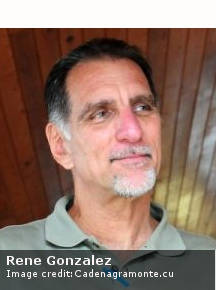
Rene GonzalezBy IAN ALLEN | intelNews.org |
►►‘Cuban Five’ spy member renounces US citizenship. Cuban intelligence officer Rene Gonzalez, who was a member of the “Cuban Five” spy group in South Florida, was released from a US prison in 2011, after serving 10 years for espionage. He was required to serve three years’ probation in the US. But on Friday US District Judge Joan Lenard ruled that Gonzalez, who had already been allowed to temporarily return to Cuba for his father’s funeral, could stay there if he renounced his US citizenship. Gonzalez is the first of the Cuban Five to return to the island. The other four men continue to serve lengthy sentences in US federal prisons.
►►US Defense Intelligence Agency contemplates austerity. Since 2001, intelligence agencies have had just about all money they wanted, but not anymore, as the cuts mandated by the Budget Control Act are hitting even previously inviolable spook accounts. In a reflection of this new reality, the Defense Intelligence Agency plans a conference with industry at its headquarters on June 27, 2013. Agency leaders will focus on “current and emerging challenges in the context of an increasingly austere fiscal posture”.
►►Report says Canada spies caught off guard by Arab Spring. The 2011 Arab Spring uprising in the Middle East came as a surprise to the Canadian government, which risks getting caught off-guard again without a new approach to gathering intelligence. This is according to a new report by Canada’s Intelligence Assessment Secretariat, a unit of the Privy Council’s Office, the bureaucratic arm of the Office of the Canadian Prime Minister. On the other hand, the report states, “there is no reason to believe that [Canadian intelligence agencies] did any worse than other allied agencies in its analysis of the Arab Spring, and in a few areas it appears to have done somewhat better”.

News you may have missed #832 (foiled Canada terror plot)

Toronto, CanadaBy IAN ALLEN | intelNews.org |
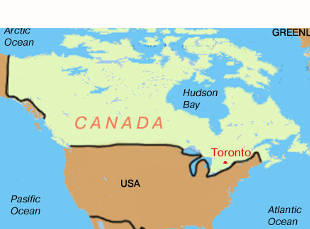
►►Two arrested in Canada terror plot. Chiheb Esseghaier, 30, and Raed Jaser, 35, who live in Montreal and Toronto, were planning to derail a Via Rail passenger train in Toronto  with support from “al-Qaeda elements located in Iran”, Canadian police said Monday. “This is the first known al-Qaeda planned attack that we’ve experienced in Canada”, Superintendent Doug Best told a news conference. Police said the men did not receive financial support from al-Qaeda, but declined to provide more details. There was no apparent reason to think the planned attacks were state-sponsored.
►►Canada foils ‘al-Qaeda inspired’ terror attack on train. The Royal Canadian Mounted Police (RCMP) said the surveillance operation leading to the arrests of the two suspects was “a result of extensive collaborative efforts”. Chief Spt Jennifer Strachan said the two men had sought to target “a specific route, but not necessarily a specific train”. At the same time, the RCMP said they believed the plot was in the planning stage and “there was no imminent threat to the general public”.
►►Tip from Muslim community ‘helped foil’ al-Qaeda plot. Canadian lawyer Hussein Hamdani told CTV News Channel that a tip from the Muslim community helped investigators foil the alleged al-Qaeda plot. “This goes to show the partnership between the Muslim community in Canada and the RCMP and all the police services,” said Hamdani. It might not be well known but collaboration between Muslims and government agencies —like the RCMP, CSIS, Canadian Border Services Agency and the Department of Justice— is quite common, according to Hamdani.

Court rejects release of spy records on iconic Canadian politician

Tommy DouglasBy JOSEPH FITSANAKIS | intelNews.org |
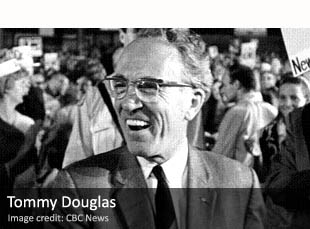
Canada’s highest court has rejected a legal argument in favor of releasing surveillance records on Tommy Douglas, an iconic Canadian politician who was monitored for most of his life by the security services. Douglas was a Scottish-born Baptist minister who later became the leader of the New Democratic Party and Premier of the Canadian province of Saskatchewan. Under his Premiership, which lasted from 1944 to 1961, Saskatchewan’s government became the first democratic socialist administration in North America and the first in the Americas to introduce a single-payer universal healthcare program. But Douglas, who is widely recognized as the father of Canada’s healthcare system, was under constant surveillance by Canadian intelligence throughout most of his life. Government records show that the now-defunct Security Service of the Royal Canadian Mounted Police (RCMP) began monitoring the socialist politician shortly before the outbreak of World War II. It appears that, in the political context of the Cold War, Douglas had drawn the attention of Canada’s security establishment by supporting antiwar causes, which led some to suspect him of holding pro-communist sympathies. The government surveillance, which was at times extensive, lasted until shortly before the politician’s death in 1986. Under Canada’s legal system, security dossiers on individuals are typically released 20 years after the target’s death. However, even though several hundred pages from Douglas’ dossier have already been released, many hundreds more remain secret. In 2005, Canadian Press reporter Jim Bronskill launched a legal campaign aimed at securing the release of the remaining pages in Douglas’ dossier. His campaign is supported by Douglas’ family, notably Douglas’ daughter, Shirley. But the Canadian government has resisted Bronskill’s effort from the very beginning. Read more of this post

Canada issues arrest warrant for former spy watchdog official

Arthur PorterBy IAN ALLEN | intelNews.org |
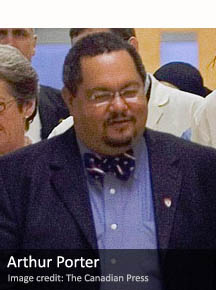
Authorities in the Canadian province of Quebec have issued a warrant for the arrest of a government official who until recently was responsible for overseeing the country’s primary national intelligence service. From 2008 to 2011, Dr. Arthur Porter was a member of the Security Intelligence Review Committee, which investigated grievances against the Canadian Security Intelligence Service (CSIS). In order to fulfill his Committee duties, Porter was awarded a top-secret security clearance, which allowed him access to the CSIS’ most closely held secrets. In 2004, Porter, who is a Cambridge University-educated oncologist, was appointed Director General of the McGill University Health Centre in Montréal. In that capacity, he began a business relationship with Ari Ben-Menashe, an Iranian-born Israeli lobbyist and weapons merchant, who in 1989 was arrested and charged in the United States for illegally attempting to sell military transport airplanes to Iran, in connection with the so-called Iran-Contra affair. Ben-Menashe was acquitted after claiming during his trial that he had been operating as an Israeli intelligence officer. In 2011, Porter stepped down from his post at the Security Intelligence Review Committee, after Canadian newspaper The National Post revealed that he had wired $200,000 in personal funds to Ben-Menashe. Soon afterwards, he moved to the Bahamas and attempted to stay away from the public limelight. This changed on Wednesday, however, Read more of this post

Former Mossad officer describes Zygier affair as ‘scandalous’

Ben ZygierBy JOSEPH FITSANAKIS | intelNews.org |
A former member of Israeli spy agency Mossad, who claims to have worked in the same covert-operations unit as Ben Zygier, has described the latter’s incarceration and subsequent death as “scandalous”. The Australian-born Zygier was a Mossad officer several years before he was placed in solitary confinement following his arrest in Israel, in February 2010. Known to the outside world only as ‘Prisoner X’, he allegedly killed himself in his cell a few months later. Earlier this month, when an Australian television program identified ‘Prisoner X’ as Zygier, the Australian government admitted it had been aware of its citizen’s incarceration and death, but chose not to extend to him diplomatic support. So far, the Mossad, Israel’s foremost covert-action agency, has remained silent on the matter. But a former Mossad operative, who uses the name Michael Ross, has weighed in with his opinion. Ross was born in Canada and converted to Judaism before joining the Mossad for 13 years, seven of which he claims to have spent in the same covert-operations unit as Zygier. Although he never met his Australian-born colleague, Ross wrote in The Daily Beast in the weekend that he and Zygier “were in the field at the same time, albeit in different units”. In his article, the former Mossad spy dismisses allegations that Zygier may have betrayed his employer, saying that he has seen no evidence that the Australian-born Jew was not dedicated to the mission of the Mossad. He argues that the circumstances surrounding Zygier’s incarceration in solitary confinement were “scandalous”, because the jailed spy presented “no danger to the public”. Instead, says the former spy, Zygier could have been dismissed from the spy service and placed under house arrest for as long as it would have been necessary for the accusations against him to be “dealt with internally”. Read more of this post

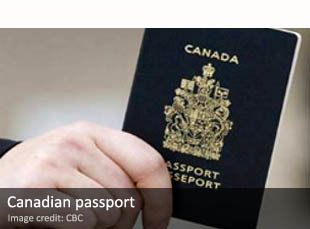
Canadian passports still highly coveted by spies and terrorists

Canadian passportBy JOSEPH FITSANAKIS | intelNews.org |
An extensive investigation into a bus bombing that targeted Israeli tourists in Bulgaria points to the continued attraction of forged Canadian passports for terrorist groups and intelligence agencies. Bulgaria’s Minister of the Interior, Tsvetan Tsvetanov, said on Tuesday that the July 18, 2012, terrorist attack, was perpetrated by Al-Muqawama al-Islamiyya, the military wing of Hezbollah. The militant Shiite group, which controls large parts of southern Lebanon, has denied involvement in the bombing, which killed seven people, including five Israeli tourists. Tsvetanov said that, during a lengthy police investigation, which was assisted by American and Israeli investigators, the printer used to produce forged driver licenses found on two of the plotters was traced to Lebanon. He also told a press conference in Bulgarian capital Sofia that the suicide bomber, who died in the attack, entered Bulgaria using a forged Canadian passport. Commentator Paul Koring, of Canadian newspaper The Globe and Mail, correctly suggests that the revelation by the Bulgarian authorities points to the continued status of Canadian passports as the international travel documents of choice for both spies and terrorists. In the 1970s, Hezbollah’s biggest enemy, the Israeli intelligence service Mossad, used Canadian passports in Operation WRATH OF GOD (also known as Operation BAYONET). The operation exterminated almost every original member of Black September, the Palestinian group that perpetrated the massacre of the Israeli athletes in the 1972 summer Olympic Games in Munich. In 1997, the Israeli spy agency employed Canadian passports once again, during the famously disastrous attempt to kill Khaled Mashal, Chairman of the Political Bureau of Palestinian militant group Hamas, in Jordan. Read more of this post

News you may have missed #819 (UKUSA edition)

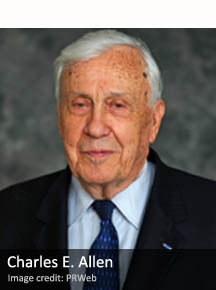
Charles E. AllenBy IAN ALLEN | intelNews.org |
►►Aussie spies’ exemption from Freedom of Information laws to end? Currently, all Australian intelligence agencies are exempt from the operation of federal Freedom of Information (FOI) legislation that allows the public and journalists to seek access to government records. But now Australian Information Commissioner John McMillan has called for the intelligence agencies to no longer be exempted from FOI laws. Professor McMillan and FOI Commissioner James Popple have made the recommendation in a 97-page submission to the review of FOI laws by former Defence Department secretary and diplomat Allan Hawke.
►►US spy agencies move towards single super-cloud. The US intelligence community is developing a single cloud computing network to allow all its analysts to access and rapidly sift through massive volumes of data. Now in its eighth month, the goal of the effort is to connect the Central Intelligence Agency’s existing cloud to a new cloud run by the National Security Agency. This NSA-run network consists of five other intelligence agencies and the FBI. Both of these clouds can interoperate, but the CIA has its own unique needs because it must work with human intelligence, which necessitates keeping its cloud slightly separate, according to Charles Allen, formerly Undersecretary of Homeland Security for intelligence and analysis.
►►Canadian Army struggles with intelligence-gathering. The Canadian Army is trying to hold on to its intelligence-gathering capability and its ability to disrupt spying in the face of budget strain, according to documents from the Canadian Department of National Defence. The Canadian Press, which obtained the documents, says the Army is “anxious to protect HUMINT network and to better resource its counterintelligence abilities”, but is worried that its shrinking budget in the post-Afghanistan War era will cause “degradation” in those disciplines.

Ex-intelligence official: cyber espionage more dangerous than terrorism

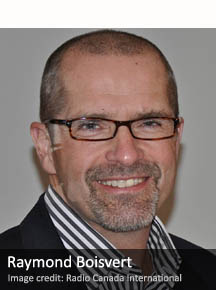
Raymond BoisvertBy JOSEPH FITSANAKIS | intelNews.org |
A former senior member of Canada’s intelligence community has said that the threat of cyber espionage requires more resources that are currently being diverted to counterterrorism. Ray Boisvert, who retired last year from the post of Assistant Director of Intelligence for the Canadian Security Intelligence Service (CSIS), said in an assertive speech last week that cyber espionage is “fundamentally undermining [Canada’s] future prosperity as a nation”. Speaking on Friday in Ottawa, Boisvert compared cyber espionage to the climate-change debate, which has been marked by a series of ignored warnings, due to “some willful blindness on behalf of individuals”. As a result, he said, the need to establish essential security measures to protect worldwide electronic infrastructure is being neglected, while desperately needed resources are being diverted to counterterrorism. He explained the lack of action on three levels: first, the resistance emanating from technologically challenged decision-makers in the government and private sector, who simply do not understand the technical complexities of digital telecommunications security. Second, it is rooted in the government’s reluctance to invest the funds required to shield the nation’s communications infrastructure from espionage attacks. Finally, he placed the blame on the fragmentation and shortsightedness of the private sector, which owns and operates nearly 90 percent of Canada’s critical communications infrastructure and yet is too consumed by competition to sit around the same table on matters of security. In giving examples of the seriousness of the threat of cyber espionage, Boisvert cited the attacks last year on the computer systems of Canada’s Treasury Board and Finance Department, which compromised trade secrets of several national industries. He also mentioned the attacks on Nortel Networks Inc., which he said lasted for over a decade and may have contributed to the company’s 2009 demise. Read more of this post

News you may have missed #804

Jeffrey Paul DelisleBy IAN ALLEN | intelNews.org |
►►CIA officer reportedly among dead in Afghanistan bombing. The attack, which was carried out in a remote area of Kandahar Province, occurred when a guard working for the Afghan intelligence service detonated a suicide vest as a delegation of American coalition members and Afghan intelligence officials arrived at the intelligence office in the Maruf District. The blast killed Ghulam Rasool, the deputy intelligence director for Kandahar Province, two of his bodyguards, another Afghan intelligence official, and some Americans, including the CIA officer. A spokeswoman for the CIA declined to comment.
►►Canadian intel officer was ‘on Russian payroll for years’. Former navy intelligence officer Jeffrey Paul Delisle, who pleaded guilty this month to spying, was leaking secrets to Russia, sending classified data about Canada as well as the United States, according to David Jacobson, the US ambassador in Ottawa. So far, the Canadian government has refrained from revealing the identity of “the foreign entity” to whom Delisle passed the classified information. Ambassador Jacobson refused to specify the nature of the information, saying only that “there was a lot of highly classified material”.
►►Panama wants to adopt euro as legal tender. Panama, one of the fastest growing economies in Latin America, wants to adopt the euro as legal tender to run alongside the country’s US dollar economy. Panama’s President Ricardo Martinelli made the request to German Chancellor Angela Merkel during a visit to Europe. The president indicated he had every faith that the crisis in the eurozone would soon be at an end, adding that Panama “would be possibly the only country in the world to have two currencies, the euro and the dollar”.

Canadian diplomats spied for the CIA in Cuba, claims new book

Embassy of Canada in Havana, CubaBy JOSEPH FITSANAKIS | intelNews.org |
Several accredited Canadian diplomats were recruited by the United States Central Intelligence Agency to spy on Cuba in the aftermath of the 1962 missile crisis, according to a new book. Authored by Canadian retired diplomat John Graham, the book, entitled Whose Man in Havana? Adventures from the Far Side of Diplomacy, is to be published this week by Penumbra Press. In it, Graham claims that he was among a number of Canadian diplomats stationed in Cuba, who were secretly recruited by the CIA. The US agency had been essentially forced out of the island after Washington and Havana terminated diplomatic relations in 1961, soon after the government of Fidel Castro declared itself a proponent of Marxism. The closure of the US embassy meant that the CIA had no base from which to operate in the Caribbean island. Two years later, in May 1963, US President John F. Kennedy personally asked Canadian Prime Minister Lester Pearson for assistance in intelligence-gathering efforts in Cuba. The Canadian leader consented and, according to Graham, Canadian diplomatic officials actively assisted the CIA until at least 1970. The author states in his book that he himself operated in Cuba for two years, from 1962 until 1964, under the official cover of Political Officer at the Canadian embassy in Havana. Prior to that, he says, he was provided with rudimentary training by the CIA, which consisted of spending “just a few days” at the Agency’s headquarters in Langley, VA. He was then tasked with conducting physical surveillance of Soviet military bases on Cuba and, if possible, identifying weapons and electronic security measures, and noting troop movements. Read more of this post

News you may have missed #802 (Jeffrey Paul Delisle edition)

Jeffrey Paul DelisleBy IAN ALLEN | intelNews.org |
►►New information released on Canadian spy case. Newly released information from Canadian naval officer Jeffrey Paul Delisle‘s bail hearing in January reveals that, facing chronic financial difficulties, Delisle began a four-year espionage career by walking into the Russian Embassy in Ottawa in 2007. Wearing civilian clothes, Delisle displayed his Canadian military identification badge and asked to meet someone from GRU, the Russian military intelligence service. Canadian prosecutors said Delisle regularly downloaded a ”vast amount” of classified information to share with his Russian handlers.
►►Canada spy had escape plan. Canadian naval officer Jeffrey Paul Delisle told a Canadian court that he had an escape plan in place —one he never got a chance to use. If he needed to seek refuge or re-establish contact with the Russians, for whom he spied for over four years, he was told he could walk into a Russian embassy —preferably not the one in Ottawa— and inform them he was “Alex Campbell”. The Russians would then ask him “did I meet you at a junk show in Austria?”, and he was supposed to reply “no, it was in Ottawa”.
►►Canada spy accessed Australia intelligence. This is not exactly news for intelNews readers, since we have covered it before, but it appears that Jeffrey Paul Delisle has openly admitted selling highly classified intelligence gathered by the United States, Britain, Canada, New Zealand and Australia to Russian agents. He said he had access to signals intelligence produced by the US National Security Agency, Britain’s Government Communications Headquarters, Canada’s Communications Security Establishment, Australia’s Defence Signals and New Zealand’s Government Communications Security Bureau.

News you may have missed #801

Alan TuringBy IAN ALLEN | intelNews.org |
►►Israel charges Arab man with spying for Hezbollah. Israel has charged Milad Khatib, a 26-year-old Arab Israeli truck driver, who was arrested a month ago, with spying for Hezbollah, making contact with a foreign agent, conspiring to aid the enemy and belonging to an illegal group. According to the indictment, Khatib was in contact with a man named Barhan, a Hezbollah agent who operated in various European locations. The two allegedly met several times between 2007-2009 in Barhan’s home in Denmark, with all of Khatib’s expenses, including food, hospitality and entertainment, covered by Barhan.
►►Britains’ GCHQ praises Alan Turing legacy. In a rare public speech, Iain Lobban, the Director of GCHQ, Britain’s signals intelligence agency, has praised the legacy of British mathematician and codebreaker Alan Turing. Widely considered the father of computer science and artificial intelligence, Turing committed suicide in 1954, after the British government prosecuted him for being a homosexual. In 2009, British Prime Minister Gordon Brown offered a public apology for Turing, who is also credited with cracking the Nazi Enigma code —a vital part of the Allied effort in World War II.
►►Canada’s SIGINT agency to get new headquarters. Canada’s electronic spy organization believes that the state-of-the-art headquarters now being built in an Ottawa suburb will make it a leader among its allies and attract the best and brightest of spies, according to newly released Canadian government documents obtained by The Ottawa Citizen. When finished in 2015-16, the Canadian Communications Security Establishment’s new $880-million spy campus in Gloucester is expected to be home to more than 1,800 employees.