Nazi official Heinrich Himmler’s daughter worked for West German intelligence
July 2, 2018 Leave a comment
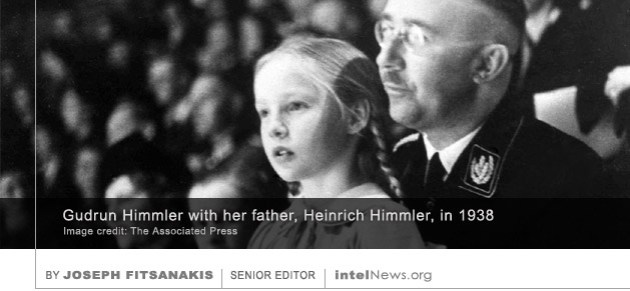 The daughter of Heinrich Himmler, who was second in command in the German Nazi Party until the end of World War II, worked for West German intelligence in the 1960s, it has been confirmed. Gudrun Burwitz was born Gudrun Himmler in 1929. During the reign of Adolf Hitler, her father, Heinrich Himmler, commanded the feared Schutzstaffel, known more commonly as the SS. Under his command, the SS played a central part in administering the Holocaust, and carried out a systematic campaign of extermination of millions of civilians in Nazi-occupied Europe. But the Nazi regime collapsed under the weight of the Allied military advance, and on May 20, 1945, Himmler was captured alive by Soviet troops. Shortly thereafter he was transferred to a British-administered prison, where, just days later, he committed suicide with a cyanide capsule that he had with him. Gudrun, who by that time was nearly 16 years old, managed to escape to Italy with her mother, where she was captured by American forces. She testified in the Nuremberg Trials and was eventually released in 1948. She settled with her mother in northern West Germany and lived away from the limelight of publicity until her death on May 24 of this year, aged 88.
Late last Thursday, an article in the German tabloid newspaper Bild revealed for the first time that Burwitz worked for West Germany’s Federal Intelligence Service (BND) in the early 1960s. The BND continues to operate today as reunited Germany’s main external intelligence agency. According to Bild, Himmler’s daughter had a secretarial post at the BND’s headquarters in Pullach, where the spy agency was headquartered for most of its existence. The paper said that Burwitz managed to be hired by the BND by using an assumed name. In a rare public statement, the BND’s chief archivist, Bodo Hechelhammer, confirmed Bild’s allegations. The archivist, who serves as one of the BND’s official historians, told the newspaper that Burwitz “was an employee of the BND for a number of years, until 1963”, working “under an assumed name”. She was dismissed once the BND began to purge former Nazis from its staff, toward the end of the tenure of its first director, Reinhard Gehlen. Gehlen was a former general and military intelligence officer in the Nazi Wehrmacht, who had considerable experience in anti-Soviet and anti-communist operations. In 1956, in the context of the Cold War, the United States Central Intelligence Agency, which acted as the BND’s parent organization, appointed him as head of the organization, a post which he held from until 1968.
It is believed that Burwitz remained a committed Nazi until the end of her life. She doggedly defended her father’s name and insisted that the Holocaust was an Allied propaganda ploy. It is also believed that she was a prominent member of Stille Hilfe (Silent Help), an underground group of leading former Nazis, which was established in 1945 to help SS officers and other Nazi officials escape prosecution for war crimes. Several German experts on neo-Nazi groups have alleged that Burwitz continued to attend neo-Nazi events and SS reunions throughout Europe, some as recently as 2014. Burwitz is believed to have died in Munich.
► Author: Joseph Fitsanakis | Date: 02 July 2018 | Permalink
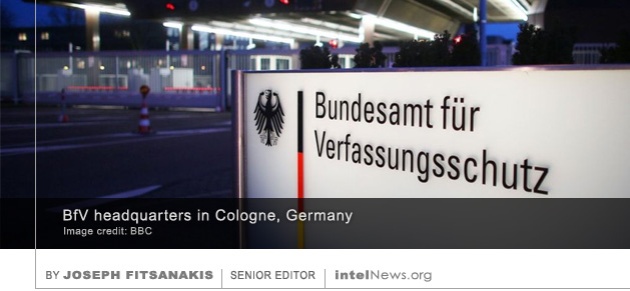 The head of Germany’s domestic security agency has publicly blamed the Russian government for a large-scale cyberattack that has targeted German energy providers. The comments follow a June 13 announcement on the subject by Germany’s Federal Office for Information Security (BSI), which is charged with securing the German government’s electronic communications. According to the BSI, a widespread and systematic attack against Germany’s energy networks has been taking place for at least a year now. The attack, which the BSI codenamed BERSERK BEAR, consists of various efforts by hackers to compromise computer networks used by German companies that provide electricity and natural gas to consumers around the country.
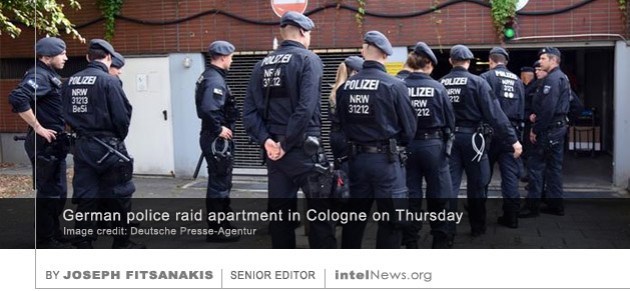 German authorities have charged a Tunisian citizen with building a biological weapon, after finding significant quantities of the highly toxic substance ricin in his apartment. The 29-year-old man is referred to in public reports only as “Sief Allah H.”, in compliance with German law that forbids the naming of suspects until they are found guilty in court. German officials said last Thursday that the man remains in custody and has been charged with violating Germany’s War Weapons Control Act (known as Kriegswaffenkontrollgesetz) and “preparing a serious act of violence against the state”.
 Some North Atlantic Treaty Organization (NATO) member states obtained access to the Soviet Union’s so-called ‘Novichok’ nerve agents in the 1990s, through an informant recruited by German intelligence, according to reports. NATO countries refer to ‘Novichok-class’ nerve agents to describe a series of weaponized substances that were developed by the Soviet Union and post-Soviet Russia from the early 1970s to at least 1993. They are believed to be the deadliest nerve agents ever produced, but Moscow denies their very existence. A type of Novichok agent, described by British scientists as A234, is said to have been used in March of this year by the person or persons who
 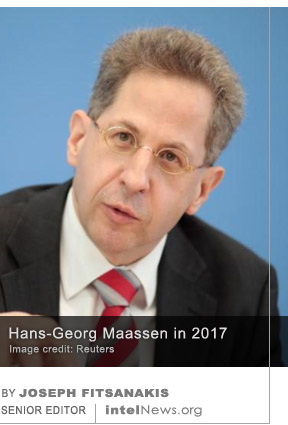 The head of Germany’s domestic intelligence agency has warned of security risks resulting from Chinese direct investment in high-technology German and other European companies. Since 2012, Hans-Georg Maassen has served as director of the Federal Office for the Protection of the Constitution, Germany’s domestic security and counterintelligence agency.
 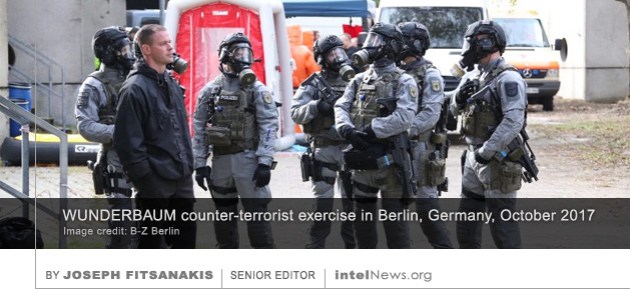 A German newspaper reported last week that at least one European intelligence agency has already warned that the Islamic State is exploring the use of chemicals for attacks in Europe. Such an eventuality would be a radical departure from prior attacks by the Islamic State in the West. In the past, the militant group has shown a strong preference for low-tech means of dispensing violence, such as firearms, vehicles and knives. But it has utilized chemical substances in Iraq and Syria, and its technical experts have amassed significant knowledge about weaponized chemicals.
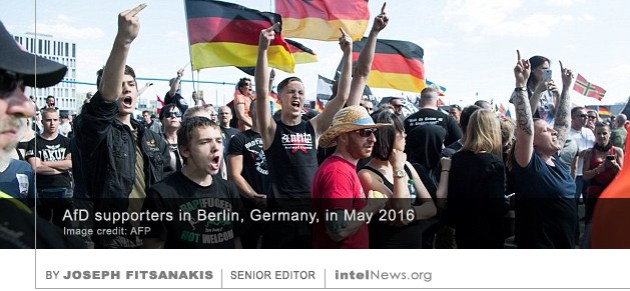 A senior German intelligence official has warned that foreign powers, including Russia, could try to shape the outcome of talks by German parties to form a governing coalition, following last week’s national elections. The elections resulted in a major shakeup of Germany’s political landscape, as Chancellor Angela Merkel’s Christian Democratic Union lost nearly 10 percentage points compared to its 2013 election result. It is now forced to seek the participation of other conservative or centrist political parties in a broad governing alliance. Meanwhile, the far-right Alternative for Germany (AfD) won 12.6 percent, propelling it to third place and giving it 91 seats in the Bundestag. The AfD result marks the first time since 1945 that a German far-right party has managed to secure parliamentary representation.
 Germany’s most famous living spy is on trial this week for hiding assets totaling $50 million in offshore bank accounts. He claims the money was given to him by unspecified “Western intelligence agencies” for his services. Werner Mauss became widely known in 1997, when he was arrested in Colombia for using a forged passport. He had traveled to the Latin American country to secure the release of a German woman who had been kidnapped by leftist guerrillas. The Colombian authorities eventually released him, following heavy diplomatic pressure from the German government. But the German media began investigating his background, and it soon became apparent that he was working for the German Federal Intelligence Service.
 Germany has launched an unprecedented investigation into three officers of Switzerland’s intelligence agency on suspicion that they spied on German tax investigators who were probing the activities of Swiss banks. News of the investigation comes three months after authorities in Germany
 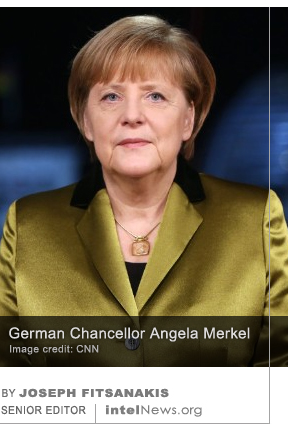 A lengthy parliamentary report on American intelligence activities in Germany was presented last week in Berlin, but was condemned by opposition parties as insufficient and incomplete, prompting calls for a new investigation. The parliamentary probe was initiated in 2013, following a series of
 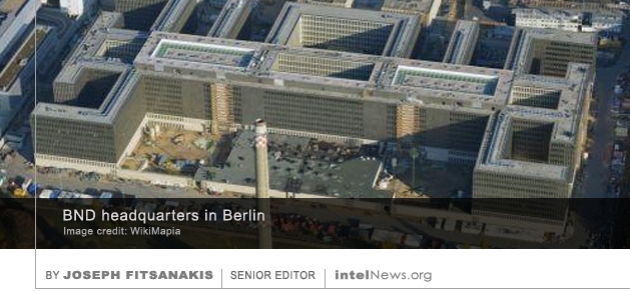 The foreign intelligence service of Germany spied on at least 4,000 targets in the United States from 1998 until 2006, according to a leaked document published yesterday by leading German newsmagazine Der Spiegel. The German investigative weekly said that the surveillance was carried out by the German Federal Intelligence Service, known as BND. The Hamburg-based magazine claimed to have in its possession a list of approximately 4,000 “selector keywords”, unique distinguishing terms, addresses or numbers that identify individual targets for surveillance. The list allegedly includes names, telephone or fax numbers, and email addresses of people that the BND had identified as worthy of individual attention between 1998 and 2006.
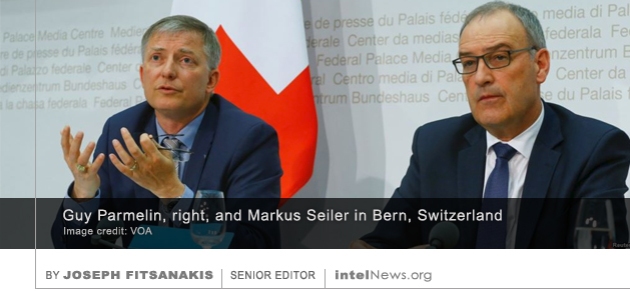 Senior Swiss government officials, including the defense minister and the director of the country’s intelligence agency, have defended Switzerland’s right to spy on European tax-fraud investigators who meddle in Swiss affairs. Earlier this week, German authorities
  Authorities in Germany have announced the arrest of a Swiss national who was allegedly spying on the activities of German tax-fraud investigators in Frankfurt. According to prosecutors in the German state of Hesse, of which Frankfurt is the largest city, the Swiss man was arrested on Friday and is currently in custody. He has been identified only as Daniel M., and is believed to be in his mid-50s. According to news reports, German counterintelligence officers had been monitoring the suspect for over a year. They were issued a warrant for his arrest in December of last year, but waited until he was on German soil to arrest him. He was arrested at Frankfurt Airport.






 intelNews.org
Iran sleeper cell agents, including diplomat, arrested in three European countries
July 6, 2018 by Joseph Fitsanakis Leave a comment
The operation against the alleged sleeper cell began on Saturday, June 30, when members of Belgium’s Special Forces Group stopped a Mercedes car in Brussels. The car was carrying a married Belgian couple of Iranian descent, named in media reports as Amir S., 38, and Nasimeh N., 33. According to the Belgian Ministry of the Interior, Nasimeh N. was found to be carrying 500 grams of triacetone triperoxide (TATP) explosive and a detonator inside a toiletries bag. On the following day, Sunday, July 1, German police arrested Assadollah A., an Iranian diplomat stationed in Iran’s embassy in Vienna, Austria. According to reports, the diplomat was driving a rental car in the southeastern German state of Bavaria, heading to Austria. On the same day, a fourth person, who has not been named, was arrested by authorities in France, reportedly in connection with the other three arrests.
The four detainees were in contact with each other and were allegedly working for the Iranian government. All four have been charged with an alleged foiled plot to bomb the annual conference of the National Council of Resistance of Iran (NCRI) that took place last Saturday, June 30, in a Paris suburb. The National Council of Resistance of Iran is a France-based umbrella group of Iranian dissidents, led by Mujahedin-e Khalq (MEK), a militant group that has roots in radical Islam and Marxism. Between 1970 and 1976, the group assassinated six American officials in Iran and in 1970 tried to kill the United States ambassador to the country. It initially supported the Islamic Revolution of 1979, but later withdrew its support, accusing the government of Ayatollah Khomeini of “fascism”. It continued its operations from exile, mainly from Iraq, where its armed members were trained by the Palestine Liberation Organization and other Arab leftist groups.
Until 2009, the European Union and the United States officially considered the MEK a terrorist organization. But the group’s sworn hatred of the government in Iran brought it close to Washington after the 2003 US invasion of Iraq. By 2006, the US military was openly collaborating with MEK forces in Iraq, and in 2012 the group was dropped from the US Department of State’s list of foreign terrorist organizations. Today the group enjoys open protection from the EU and the US. According to Belgian authorities, the four members of the Iranian sleeper cell were planning to bomb the MEK-sponsored NCRI meeting in Paris under instructions by the Iranian government. Conference participants included over 30 senior US officials, including US President Donald Trump’s personal lawyer, Rudy Giuliani, who addressed the meeting. Stephen Harper, Canada’s former prime minister, also spoke at the conference.
Speaking in Brussels this week, Belgium’s Interior Minister Jambon praised the country’s intelligence, security and law enforcement agencies for foiling the alleged bomb plot in Paris. But Mohammad Javad Zarif, Iran’s Minister of Foreign Affairs, dismissed claims of an Iranian sleeper cell as “fake news” and described reports of a foiled bomb attack as “a sinister false flag plot”.
► Author: Joseph Fitsanakis | Date: 06 July 2018 | Permalink
Filed under Expert news and commentary on intelligence, espionage, spies and spying Tagged with Belgium, France, Germany, Iran, Iranian embassy in Austria, Mujahedeen-e Khalq, National Council of Resistance of Iran, News, Newstex, sleeper agents