News you may have missed #791

Liang GuanglieBy IAN ALLEN | intelNews.org |
►►India sees espionage behind Chinese cash payments to Indian pilots. According to Indian government sources, Chinese Defense Minister General Liang Guanglie gave two envelopes to the two Indian pilots, both wing commanders, who had flown him in a special Indian Air Force aircraft to New Delhi from Mumbai. After seeing off Liang, the pilots opened the sealed envelopes and found cash gifts inside. They immediately reported this to their superiors, who, in turn, informed the Indian Defense Ministry. India is now planning to lodge a protest with China over the incident.
►►NSA says foreign cyberattacks increasingly reckless. Debora Plunkett, of the secretive National Security Agency, whose responsibilities include protecting US government computer networks, has said that other nations are increasingly employing cyberattacks without “any sense of restraint”, citing “reckless” behaviors that neither the United States nor the Soviet Union would have dared at the height of Cold War tensions. She also predicted that Congress would pass long-stalled cybersecurity legislation within the next year. One wonders whether the Stuxnet incident is included in such “reckless” cyberattacks?
►►Taliban ‘using Facebook to lure Australian soldiers’. According to a review of social media by the Australian federal government, Australian soldiers are being warned by their commanders that enemies are creating fake Facebook profiles to spy on them. The report says that Taliban insurgents in Afghanistan are posing as “attractive women” on Facebook to befriend coalition soldiers and gather intelligence about operations. It adds that family and friends of soldiers are inadvertently jeopardizing missions by sharing confidential information online. This is not the first such warning in recent years.

News you may have missed #790

Abdullah al-SenussiBy IAN ALLEN | intelNews.org |
►►New report reopens CIA torture allegations. A report from Human Rights Watch, which was released last week, said that Libyan fighters opposed to Muammar Gaddafi’s regime were subjected to harsh interrogation techniques while in US custody overseas, during the administration of George W. Bush. The accusations, if substantiated, would suggest wider use of waterboarding than US officials have previously acknowledged. The report, which is based on documents and interviews in Libya after the fall of Gaddafi, includes a detailed description of what appears to be a previously unknown instance of waterboarding by the CIA in Afghanistan nine years ago.
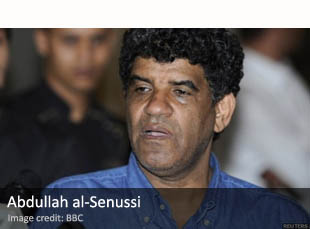
►►Analysis: What does Gaddafi’s ex-spy chief know about Lockerbie? Abdullah al-Senussi became a hate-figure in his home country as head of an intelligence machinery responsible for the mistreatment of thousands of opponents of the regime of Muammar Gaddafi, his brother-in-law. He is nicknamed the “butcher” and known as Gaddafi’s “black box” because of the secrets he supposedly holds. The new Libyan regime had been negotiating for months with Mauritania where al-Senussi had fled following the fall of the Gaddafi regime last September. But now that al-Senussi has been flown back to Libya by private jet, he may at last be able to face questions by British police about Lockerbie.
►►Chinese hardware manufacturer denies spying allegations. The Chinese hardware-manufacturing firm Huawei has released a 24-page report, written by John Suffolk, a former British government chief information officer who has now turned Huawei’s global security officer, which states that protecting the network security of its worldwide customers is one of company’s “fundamental interests”. The report follows allegations in the United States, Australia, India, and elsewhere, that the company maintains close operational ties to China’s intelligence establishment.
News you may have missed #789

Mikhail FradkovBy IAN ALLEN | intelNews.org |
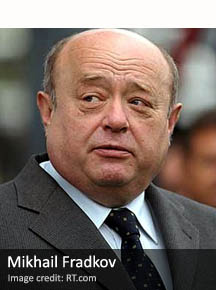
►►Putin adds spy chief to energy commission. Russian President Vladimir Putin has reinforced a presidential commission seen as Kremlin’s vehicle for vying for control over the country’s crucial oil and gas sector, by adding the country’s top police officer and senior spy to its ranks. They are Interior Minister Vladimir Kolokoltsev and Mikhail Fradkov, director of the Foreign Intelligence Service, formerly a department of the KGB. The commission is driven by Igor Sechin, a former KGB officer and close ally of President Putin.
►►US spy sat agency plans major expansion. The National Reconnaissance Office (NRO), America’s secretive spy satellite agency, operates a vast constellation of spy satellites in orbit. But these surveillance spacecraft have traditionally only been able to gaze down on a few small areas of the planet at a time, like flashlights probing the dark. And this, only with careful advance planning by human operators on the ground. Now the NRO wants to expand the current flashlight-like satellite deployment to a horizon-spanning, overhead spotlight that can illuminate vast swaths of the planet all at once. The agency also wants new spacecraft that can crunch the resulting data using sophisticated computer algorithms, freeing the satellites somewhat from their current reliance on human analysts.
►►GCHQ warns of ‘unprecedented’ cyberattack threat. The British government’s electronic eavesdropping and security agency, GCHQ, has warned the chief executives of Britain’s biggest companies about an allegedly “unprecedented threat” from cyber-attacks. “GCHQ now sees real and credible threats to cybersecurity of an unprecedented scale, diversity, and complexity”, said Ian Lobban, the agency’s director. The magnitude and tempo of the attacks pose a real threat to Britain’s economic security’, Lobban adds, but notes that about 80% of known attacks would be defeated by embedding basic information security practices.

News you may have missed #788

U-2 surveillance aircraftBy IAN ALLEN | intelNews.org |
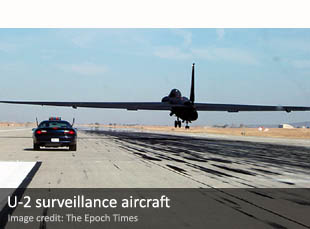
►►US spy planes violated Israeli airspace in 1950s. American U-2 espionage planes repeatedly entered Israeli airspace in the 1950s for a series of secret spy missions, according to new information to be published by the Israel Air Force magazine next week, bringing to an end a decades-long mystery. At the time, Israel’s defense establishment was baffled by the entrance of high-flying crafts. For years, officials in IAF command disagreed on the identity of the mystery crafts, with some claiming that they were British Vickers-Valiants, and others saying they were American Vought F-8 Crusader planes, that had been stationed on a US aircraft carrier. According to documents to be published next week, it was the USSR that aided Israeli officials to expose the identity of the mystery planes, after a US U-2 espionage plane was shot down over Soviet soil.
►►US guard pleads guilty to espionage. A civilian guard at a new US consulate in China pleaded guilty on Thursday to attempting to sell Chinese security officials photographs and access to the compound so they could plant listening devices. According to a court proffer, Bryan Underwood had lost a significant amount of money in the stock market and hoped to make between $3 million and $5 million by supplying classified photos and information to China’s Ministry of State Security. Underwood, 32, appeared in federal court in Washington and pleaded guilty to one count of attempting to communicate national defense information to a foreign government.
►►CIA torture probe ends without any charges. The US Department of Justice has ended its investigation into the CIA’s interrogation program for terror detainees, without bringing charges. Attorney General Eric Holder said there was not enough evidence to “sustain a conviction beyond a reasonable doubt”. Jameel Jaffer, deputy legal director of the American Civil Liberties Union, said the investigation’s conclusions were a “nothing short of a scandal”. But CIA officials welcomed the decision. CIA Director David Petraeus thanked his staff for co-operating with the investigation. “As intelligence officers, our inclination is to look ahead to the challenges of the future rather than backwards at those of the past”, he said. No surprises here, surely.

News you may have missed #787

Alexander Makowski By IAN ALLEN | intelNews.org |
►►An interview with a senior Yemeni spy. Here’s something you don’t read every day: an interview with Ahmed Bin Mo’aili, 66 (pictured here), who worked as a spy for Yemen’s Political Security Organization (PSO) for more than 30 years. He says that, due to his “different duties in different countries”, which required him to travel in several Arab countries, he acquired “tens of wives” over the years. He is now upset with the PSO because the Organization has “separted him from his 31 children who live all around the Arab countries he has worked in and who are awaiting his return”.
►►Cyprus wants answers from UK over Syria spy claims. Dr. Erato Kozakou-Marcoullis, the Minister of Foreign Affairs of the Republic of Cyprus, has asked British authorities for “a full explanation” into media reports that UK military installations in Cyprus are providing intelligence to Syrian rebels. Earlier this month, The London Times claimed that two British military bases on Cyprus, located in Dhekelia and Akrotiri, were being used to collect signals intelligence on Syria. The data collected at the listening posts, operated by the General Communications Headquarters, Britain’s foremost signals intelligence agency, was passed on to the Free Syrian Army through Turkish intelligence operatives, said The Times. But the Cypriot Foreign Minister said that it was crucial that the bases were not being used for purposes not enshrined in the island’s Treaty of Establishment, which mandates the British Bases to be used for defensive purposes only.
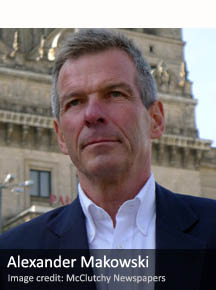
►►CIA ‘turned down offer’ to kill bin Laden in 1999. In late 1999, two years before the 9/11 terrorist attacks, which killed nearly 3,000 people, a group of Afghan agents loyal to an anti-Taliban guerrilla leader proposed assassinating Osama bin Laden. In returne, they asked for the $5 million reward the Bill Clinton administration had offered for bin Laden’s capture. But the CIA rejected the plan, saying: “we do not have a license to kill”. This is according to the book Ferreting Out Bin Laden (not yet available in English), by Polish former spy Alexander Makowski (pictured), who claims he was the Afghans’ go-between on the plot. Makowski’s credentials are many: the son of a spy, he attended primary school in Great Britain, high school in the United States, and received a postgraduate law degree from Harvard. He graduated from the Polish military intelligence academy at Stare Kiejkuty before spending 20 years in Polish intelligence.

News you may have missed #786

Richard Masato AokiBy IAN ALLEN | intelNews.org |
►►US Pentagon wants to share intel with Egypt. The US Department of Defense is offering Egypt a package of classified intelligence-sharing capabilities designed to help it identify military threats along its border with Israel. According to an unnamed senior US official, the Pentagon leadership is concerned about “rising militancy” along the Egyptian-Israeli border. The purported intelligence package includes satellite imagery, data collected through unmanned drones, as well as intercepts of cell phone and other communications among militants suspected of planning attacks. The Egyptian intelligence chief was summarily fired earlier this month, after more than a dozen Egyptian soldiers were killed near Israel’s border when gunmen attacked a post and tried to enter Israel.
►►Researcher disputes Aoki was FBI informant. Last week author Seth Rosenfeld alleged that prominent 1960s Black Panther Party member Richard Masato Aoki, who gave the Black Panthers some of their first firearms and weapons training, was an undercover FBI informer. But the claim, which is detailed in Rosenfeld’s new book, Subversives, is disputed by another researcher, Diane C. Fujino. A professor and chair of Asian American studies at UC Santa Barbara, and author of the recently published Samurai Among Panthers, Fujino argues that Rosenfeld has not met the burden of proof on Aoki, and that he “made definitive conclusions based on inconclusive evidence”.
►►Russian intelligence to monitor blogosphere. Russia’s Foreign Intelligence Service, the FSB, says it plans to fund a program that monitors the Internet’s “blogosphere”, with an aim to “shape public views through social networking”. Citing unnamed sources from inside the FSB, Russian newspaper Kommersant said that the project’s research stage will cost around $1 million. The article implies that the online surveillance and opinion-shaping program will target both Russian- and foreign-language online users. This is not the first time that the FSB has displayed interest in online social networking in recent years.

News you may have missed #785 (interview edition)

Stella RimingtonBy IAN ALLEN | intelNews.org |
►►Interview with first-ever NSA Compliance Director. John DeLong, the first-ever compliance director at the US National Security Agency, has given an interview to NextGov. In it, he says that “we’re nothing if we lose the confidence of the American people”. He is referring to frequent allegations, by whistleblowers and others, that the Agency is increasingly spying on Americans’ communications. As Compliance Director, DeLong is responsible for ensuring that the NSA abides by US law, which forbids it from intercepting electronic messages exchanged between US citizens or persons.
►►Ex-MI5 boss offers comment on WikiLeaks. Former MI5 Director-General Dame Stella Rimington has criticized “the indiscriminate pouring out into the public domain of streams of leaked documents by Julian Assange and his WikiLeaks organization”. But she also said that the US government should have taken better steps to prevent WikiLeaks from acquiring the information in the first place. Speaking at an international archiving conference in Brisbane, Australia, Dame Stella said that while the WikiLeaks saga could prompt the US government to come up with better databases, it would more likely encourage it to be even more secretive. This, she added, “must be absolutely the opposite effect of what WikiLeaks was seeking”.
►►Interview with NSA whistleblower. Filmmaker Laura Poitras interviews William Binney, a 32-year veteran of the US National Security Agency, who helped set up STELLAR WIND, the NSA’s top-secret domestic spying program, which was put in place after 9/11. The program was so controversial that it nearly caused top Justice Department officials to resign in protest in 2004. Binney, who resigned over STELLAR WIND in 2001, and began speaking out publicly in the last year, explains how the program he created for foreign intelligence gathering was turned inward on America.

Interview with NSA whistleblower

News you may have missed #784

Aimal FaiziBy IAN ALLEN | intelNews.org |
►►US agencies still not sharing intelligence. Nearly half of US federal agencies are not sharing documented incidents of potential terrorist activity with US intelligence centers, according to officials in the Office of the Director of National Intelligence. Federal and police officials are supposed to deposit reports of suspicious behavior through a system known as the Nationwide Suspicious Activity Reporting Initiative (NSARI). It is a virtualized inventory of tips that can be reached by federal, state or local government authorities. But progress in connecting local agencies to fusion centers through the NSARI appears to be slow-going. Almost exactly a year ago, a similar report by the US Congressional Research Service found that US intelligence agencies were still struggling to strengthen their information-sharing networks.
►►Russian spies ‘top priority’ for Czech intelligence. A new report by the Czech Security Information Service (BIS) says that Russian intelligence services are the most active foreign espionage organizations in the Czech Republic. The report, published last Wednesday, states that Russian spies work under different covers, mainly at Russian diplomatic missions, and in numbers that are utterly unjustified, given the current status of Czech-Russian relations. “Russian intelligence officers were spotted at different public and corporate events, where they tried to resume old contacts and meet new people”, the report said. It is worth noting that the BIS report devoted nine paragraphs to Russian espionage and only one to Chinese. Chinese intelligence officers “do not pose an immediate risk to Czech citizens”, the report said.
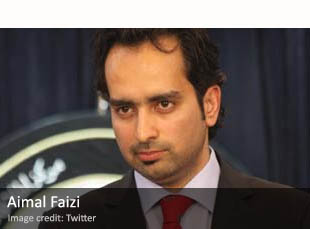
►►Afghanistan blames ‘foreign spies’ for insider attacks. Some of Afghan President Hamid Karzai’s top advisers said this week that the recent rise in insider attacks on NATO troops is the product of foreign spy agencies infiltrating Afghanistan’s security forces. They said that Afghanistan’s National Security Council has concluded that both Pakistani and Iranian intelligence organizations are recruiting young Afghans to enlist in the army and police with the intention of targeting Western service members. The officials suggested that the ultimate aim of the alleged efforts by foreign agencies is to destabilize Afghanistan’s forces. One of the Afghan government’s spokesmen, Aymal Faizi (pictured), said that the allegations from Kabul rested on classified evidence from “documents, telephone calls, pictures and audio that show direct contact between these individuals and foreign spy agencies”.

News you may have missed #783

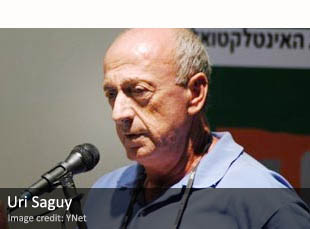
Uri SaguyBy IAN ALLEN | intelNews.org |
►►Israeli ex-intel chief says warns of ‘hysteria’ over Iran. Major General Uri Saguy (a.k.a. Uri Sagi), who was head of the IDF’s Operations Directorate during the 1982 Lebanon war, and Military Intelligence chief from 1991 to 1995, has warned of an “orchestrated and purposely timed hysteria that puts the country into a state of anxiety, artificial or not”, regarding the Iranian nuclear issue. Saguy, who resigned from the IDF in 1995 due to a conflict between him and the Chief of General Staff, added that “it would be a mistake if Israel uses force, certainly now, in order to thwart the Iranian nuclear potential”. The essence of Saguy’s message, notes Ha’aretz‘s Amir Oren, is that Israel’s citizens cannot trust Defense Minister Ehud Barak or Prime Minister Benjamin Netanyahu.
►►Australian spy chief warns of economic espionage. The director-general of the Australian Security Intelligence Organisation, David Irvine, has warned that the online revolution has left Australian companies increasingly vulnerable to cyber attacks and commercial espionage. Speaking to a business audience in Canberra, Irvine said that most online attacks in the business world go undetected, despite growing awareness of the threat. Asked how much commercial cyber crime went undetected, he said: “I would be very surprised if we who are active in this area are picking up the greater proportion of it, in fact, quite the reverse”.
►►Top US military official objects to attack on Iran. As Israeli officials are telling local reporters that they’re really, really ready to attack Iran’s nuclear facilities, and they mean it this time, the top US military officer is saying what a terrible idea that would be. “I may not know about all of [Israel’s] capabilities”, said General Martin Dempsey, the chairman of the Joint Chiefs of Staff. “But I think that it’s a fair characterization to say that they could delay but not destroy Iran’s nuclear capabilities”. Left unsaid: in a few years, the US and Israel would be back to the same standoff with Iran —except this time it might do so amidst a proxy terrorist war to avenge the Iranians.

News you may have missed #782 (history edition)

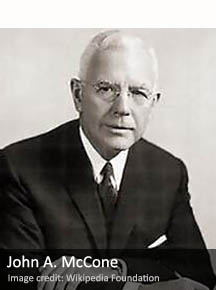
John A. McConeBy IAN ALLEN | intelNews.org |
►►Did US DCI McCone authorize CIA assassinations? By the CIA’s own admission, we do know the Agency was involved in attempts to kill or overthrow several Third World leaders during the Cold War. But the doctrine of plausible deniability meant there is no paper trail identifying those who ordered such operations. Evidence is reasonably clear that Allen W. Dulles, who served as Director of Central Intelligence (DCI) for nearly nine years, sanctioned them. But what about John A. McCone (pictured), whom Kennedy appointed as DCI in 1961? Is it possible that the CIA carried out assassination plots without his approval or even in the face of his disapproval? Newly discovered notes from a cryptic telephone call McCone made to Secretary of State Dean Rusk on August 21, 1962, support the claim that, while McCone opposed any open discussion of assassination proposals, he did not oppose the efforts as a matter of principle.
►►Ronald Reagan was FBI informant (Note: this is not new information, but it helps to refresh one’s memory from time to time). In the early stages of the Cold War, FBI Director J. Edgar Hoover feared a ‘Kremlin-controlled conspiracy’ to infiltrate Hollywood and use the world’s largest producer of motion pictures to manipulate public opinion against America. In 1945, Ronald Reagan, then an actor, passed along some political gossip of special interest to Hoover. Eventually, Reagan served as an informer in the Bureau’s investigation of alleged communist infiltration of the radio and television industry. He was listed as “Confidential Informant T-36”. Agents described him as “reliable”.
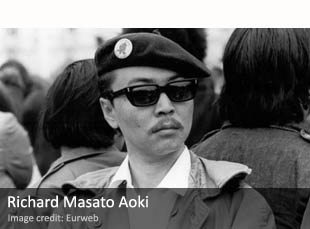
►►Senior Black Panther member was FBI informant. Prominent 1960s Black Panther Party member Richard Masato Aoki, who gave the Black Panthers some of their first firearms and weapons training, was an undercover FBI informer in California, a former agent and FBI report reveal. Aoki’s role inside the Black Panthers was discovered by Seth Rosenfeld while researching his book Subversives: The FBI’s War on Student Radicals, and Reagan’s Rise to Power, which was published today by Farrar, Straus and Giroux. Aoki’s life in the Black Panthers was documented in a 2009 film, Aoki and a 2012 biography titled Samurai Among Panthers. Neither mentioned his work with the FBI. Rosenfeld said Aoki had contended in a 2007 interview it wasn’t true he was an informant, but added: “people change. It is complex. Layer upon layer”.

News you may have missed #781

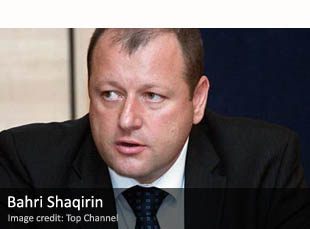
Bahri ShaqirinBy IAN ALLEN | intelNews.org |
►►Syria denies Vice-President has defected. Syria denied reports over weekend that President Bashar al-Assad’s deputy had defected. Vice-President Farouq al-Shara “never thought for a moment about leaving the country”, said a statement from his office, broadcast on state television and issued in response to reports that the veteran Ba’ath Party loyalist had tried to defect to Jordan. Al-Sharaa’s office said the vice-president “supports get[ting] united support from the [United Nations] Security Council to carry out his mission without obstacles”.
►►What is inside the CIA’s Polish prison? A major political scandal erupted in Poland this year, over an alleged secret CIA ‘black site’ used to house high-ranking terrorism suspects. But exactly was in this prison? In this interview, aired yesterday on Washington DC-based National Public Radio’s Weekend Edition program, host Linda Wertheimer speaks to journalist and author Roy Gutman about his recent trip to Poland, to cover an investigation into the CIA interrogation facilities.
►►US ‘surprised’ after Albania replaces spy chief. Little more than a month after taking office, Albanian President Bujar Nishani has discharged the Director of the country’s State Security Agency, SHISH, Bahri Shaqirin. The move follows a request by Albanian Prime Minister Sali Berisha, who first proposed that Shaqirin should be removed. His replacement is Visho Ajazi Lika, currently Deputy Minister for Technology and Information. Some analysts note that Shaqirin enjoyed the support of the US Embassy in Tirana. One of its spokespersons said that “the US had not been informed about Shaqiri’s discharge and [Washington was] surprised by this fast and unexpected decision”.

News you may have missed #780

Syrian rebel video of downed dronesBy IAN ALLEN | intelNews.org |
►►Israeli Prime Minister rebukes President’s Iran comments. Aides to Israeli Prime Minister Benjamin Netanyahu launched a stinging rebuke to the country’s president, Shimon Peres, after he said that Israel should not act alone in launching military action against Iran’s nuclear program. In an interview on Israeli television, Peres said: “It is clear to us we cannot do it on our own. We can only delay [Iran’s progress]. Thus it’s clear to us that we need to go together with America”. Officials from Netanyahu’s office were quoted in the Israeli media as saying: “Shimon Peres forgets what the role of the president of Israel is”. The row is a stark example of the sharp differences at the heart of Israel’s political, military and intelligence establishment over the merits and dangers of an early unilateral military strike on Iran.
►►Russian embassy in UK alleges attack by Syrian activists. Russia’s embassy in London accused British police on Friday of taking no action to prevent an attack on its building by a group of activists protesting Moscow’s support for Syrian President Bashar al-Assad. It made the accusation as about 40 protesters clad in balaclavas demonstrated outside the embassy, located in an upscale part of London, against the verdict in a trial of the Russian feminist punk band Pussy Riot in Moscow. An embassy spokesman said a group of protesters chanting anti-Assad slogans attacked the building overnight, throwing stones and smashing windows.
►►Syrian rebels put captured Iranian drones on YouTube. The opposition to Bashar al-Assad says it’s captured spy drones made by Assad’s patron, Iran. And it’s put the evidence on YouTube. In the video, Syrian rebels show off three smallish, unarmed surveillance drones they say they downed. The two larger drones appear to be variants of Iran’s homemade Ababil, or Swallow, surveillance aircraft. All three show signs of damage, with the tiny drone’s nose cone looking to have taken the worst, and alongside the drones are pamphlets displaying the face of the dead Iranian ayatollah Ruhollah Khomeini. It’s yet more evidence that Iran considers Syria’s civil war to be a proxy contest with much at stake for their influence in the region.

News you may have missed #778 (analysis edition)

Lieutenant-General Zahir ul-IslamBy IAN ALLEN | intelNews.org |
►►Some rules restrain Mossad’s work in Iran. It is widely believed that at least four assassinations of Iranian nuclear scientists in Tehran were carried out in recent years by Mossad operatives. The perpetrators were part of an elite unit within Israeli intelligence, called Kidon, founded in 1972 to avenge the killing of 11 Israeli athletes at the Munich Olympics, by any means necessary. But veteran Israeli intelligence correspondents Dan Raviv and Yossi Melman argue that the Kidon is not technically a ‘lawless’ organization; it has to comply with a set of “unwritten regulations” adopted by Israel’s secret agencies fifty years ago.
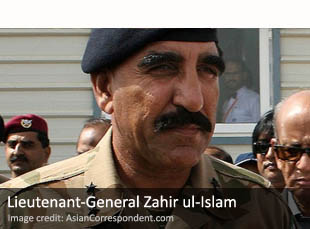
►►Are US and Pakistani spy agencies starting to get along? The relationship between the CIA and Pakistan’s Inter-Services Intelligence (ISI) agency has been at the core of Washington and Islamabad’s alliance for over a decade now. But over the past two years, as suspicions have grown, the two sides had become near adversaries. After months of relations languishing at an all-time low, Pakistan and the US may now be opening up a fresh phase of engagement. Following US Secretary of State Hillary Clinton’s recent apology for the loss of 24 Pakistani soldiers at a border checkpoint last November, NATO supplies are rumbling through again. Washington has also released funds for Pakistani military operations it had previously withheld. And, perhaps most crucially, the two fractious allies’ top spies are said to be talking again. New ISI Director Zahir ul-Islam (pictured) visited Washington for talks earlier this month.
►►Why the US isn’t arming Syria’s opposition –yet. Up until this point, the only thing the US has owned up to is providing humanitarian assistance and communications equipment to Syrian opposition groups. A report earlier this month revealed that US President Barack Obama signed a secret “finding” in July, which allows the CIA to take action in Syria, but does not include lethal support. In other words, the US won’t be sending in Seal Team Six to take down Assad any time soon, but it is training certain groups to handle and gather intelligence. Why is that?

News you may have missed #777

KH-9 HexagonBy IAN ALLEN | intelNews.org |
►►Egypt sacks spy chief after border attacks.  Egypt’s President Mohamed Morsi sacked the Director of the General Intelligence Directorate, Murad Muwafi, two generals and the governor of north Sinai region on Wednesday, after gunmen killed 16 border guards there on Sunday before last. Mowafi was the most high-profile official who lost his job, forced into early retirement as Egypt’s intelligence agencies were criticized for missing or ignoring warnings about the attack.
►►Photos reveal CIA deep-sea rescue of a spy satellite. On July 10, 1971, America’s newest photo reconnaissance satellite, the KH-9 Hexagon, dropped a capsule loaded with film toward the Earth. Due to a technical error, the capsule sunk in the Pacific Ocean. Last week, the CIA declassified documents and photographs showing how it went 16,000 feet into the sea to recover the Hexagon capsule.
►►Pre-inquest review into death of ex-KGB officer Litvinenko. A British High Court judge will soon hold a pre-inquest review into the death of Russian spy Alexander Litvinenko, officials have said. Litvinenko, who was working for MI6 following his defection from Russia, is believed to have been poisoned with radioactive polonium-210 in London, in November 2006. British prosecutors accuse former KGB operatives Andrei Lugovoy and Dmitry Kovtun for the murder. However, earlier this year Lugovoy reportedly passed a lie detector test on the subject of Litvinenko’s death, which was administered in Moscow by the British Polygraph Association.