News you may have missed #702

James BamfordBy IAN ALLEN | intelNews.org |
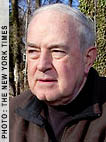
►►NSA chief denies domestic spying allegations. In a rare break from the NSA’s tradition of listening but not speaking, National Security Agency chief General Keith Alexander was grilled last week on the topic of eavesdropping on Americans in front of a House subcommittee. The questioning from Rep. Hank Johnson (D-Georgia) was prompted by Wired magazine’s cover story earlier this month on the NSA’s growing reach and capabilities. But author James Bamford (photo) and NSA whistleblower Thomas Drake insist that the NSA is quietly building America’s the largest spy center in Utah, as part of a secret domestic surveillance program codenamed STELLAR WIND.
►►NY police says it monitored Iran operatives taking photos. Speaking before the US House Homeland Security Committee, Michael Silber, director of New York Police Department Intelligence Analysis, said New York City Police have observed Iranian operatives photographing key transportation sites at least six times since September 11, 2001. He gave an example of six men on an East River sightseeing cruise in 2005, who paired off with maps and cell phones while taking photographs and videos of the bridges over the river. The NYPD determined each was on the payroll of Iranian government, one employed at Iran’s mission to the United Nations.
►►Major Canadian Cold War era mole hunt operation revealed. Newly released archival records show that even the cream of Canada’s foreign service was not immune from scrutiny in a top secret RCMP investigation known as Operation FEATHER BED. The probe, which stretched from the late 1950s into the 1970s, saw RCMP security branch investigators pore over the backgrounds of possible Communist sympathizers in the public service and political sphere —including a future Mountie spy chief. There is no evidence the highly confidential investigation ever identified a Soviet agent.

News you may have missed #697: US edition

David PetraeusBy IAN ALLEN| intelNews.org |
►►What happens when CIA couples divorce? One retired CIA senior paramilitary officer, who served for more than two decades and lives in Virginia, said he was told several years ago that the divorce rate for the agency’s operations division was astonishingly high. But unlike the Pentagon, which studies how often service members split up, and knows, for instance, that 29,456 of 798,921 military couples divorced last year, the CIA does not keep official tabs on its employees’ divorce rates.
►►Spies exchange tips in the cloud. While some US federal agencies shy away from cloud computing for fear of losing control over their data, the intelligence community and military increasingly are turning to networked services expressly to exert tighter security restraints, according to Jim Heath, Senior Science Adviser for the National Security Agency.
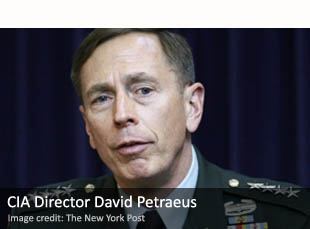
►►CIA Chief: We’ll spy on you through your dishwasher. More and more personal and household devices are connecting to the internet, from your television to your car navigation systems to your light switches. CIA Director David Petraeus cannot wait to spy on you through them. Earlier this month, Petraeus mused about the emergence of an “Internet of things” —that is, wired devices— at a summit for In-Q-Tel, the CIA’s venture capital firm. “‘Transformational’ is an overused word, but I do believe it properly applies to these technologies”, Petraeus enthused, “particularly to their effect on clandestine tradecraft”.
News you may have missed #696

NSA's Utah Data CenterBy IAN ALLEN| intelNews.org |
►►French spies to stage labor protest. The main union representing French domestic intelligence officers, those charged with counter-espionage and anti-terror investigations, called Wednesday on its members to stage a protest. The head of the SNOP union, which represents senior police officers and is the main labor body for members of the DCRI security agency, said his members planned a “gathering” at their Paris headquarters. A smaller union said it wanted no part in the protest, and it was not clear how many of the agency’s 4,000 intelligence officers planned to take part.
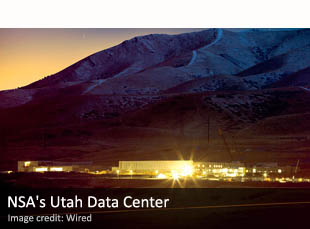
►►James Bamford on the NSA’s new spy center in Utah. Under construction by contractors with top-secret clearances, the blandly named Utah Data Center is being built in Bluffdale for the National Security Agency. A project of immense secrecy, it is the final piece in a complex puzzle assembled over the past decade. Its purpose: to intercept, decipher, analyze, and store vast swaths of the world’s communications as they zap down from satellites and zip through the underground and undersea cables of international, foreign, and domestic networks. The heavily fortified $2 billion center should be up and running in September 2013.
►►Author of unauthorized CIA book gave proceeds to charity. After former CIA officer Ishmael Jones wrote a book about the CIA without gaining prior approval from the Agency, the government sought and won a judicial ruling that Jones had acted in violation of his CIA secrecy agreement, and that he could be held liable for the breach. But the government’s current efforts to seize the financial proceeds from Jones’ 2010 book, The Human Factor: Inside the CIA’s Dysfunctional Intelligence Culture, have been frustrated by the fact that the author has already given the proceeds away to charity.

News you may have missed #691

Thomas DrakeBy IAN ALLEN| intelNews.org |
►►NSA whistleblower says Obama worse than Bush. Thomas Drake, the whistleblower whom the administration of US President Barack Obama tried and failed to prosecute for leaking information about waste, fraud and abuse at the National Security Agency, now works at an Apple store in Maryland. In an interview with Salon, Drake says the Obama administration is “expanding the secrecy regime far beyond what Bush ever intended”.
►►Australian spies reportedly buying computer bugs. The Australian government is buying computer security weaknesses found by hackers before they are sold on the black market, as part of its defense strategy, according to an Australian security consultant who wishes to remain anonymous. He says while the government won’t admit it, buying vulnerabilities is an obvious part of “gathering intelligence”.
►►Refugees in Finland face spying threats. Foreign governments and groups are carrying out more spying on refugees and dissidents living in Finland, according to SUPO, the country’s security intelligence service. SUPO issued a report last week contending that while the Scandinavian country isn’t seeing an increased threat of terrorist acts on its soil, it still faces several terror-related challenges. One of them is “regular” surveillance activity by foreign intelligence services operating within Finland, whose aim is spy on their home countries’ dissidents and develop links with other refugees and expatriates.

News you may have missed #689: NSA edition

Michael HaydenBy IAN ALLEN| intelNews.org |
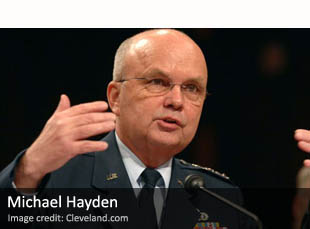
►►Ex-NSA Director calls Stuxnet a ‘good idea’. General Michael Hayden, once head of the NSA and CIA, who was no longer in office when the Stuxnet attack on Iran occurred, but who would have been around when the computer virus was created, denies knowing who was behind it. He calls Stuxnet “a good idea”. But he also admits “this was a big idea, too. The rest of the world is looking at this and saying, ‘clearly, someone has legitimated this kind of activity as acceptable'”.
►►NSA develops secure Android phones. The US National Security Agency has developed and published details of an encrypted VoIP communications system using commercial off-the-shelf components and an Android operating system. A hundred US government employees participated in a pilot of Motorola hardware running hardened VoIP called ‘Project FISHBOWL’, NSA Information Assurance Directorate technical director Margaret Salter told the RSA Conference in San Francisco on Wednesday. “The beauty of our strategy is that we looked at all of the components, and took stuff out of the operating system we didn’t need”, said Salter. “This makes the attack surface very small”.
►►Senior US Defense official says DHS should lead cybersecurity. In the midst of an ongoing turf battle over how big a role the National Security Agency should play in securing America’s critical infrastructure, Eric Rosenbach, deputy assistant secretary of Defense for Cyber Policy in the Department of Defense, said on Wednesday that the NSA should take a backseat to the Department of Homeland Security in this regard. “Obviously, there are amazing resources at NSA, a lot of magic that goes on there”, he said. “But it’s almost certainly not the right approach for the United States of America to have a foreign intelligence focus on domestic networks, doing something that throughout history has been a domestic function”.

News you may have missed #675

Eugene ForseyBy IAN ALLEN | intelNews.org |
►►US ‘has engaged in cyberwarfare’. Former National Security Agency Director Mike McConnell said in an interview with Reuters that the United States has already used cyber attacks against an adversary. Most believe he was referring to Stuxnet, the computer virus unleashed against Iran in 2010.
►►Philippines studying US offer to deploy spy planes. The Philippines is considering a US proposal to deploy surveillance aircraft on a temporary, rotating basis to enhance its ability to guard disputed areas in the South China Sea, the Philippine defense minister said last week. The effort to expand military ties between the United States and the Philippines, which voted to remove huge American naval and air bases 20 years ago, occurs as both countries grapple with the growing assertiveness of China.
►►Canadian intelligence spied on constitutional expert. Canadian security forces kept close tabs on renowned constitutional scholar Eugene Forsey from his early days as a left-wing academic to his stint as a senator, according to newly declassified documents. The collection of more than 400 pages, which has been obtained by Canadian newspaper The Toronto Star, reveals the RCMP Security Service (the predecessor to the Canadian Security Intelligence Service), followed Forsey for four decades throughout his career as an economics professor, research director for the Canadian Congress of Labour (now called the Canadian Labour Congress), a two-time Ottawa-area candidate for the Cooperative Commonwealth Federation and then his 1970 appointment as a Liberal senator. No surprises here.

US Pentagon computers cannot be protected, says NSA head

General Keith AlexanderBy JOSEPH FITSANAKIS | intelNews.org |
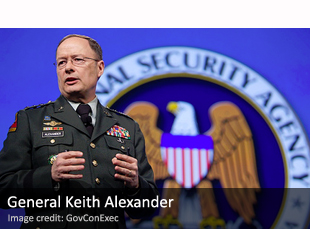
The man in charge of America’s most powerful intelligence agency says the United States Department of Defense computer network is so disordered and chaotic that it cannot be defended from cyberattacks. General Keith Alexander directs the National Security Agency, America’s wealthiest intelligence institution, which expert James Bamford has described as “the world’s most powerful spy agency”. As America’s foremost signals intelligence agency, the NSA is largely responsible for protecting the integrity, security and cohesion of the country’s public and restricted military communications networks, including computer networks. To do so, it consumes an annual budget that dwarfs those of most other intelligence agencies, and employs entire armies of computer security experts and other professionals. But, according to General Alexander, who also heads the US Pentagon’s new Cyber Command, there is not much his army of cyberwarriors can do to either prevent or repel possible large-scale cyberattacks directed against the DoD’s computer networks. The NSA chief was speaking yesterday at the International Conference on Cyber Security, a high-profile gathering of experts at New York’s Fordham University. He told the conference, which is sponsored by the Federal Bureau of Investigation, that the Pentagon’s computer infrastructure is too anarchic and chaotic to be successfully defended from cyberespionage, cyberterrorism, or cyberwarfare assaults. He said the DoD computer system consists of so many interconnected networks —over 15,000 in all— that the NSA “can’t see them all [let alone] defend them all”. As a result, said Alexander, the DoD’s current communications infrastructure “is indefensible”. Read more of this post

News you may have missed #657

Israel and IranBy IAN ALLEN | intelNews.org |
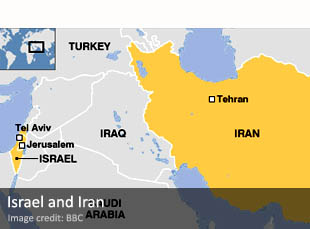
►►Israeli company exported Internet-monitoring hardware to Iran. Israel bans all trade with its enemy, Iran. It turns out, however, that Israeli Internet-monitoring equipment has been finding its way to Iran for years, through Denmark. An Israeli company shipped the equipment to Denmark, where workers stripped away the packaging and removed the labels, before forwarding it to Iran. Now Israeli trade, customs and defense officials say they “did not know” that the systems were ending up in Iran.
►►Court decision revives NSA lawsuits. The 9th US Circuit Court of Appeals has ruled that the case of Jewel v NSA, which claims that after the 2001 terrorist attacks the NSA began large-scale monitoring of digital traffic, with the assistance of AT&T and others, can proceed. At the same time, the court denied leave to continue on a linked case against AT&T, for aiding and abetting the surveillance. The court upheld the 2008 Foreign Intelligence Surveillance Act (FISA) revision, voted for by the current president, which grants the telecommunications companies retroactive immunity from any actions carried out during the period.
►►Czechs charged with espionage in Zambia sent home. Three Czech citizens, who were detained in Zambia on October 12, 2011, and charged with espionage, have returned home, the Czech Foreign Ministry said Sunday. A ministry spokesman declined to give any details on the return of the three Czechs, who were arrested after they were found taking pictures near military sites.

Analysis: Cloud computing causes ‘cosmic shift’ in US spy community

Cloud computing

Cloud computing

By JOSEPH FITSANAKIS | intelNews.org |
While many are focusing on recent reports of arrests of CIA operatives in Lebanon and Iran, American intelligence planners have other things on their minds: the latest buzzword is ‘cloud’; specifically, ‘cloud computing’. The term means storing information and software on a network, which can then be shared on demand by users of interconnected electronic devices. The US intelligence community’s interest in this form of data organizing has been known for quite some time. But according to specialist publication Federal Computer Week, cloud computing is rapidly becoming a reality, as one after the other, US intelligence agencies are “moving their classified, sensitive information off their own servers and into the cloud”. Such a change “might have sounded crazy five years ago”, says FCW, and the fact that it is happening marks nothing less than a “cosmic shift” for American intelligence. The migration unto the cloud was spearheaded two years ago by the National Security Agency; the NSA was later joined by the Defense Intelligence Agency, the National Geospatial-Intelligence Agency, and the super-secretive National Reconnaissance Office. Soon the CIA wanted in: in 2009, Jill Tummler Singer, the CIA’s deputy Chief Intelligence Officer, told ComputerWorld that the CIA was becoming one of the US government’s strongest advocates for cloud computing, even though “the term really didn’t hit our vocabulary until a year ago”. Not everyone is super-excited about the cloud. Last year, Brian Snow, the NSA’s former Technical Director, said at a conference that he didn’t trust cloud services, mostly because of the existence of countless unpatched software vulnerabilities. But the move is heavily supported by two of America’s most senior intelligence officials: Keith Alexander, commander of US Cyber Command and director of NSA —America’s largest intelligence agency— and Director of National Intelligence James Clapper. Read more of this post

News you may have missed #617

Ilan Grapel

Ilan Grapel

►►Analysis: Is the CIA Still an Intelligence Agency? Early September 2011, a former intelligence official commented to The Washington Post that, “The CIA has become one hell of a killing machine”. He then attempted to retract, but his words were on record. But is that really what it should be: a hell of a killing machine?
►►US National Security Agency helps Wall Street battle hackers. The National Security Agency, a secretive arm of the US military, has begun providing Wall Street banks with intelligence on foreign hackers, a sign of growing US fears of financial sabotage. While government and private sector security sources are reluctant to discuss specific lines of investigations, they paint worst-case scenarios of hackers ensconcing themselves inside a bank’s network to disable trading systems for stocks, bonds and currencies, trigger flash crashes, initiate large transfers of funds or turn off all ATM machines.
►►Israel okays deal with Egypt to free alleged spy. Israel’s security cabinet unanimously approved an agreement Tuesday for the release of Israeli-American law student Ilan Grapel (pictured), who has been in jail in Egypt since June 12 on spying allegations that were later reduced to incitement. In exchange, Israel will release 22 Egyptian prisoners, most of them Bedouin from the Sinai jailed for smuggling drugs or weapons.

News you may have missed #598 (US edition)

Brian Kelley

Brian Kelley

►►CIA officer wrongly accused of being KGB mole dies. CIA officer Brian J. Kelley, who was falsely accused by his own agency, as well as by the FBI, of supplying covert information to Moscow, has died at the age of 68. The real mole, the FBI agent-turned-spy Robert P. Hanssen, was apprehended in 2001, but not before Mr Kelley had been followed, interrogated, suspended and told that he might well be charged with a capital offense.
►►NSA working on secure smartphone technology. Troy Lange,  mobility mission manager at the US National Security Agency, says he is developing a secure smartphone that can be used to access classified information and apps while on the move. He is working on a pilot project using a smartphone that looks like any bought in stores but with security configurations to allow top-secret communication.
►►Kabul attack kills CIA contractor. An Afghan working for the US government killed a CIA contractor and wounded another American in an attack on the intelligence agency’s office in Kabul, making it the latest in a series of high-profile attacks this month on US targets. An anonymous US official in Washington said the Afghan attacker was providing security to the CIA office and that the American who died was working as a contractor for the CIA.

News you may have missed #570

Nassr al-Mabrouk Abdullah

Abdullah Nassr

►►Libya internal security chief defects. Egyptian airport officials said Nassr al-Mabrouk Abdullah, Muammar al-Gaddafi’s interior minister, landed in a private plane in Cairo with nine family members traveling on tourist visas. Nassr was the minister responsible for police, civil defense, domestic intelligence, and some border security units.
►►S. Korea admits 1962 death occurred in spy training camp. A special committee is reviewing whether the family of a South Korean man who died half a century ago while being trained as a spy for elite missions into North Korea is eligible for compensation. South Korea’s military intelligence command admitted in a July 14 letter that “Mr. Jeon Gwang-su died during training on Sept. 30 of 1962 ahead of being dispatched for a mission in the North”.
►►NSA announces ‘hiring blitz’. The National Security Agency, America’s largest cryptologic intelligence agency, has announced its intention to hire as many as 3,000 people over the next two years, many of them cybersecurity experts. In fact, NSA recruiters even took a trip to Las Vegas in the last few weeks to look for potential hires at DefCon, a high-profile hacker conference there.

News you may have missed #556

David Irvine

David Irvine

►►Australian computer networks spied ‘massively’. Cyberespionage is being used against Australia on a “massive scale” and some foreign spies are using Australian government networks to penetrate the cyberdefenses of allies such as the United States. This according to the Director of the Australian Security Intelligence Organisation (ASIO) David Irvine. Speaking at a business forum, Mr. Irvine said that “it seems the more rocks we turn over in cyberspace, the more [cyberespionage] we find”.
►►US to give Iraq wiretapping system. The US will give the government of Iraq a wiretapping system that will allow it to monitor and store voice calls, data transmissions and text messages from up to 5,000 devices simultaneously. The system is to be installed with the acquiescence of the three current cellular communications providers in Iraq, according to the US Air Force. A similar system was set up by a US contractor three years ago in Afghanistan.
►►Judge says NSA whistleblower faced ‘tyrannical’ US government. This blog has kept an eye on the case of Thoma Drake, a former US National Security Agency employee  who was taken to court for leaking secrets about the agency to a journalist. But the judge in his case, Richard D. Bennett, refused Read more of this post

News you may have missed #546

Thomas Drake

Thomas Drake

By IAN ALLEN | intelNews.org |
►►Whistleblower says NSA mismanagement continues. Former US National Security Agency employee Thomas Drake was recently sentenced to a year’s probation for leaking secrets about the agency to a journalist. The presiding judge did not sentence him to prison, recognizing that his genuine intention was to expose mismanagement. Soon after his sentencing, Drake told The Washington Times that mismanagement continues at the NSA, which he compared to “the Enron of the intelligence world”. He also told the paper that NSA’s accounts were “unauditable”, like those of most of the other agencies operating under the Pentagon. ►►Taliban claim phones hacked by NATO. The Afghan Taliban have accused NATO and the CIA of hacking pro-Taliban websites, as well as personal email accounts and cell phones belonging to Taliban leaders, in order to send out a false message saying that their leader, Mullah Mohammad Omar, had died. Taliban spokesman Zabihullah Mujahid told the Reuters news agency that the hacking was “the work of American intelligence” and that the Taliban would “take revenge on the telephone network providers”. ►►Rumsfeld memo says ‘US can’t keep a secret’. “The United States Government is incapable of keeping a secret”. This was opined in a November 2, 2005 memo authored by Donald Rumsfeld. The memo by the then-Defense Secretary continues: Read more of this post

News you may have missed #544

Google

Google

By IAN ALLEN | intelNews.org |
►►Russia a ‘leading suspect’ in cyberespionage attack on US. I wrote on Monday about the cyberespionage operation that targeted a leading US defense contractor last March, and resulted in the loss of tens of thousands of classified documents. US Deputy Defense Secretary William J. Lynn III, who disclosed the operation, said only that it was conducted by “a foreign intelligence service”. According to the last sentence of this NBC report, US officials see Russian intelligence as “one of the leading suspects” in the attack. ►►Al-Qaeda acquires Pakistani spy service manuals. Jamestown Foundation researcher Abdul Hameed Bakier reports that al-Qaeda operatives have managed to get access to espionage training manuals used by Pakistan’s Inter-Services Intelligence directorate (ISI). Copies of the documents have apparently been posted on Internet forums that are sympathetic to al-Qaeda, and bear the mark of the As-Sahab Foundation, al-Qaeda’s media wing. ►►Google-NSA collaboration documents to remain secret —for now. Even before Google shut down its operations in China, following a massive cyberattack against its servers in early 2010, the company has maintained close contact with American intelligence agencies. But after the 2010 cyberattack, some believe that Google’s relationship with the US intelligence community has become too cozy. In February of 2010, the ACLU said it was concerned about Google’s contacts with the US National Security Agency (NSA). Other groups, including the Electronic Privacy Information Center (EPIC), have filed Freedom of Information Act (FOIA) requests seeking access to the inner workings of Google’s relationship with NSA. Read more of this post