S. Korea parliament probes spy agency’s elections meddling

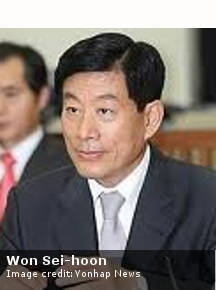
Won Sei-hoonBy JOSEPH FITSANAKIS | intelNews.org |
A parliamentary probe began last week into whether South Korea’s main intelligence agency tried to steer voters away from the liberal candidate during the 2012 presidential election. The country’s National Intelligence Service (NIS) is accused of having deliberately leaked a classified document in order to embarrass the late South Korean President Roh Moo-hyun, who was also a member of the liberal Uri Party (now Democratic Party) of South Korea. IntelNews readers will recall that Won Sei-hoon, who headed NIS from 2008 to 2013, was recently indicted for meddling in the 2012 Presidential Election. According to the indictment, Won ordered a group of NIS officers to “flood the Internet” with messages accusing DP candidates of being “North Korean sympathizers”. Prosecutors allege that Won initiated the Internet-based psychological operation because he was convinced that “leftist adherents of North Korea” were on their way to “regaining power” in the South. The NIS affair has gripped South Korea’s media headlines for months, but fuel was added to the fire in June, when the NIS “mistakenly” declassified an internal document describing a series of secret North-South Korean negotiations. The document, from 2007, shows that the then-President of Korea, Roh Moo-hyun, from the Uri Party, had proposed to North Korean officials the establishment of a “maritime peace zone” along the disputed border between the two nations. Liberal politicians allege that, according to South Korean declassification laws, the document should have remained secret for many decades, and accuse the NIS of deliberately leaking it in order to promote the image of South Korean liberals as “North Korean sympathizers”. Meanwhile, another senior South Korean security official, former Seoul metropolitan police chief Kim Yong-pan, has also been indicted for allegedly hampering a police investigation into Won’s internet campaign. This series of apparently interlinked events is now at center stage in the parliamentary probe, as rival parties prepare to clash over the allegations. Read more of this post

S. Korea’s spy agency accused of politicization, ‘dividing country’

Won Sei-hoonBy JOSEPH FITSANAKIS | intelNews.org |
South Korea’s main opposition party has accused the country’s intelligence agency of acting as a “political provocateur”, “championing conservative causes” and promoting partisanship among the electorate. Lawmakers from the liberal Democratic Party (DP) of South Korea were reacting to allegations last week that the country’s National Intelligence Service (NIS) deliberately leaked a classified document in order to embarrass former South Korean President Roh Moo-hyun. IntelNews readers will recall that, earlier this year, Won Sei-hoon, who headed NIS from 2008 to 2013, was indicted for meddling in the 2012 Presidential Election. According to the indictment, Won ordered a group of NIS officers to “flood the Internet” with messages accusing DP candidates of being “North Korean sympathizers”. Prosecutors allege that Won initiated the Internet-based psychological operation because he was convinced that “leftist adherents of North Korea” were on their way to “regaining power” in the South. If Won, who has since resigned from his NIS post, is found guilty, he faces sentencing of up to five years in prison. Won’s indictment has increased tensions between the DP and the conservative Saenuri Party, which is currently in power in Seoul, and is believed to have strong ties with NIS executive circles. The NIS is supposed to be politically nonpartisan, though its history is highly controversial. Democratization within the NIS only began in the late 1980s, as South Korean politics gradually emerged from a Cold War period dominated by bloody rightwing military coups. This past June, as the country continued to deliberate the 2012 Internet postings affair, the NIS “mistakenly” declassified an internal document describing a series of secret North-South Korean negotiations. Read more of this post

News you may have missed #840

John KiriakouBy IAN ALLEN | intelNews.org |
►►S. Korea prosecutors might seek ex-spy chief’s arrest. Prosecutors said Monday they will decide sometime this week whether to seek an arrest warrant against Won Sei-hoon, who headed South Korea’s National Intelligence Service (NIS) for about four years until early this year. He is suspected of ordering agents to post a slew of politically sensitive comments on the Internet in order to sway public opinion in favor of the ruling party candidate prior to the December 19 national election. Won, who headed the NIS under former President Lee Myung-bak, has been barred from leaving the country pending investigation.
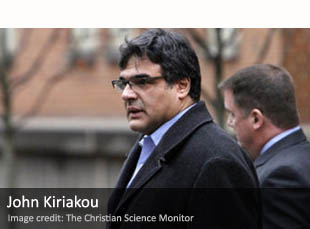
►►CIA self-described whistleblower writes about life in prison. In 2012, former CIA officer John Kiriakou pleaded guilty to violating the Intelligence Identities Protection Act. In January of this year, he was sentenced to 30 months in a low security prison in Loretto, Pennsylvania. In a letter released by his lawyer, Kiriakou describes his day-to-day life behind bars, from his own tiny cell to an almost anthropological study of the lunchroom and the relatively rare prison fights.
►►Comment: End the spy budget secrecy in Israel. Since the establishment of the Israeli state, the security establishment has enjoyed confidentiality with regard to the details of its budget, justified by the need to keep secrets from enemy intelligence services. This lack of transparency has impaired public scrutiny of security expenditure, which represents a large chunk of the Israeli economy. When the watchful eye is distant, the temptation is great to inflate job slots, exaggerate salary increments and hike up pension conditions.

News you may have missed #837

Alexander LitvinenkoBy IAN ALLEN | intelNews.org |
►►Russian ex-spy ‘would testify’ in Litvinenko inquiry. The 2006 murder of former Russian spy Alexander Litvinenko has never been solved and remains the subject of conflicting narratives and still-deepening intrigue over who may have killed him and why. Now a key witness, a US-based former Russian spy who worked with Litvinenko in the months leading up to his death, says he is willing to give evidence at a public inquiry. British police considered him such a vital witness that they visited the US three times to persuade him to give evidence at the inquest.
►►Assange reveals GCHQ messages discussing extradition. Authorities at GCHQ, Britain’s eavesdropping agency, face embarrassing revelations about internal correspondence in which WikiLeaks founder Julian Assange is discussed, apparently including speculation that he is being framed by Swedish authorities seeking his extradition on rape allegations. The records were revealed by Assange himself in a Sunday night interview with Spanish television. A message from September 2012, apparently says: “They are trying to arrest him on suspicion of XYZ. It is definitely a fit-up. Their timings are too convenient right after Cablegate“.
►►North Korean defector accused of spying by his sister. Earlier this year, Yoo Woo-sung, one of the most prominent North Korean defectors living in South Korea, was arrested on charges of espionage. Now court documents have shown that Yoo was arrested after testimony from his sister, who said he had been sent on a mission by North Korea’s secret police to infiltrate the defector community and pass back information about the people he met. The Washington Post reports that defectors from the North are increasingly facing the brunt of this suspicion.
►►Iran hangs two men for spying for Israel and US. Mohammad Heydari was found guilty of passing intelligence on “security issues and national secrets” to Israeli Mossad agents in exchange for cash. Kourosh Ahmadi was convicted of providing intelligence to the CIA, Tehran’s prosecutor’s office said. It is not clear when Heydari and Ahmadi were arrested or where they were tried. Their execution was handed down by Tehran’s Revolutionary Court and confirmed by the Supreme Court, Iran’s Fars news agency reported.

News you may have missed #834

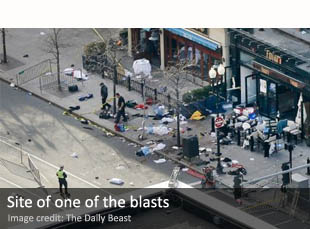
Site of one of the Boston Marathon blastsBy IAN ALLEN | intelNews.org |
►►Why FBI and CIA didn’t connect the dots on Boston bombers.  The FBI and the CIA are being criticized for not keeping better track of Tamerlan Tsarnaev in the months before the Boston Marathon bombings. How could they have ignored such a dangerous person? How do we reform the intelligence community to ensure this kind of failure doesn’t happen again? Legendary security expert Bruce Schneier says the idea of connecting the dots is a bad metaphor, and focusing on it makes us more likely to implement useless reforms.
►►Korean spy’s deportation reveals web of intrigue. Relations between Australia and South Korea have been strained after the East Asian economic powerhouse was caught soliciting sensitive information from public servants, and the deportation of a South Korean spy for espionage in 2009 was disclosed. New details of South Korean espionage in Australia were revealed in an unfair dismissal case before the Fair Work Commission brought by a former intelligence officer with the Australian Federal Police, Bo-Rim “Bryan” Kim.
►►Secret US court approved all domestic spying requests in 2012. The United States Foreign Intelligence Surveillance Court (also known as FISA court) quietly rubber-stamped nearly 2,000 government requests to search or electronically monitor people in the United States last year, according to a Justice Department report. The agency, which oversees requests for surveillance warrants against suspected foreign intelligence agents on US soil, released the report to Senate majority leader Harry Reid (D-Nevada), showing that by approving the 1,856 inquiries “for foreign intelligence purposes”, it had granted every single government request in 2012.

Revealed: South Korean intel officers caught spying on Australia

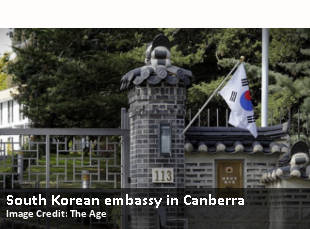
Embassy of South Korea in AustraliaBy JOSEPH FITSANAKIS | intelNews.org |
A court in Australia has released information about “inappropriate activities” allegedly conducted by South Korean intelligence officers targeting trade negotiations between Seoul and Canberra. The 2011 case involved operatives of South Korea’s National Intelligence Service (NIS), who purportedly tried “to obtain sensitive information” from Australian civil servants. The documents, released Tuesday by Australia’s Federal Court, reveal that an Australian government official, Dr. Yeon Kim, was sacked and had his security clearance revoked, for allegedly holding clandestine meetings with South Korean NIS officers. The Australian government accused Kim, who worked for the Bureau of Agricultural and Resource Economics and Sciences, of meeting repeatedly with Hoo-Young Park, an employee of the South Korean embassy in Canberra, who had been declared to the Australian government as an NIS liaison officer. According to the court documents, three other NIS officers serving under diplomatic cover in Australia, Bum-Yeon Lee, Sa-Yong Hong, and a man named Kim, were involved in collecting intelligence on Australian trade secrets. According to the Australian Security Intelligence Organisation (ASIO), which detained Kim, he willingly participated in the “foreign interference” operation by the NIS. It is worth noting, however, that there were no expulsions of South Korean intelligence officers or diplomats following Kim’s detention. On the contrary, ASIO appears to have gone to great lengths to prevent disclosure of the spy affair and even protect the identities of the NIS officers involved. In a move interpreted by some as an attempt by Canberra to safeguard its good relations with Seoul, the Australian government warned in a memo that any disclosure of the South Korean intelligence operation would have “a detrimental impact” on bilateral relations between the two nations. Read more of this post

News you may have missed #833

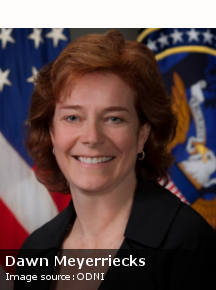
Dawn MeyerriecksBy IAN ALLEN | intelNews.org |
►►Report states Switzerland increasingly targeted by spies. Cyber attacks and abductions of Swiss abroad were two of the main security challenges faced by Switzerland last year, according to report released on Tuesday by the alpine country’s Federal Intelligence Service (FIS). “Switzerland continues to be no priority for jihadist motivated attacks,” the report said. However, presenting the report, FIS head Markus Seiler said an Islamist attack on Swiss soil could not be ruled out. And Swiss nationals abroad were “more threatened than in the past by politically and terrorist motivated abductions”, he said.
►►Prosecutors raid South Korean spy agency. State prosecutors raided the headquarters of the National Intelligence Service of South Korea on Tuesday to investigate accusations that the spy agency used its agents and hired bloggers to influence the presidential election in December. The raid, which started in the morning and continued into the evening, was highly unusual, dealing a blow to the reputation of the spy agency. Such a raid would have been unthinkable decades ago when the agency had served as the main tool of political control for South Korea’s military dictators.
►►Former AOL VP to lead CIA tech and science division. The CIA has appointed Dawn Meyerriecks, former AOL Senior Vice President for Product Technology, as its new Chief of Science and Technology. According to Wired, Meyerriecks is the first internet executive to ever take a top-tiered position in the CIA. Some of the things Meyerriecks has done in the past include working as a Jet Propulsion Lab engineer for NASA, working as a Assistant Director of National Intelligence for Acquisitions and Technology, working as a Chief Technology Officer and Technical Director for the Joint Interoperabillity and Engineering Organization (JIEO), establishing an in-house app market for both spies and analysts, encouraging the US government to use open source software, and much more.

Ex-CIA analyst says North Korea will launch strikes against South

North and South KoreaBy IAN ALLEN | intelNews.org |
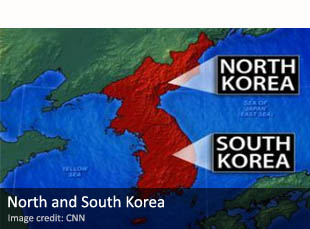
A former senior analyst on North Korea at the United States Central Intelligence Agency believes that the communist state will launch limited strikes against the South before moving to de-escalate the ongoing crisis in the Korean peninsula. On March 27, Pyongyang announced it was withdrawing from  the Korean Armistice Agreement, which it signed along with the United Nations and China at the end of the Korean War, in 1953. Shortly afterwards, North Korea closed all border connections with the South and disconnected the direct telephone line linking it with Seoul. It subsequently declared that it would not hesitate to launch a preemptive nuclear strike against South Korea and the United States. Pyongyang heightened its rhetoric in response to Key Resolve/Foal Eagle, a two-month-long military exercise involving US and South Koran armed forces, which includes the deployment of nuclear-armed airplanes and ships. Although some expert observers are worried, few believe that the rhetorical boxing-match between the two Koreas will result in an outbreak of hostilities. But Columbia University Professor Sue Mi Terry, who headed the CIA’s North Korea analysis unit from 2001 to 2008, believes that Pyongyang will launch military strikes against Seoul before de-escalating the tension. Speaking to Wired magazine’s Danger Room blog, Terry noted that the attack will not be nuclear, nor will it involve mass use of military force. Instead, it will be “a relative small attack” that “won’t leave many people dead”, she said. Read more of this post

Alleged coup attempt against North Korean leader in Pyongyang

Kim Jong-un surrounded by generalsBy JOSEPH FITSANAKIS | intelNews.org |
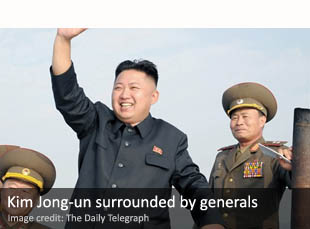
A prolonged exchange of gunfire that took place in the North Korean capital last November was part of a failed military coup against North Korean leader Kim Jong-un, according to intelligence sources. On Wednesday, South Korean daily JoongAng Ilbo quoted an anonymous intelligence source in Seoul, who said the coup was linked to an ongoing power struggle unfolding inside the North Korean armed forces. The unnamed source told the paper that Seoul had confirmed the accuracy of rumors of an “armed skirmish” that took place at a central location in downtown Pyongyang in mid-November of 2012. The exchange of gunfire, which stunned residents of the eerily ordered city, was allegedly an effort to assassinate Kim, but failed after the assailants were rounded up and arrested by troops loyal to the country’s leadership. The culprits appear to be members of the Reconnaissance Bureau of the General Staff Department, which operates as the primary intelligence-collection agency of North Korea’s Ministry of the People’s Armed Forces. In early November of last year, the Reconnaissance Bureau was restructured to accommodate two newly amalgamated intelligence agencies, the Intelligence Department of the Workers’ Party of Korea and a combat-intelligence unit of the People’s Armed Forces. A number of North Korean generals, who were previously leading these amalgamated agencies, were demoted to reflect their new posts under the Reconnaissance Bureau. Among them was Kim Yong-chol, who saw his rank change overnight from a four-star general to that of a two-star lieutenant general. Read more of this post

US held secret meetings with North Korea after Kim Jong Il’s death

North and South KoreaBy JOSEPH FITSANAKIS | intelNews.org |
Senior United States officials traveled secretly to North Korea for talks on at least two occasions following the death of North Korean leader Kim Jong Il, according to a leading Japanese newspaper. Quoting unnamed sources from Japan, South Korea and the United States, the Tokyo-based Asahi Shimbun newspaper said last week that the American officials traveled on US military airplanes from an Air Force base on the Pacific island of Guam to North Korean capital Pyongyang. According to the paper, the visits, which took place on April 7 and August 18-20, 2012, were kept secret from both the South Korea and Japanese governments. It appears, however, that Tokyo found out about the secret flights after it was approached by amateur air traffic hobbyists, who noticed the Pyongyang-bound flights out of Guam. After analyzing air traffic patterns, officials at the Japanese Ministry of Foreign affairs contacted the US Department of State inquiring about the mystery flights. Incredibly, however, Washington refused to discuss the flights with its Japanese ally, citing national security concerns. Eventually, says Asahi, the State Department acknowledged one of the visits, but responded to persistent Japanese pressure by warning Tokyo that further inquiries on the subject “would harm bilateral relations” between Japan and the US. The Japanese daily claims that the secret flights carried a host of senior US officials, including Joseph DeTrani, then chief of the North Koran desk at the Office of the Director of National Intelligence, and Sydney Seiler, Korea policy chief at the White House National Security Council. Read more of this post

Korea spy gave North data on 10,000 defectors living in South

North and South KoreaBy JOSEPH FITSANAKIS | intelNews.org |
An employee of the South Korean government has been detained for allegedly providing North Korea with detailed resettlement information on over 10,000 North Korean defectors living in the South. The 33-year-old man, who has been identified simply as “Mr. Yu”, was arrested on January 11 by South Korea’s National Intelligence Service. The NIS, which leads South Korea’s intelligence community, described Yu’s activities as “an unusual breach of the South Korean civil service”. The detainee is accused of providing Pyongyang with a “complete list” of thousands of North Korean defectors living in South Korean capital Seoul. The list is said to include information such as the defectors’ resettlement addresses and employment information among other personal data. Interestingly, the accused spy is himself a North Korean defector, according to South Korean news outlets. A trained surgeon, he is said to have been a member of North Korea’s social elite before defecting to the South on foot via China, in 2004. Seven years later, in 2011, he joined the Seoul city municipal government, where he was tasked with providing assistance and services to the thousands of North Korean defectors living in the South Korean capital and surrounding areas. According to reports, Yu was arrested after the NIS discovered that he made frequent trips to China and came to suspect that he might have crossed into North Korea on several occasions during his trips. South Korean counterintelligence investigators are currently trying to determine whether the accused spy entered South Korea with the intention of conducting espionage on behalf of Pyongyang. Read more of this post

News you may have missed #816

Kim Jong-namBy IAN ALLEN | intelNews.org |
►►Danish minister vows more control over spy agency. Following the uproar created by the revelations from former Danish secret service (PET) agent Morten Storm, Denmark’s Minister of Justice, Morten Bødskov, is now calling for parliament to have more control over the domestic intelligence agency. In an interview with Berlingske newspaper, Bødskov said that he is seeking increased powers for parliament’s Kontroludvalg, a committee established in 1964 to oversee PET. The move comes in response to the many questions that have arisen about PET’s actions following Storm’s decision to contribute to a series of articles in Jyllands-Posten newspaper that chronicled his time as a PET double-agent.
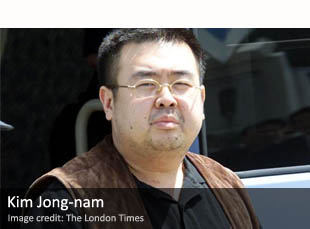
►►South Korea jails alleged North Korean assassin. A South Korean court has jailed an unidentified North Korean spy reportedly ordered to attack Kim Jong-nam, the eldest son of late North Korean leader Kim Jong-il. Kim Jong-nam, who is believed to have fallen out of favor with Kim Jong-il in 2001, was thought to have been living in Macau, but media reports indicate he may have moved to Singapore. South Korean media said the alleged assassin had spent a decade in China tracking down North Korean defectors before coming to the South, and that he had admitted trying to organize “a hit-and-run accident” targeting Kim Jong-nam.
►►US Pentagon to double the size of its worldwide spy network. The Defense Intelligence Agency (DIA), the US Pentagon’s military intelligence unit, is aiming to recruit 1,600 intelligence collectors —up from the several hundred overseas agents it has employed in recent years. The DIA’s new recruits would include military attachés and others who do not work undercover. But US officials say that the growth will be driven a new generation of spies who will take their orders from the Department of Defense. The project is reportedly aimed at transforming the DIA into a spy service more closely aligned with the CIA and elite military commando units.

News you may have missed #769 (analysis edition)

John McLaughlinBy IAN ALLEN | intelNews.org |
►►Is S. Korea’s spy agency losing its capabilities? The National Intelligence Service, South Korea’s primary external intelligence agency, is presumed to spend around US $1 billion a year, most of which it uses to spy on its northern neighbor. But when asked about the identity of the young woman who frequently accompanies new North Korean leader Kim Jong Un in his public appearances, the state intelligence agency offers no clear answer. Although it was seven months ago, at the time of Kim Jong-il’s funeral, that the woman was first spotted, the agency still does not know who she is. In the past 20 years, NIS has undergone a process of transformation to rid it of political functions. But the lingering question is: have the changes compromised the overall capabilities of the giant organization?
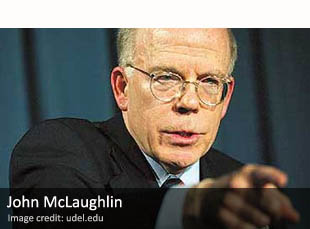
►►How 10 years of war has changed US spies. John McLaughlin, who was a CIA officer for 32 years and served as Deputy Director and Acting Director from 2000-2004, says he is often asked how American intelligence has changed in the 11 years since 9/11. His answer is that the changes are profound and have been transformative. Perhaps the most important thing to realize about American intelligence officers in 2012, he says, is that this is the first generation since Vietnam to have been “socialized” –that is hired, trained, and initiated– in wartime. And to a greater degree than even the Vietnam generation, their experience approximates that of their World War II forbears in the Office of Strategic Services (OSS) –the organization to which most American intelligence officers trace their professional roots.
►►Assessing the Social Media Battlefield in Syria. While the numerous insurgent factions and the Syrian security forces engage each other in combat in towns and cities to secure tangible battlefield gains, the warring parties are also waging a contentious information war in cyberspace, specifically within the virtual arena of online social media. The various strands of the opposition in Syria —political and violent— have taken to social media since the earliest stages of the uprising to advance their agendas. Analogous to their role in facilitating communication and information exchange during the wave of revolts that have been sweeping the Arab world since 2011, new media platforms such as the array of social media websites and related technologies that are available to the public at virtually little or no cost have become crucial to shaping how the crisis in Syria is portrayed and perceived.

Situation Report: Samsung accuses LG of corporate espionage

Samsung smartphones on display in KoreaBy TIMOTHY W. COLEMAN | intelNews.org |
Most technology companies spar with rivals over patent portfolio infringement, pricing arrangements, bundling of products and services with partners, and other trade practices. More recently, technology companies have been waging a war for talent and human capital. But in Korea, a dispute between Samsung and LG Electronics has been taken to a new level with Samsung publicly accusing LG of conducting corporate espionage. According to VenterBeat, Samsung has leveled corporate espionage charges against an employee at LG regarding particularly sensitive display technology that is used in smartphones and other mobile devices. This technology is of great value to Samsung, as its displays are used in nearly 98 percent of mobile phones around the globe. The critical display technology, active-matrix organic light-emitting diode, or MOLED, technology, is an extremely thin-film, which is a lynchpin technology for televisions and mobile devices. This technology replaced previously existing display technologies because it required significantly less power and therefore less battery drain and it also increased response rates to mere milliseconds. Such technology was perfectly positioned to help spur on the proliferation of the mobile and smartphone boom. Read more of this post

News you may have missed #726

Barbara Annette RobbinsBy IAN ALLEN | intelNews.org |
►►Portrait of first female CIA officer to die in line of duty. In 1965, a 21-year-old American woman, Barbara Annette Robbins (photo), was among the victims of a car bombing at the US Embassy in Saigon, South Vietnam. Washington said she was a diplomat. But, at a ceremony last year, the CIA admitted she was an employee of the Agency. This makes her the first woman at the male-dominated CIA killed in the line of duty. She is also the youngest CIA employee ever killed. And she appears to be the first American woman to die in the Vietnam War. The Washington Post has an interesting article about her short life and career.
►►US Jewish leader says release of Israeli spy Pollard ‘inevitable’. The release of Jonathan Pollard, who is serving a life sentence in a US prison for spying on the US for Israel, is “inevitable” and could take place shortly on “technical grounds”, according to Jack Rosen, a prominent Jewish leader and supporter of US President Barack Obama. A New York City real estate executive who hosted Obama at his Upper East Side home for a Democratic Party fundraiser last November, Rosen said that “there are some technical reasons, I’m told, why [Pollard] will be released. I think there’s an inevitability to that happening”.
►►Senior reshuffle at South Korean spy agency. South Korean President Lee Myung-bak reshuffled two top posts at South Korea’s main intelligence agency Monday in a shake-up that also affected five other vice-ministerial posts. Nam Joo-hong, a former well-known security scholar who has so far served as ambassador to Canada, was named the first deputy chief of the National Intelligence Service, while Cha Moon-hee, a veteran intelligence official, was tapped as the agency’s second deputy chief. The spy agency’s first and second deputy chiefs are in charge of its overseas and domestic operations, respectively.