Turkish officials see link between Israel and Kurdish rebels

Israeli Heron UAVBy JOSEPH FITSANAKIS | intelNews.org |
Turkish intelligence agencies have authored a report detailing alleged Israeli assistance to Kurdish rebels, whose goal is to secede from Turkey and create an independent Kurdish homeland, according to a leading Turkish newspaper. The Ankara-based Zaman said the intelligence report was commissioned after Turkish forces detected Israeli unmanned aerial vehicles (UAVs) conducting reconnaissance missions over Turkey. The paper, which is tacitly affiliated with Turkey’s ruling Justice and Development Party, said the UAVs were spotted flying over Turkey’s Adana and Hatay provinces, both of which are adjacent to Turkey’s border with Syria. As intelNews reported last August, Turkey’s main intelligence directorate, the MİT, is convinced that the Syrian government of Bashar al-Assad has increased its clandestine support for the largest Kurdish secessionist group, the Kurdistan Workers Party (PKK), in an attempt to court Syria’s 500,000-strong Kurdish minority. According to the Zaman news report, airborne intelligence collected by Israeli Heron UAVs is shared with PKK guerrillas, who then use it to construct training bases in Syrian border regions. This explains, claims the paper, why most PKK training bases in Syria are located “in areas that are known to be weak spots for the Turkish military”. The report also claims that Turkish intelligence has verified that senior PKK military commander Kenan Yıldızbakan has visited Israel “several times” in recent months. Yildizbakan is believed to have commanded a brazen PKK assault on a Turkish naval base in İskenderun in 2010, which killed seven and wounded four members of the Turkish armed forces. Read more of this post

Who is behind mystery spy devices dropped over Syria?

Radio transmitters found in Afrin, SyriaBy JOSEPH FITSANAKIS | intelNews.org |
On December 14, residents of a small town in northern Syria reported seeing unidentified aircraft circling overhead, and dropping several small items attached to mini-parachutes. Two days ago, one local resident, Adnan Mustafa, posted on Facebook several photographs of some of these items, which were found scattered around the area. The gadgets, pictured here, look suspiciously like surreptitious listening devices. Residents say the question is: who dropped them, and why? The devices were found in the hills around Afrin, a predominantly ethnic-Kurdish town 20 miles south of the Syrian-Turkish border. Local townsfolk said the flight patterns of the planes observed on December 14 resembled those of previous sightings of Turkish aircraft, which routinely invade Syrian airspace before returning to the Turkish air base in Incirlik, about 100 miles north of Afrin. Syrian newspaper Al-Hakikah (The Truth), which supports the opposition Syrian National Council for Truth, Justice and Reconciliation, said the suspected spy gadgets weigh about 90 grams each and bear “Made in Germany” labels, as well as “GRAW DFM-06” inscriptions. Graw is a Nuremberg-based German company that produces radiosondes, small radio transmitters used in weather balloons, that measure various atmospheric parameters and transmit them to fixed receivers. But Al-Hakikah reports that the devices found in Afrin seem to transmit GPS coordinates, and appear to have been modified to intercept radio communications. Some suspect that the devices are aimed at eavesdropping on the communications of Syrian government troops and of Syrian Air Force planes, which are engaged in an increasingly bloody conflict against the opposition Syrian National Council. Read more of this post
News you may have missed #630

Riad Al Assad

Riad al-Assad

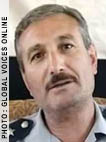
►►Senior Syrian military defector in Turkey denies training troops. Colonel Riad al-Assad, who acts as head of Syria’s military defectors, has denied a news report that he crossed the border from Turkey to Syria to command troops loyal to the opposition force called the Free Syrian Army. “News reports that appeared on a number of Internet sites that I had crossed into Syria to command troops there are false. I am in Turkey at the moment, in a safe place,” he told the Turkey’s Anadolu Agency on Tuesday.
►►Iran says missile base blast was not caused by Mossad. Iran has insisted that last weekend’s huge blast at the Alghadir missile base at Bid Ganeh, 30 miles to the west of Tehran, was not carried out by Israel or the US, despite widespread reports that it was the work of the Israeli secret service, the Mossad. The explosion killed 17 of the country’s elite revolutionary guards, including Major General Hassan Moqqadam, a senior commander described as the pioneer of the regime’s missile programme.
►►British official says MI6 foiled Libyan assassination plan. British intelligence foiled a plot by Colonel Muammar al-Gaddafi’s forces to assassinate Western diplomats and Libya’s revolutionary leadership, Britain’s Foreign Secretary has disclosed. In a rare speech about the secret services, William Hague said the Libyan intelligence service launched a “sustained effort” to conduct suicide and car bomb attacks against the National Transitional Council, but that “the attacks were prevented”.

Western companies provide Syrian regime with monitoring systems

Syria

Syria

By JOSEPH FITSANAKIS | intelNews.org |
An Italian communications company is working with the Syrian government to provide it with a sophisticated email surveillance system, using equipment created by American, French and German firms. The Syrian regime has come under sustained pressure by Western governments in recent months. The latter urge Syria’s President, Bashar al-Assad, to stop using lethal violence against protesters, citing independent reports that over 3,000 civilians have been killed by government forces since March. But Bloomberg News Agency cites an unnamed insider who claims Area SpA, a telecommunications surveillance company based in Milan, Italy, has technicians in several Syrian cities working feverishly to provide the  Syrian authorities with a state-of-the-art email surveillance system. According to the unnamed source, when completed, the surveillance system will be able to “intercept, scan and catalog virtually every e-mail that flows through the country”. The project, which has been codenamed ASFADOR, is directed by senior Syrial intelligence officials, who are supervising the work of several Italian technicians working in Damascus and elsewhere. Bloomberg reports that numerous Area SpA technicians have been traveling to Syria “in shifts”, as the company is anxiously trying to accommodate pressures by Syrian officials, who say “they urgently need to track people”. The Italian company, known for providing Italian law enforcement with telephone surveillance hardware and software, is apparently using equipment by European and American firms, including France’s Qosmos SA, Germany’s Ultimaco Safeware AG, and America’s NetApp Inc. Bloomberg, which claims it has seen blueprints of the surveillance system, contacted Area SpA’s chief executive officer, Andrea Formenti, who refused to comment on the case, except to say that his company “follows all laws and export regulations”. Wondering where you’ve heard all this before? Read more of this post

FBI ‘used Google Translate’ to indict alleged Syrian spy, claims lawyer

Mohamad Anas Haitham Soueid

Mohamad Soueid

By JOSEPH FITSANAKIS | intelNews.org |
The lawyer of a Syrian national accused by the United States of spying for Syria has accused the Federal Bureau of Investigation of resorting to Google to prepare the case against his client. Mohamad Anas Haitham Soueid was arrested last summer and charged with conducting political espionage against Syrian and American citizens participating in demonstrations against the regime of Syrian President Bashar al-Assad. The alleged espionage appears to have been organized by members of the Syrian embassy in Washington, DC. A few weeks prior to Soueid’s arrest, the US Department of State had communicated to Syria’s ambassador to Washington, Imad Moustapha, “a number of […] concerns with […] reported actions of certain Syrian embassy staff in the United States”. The concerns centered on confirmed sightings of Syrian diplomats conducting technical surveillance against Syrian opposition activists in several US cities. Soueid was subsequently arrested for allegedly gathering intelligence on protesters and planning an extensive intimidation campaign. But Soueid’s lawyer, Haytham Faraj, told the court last week that his client’s name, as transcribed in the FBI indictment, had been wrongly transliterated into English using Google Translate. He also wrote in a court filing that the prosecution had “demonstrated a serious deficit in its ability to translate recorded conversations from Arabic into English”. Soueid’s defense also argues that federal prosecutors appear “to have taken extensive liberties with a playful [telephone] conversation” between the accused and his wife back in Syria, eventually producing an English-language translation “that has no basis in fact”. In one case highlighted by the defense, the accused allegedly told his wife that the Syrian intelligence agency was monitoring telephone calls; but in English, the phrase was changed to say “this phone belongs to intelligence agency”. Read more of this post

News you may have missed #611

Kalevi Sorsa

Kalevi Sorsa

►►Diplomat says Finland’s ex-prime minister was Stasi agent. Finnish former diplomat Alpo Rusi said last week that Kalevi Sorsa, Finland’s longest serving prime minister, who led the country in the 1970s and 1980s, is on a secret list of 18 high-profile Finns with links to the Stasi, East Germany’s Cold-War security service. West German intelligence handed the file to its Finnish counterpart in 1990, but the Finnish Supreme Court ruled last year that the list would not be made public.
►►Nazi criminal spied for West Germany. A wiretap operation conducted in the early 1960s by the CIA against the BND, West Germany’s foreign intelligence service, revealed that the BND employed a senior Nazi war criminal, Franz Rademacher, to spy for it in Syria, CIA records show.
►►US government aims to build ‘data eye in the sky’. Social scientists are trying to mine the vast resources of the Internet — Web searches and Twitter messages, Facebook and blog posts, the digital location trails generated by billions of cell phones to “predict the future”.

News you may have missed #578

Syria

Syria

►►CIA agent who helped kill Che wants payout from Cuba. This is from the “news that isn’t” department: Gustavo Villoldo, a Cuban-born CIA operative, who helped track down and kill Che Guevara in Bolivia, has won $2.8 billion in damages from the Cuban government, for confiscating his family property after the 1959 revolution. But he is unlikely to ever collect the money because Cuba does not recognize US court rulings.
►►Cheney wanted Bush to destroy suspected Syrian nuke site. Former US Vice President Dick Cheney says in a new memoir that he urged President George W. Bush to bomb a suspected Syrian nuclear reactor site in June 2007. But, he wrote, Bush opted for a diplomatic approach expressed misgivings. Eventually Israeli jets bombed the site. Cheney’s account of the discussion appears in his autobiography, In My Time: A Personal and Political Memoir, which is to be published by Simon & Schuster next week.
►►South Korea indicts five for spying for North. Five South Koreans, including a former parliamentary aide, have been indicted for allegedly spying for North Korea, in connection with the Wangjaesan spy ring.

News you may have missed #568

Gareth Williams

Gareth Williams

►►Lebanon intercepts covert arms shipment bound for Syria. It looks like anti-Syrian Lebanese groups, allied with former Lebanese Prime Minister Saad Hariri, are smuggling Kalashnikovs and M-16s across the border to anti-government rebels in Banyas and other Syrian towns. The question is, where are these arms coming from? It is also worth noting that the Syrian army claimed last week that it has detained hundreds of Salafi fighters –including Afghans– with Lebanese documents.
►►Russian embassy cars seen near murdered MI6 officer’s flat. British paper The Daily Mail quotes an unnamed “former KGB agent who fled to London 12 years ago”, who says that he “logged two cars with Russian diplomatic number plates […] parked or driving close” to the central London apartment of MI6 and GCHQ officer Gareth Williams. The unnamed former agent says he noticed the vehicles around the time when Williams is believed to have been murdered in his apartment.
►►Indonesian intel reports on West Papua leaked. Hundreds of intelligence briefs from Indonesia’s elite special forces unit, Kopassus, have been obtained by Australian newspaper The Age. They include a detailed analysis of the separatist movement in oil-rich Western Papua. According to the Australian press, the reports “illustrate the level of paranoia in Jakarta about its hold over the resource-rich region”.

News you may have missed #565 (United States edition)

DHS seal

DHS seal

►►Secret watch-list proposal causes US privacy groups protests. The US Department of Homeland Security (DHS) is planning to duplicate the FBI’s Terrorist Screening Database to expand an extensive database called Watchlist Service. The proposed database will include names, birthdays, photos and biometrics of targeted individuals. But the DHS has proposed to exempt the database from Privacy Act provisions, which means that a person can never know if they are on it.
►►US blacklists Syrian banks over WMD ties. The Obama administration unveiled punitive measures on Wednesday against two Syrian financial institutions for their alleged ties to nuclear proliferation in Syria and North Korea. The government-run Commercial Bank of Syria and a subsidiary, the Syrian-Lebanese Commercial Bank, are now prohibited from engaging in transactions with US individuals and from accessing any assets under US control. The US Department of the Treasury alleges that the banks have carried out transactions on behalf of the Scientific Studies and Research Center in Syria and the Tanchon Commercial Bank in North Korea, both of which the US blacklisted several years ago for supporting “WMD proliferation activities”.
►►FBI revises surveillance exam after cheating revelations. About a year ago, the US Federal Bureau of Investigation revealed that hundreds of its agents were caught having cheated on an examination about new surveillance guidelines (known as Read more of this post

Turkish intel report raises fears of Syrian, Iranian support for PKK

PKK banner

PKK banner

By JOSEPH FITSANAKIS | intelNews.org |
By all accounts, in 1998 Syria discontinued its clandestine support for the Kurdistan Workers’ Party (PKK), a leftist secessionist movement that aspires to create a Kurdish homeland comprising mostly of territories in Turkey’s Anatolia region. But a leading Turkish newspaper claims that, according to a classified intelligence report, Damascus has resumed its support for the PKK. The paper, Zaman, said that according to the report, Turkey’s main intelligence directorate, the MİT, has concluded that Syria has “started to support the PKK” again, thus reverting to its pre-1998 stance. It was on that year that Damascus expelled the PKK’s founder and leader, Abdullah Öcalan, who had previously been given shelter and protection in the country. A few months later, Öcalan was snatched by Turkish commandos from the hands of Greek diplomats in Nairobi, Kenya, and flown to Turkey, where he is now serving a life sentence. Following Öcalan’s expulsion, Syria, which is home to an estimated 400,000 Kurds, quietly began cooperating with Ankara against the PKK and its sister organizations operating on Syrian soil. But the MİT report cited by Zaman says that, under the fear of anti-government militancy and continuous popular and ethnic uprisings, Damascus has tried to mend relations with its Kurdish minority, and is now “providing shelter to some of the PKK’s most important leaders”. The classified report, which Zaman says gives “a highly detailed overview” of the PKK’s regional activities, also alleges that Syria has increased its security collaboration with Iran, which is also home to several thousand ethnic Kurds. Read more of this post

News you may have missed #549

Lo Hsien-che

Lo Hsien-che

►►Taiwan general who spied for China gets life. A court in Taiwan has sentenced Lo Hsien-che to life imprisonment, for spying for the People’s Republic of China. As intelNews reported before, Major General Lo gave national secrets to his mistress, a “tall, beautiful and chic” Chinese female operative, who held an Australian passport. Taiwanese counterintelligence investigators said this was Taiwan’s most serious espionage scandal in almost fifty years.
►►Did German intelligence protect world’s most wanted Nazi criminal? The German intelligence service, the BND, destroyed the file of the world’s most-wanted Nazi criminal, Alois Brunner, and may have tried to recruit him into its ranks, German newsmagazine Der Spiegel reported over the weekend. The order to destroy Brunner’s file came “at some point between 1994 and 1997”, according to the magazine. Few of those knowledgeable of BND’s history will be surprised. Incidentally, intelligence observers may remember that, in 1961 and 1980, Brunner, who lived in Syria, was injured by postal bombs sent by Mossad agents.
►►Analysis: New Czech spy law will not curtail abuse. Authorities in the Czech Republic have drafted a new law aimed, partly, at limiting the mandates of the country’s domestic Security and Information Service (BIS) and the Office of Foreign Relations and Information (ÚZSI) –the Czech foreign espionage agency. Read more of this post

US summons Syrian ambassador for spying on protesters

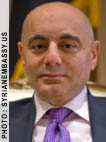
Imad Moustapha

Imad Moustapha

By JOSEPH FITSANAKIS | intelNews.org |
American government officials acknowledged late last week that they warned Syria’s ambassador to Washington to stop his diplomats from spying on anti-government activists operating in the United States. The State Department said that Eric Boswell, Assistant Secretary for Diplomatic Security, summoned the ambassador of the Syrian Arab Republic, Imad Moustapha, and conveyed “a number of […] concerns with […] reported actions of certain Syrian embassy staff in the United States”. The concerns center on what appear to be confirmed sightings of Syrian diplomats conducting technical surveillance against Syrian and American citizens participating in demonstrations and other legal political activities in several US cities. There are also reports that intelligence gathered by Syrian diplomats in the United States is used by the Syrian security services in Syria to intimidate family members of Syrian and Syrian-American dissidents who are active in the United States. According to The Washington Times, the State Department was first alerted to the alleged political surveillance by the activists themselves, who began noticing in June the presence of suspected Syrian government informants in their Washington gatherings. Read more of this post

News you may have missed #524 (analysis edition)

  • US intelligence shift shows change in Afghan war aims. American military intelligence officers were scrambling a year ago to collect and analyze the social, economic and tribal ins and outs of each valley and hamlet in Afghanistan. But the gradual scaling back of US operations (and ambitions) in Afghanistan is driving a shift away from that labor-intensive attention to detail. Now targeting insurgent leaders and their close support networks is seen as an important part of the US exit strategy (some would call this settling old scores before the US leaves the area).
  • Ex-CIA officer questions West’s motives in Syria. The European and American intervention in Syria is designed to harm Iran and to protect Israel and Lebanese Christians, not Syrian people, according to Robert Baer, a retired CIA officer with direct experience in the region.
  • Will new CIA director rein in the drone war? When General David Petraeus takes heads to the CIA, he’ll put “relentless pressure” against al-Qaida, he told senators last week. But in a rare public discussion of the CIA’s drone war in Afghanistan and Pakistan, Petraeus suggested it may not be his first counterterrorism option.

News you may have missed #511

Did compromised laptop prompt Israel to bomb Syrian nuclear reactor?

Al-Kibar reactor

Al-Kibar reactor

By JOSEPH FITSANAKIS | intelNews.org |
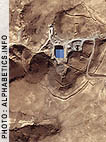
One of the Middle East’s biggest mysteries in recent years concerns Operation ORCHARD, the September 6, 2007, attack by Israeli fighter jets on a site deep in the Syro-Arabian Desert. Many observers, including former CIA Director, General Michael Hayden, have called for the secrecy surrounding the covert operation to be finally lifted. But it has been more-or-less confirmed that the attack targeted a plutonium production reactor, which was part of Syria’s secret nuclear weapons program. And officials in Tel Aviv have repeatedly hinted that Israel was behind the operation. The burning question, however, is how did Israel learn of the existence of Syria’s nuclear reactor at Al-Kibar, a secret and isolated site deep in the Syro-Arabian Desert? The authoritative account of the operation, which appeared in German newsmagazine Der Spiegel in 2009, suggested that the initial tip came from the US National Security Agency, which “detected a suspiciously high number of telephone calls between Syria and North Korea”. But it also alleged that the Mossad managed to acquire vital clues about the Al-Kibar building site by installing a stealth “Trojan horse” program on the laptop of a Syrian government official, while the latter was visiting Britain. Read more of this post