Analysis: US spy agencies stil in the dark about Syria

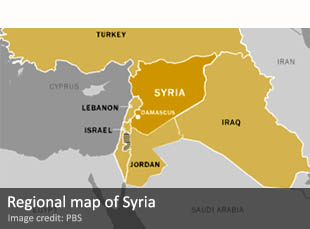
Regional map of SyriaBy JOSEPH FITSANAKIS| intelNews.org |
It has been almost a year since the ongoing anti-government uprising erupted in Syria. But intelligence agencies in the United States are still struggling to make sense of most aspects of the spiraling conflict. In February, the US Department of State closed down its embassy in the Syrian capital Damascus and recalled all of its diplomatic personnel, including US Ambassador to Syria, Robert Ford, to Washington. Since then, the Central Intelligence Agency, which conducted its operations in Syria largely out of the US embassy there, has been forced to rely on scattered fragments of its agent network in Damascus, as well as on the work of a handful of allied intelligence services, including those of Jordan, Turkey, Israel, and Saudi Arabia. Naturally, the closure of the US embassy in Syria has boosted the role of the signals intelligence collection and satellite reconnaissance. But, none of these intelligence collection channels have been able to compensate for the lack of adequate human intelligence collection from inside Syria. As a result, according to The Washington Post, which cites “senior US officials”, US intelligence-gathering on the situation in Syria is currently “fragmentary [and] out of focus”. Specifically, the US intelligence community remains unclear about the tactical and strategic intentions of the regime of Syrian President Bashar al-Assad, and has limited information about the makeup and strength of the opposition forces in the country. Perhaps more importantly, American intelligence analysts have little evidence on which to base any sort of firm conclusions about the extent of involvement of militant Islamists in the funding and operations of the Syrian opposition. Read more of this post
Israel ‘has decided to attack Iran’, claims US intelligence source

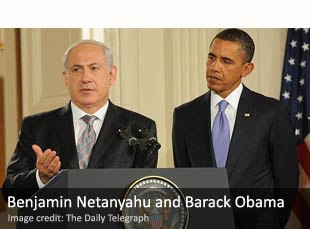
Benjamin Netanyahu and Barack ObamaBy JOSEPH FITSANAKIS| intelNews.org |
The consensus in the US intelligence community is that Israel has decided “on principle” to launch a military strike on Iran in order to halt its nuclear program, according to an American intelligence insider. The American source was quoted on Israel’s Channel 2 (Arutz 2) television on Monday as saying that most US intelligence analysts believe “the attack will go ahead”. The source also argued that the Israeli public remains unaware of the “catastrophic consequences” of such an attack, which, according to US intelligence analysts, will be met with thousands of missiles launched against Israel by Iran and several Arab states. The confrontation will most likely trigger a regional war and “possibly even World War III”, said the source, citing US intelligence reports on the subject. He also warned Israel that the decision to attack Iran would be “tantamount to suicide”. The Channel 2 report claimed that the American and Israeli governments are “deeply at odds” over the potential consequences of a military attack on Iran, but that Tel Aviv has already decided to authorize strikes. The latter will allegedly take place before summer, unless there is “a significant change in the Iranian nuclear program in the next few weeks”, said the report. However, sources close to the Office of Israeli Prime Minister Benjamin Netanyahu rejected the Channel 2 report as part of “scare tactics” employed by Washington. The sources dismissed the so-called “nightmare scenario” as a method employed by members in the administration of President Barack Obama, who “want to constrain Israel from contemplating an attack on Iran”. Meanwhile, British newspaper The Daily Telegraph effectively corroborates the Channel 2report, and adds that Israeli Prime Minister Netanyahu issued the US President with “an ultimatum” during their closed-door meeting in Washington on Monday. Read more of this post

News you may have missed #689: NSA edition

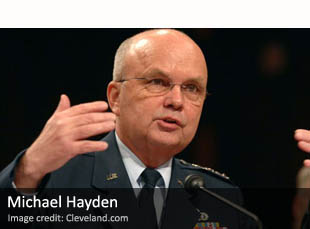
Michael HaydenBy IAN ALLEN| intelNews.org |
►►Ex-NSA Director calls Stuxnet a ‘good idea’. General Michael Hayden, once head of the NSA and CIA, who was no longer in office when the Stuxnet attack on Iran occurred, but who would have been around when the computer virus was created, denies knowing who was behind it. He calls Stuxnet “a good idea”. But he also admits “this was a big idea, too. The rest of the world is looking at this and saying, ‘clearly, someone has legitimated this kind of activity as acceptable'”.
►►NSA develops secure Android phones. The US National Security Agency has developed and published details of an encrypted VoIP communications system using commercial off-the-shelf components and an Android operating system. A hundred US government employees participated in a pilot of Motorola hardware running hardened VoIP called ‘Project FISHBOWL’, NSA Information Assurance Directorate technical director Margaret Salter told the RSA Conference in San Francisco on Wednesday. “The beauty of our strategy is that we looked at all of the components, and took stuff out of the operating system we didn’t need”, said Salter. “This makes the attack surface very small”.
►►Senior US Defense official says DHS should lead cybersecurity. In the midst of an ongoing turf battle over how big a role the National Security Agency should play in securing America’s critical infrastructure, Eric Rosenbach, deputy assistant secretary of Defense for Cyber Policy in the Department of Defense, said on Wednesday that the NSA should take a backseat to the Department of Homeland Security in this regard. “Obviously, there are amazing resources at NSA, a lot of magic that goes on there”, he said. “But it’s almost certainly not the right approach for the United States of America to have a foreign intelligence focus on domestic networks, doing something that throughout history has been a domestic function”.

News you may have missed #688

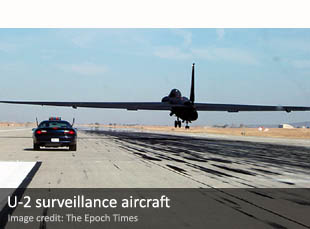
U-2 surveillance aircraftBy IAN ALLEN| intelNews.org |
►►Analysis: StratFor email leaks offer frightening view of government intelligence. As promised in December, WikiLeaks has begun to release a stash of emails related to the modus operandi of the private intelligence sector, using Texas-based StratFor as a case study. The CIA has long used private intelligence firms for ‘black ops’, allowing for plausible deniability in the event that an operation goes pear-shaped and public accountability threatens. But these emails suggest that there’s now far more to the incompetence of America’s intelligence services than meets the eye.
►►US still using U-2 to spy on North Korea. For more than 35 years, the U-2 has been one of Washington’s most reliable windows into military movements inside North Korea. Unlike satellites, U-2s can be redirected at short notice to loiter over target areas. Last month, the US Air Force postponed at least until 2020 any plans to replace them with costlier, unmanned Global Hawks. Now, as the world watches for signs of instability during North Korea’s transition to a new leadership, the U-2 operations are as important ―or more so― than ever.
►►Thin line separates cyberspies from cybercriminals. New research appears to raise questions over the conventional wisdom that pure nation-state cyberspies rarely dabble in traditional financial cybercrime. Dell SecureWorks Wednesday shared details of a complex study it conducted of two families of espionage malware that have infected government ministry computers in Vietnam, Brunei, Myanmar, Europe, and at an embassy in China.

CIA joins hunt for white British woman who joined Somali militants

Samantha LewthwaiteBy JOSEPH FITSANAKIS| intelNews.org |
American intelligence officials are said to be actively cooperating with Kenyan authorities in the hunt for a white British woman believed to have joined a Somali group that is part of al-Qaeda in East Africa. The woman, Samantha Lewthwaite, 28, was married to Jermaine Lindsay, a British suicide bomber who blew up a train at London’s King’s Cross station on July 7, 2005. Lewthwaite, who by that time had two children by Lindsay, disappeared soon after the so-called 7/7 bombings, and allegedly reappeared in England in 2009, to give birth to her third child, which she reportedly had with a Moroccan man. Today she is considered an important organizer of al-Shabaab, (The Party of Youth), which used to be the youth wing of Somalia’s Islamic Courts Union (ICU). The Sunni-Muslim ICU ruled most of Somalia until the 2006 US-supported invasion of the country by Ethiopia. Ever since that time, al-Shabaab has become one of Africa’s most highly organized militant groups, relying on hundreds of Westerners who have flocked to Kenya, Somalia, Tanzania, and elsewhere, to join a peculiar form of jihad (holy war) inspired largely by al-Qaeda. According to reports from the UK, Lewthwaite is one of at least three British planners involved in setting up al-Shabaab’s operations in Kenya, Somalia, and elsewhere. She first entered Kenya several years ago, using a forged passport belonging to a South African identity theft victim called Natalie Faye Webb. In February of 2011, she is believed to have entered Kenya again, on foot, via Tanzania. Her travels are thought to be connected with her fundraising and other organizing activities on behalf of al-Shabaab, which appear to include —aside from financing— procuring weapons and training recruits. Not long ago, Kenyan police said a white woman matching Lewthwaite’s description managed to escape during a raid at the house of a suspected Islamist militant in Kenyan capital Nairobi. Read more of this post

News you may have missed #687

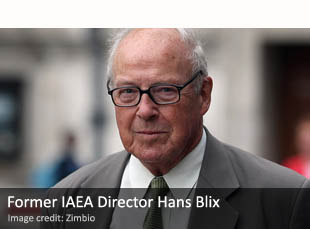
Hans BlixBy IAN ALLEN | intelNews.org |

►►Analysis: Is Obama abusing the US Espionage Act? Prosecutors may still attempt to indict WikiLeaks founder Julian Assange under the 1917 Espionage Act, though their case will likely depend on exactly how he received his information. But, WikiLeaks aside, the Obama administration has made increasing use of the act to clamp down on whistleblowers.
►►Ex-head admits IAEA does work with spies (shock, horror). The International Atomic Energy Agency, which acts as the nuclear watchdog of the United Nations has been closely cooperating with the world’s spy agencies, including on Iran and Syria, for years, according to its former director. Hans Blix told RT that the IAEA’s cooperation with the world’s intelligences started following the Iraqi crisis of the 1990s. “Of course, intelligence can always try to fool everybody”, he said. “Half of the information may be true, half of it may be disinformation, and therefore they have to examine it critically”.
►►Afghanistan arrests diplomat on spying charges. Afghanistan’s State Intelligence Agency (KHAD) on Monday said that a senior foreign ministry diplomat and three other government officials had been arrested over charges of spying for Iran and Pakistan. The men were detained “on charges of spying for neighboring regions” and “the arrests were made with concrete evidence”, KHAD’s spokesman, Lutfullah Mashal, said. An unnamed source in the same agency also claimed that the deputy head of KHAD’s Asia desk and two government employees had been arrested in a similar incident in the eastern Afghan province Nangarhar a month before.

Israel ‘not to warn US’ on Iran attack, says US intelligence official

White House National Security Adviser Tom DonilonBy JOSEPH FITSANAKIS | intelNews.org |
The Israeli government has reportedly decided not to forewarn the United States if and when it decides to launch military strikes against Iran’s nuclear energy program. Citing a US intelligence insider, the Associated Press reported on Monday that American officials have been given the message “in a series of private, top-level” meetings with senior Israeli leaders. Tel-Aviv’s decision not to notify Washington about a possible attack on Tehran has been allegedly communicated to US officials by none other than Israeli Prime Minister Benjamin Netanyahu and Minister of Defense Ehud Barak. The US intelligence official, who tipped off the Associated Press anonymously, said that the two men have been relaying the same message to a host of American officials who have visited Israel in the past several weeks. The officials include the US Director of National Intelligence James Clapper, Chairman of the Joint Chiefs of Staff Martin Dempsey, as well as several senior American lawmakers. The intelligence source told The Associated Press that Tel Aviv’s decision to keep its cards on Iran close to its chest was solidified following a series of meetings last week between the Israeli leadership and White House National Security Adviser Tom Donilon (pictured). The American official relayed to Netanyahu, Barak and others, the opinion of the White House that a military attack on Iran would be both dangerous and counterproductive. This appears to have further alarmed the Israeli leadership, which last week chastised the United States for voicing criticism of a possible Israeli military attack on Iran, arguing that this criticism effectively “served Iran’s interests”. Read more of this post

News you may have missed #686

Folkert Arie van KoutrikBy IAN ALLEN| intelNews.org |
►►WikiLeaks to publish 5 million StratFor emails. In its latest high-profile data dump, WikiLeaks is to reveal five million internal and external emails from StratFor today. In a press release late Sunday, Wikileaks said the emails “show StratFor’s web of informers, pay-off structure, payment-laundering techniques and psychological methods”, and reveal “how StratFor has recruited a global network of informants who are paid via Swiss banks accounts and pre-paid credit cards. Stratfor has a mix of covert and overt informants, which includes government employees, embassy staff and journalists around the world”.
►►Analysis: Blurred line between espionage and truth under Obama. “There is plenty of authorized leaking going on, but this particular boat leaks from the top. Leaks from the decks below, especially ones that might embarrass the administration, have been dealt with very differently […]. And it’s worth pointing out that the administration’s emphasis on secrecy comes and goes depending on the news. Reporters were immediately and endlessly briefed on the “secret” operation that successfully found and killed Osama bin Laden. And the drone program in Pakistan and Afghanistan comes to light in a very organized and systematic way every time there is a successful mission”.
►►Nazis had spy in MI5 but failed to use him. Dutchman Folkert Arie van Koutrik was the first German agent to ever infiltrate MI5 when he was employed by them in 1940, just a month before Anthony Blunt, who was later exposed as a Soviet spy. Koutrik had already worked for Abwehr, the German secret service, before the war as a double agent with MI6 in Europe and exposed some of the UK’s top agents. But, incredibly, after he moved to the UK and joined MI5 all contact appears to have broken off.

US spy agencies see no clear evidence of Iran building nukes

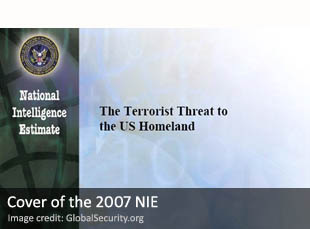
Cover of the 2007 National Intelligence EstimateBy JOSEPH FITSANAKIS| intelNews.org |
The United States intelligence community still believes Iran has no immediate goals to produce nuclear arms, and says that Tehran terminated its atomic weapons program in 2003, according to American officials. This is not to say that Iran is not interested in potentially building nuclear weapons. Most intelligence analysts agree that Iran’s long-term goal is to explore the possibility of establishing a nuclear arsenal. However, putting aside the broad concurrence of opinion about Iran’s long-term goal, very little is clear about the current state of Tehran’s nuclear program. Iran maintains that its goal is peaceful, namely to invest in nuclear energy so as to free up large quantities of oil for exports. It is important to stress that the consensus among America’s intelligence agencies is that this is in fact Iran’s immediate goal. This was pronounced in the 2007 National Intelligence Estimate (NIE), a publicly available annual report cooperatively authored by the heads of all 16 US intelligence agencies. The 2007 report stated “with high confidence that in fall 2003, Tehran halted its nuclear weapons program”. The US intelligence community has come under sustained criticism from many who have denounced the 2007 and subsequent NIEs as mistaken, or even reckless. Last Friday, however, a New York Times article citing “current and former American officials” said that the consensus among US intelligence analysts remains “that there is no hard evidence that Iran has decided to build a nuclear bomb”. According to the article, the US intelligence community’s consensus remains “broadly consistent” with the 2007 and 2010 NIEs. Read more of this post

News you may have missed #685

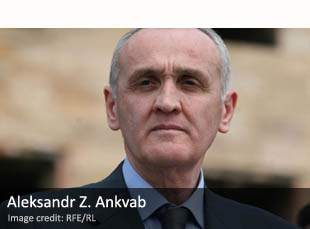
Aleksandr Z. AnkvabBy IAN ALLEN| intelNews.org |
►►Abkhazia President survives assassination attempt. Unidentified assassins tried on Wednesday to kill Aleksandr Z. Ankvab, the president of Abkhazia, a Russian-backed rebel enclave of Georgia. The assailants used automatic rifles, grenade launchers and a powerful roadside bomb in an attack that raised fresh questions about Moscow’s ability to preserve order there.
►►Groups object to CIA declassification charges. Open government advocates are protesting a recently adopted CIA policy that allows the agency to charge up to $72 an hour to review requests to declassify secret records. The effect “will be to price the public out of submitting” requests for “mandatory declassification review,” the American Library Association, Sunlight Foundation and more than 30 other organizations said in a letter Thursday to CIA Director David Petraeus.
►►Analysis: Fallout from Syrian colonel’s abduction in Turkey. The smokescreen surrounding the abduction of Syrian Col. Hussein Harmush, who defected to Turkey in June 2011 before being handed over to the Syrian secret service in September 2011, has begun to clear in recent weeks following a judicial probe. Claims that Turkey’s spy agency, the National Intelligence Organization (MİT), was involved in handing Harmush over to Syria were finally confirmed on February 2 when the Adana Chief Public Prosecutor’s Office issued a written statement saying one MİT agent had been arrested for questioning and further MİT officials had been called to testify as “suspects” in the scandalous repatriation case.

News you may have missed #682

Lieutenant General Ronald BurgessBy IAN ALLEN | intelNews.org |
►►Is there a Mossad base near Iran? The London-based Sunday Times has published an interview with a man claiming to be an Azerbaijan-based agent of Israeli intelligence agency, who confirmed the existence of such a base. The man, identified in the article as “Shimon,” told the paper that there were dozens of Israeli Mossad agents working out of the base. The meeting between the agent and the London Times‘ reporter took place in Baku, near the Israeli Embassy, the report said.
►►Analysis: CIA report on Soviet bioweapons still secret. It has been three decades since the Reagan administration accused the Soviet Union and Vietnam of using chemical weapons known as yellow rain. We still do not know how the US came to this conclusion, but have good reason to believe that it was based on flawed or distorted intelligence. A classified critique of the intelligence behind those charges, written several years ago for the Central Intelligence Agency, could shed light on what happened. Last year, Matthew Meselson, a Harvard expert on chemical and biological weapons, filed a Freedom of Information Act request to get the report released. He was turned down.
►►US official says Iran unlikely to strike first. Lieutenant General Ronald Burgess, director of the US Defense Intelligence Agency, said the Iranian military is unlikely to intentionally provoke a conflict with the West. He said Iran probably has the ability to “temporarily close the Strait of Hormuz with its naval forces”, as some Iranian officials have threatened to do if attacked or in response to sanctions on its oil exports by the US and European Union. But, he added, “Iran is unlikely to initiate or intentionally provoke a conflict or launch a preemptive attack”.

News you may have missed #681

Vladimir NesteretsBy IAN ALLEN | intelNews.org |

►►Mossad ‘bolsters activity in Tunisia’. The Mossad has bolstered its activity in several Tunisian cities since the start of the revolt that ousted President Zine El Abidine Ben Ali last January, Tunisian magazine Al-Musawar has reported. According to the magazine, the Israeli intelligence agency has been working with its US-based counterpart, the CIA, to revive its spy network in post-revolution Tunisia.
►►US ‘used quake’ to send Special Forces into Pakistan. The US Pentagon used the Kashmir earthquake of 2005 to send operatives from the Joint Special Operations Command (JSOC) into Pakistan, reveals a new book by D.B Grady and Marc Ambinder, entitled The Command: Deep Inside the President’s Secret Army. The authors claim that dozens of CIA operatives and contractors entered Pakistan using valid US passports and posing as construction and aid workers, thus avoiding the requisite background checks from Pakistan’s Inter-Services Intelligence spy agency.
►►Russian officer convicted of spying for CIA. A Russian military court last week convicted Lt. Col. Vladimir Nesterets of providing the CIA with secret information on Russia’s new intercontinental ballistic missiles and sentenced him to 13 years in prison. The officer pleaded guilty to passing on that classified information in exchange for money, said the Federal Security Service, the main agency that replaced the Soviet-era KGB. Russia’s RIA Novosti news agency quoted the officer’s wife, Irina, as saying she could not understand the guilty plea because her husband had told her he did nothing wrong and had not betrayed his country.

News you may have missed #679

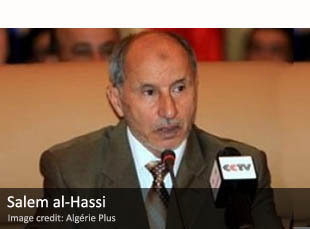
Salem al-HassiBy IAN ALLEN | intelNews.org |

►►New spy chief in Libya. Libya’s ruling National Transitional Council yesterday appointed a lifelong opponent of slain Libyan leader Muammar Gaddafi as the country’s new intelligence chief. Salem al-Hassi, who was involved in a bid to assassinate Gaddafi in 1984, was appointed as the intelligence chief at a meeting of the council.
►►Anonymous hackers release German classified information. Hackers from the group Anonymous said last week they had accessed classified German files and posted them online, revealing details of the country’s military operations in Afghanistan. The military documents were collected for an inquiry, now finished, into a September 2009 airstrike by US jets under German orders that killed more than 140 Taliban fighters and Afghan civilians. Anonymous said it obtained the data from a server at the Bundestag  (German parliament).
►►Did Chinese espionage lead to F-35 delays? Did Chinese cyber spying cause the United States’ F-35 Joint Strike Fighter’s cost spikes and production delays? This is the question being asked by US Pentagon budget officials, according to industry magazine Aviation Week. Chinese spies apparently hacked into secure conference calls and listened to meetings discussing the classified technologies aboard the jets. In particular, China may have stolen info about the F-35’s secure communications and antenna systems, leading to costly software rewrites and other redesigns to compromised parts of the plane.

News you may have missed #677: Analysis edition

Che Guevara after his arrest in BoliviaBy IAN ALLEN | intelNews.org |

►►New book ties Johnson administration to Che Guevara’s death. Michael Ratner and Michael Steven Smith are the co-authors of a new book about the US role in the killing of Cuban revolutionary Ernesto “Che” Guevara. In their book, Who Killed Che?, Ratner and Smith draw on previously unpublished government documents to argue the CIA played a critical role in the killing. “The line of the [US] government was that the Bolivians did it, we couldn’t do anything about it. That’s not true”, Smith said. “This whole operation was organized out of the White House by Walt Whitman Rostow. And the CIA, by this time, had become a paramilitary organization”.
►►CIA digs in as US withdraws from Iraq and Afghanistan. The CIA is expected to maintain a large clandestine presence in Iraq and Afghanistan long after the departure of conventional US troops as part of a plan by the Obama administration to rely on a combination of spies and Special Operations forces to protect US interests in the two longtime war zones, US officials said. They added that the CIA’s stations in Kabul and Baghdad will probably remain the agency’s largest overseas outposts for years.
►►Indian Army ‘preparing for limited conflict with China’. Noting that India is increasingly getting concerned about China’s posture on its border, James Clapper, US Director of National Intelligence, said this week that the Indian Army is strengthening itself for a “limited conflict” with China. “The Indian Army believes a major Sino-Indian conflict is not imminent, but the Indian military is strengthening its forces in preparation to fight a limited conflict along the disputed border, and is working to balance Chinese power projection in the Indian Ocean,” he said.

News you may have missed #675

Maria del Pilar HurtadoBy IAN ALLEN | intelNews.org |
►►Panama refuses to extradite Colombian ex-spy chief. Panama’s foreign ministry cited the Inter-American Convention on Human Rights, an international accord on asylum and Panamanian law, as reason for denying Colombia’s request to extradite Maria del Pilar Hurtado, who faces charges in Bogota over an illegal wiretapping scandal. Currently enjoying asylum in Panama are former presidents of Guatemala, Jorge Serrano Elias; and Ecuador, Abdala Bucaram; as well as erstwhile Haitian military strongman Raoul Cedras.
►►Russian spy chief to visit Syria. Russian Foreign Minister Sergei Lavrov said on Saturday he and Foreign Intelligence Service (SVR) head Mikhail Fradkov will visit Syria and meet with President Bashar al-Assad on February 7. The visit will be made on instructions from Russian President Dmitry Medvedev. Lavrov did not reveal any details of the upcoming the visit.
►►US spy chief: ‘we don’t know if Iran is building a bomb’. At a hearing of the Senate Select Committee on Intelligence last Tuesday, James Clapper, the US Director of National Intelligence, released the following statement: “We assess Iran is keeping open the option to develop nuclear weapons, in part by developing various nuclear capabilities that better position it to produce such weapons, should it choose to do so.  We do not know, however, if Iran will eventually decide to build nuclear weapons”.