Soviet KGB may have killed Albert Camus, claims paper

Albert Camus

Albert Camus

By JOSEPH FITSANAKIS | intelNews.org |
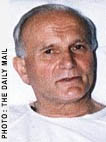
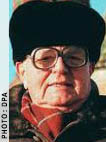
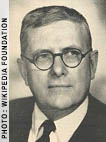
Albert Camus, one of France’s most revered intellectuals, who died in a mysterious accident in 1960, may have been killed by Soviet intelligence, according to an article in one of Italy’s most reputable newspapers. Camus, a philosopher, novelist and journalist, who won the 1957 Nobel Prize for Literature, died on January 4, 1960, during a road trip from Provence to Paris. Camus had initially planned to accompany his wife and children on a train ride to Paris, but changed his mind at the last minute, after his trusted friend and publisher, Michel Gallimard, offered him a ride in his car to the French capital. That evening, as Gallimard and Camus were driving through the small town of Villeblevin, Gallimard’s Facel Vega FV3B rammed into a tree at high speed. Camus was killed instantly, while Gallimard died in hospital several days later. But an article published last week in one of Italy’s oldest newspapers, Corriere della Sera, claims that the two men may have been killed after Soviet intelligence agents sabotaged Gallimard’s car. The allegation is based on Italian literary scholar Giovanni Catelli, who reportedly unearthed a written testimony by Czechoslovakian author and translator Jan Zábrana. The testimony is included in the Czech-language edition of Zábrana’s personal diary, in which he claims that “a man who knew lots of things and had very informed sources” had told him that Camus’ assassination was “ordered personally” by Dmitri Shepilov, who was the Soviet Union’s Minister of Foreign Affairs from 1956 to 1957. Read more of this post

News you may have missed #560 (new books edition)

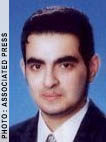
Khalil al-Balawi

Khalil al-Balawi

►►New book on CIA’s Khost bomb disaster. Washington Post reporter Joby Warrick has authored a new book, examining the December 31, 2009, killing of seven CIA operatives by Jordanian doctor Humam Khalil al-Balawi in Khost, Afghanistan. In the book, entitled The Triple Agent, Warrick quotes several “anonymous” sources from within CIA and Jordan’s General Intelligence Department (GID), which was involved in running al-Balawi. Aside from blaming GID, Warrick says the CIA’s Amman station chief was partly responsible for the botched operation.
►►Hollywood producer was Mossad spy, says new book. The book Confidential: The Life of Secret Agent Turned Hollywood Tycoon Arnon Milchan, says that Milchan was a full-fledged operative for Israel’s now-defunct intelligence agency, Lakam. The agency, which was also known as Israel’s Bureau of Scientific Relations, collected scientific and technical intelligence abroad. It was disbanded in 1986 following the arrest of US Navy analyst Jonathan Pollard for engaging in espionage on behalf of Israel. The book’s authors, Meir Doron and Joseph Gelman, argue that Milchan, who produced such movies as Love and Other Drugs and Knight and Day, worked for Israeli intelligence by supervising government-backed accounts and front companies that financed “the special needs of the entirety of Israel’s intelligence operations outside the country”.
►►Book alleges US-Russian spy swap deal. In 2010 the CIA considered a swap deal that would have delivered to Moscow two Americans currently imprisoned in the US for spying for Russia. This information is included Read more of this post
News you may have missed #552

Nikolai Kuznetsov

Nikolai Kuznetsov

►►This just in: South Korea arrests five for spying for North. South Korean prosecutors have arrested five people on charges of “setting up an underground communist group on the instructions of an espionage unit of North Korea’s ruling Workers Party”, a report from South Korea’s Yonhap news agency said on Friday. According to the report, South Korean authorities are “investigating about 20 other people including union activists and opposition party members”. We will publish more information as it comes in.
►►Some US intel analysts believe al-Qaeda near collapse. Citing classified intelligence reports and closed-door Capitol Hill briefings from the CIA, the National Counterterrorism Center and other agencies, some US officials are telling The Washington Post that bin Laden’s death has “pushed al-Qaida to the brink of collapse”. One official told the paper that al-Qaeda is now “largely incapable” of mass-casualty attacks against the United States. Could the ‘Leon Panetta Legacy Committee’ be the source of this report?
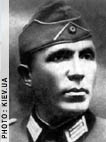
►►Russia and Ukraine commemorate legendary Soviet spy. Russia and Ukraine are celebrating 100 years from the birth of legendary Soviet spy Nikolai Kuznetsov. Kuznetsov, who operated in Nazi-occupied Ukraine, uncovered Read more of this post

News you may have missed #547

Imtiaz Ahmad

Imtiaz Ahmad

By IAN ALLEN | intelNews.org |
►►Finland cancels visa of ex-KGB general. We reported recently on the case of Mikhail Golovatov, a former commander of the Soviet KGB’s Alpha Group, who is wanted in Lithuania for alleged war crimes against the country’s secession movement in the early 1990s. Last week, Austria arrested Golovatov, but released him 24 hours later, claiming that his Lithuanian-issued European arrest warrant was “too vague” to justify his continued detention. There are now reports that the Finnish embassy in Moscow has annulled the Schengen visa it had previously issued to the former KGB officer. In a statement, Finnish officials said they would not have granted Golovatov a visa in the first place, except there had been “a spelling mistake in Golovatov’s first name”, which made them think he the applicant was not General Golovatov of KGB fame. Hmmm…. ►►Georgian ‘spy photographers’ to be released. In a bizarre twist to the ‘photojournalist spies’ saga in Georgia, the government has announced that the three will be released under an agreed plea-bargain deal, because they had given the authorities “information of particular importance for national security” about Russian intelligence operations in Georgia. The three have allegedly “revealed the identities of Russian spies working in the country as well as the names of their Georgian collaborators and cover organizations operating on behalf of Moscow”. The three, Zurab Kurtsikidze, Irakli Gedenidze and Giorgi Abdaladze, are all professional photojournalists, who are accused by Tbilisi of spying for Moscow. ►►Pakistani ex-spy director says US owes Pakistan. Imtiaz Ahmed (often spelled Ahmad) is the former Director General of Pakistan’s main domestic intelligence agency, the Intelligence Bureau (IB). In a recent interview, he accused the United States of using the ‘war on terrorism’ as a strategic pretext for capturing energy resources and limiting China’s economic growth. He also said that the US owes the Pakistani intelligence agencies, because without them it could not have accomplished its task in the Afghan war against the Soviet Union. IntelNews readers may remember the last time Ahmad had made headlines, when he revealed a series of CIA operations against Pakistan’s nuclear program.

Lithuania recalls Austria ambassador over ex-KGB general’s release

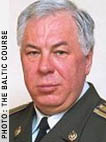
Mikhail Golovatov

Mikhail Golovatov

By JOSEPH FITSANAKIS | intelNews.org |
The government of Lithuania has recalled its ambassador to Vienna, in protest over the release by Austria of a former Soviet intelligence official, who is wanted in Vilnius for war crimes. Last Thursday, Austrian authorities arrested Russian citizen Mikhail Golovatov, a former general of the KGB, who was stationed in Lithuania during the final years of the Soviet Union. Golovatov’s detention was facilitated by a European arrest warrant issued by the office of the Lithuanian prosecutor. The latter accuses Golovatov of authorizing crimes of war as head of Alpha Group —also known as Spetsnaz Grupp Alfa— a special forces unit within the KGB’s First Chief Directorate. On January 13, 1991, Alpha Group forces spearheaded a counterinsurgency attack on the State Radio and Television Building and the Vilnius TV Tower in the Lithuanian capital, in an attempt to quash the Soviet Republic’s growing secessionist movement. The latter had unilaterally declared Lithuania’s independence on March 11, 1990. The attack resulted in the death of 14 and the injury of over 700 people. During the past two decades, the Lithuanian state has sponsored an international campaign for the arrest of numerous officials who represented the Soviet security apparatus in Lithuania during the final months of the USSR’s existence. But, to Vilnius’ shock, Austrian authorities released Golovatov 24 hours after arresting him, arguing that the European arrest warrant issued by the Lithuanian prosecutor’s office was “too vague” to justify the former KGB general’s continued detention. Read more of this post

News you may have missed #532

Viru Hotel

Viru Hotel

By IAN ALLEN | intelNews.org |
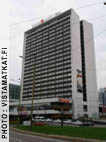
A new exhibition in Tallinn, called The Viru Hotel and the KGB, showcases the Soviet KGB operations in the Estonian capital’s most prestigious Soviet-era hotel. According to the curators, the 23rd floor of the hotel served as the KGB’s operational center in the city. The exhibition focuses specifically on KGB bugging technology during the last stages of the Cold War. Speaking of the Cold War, The Oak Ridger hosts an interesting interview with Francis Gary Powers Jr., son of the CIA pilot who was shot down over the USSR and later captured by the Soviets in 1960. Powers insists his father “never divulged America’s secrets” during his two-year imprisonment in Moscow. Interestingly, declassified documents from that time show that the CIA doubted Powers’ plane had been shot down by the Soviets, and believed the pilot had willingly defected to the USSR. In Canada, meanwhile, a new report to parliament by the Canadian Security Intelligence Service’s (CSIS), claims that cyber-spying is fastest growing form of espionage in the country. The report also states that, as a matter of policy, CSIS views some private-sector cyberattacks as a national security issue.

Comment: Bin Laden’s Alleged ‘Magazine Stash’ May be CIA PsyOp

Osama bin Laden

Osama bin Laden

By IAN ALLEN| intelNews.org |
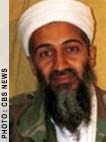
Rumors of an alleged discovery of “a stash of pornography” in Osama bin Laden’s hideout in Pakistan have spread like wildfire since Friday, when Reuters published an “exclusive” report on the subject. The report, written by Mark Hosenball and Tabassum Zakaria, cites “current and former US officials […] who discussed the discovery […] on condition of anonymity”. According to the allegations, “[t]he pornography recovered in bin Laden’s compound in Abbottabad, Pakistan, consists of modern, electronically recorded video and is fairly extensive”. The report was almost immediately picked up by several news outlets, including The New York Times, which notes that the disclosure “will be welcomed by counter-terrorism officials because it could tarnish [the al-Qaeda founder’s] legacy and erode [his] appeal”. Indeed. It appears that only Danger Room‘s Spencer Ackerman thought it wise to air a brief disclaimer to the effect that the “welcomed disclosure” may in fact be “a CIA information operation”. He has a point. Read more of this post

Controversial Swiss master-spy dies in Ireland

Albert Bachmann

Albert Bachmann

By JOSEPH FITSANAKIS | intelNews.org |
One of Switzerland’s most controversial Cold War figures, who set up a clandestine guerrilla unit to combat a feared Soviet invasion, has died in Cork, Ireland. Swiss newspaper Tages-Anzeiger has said last week that Colonel Albert Bachmann, who headed Switzerland’s military intelligence force, the Untergruppe Nachrichtendienst der Armee (UNA), from 1976 until 1979, died on April 12. Although Bachmann was a communist in his student years, he later headed Projekt-26 (P-26), a clandestine project to set up a ‘left-behind’ force of Swiss guerrillas trained in sharp shooting, bombing and assassination techniques. The guerrilla force was designed to engage the Soviet military if it ever invaded Switzerland. In the late 1970s, Colonel Bachmann also secured government funds to purchase the 200-acre Liss Ard country estate near the Irish town of Skibbereen, in west Cork. The estate was to be used as a base for a Swiss government-in-exile following a feared Soviet invasion of central Europe. Furthermore, the basement of one of the two manors on the estate was designated as a secret depository of Switzerland’s gold reserves, in the event of a Soviet invasion of the Alpine country. Read more of this post

Book claims CIA framed Bulgaria over assassination attempt on Pope

John Paul II

John Paul II

By IAN ALLEN | intelNews.org |
A new book claims that the United States Central Intelligence Agency concocted a link between the Bulgarian intelligence services and the 1981 failed assassination attempt against Pope John Paul II. Entitled Kill the Pope: The Truth About the Assassination Attempt on Pope John Paul II, the book is authored by Italian investigative journalist Marco Insaldo and Turkish researcher Yasemin Taksin. Both say that Kill the Pope is the result of a twenty-year study into the incident. Pope John Paul II was shot four times by a 9mm handgun fired by Turkish citizen Mehmet Ali Ağca, while riding in the back of an open-roof car at the Vatican’s St Peter’s Square. Although Ağca’s motives are shrouded in mystery, many intelligence historians believe that he was operating as an agent for the Bulgarian secret services. It has been speculated that the Soviet KGB instructed Bulgarian intelligence to use Ağca and another Turk, Oral Çelik, to kill the Polish-born Pope, because he had strong ties with Poland’s dissident Solidarność (Solidarity) movement. But Insaldo and Taksin insist that there is no evidence to connect the Bulgarian government to the assassination operation, and that Ağca operated under the command of Turkey’s Grey Wolves, a nationalist, anti-Western paramilitary group, which consists of both secular and Islamist factions. Read more of this post

West German defector dies in Moscow

Hans-Joachim Tiedge

Tiedge

By JOSEPH FITSANAKIS | intelNews.org |
A senior West German counterintelligence official, whose 1985 defection to the Soviet bloc shocked Western intelligence, has died in Moscow. Hans-Joachim Tiedge headed the Cologne office of West Germany’s now-defunct Federal Office for the Protection of the Constitution (BfV). He was also involved in the BfV’s counterintelligence work against East German spy operations on West German soil. But on August 19, 1985, Tiedge boarded a train to East Germany. Once there, he walked over to a branch of the Ministry for State Security (commonly known as the Stasi) and declared his intent to defect. His defection caused disarray in West German intelligence circles, prompting the recall of dozens of West German officers and agents operating in East Germany. It eventually led to the resignation of the Director of the BfV, Heribert Hellenbroich. In his autobiography, published in 1998, Tiedge said he decided to defect “due to personal problems” relating to chronic alcoholism and financial debt. He also said his decision to flee to East Germany was prompted by the fear that he was about to be reassigned to a less desirable post inside the BfV. Read more of this post

Australian Labour Party leader worked for Soviets, claims historian

H.V. Evatt

H.V. Evatt

By IAN ALLEN | intelNews.org |
One of Australia’s leading intelligence historians has said that Herbert V. Evatt, who led the Australian Labour Party in the 1950s, operated as a secret agent for the Soviet Union. Dr Desmond Ball, professor at the Australian National University’s Strategic and Defence Studies Centre, made the claim following last week’s release in London of previously classified documents relating to Australian intelligence. The documents, which came from the archives of MI5, Britain’s domestic intelligence agency, reveal that Australian Prime Minister Robert Menzies was convinced that Evatt was a Soviet agent. His fear appears to have culminated two days before the national election of November 22, 1958, when he privately expressed the fear that Evatt would destroy Australian counterintelligence documents on the Soviet Union if the Labour Party was elected to power. With this in mind, he ordered the Australian Security Intelligence Organization (ASIO) to share top-secret documents on the Soviet Union with London and Washington. Following Menzies’ directive, the ASIO provided Britain’s MI5 and MI6, as well as America’s CIA with two sets each of a number of intelligence reports acquired through KGB defector Vladimir Petrov. Read more of this post

News you may have missed #493 (MI6 edition)

  • MI6 scientist’s death questioned by close friend. A close friend of MI6 worker Gareth Williams, whose body was found in a locked bag in a London apartment, has questioned suggestions that his death was linked to his private sex life.
  • Who killed MI6 agent Lionel Crabb? A relative of MI6 agent Lionel Crabb wants to know who killed him. Crabb is thought to have disappeared in a 1956 botched CIA/MI6 attempt to sabotage a Soviet warship docked at Portsmouth harbor. In 2007, Eduard Koltsov, a retired Russian military diver, said he killed a man he thinks was Crabb, as he was “trying to place a mine” on the Soviet ship.
  • Analysis: Libya gives spies a chance to shine. British officers of the Secret Intelligence Service, better known as MI6, are actively operating in Libya. Among their tasks is encouraging senior Libyan officials to defect to the West.

News you may have missed #492 (history edition)

  • Holocaust spy’s memoir gets movie treatment. The extraordinary memoir of Jan Karski, a Polish resistance fighter who gave the first eyewitness report on the Holocaust to the Allies, is to be made into a film by the producer of The King’s Speech. In 1943, Karski escaped from Nazi-occupied Poland and went to London with a hidden microfilm, revealing the persecution of Europe’s Jews by the Third Reich.
  • British spy files shed light on Nazi saboteurs in the US. Declassified British intelligence files describe the activities of Nazi sabotage teams sent to the US in June 1942 to undermine the American war effort. A detailed new account of the German mission, code-named Pastorius, is provided in a report written in 1943 by MI5 intelligence officer Victor Rosthchild.
  • New information on Evdokia Petrova’s defection. New information has emerged on the 1954 defection to Australia of Evdokia Petrova, wife of Vladimir Petrov, who was the most senior Soviet intelligence official to have defected to the West until that time.

MI5 concealed report on Soviet penetration from CIA

Kim Philby

Kim Philby

By IAN ALLEN | intelNews.org |
British counterintelligence officials decided to conceal from their American counterparts a report detailing Soviet spy penetration of the UK, because it showed London’s permissive attitude towards intelligence infiltration. The secret report, entitled “Survey of Russian Espionage in the UK 1935-1955”, was authored by the D Branch of MI5, which was tasked with countering Soviet intelligence operations on British soil. It was declassified on Monday by Britain’s National Archives, 55 years after it was initially authored. The survey was apparently commissioned following the embarrassing defections of Guy Burgess and Donald Maclean, MI5 and MI6 officers respectively, who escaped to Moscow in 1951, after several years of spying for the Soviet Union. Its pages detail the cases of over 50 Soviet intelligence operatives and double agents who were believed at the time to be mostly at large in the UK or abroad. But senior MI5 officials decided to limit the report’s distribution, fearing that it revealed too many weaknesses in Britain’s counterintelligence posture. Instead, they decided to print only about 25 copies of the report, which were to be distributed strictly within MI5. Read more of this post

News you may have missed #484

  • Analysis: CIA may face reduced role in Pakistan after murder row. People familiar with the views of the Pakistani government say that, as part of the deal for the freeing of CIA operative Raymond Davis, the CIA agreed to give Pakistan more credit for its role in counter-terrorism efforts in Afghanistan, to cut back on US spying in Pakistan and to keep Pakistani authorities better informed of CIA activities.
  • Lebanese Army dismantles Israeli spying device. The Lebanese Army has dismantled an Israeli electronic spy device after receiving a tip-off from members of Hezbollah, according to reports from south Lebanon. This is not the first such reported incident. More pictures of the device are posted here.
  • Exhibition commemorates Soviet spy legend. An exhibition, dedicated to the 100th birth anniversary of legendary Soviet intelligence agent Nikolai Kuznetsov has opened in the Russian city of Yekaterinburg. Kuznetsov uncovered German plans to launch a massive tank attack in Ukraine’s Kursk region, as well as an operation to assassinate Stalin, Roosevelt and Churchill in Tehran in 1943.