MI6 set up fake mosque in Europe to attract Muslim extremists

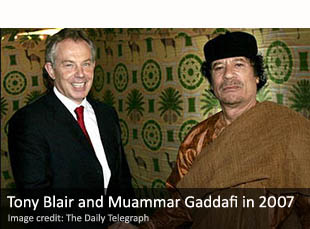
Tony Blair and Muammar Gaddafi in 2007By JOSEPH FITSANAKIS | intelNews.org |
British and Libyan intelligence collaborated during the reign of Libyan leader Muammar al-Gaddafi, in setting up a radical mosque in a European city aimed at luring Muslim extremists. The revelation was made last weekend by British newspaper The Sunday Telegraph, which said it was in possession of documents describing the complex ruse. The paper said that the documents, which were authored by MI6, were discovered in the abandoned headquarters of the ESO, Libya’s External Security Organization, following the collapse of the Gaddafi regime. They allegedly describe a series of operations resulting from the close collaboration between the ESO and MI6, Britain’s Secret Intelligence Service, which began in 2003. During that time, the two intelligence agencies re-established contact in the context of the diplomatic ‘thaw’ between London and Tripoli, which began with Libya’s decision to abandon its nuclear weapons program. With ESO’s assistance, MI6 recruited an agent who was “closely connected” to a senior al-Qaeda commander in Iraq. Codenamed JOSEPH, the agent was slowly groomed to infiltrate an al-Qaeda cell operating in a Western European city. The project’s ultimate goal was for JOSEPH to help establish a mosque aimed at luring Muslim extremists planning to launch terrorist attacks. The Telegraph states that the name of the city, which is in continental Europe, “cannot be named for security reasons”. In December 2003, JOSEPH was flown to the UK by MI6, along with a Libyan intelligence officer who had previously been stationed in London. The two men met with MI6 officers in a British hotel, where they discussed plans to set up the mosque. After taking some time to address JOSEPH’s strong reservations about his personal safety, MI6 officers met with him again in 2004 in “a city in the north of England”. Read more of this post

News you may have missed #717

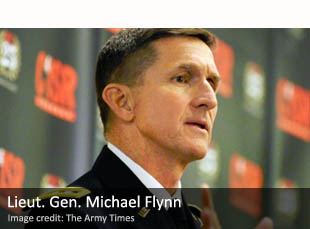
Lieutenant General Michael FlynnBy IAN ALLEN | intelNews.org |
►►CIA wants more drone strikes in Yemen. The CIA is seeking permission to launch more airborne drone strikes in Yemen, even when there is a risk the victims might not always be terrorists, The Washington Post reports. The paper quotes an unnamed Obama administration official saying that “there is still a very firm emphasis on being surgical and targeting only those who have a direct interest in attacking the United States”. But critics of the drone program say killings of innocent victims could become more common if the strikes are expanded. The CIA proposal for the “signature strikes” is awaiting a decision by the National Security Council, The Post quotes unnamed US officials as saying.
►►US military intelligence critic to lead spy agency. Lieutenant General Michael Flynn, who once blasted the work of US military spies in Afghanistan as “only marginally relevant”, has been nominated to take over the Defense Intelligence Agency, which is the US Pentagon’s intelligence organization. Flynn was a scathing public critic of military intelligence in Afghanistan, where he served as a top intelligence officer in 2010, saying it failed to provide decision makers with a clear picture of conditions on the ground. Flynn is credited with playing an influential role during his tenure at Joint Special Operations Command (JSOC), the secretive headquarters that oversees elite commandos like the team that killed Osama bin Laden in May 2011.
►►Taiwanese man detained for spying for China. A Taiwanese businessman, identified by his surname Cheng, has been detained for allegedly spying for China. He was allegedly recruited by China when he moved to the southeastern coastal province of Fujian to do business a few years ago, prosecutors said. Cheng is accused of trying to lure a former classmate, who is now a military officer, to meet with Chinese officials abroad for money; but the officer turned him in to Taiwanese authorities.

UK Foreign Secretary asked if murdered businessman was MI6 spy

Neil HeywoodBy JOSEPH FITSANAKIS | intelNews.org |
Britain’s Foreign Secretary has been officially asked by a parliamentary committee whether Neil Heywood, the British businessman who was found murdered in China last November, was spying for British intelligence. There is no question that Heywood, a financial consultant and fluent Chinese speaker, who had lived in China for over a decade, maintained contacts with intelligence insiders. In the past, he had collaborated with Hakluyt, a business intelligence firm established and staffed by former officers of MI6, Britain’s external intelligence agency. British government sources have denied that the murdered businessman had ever been employed by the British state. But Heywood’s background —his schooling at Harrow, his background in international relations, his contacts with senior Chinese Communist Party apparatchiks, and his language skills— have given rise to intense speculation that he may have been an asset for British intelligence. Yesterday British newspaper The Daily Mail cited “a well-placed source” in claiming that Heywood “passed information to MI6 as an agent of influence”. Speculation about Heywood’s alleged contacts with British intelligence is bound to increase following news of an official request on the subject, issued to British Foreign Secretary William Hague, by the House of Commons Foreign Affairs Committee. The request, submitted in the form of a letter (.pdf) authored by Committee Chairman Ricahrd Ottaway, urges Hague to address “speculation” about the murdered Englishman’s profession. In the letter, Ottaway asks the Foreign Secretary to clarify whether Haywood had ever supplied intelligence “on a formal or informal basis” to Britain’s embassy in Beijing or its consulate in the city of Chongqing, where Heywood was found dead last November. Read more of this post

Iran offers more details on alleged Israeli sabotage ring

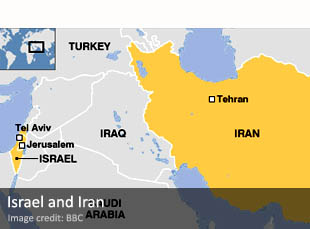
Israel and IranBy IAN ALLEN | intelNews.org |
Iranian state media have released fresh details about the arrests of several members of an alleged Israeli sabotage ring, which were initially announced last week. According to the original reports from Tehran, which were notably vague, the ring was allegedly supported by Israel and its members were “plotting attacks” against Iranian government targets. The latest reports from Iran’s IRNA news agency state that the arrestees include “more than fifteen Iranian and foreign nationals […] spying for Israel” and that those arrested were involved in a complex sabotage plot orchestrated by the “Zionist regime” —a term used by Iranian government media to refer to the Jewish state. The reports claim that the group had planned to assassinate an Iranian government “specialist”, possibly a reference to employees in the Islamic Republic’s nuclear program. Moreover, Iranian state prosecutors allege that the planned assassination had been scheduled for last February 10, but was preempted by the planners’ arrests. The date suggests that the arrests were conducted over two months ago. If the February 10 date is accurate, it would also signify that the alleged assassination had been planned for the day before the 33rd anniversary of the 1979 Islamic Revolution, which commemorates the day when the regime of Iran’s Shah collapsed and power was transferred to the hands of the revolutionaries led by Ayatollah Khomeini. Read more of this post

News you may have missed #716 (analysis edition)

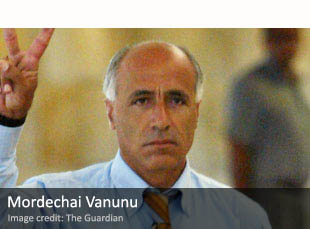
Mordechai VanunuBy IAN ALLEN | intelNews.org |
►►Kabul attacks show intel failures in Afghanistan. Dozens, possibly hundreds of people would have been involved in training, equipping and then infiltrating into the heart of Kabul the large number of insurgents who were prepared to fight to a certain death in the Afghan capital last Sunday. Yet neither Afghan nor foreign intelligence operatives appeared to have any idea that an unprecedented wave of attacks was about to engulf both Kabul and several other key locations around the country. So it seems that Afghan President Hamid Karzai may have a point when he says that the “infiltration in Kabul and other provinces is an intelligence failure for us and especially for NATO and should be seriously investigated”.
►►Report claims China spies on US space technology. China is stealing US military and civilian space technology in an effort to disrupt US access to intelligence, navigation and communications satellites, according to a report authored by the State and Defense Departments. The report (.pdf) argues China should be excluded from recommendations made to the US government to ease restrictions on exports of communications and remote-sensing satellites and equipment. Chinese officials have denied the report’s allegations, calling it a “Cold War ghost”.
►►The long and sordid history of sex and espionage. Using seduction to extract valuable information is as old as the Old Testament —literally— Whether from conviction or for profit, women —and men— have traded sex for secrets for centuries. The Cold War provided plenty of opportunities for so-called “honey-pot” scandals. Perhaps the most dramatic case of seduction in recent times involved Israeli nuclear technician Mordechai Vanunu. In 1986 he visited London and provided The Sunday Times with dozens of photographs of Israel’s alleged nuclear weapons program. But Mossad was on his trail and a female agent —Cheryl Ben Tov— befriended him (reportedly bumping into him at a cigarette kiosk in London’s Leicester Square). She lured him to Rome for a weekend, where he was drugged and spirited to Israel.

News you may have missed #715 (Israel edition)

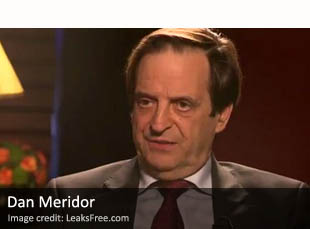
Dan MeridorBy IAN ALLEN | intelNews.org |
►►Israeli Deputy PM says “attack on Iran won’t help us”. In this interview conducted at Israel’s embassy in London, the country’s Deputy Prime Minister and Minister of Intelligence and Atomic Energy, Dan Meridor, says that “an attack on Iran wouldn’t add anything to [Israel’s] security”. He adds that “it’s possible that we have to use force”. But, he notes, “I don’t think Israel should use the military option. I don’t agree with some of my colleagues who support a military strike”. Compare that with the last time he spoke about this issue.
►►Analysis: Beware of faulty intelligence on Iran. The experienced Israeli intelligence correspondent Ronen Bergman argues that the decision to attack Israeli militarily “will be driven to an extraordinary extent by intelligence reports” produced by Washington and Tel Aviv. For this reason, he argues, “even a slight intelligence gaffe could have an outcome of historic proportions”. Furthermore, he calls on America and Israel not to rely on “scraps of information […] as the basis for action against Iran”, insisting that “a miscalculation could be the worst possible outcome”.
►►Israeli spy Pollard back in prison after hospitalization. Israeli President Shimon Peres sent a letter to United States President Barack Obama last week urging him to consider granting clemency to convicted spy Jonathan Pollard based on his ill health. The White House rejected the appeal and now Pollard, who was convicted in 1987 for selling classified US government information to Israel, is back in prison.

News you may have missed #714

Tjostolv Moland and Joshua FrenchBy IAN ALLEN | intelNews.org |
►►British PM urged to intervene in Congo spy case. The mother of Joshua French, who has dual British and Norwegian nationality, and is facing execution in the Democratic Republic of Congo, has urged British Prime Minister David Cameron to ask Congolese authorities to pardon him. French, and his Norwegian friend Tjostolv Moland, were sentenced to death for murder and spying in the vast central African country in 2009. A prison official claimed in August last year that the pair had tried to escape, but their lawyer denies this.
►►Computers of Syrian activists infected with Trojan. Since the beginning of the year, pro-Syrian-government hackers have steadily escalated the frequency and sophistication of their attacks on Syrian opposition activists. Many of these attacks are carried out through Trojans, which covertly install spying software onto infected computers, as well as phishing attacks which steal YouTube and Facebook login credentials. According to the Electronic Frontier Foundation, the latest surveillance malware comes in the form of an extracting file which is made to look like a PDF if users have their file extensions turned off. The PDF purports to be a document concerning the formation of the leadership council of the Syrian revolution and is delivered via Skype message from a known friend.
►►Report claims Australian government spied on anti-coal activists. The leader of the Australian Greens, Bob Brown, says he is outraged at reports that the Australian Security Intelligence Organisation (ASIO) is spying on mining protesters, and says such action is a misuse of the spy agency’s resources. The revelations were reported in Australian newspapers yesterday, and are based on a Freedom of Information request to the Department of Resources, Energy and Tourism that was reportedly rejected because it involved “an intelligence agency document”. The ASIO says it cannot confirm whether it has conducted surveillance of anti-coal protesters, but it says it does not target particular groups or individuals unless there is a security-related reason to do so.

Denmark university professor faces charges of spying for Russia

Timo KivimäkiBy JOSEPH FITSANAKIS | intelNews.org |
Authorities in Denmark have charged a university professor with assisting “foreign intelligence operatives”, believed to be Russian. Professor Timo Kivimäki, a conflict resolution expert, who teaches international politics at the University of Copenhagen, is accused of “providing or attempting to provide” information to four Russian government officials on several documented instances between 2005 and 2010. The indictment claims Kivimäki, who was born in Finland, intended to give the Russians “information relating to individuals and subjects connected with intelligence activities”. The charges were filed after a lengthy investigation, launched in 2009 by the Danish Security and Intelligence Service (PET) in cooperation with Finland’s Security Intelligence Service (SUPO). The university professor spoke to leading Finnish newspaper Helsingin Sanomat and admitted that he carried out contractual “consulting work” for the Ministry of Foreign Affairs of the Russian Federation, for six years. He said he was paid approximately €16,000 (US$20,000) for his services, but denied that he knowingly contacted Russian intelligence operatives in the course of his consulting duties. According to Kivimäki, the Russian officials he interacted with appeared to be “diplomats, not spies”. He also pointed to the fact that none of the Russian officials he worked with as a consultant were apprehended or expelled by Danish counterintelligence, as is customary in such cases. Despite its relatively small size, Denmark had its share of international intelligence activity during the Cold War. During that period, PET amassed detailed files on approximately 300,000 Danish citizens considered to be “leftist sympathizers”. More recently, in November of 2010, media reports from Denmark suggested that the US embassy in Copenhagen maintained a network of local former police and intelligence officers, who were conducting “illegal systematic surveillance of Danish citizens”. Read more of this post

Ex-CIA officer sheds light on 1977 spy arrests in Moscow

Martha D. PetersonBy JOSEPH FITSANAKIS | intelNews.org |
A recently retired CIA officer has spoken publicly for the first time about the 1977 arrest and eventual suicide of a Soviet double agent considered one of the Central Intelligence Agency’s most important assets during the Cold War. Aleksandr Dmitryevich Ogorodnik was an official in the Soviet diplomatic service who, while stationed at the Soviet embassy in Bogotá, Colombia, was compromised and later blackmailed by Colombian intelligence into spying on Moscow. Ogorodnik was initially handled by the Colombians, with little success. Later, however, when he was moved to a sensitive post in the Soviet Ministry of Foreign Affairs in Moscow, the Colombians turned him over to the CIA. He was handled by CIA officer Aldrich Ames —himself a double spy for the Soviet KGB— who gave Ogorodnik the codename TRIGON. After establishing contact with him in Moscow, the CIA provided Ogorodnik with a miniature camera and other essentials, which he used regularly to take photographs of classified Soviet documents. As a go-between, the Agency selected Martha D. Peterson, the first female CIA case officer ever to be posted in Moscow. Peterson was a fresh CIA recruit, who had completed her Career Training program in 1974, less than a year before being sent to the Soviet capital. Having retired in 2003, after 31 years with the CIA, Peterson has now published a memoire entitled The Widow Spy. In it, she reveals that she coordinated regular dead-drops with Ogorodnik for nearly two years, picking up his used film while supplying him with fresh film and other espionage accessories. On July 15, 1977, however, her mission was abruptly terminated after she was arrested by a large team of KGB officers underneath a railway bridge in Moscow, a few minutes after conducting a dead-drop for Ogorodnik. She was taken to the KGB’s Lubyanka prison, where she says she was interrogated for three days before being released by way of her diplomatic immunity, and ordered to leave the USSR. Ogorodnik was not so fortunate. A few months prior to his arrest, he had requested that the CIA provide him with a poison pill, which he could take in case he was arrested by the KGB. Read more of this post

Analysis: Biometric passports, iris scanners, worry undercover spooks

Biometric passportBy JOSEPH FITSANAKIS | intelNews.org |
False passports are to intelligence operatives what petrol is to automobiles. In the absence of forged travel documentation, intelligence officers working undercover are unable to operate internationally without revealing their identity. This is why, traditionally, intelligence operatives are known to “use and discard false passports like hand wipes”, in the words of one knowledgeable source. But according to a fascinating article by veteran intelligence correspondent Jeff Stein, authored for Wired magazine’s Danger Room blog, “the day of the trench-coated spy easily slipping in and out of countries on false papers multiple times [may be] coming to an end”. The reason is “the electronic curtain [that] is descending all over the world”, most notably the increasing deployment of iris recognition devices and biometric passports at airports and hotels around the world, says Stein. Over the coming decade, iris scanners, which employ mathematical pattern-recognition techniques to identify individuals by their irides, will become increasingly common at international airports. The same applies to biometric passports, namely travel documents with embedded microchips that store a massive amount of personal information. These technologies are ostensibly being introduced in international transport hubs in order to combat transnational terrorism and organized crime. But they are also expected to heavily interfere with the work of undercover intelligence operatives, says Stein, especially as they are being introduced in popular spy routes, in countries such as India, Jordan, United Arab Emirates, as well as in several European Union entry points. He quotes an unnamed “career spook” currently working for the Central Intelligence Agency as a consultant, who explains that an undercover officer’s biometric identity will be forever linked to the passport that he or she first uses to enter these countries. If the officer were to try to enter these countries again, using a different alias, alarm bells will ring: “you can’t show up again under a different name with the same data”, says the CIA consultant. Read more of this post

News you may have missed #713 (analysis edition)

RAW headquarters, New Delhi, IndiaBy IAN ALLEN | intelNews.org |
►►Israel wary of changes in the Arab world. For decades, Israel had been hoping for change in the Arab world. Yet now that the region is in upheaval, its not just Israeli citizens who are concerned. The government has shown a preference for walling itself in rather than exploring new opportunities. The Jewish state has tried to integrate itself into the Middle East for decades. Now it is trying to cut the cord between itself and the surrounding region, blocking out the changes in its neighborhood.
►►Melting Arctic may redraw global geopolitical map. If, as many scientists predict, currently inaccessible sea lanes across the top of the world become navigable in the coming decades, they could redraw global trading routes —and perhaps geopolitics— forever. This summer will see more human activity in the Arctic than ever before, with oil giant Shell engaged in major exploration and an expected further rise in fishing, tourism and regional shipping. But that, experts warn, brings with it a rising risk of environmental disaster not to mention criminal activity from illegal fishing to smuggling and terrorism.
►►Why Indian intelligence doesn’t work too well in Pakistan. Sources in the RAW, India’s external agency, say India lacks both political will and the capability to carry out a hit inside Pakistan. “We do not have the mandate to do what Mossad does. Our charter does not include the job of getting [or assassinating] people from other countries. If such political will is there, the agency would be able to do it”, says a senior RAW official. Another former officer, who has spent a considerable time studying these outfits, attributes it to the fundamental difference between India and Pakistan in dealing with espionage. “It takes a great deal of money and time to cultivate sources in foreign soil. We don’t have either in plenty, unlike countries in the West. Pakistan’s ISI is better off in this as the state sponsors terrorism”, he says.

Iran allegedly busts ‘Israel-backed’ sabotage ring

Israel and IranBy IAN ALLEN | intelNews.org |
The government of Iran has announced the arrests of a “terrorist network” that was allegedly planning sabotage and assassination operations inside the Islamic Republic. The announcement was released by the Iranian Intelligence Ministry and aired by a host of state-controlled media on Tuesday. The reports were vague, but claimed that the sabotage ring was supported by Israel, and that its members were “plotting fresh attacks” against Iranian government targets. The Intelligence Ministry said that Iranian counterterrorist teams decided to move against the “large and sophisticated” network after preparing the ground during “months of operations”. An unidentified Iranian government official was quoted as saying that the arrests of the group members involved the “recovery of large bombs, automatic weapons, handguns, [as well as] telecommunications equipment” from houses and apartments belonging to alleged sabotage group members. One report stated that some of the arrests were concluded following “firefights” between the suspects and Iranian government forces. Reports also claimed that the network led officials to the discovery of a separate “regional command center in a third country”, which was not named, but which is widely suspected to be Azerbaijan. Earlier this week, The Washington Post reported that American intelligence agencies had ramped up intelligence and sabotage missions directed against Iran’s nuclear program. Read more of this post

News you may have missed #712

Abdel Hakim BelhajBy IAN ALLEN | intelNews.org |
►►New US spy satellite could include ‘domestic surveillance. Last week, a new US spy satellite was launched into orbit as part of a secretive military program enabling the surveillance of Earth from space. An official at the Vandenberg base told The Los Angeles Times that the NROL-25 was part of a “national security payload”, which could mean it is to be used for any number of purposes, possibly including domestic surveillance.
►►US steps up intelligence and sabotage missions in Iran. American intelligence agencies are ramping up intelligence and sabotage missions focused on Iran’s nuclear program, according to The Washington Post. Officials from the National Security Agency have increased efforts to intercept email and electronic communications coming from Tehran, according to reports in The Post‘s Sunday edition. The CIA and other agencies have also ramped up sabotage missions in the country, geared toward disrupting Iran’s ongoing nuclear work, the paper reports.
►►MI6 ‘considers paying off’ Libyan official. Britain’s MI6 chiefs allegedly plan to offer more than £1 million ($1.6 million) hush money to a Libyan who claims British spies sent him to be tortured by the Gaddafi regime. The Secret Intelligence Service is scrambling to prevent Abdel Hakim Belhaj releasing details of his case following the revelation that a Labour Party minister sanctioned his extraordinary rendition —contravening UK policy on torture.

News you may have missed #711 (ex-spy edition)

Glenn L. CarleBy IAN ALLEN | intelNews.org |
►►Egypt ex-spy chief to run for President. Omar Suleiman, 74, announced his candidacy on Friday and collected around 72,000 signatures of eligible voters in one day, more than twice the 30,000 required. Hosni Mubarak’s former intelligence chief insisted that his bid for the presidency does not have the support of Egypt’s military rulers and accused Islamists of sending him death threats. Mr Suleiman, made vice-president by Mubarak in the last days of his three-decade rule, symbolizes that era’s tough security regime and poses a threat to Islamists, who were routinely harassed and arrested during Mubarak’s era, and to liberals, who spearheaded Mubarak’s ouster. But his candidacy might appeal to some Egyptians hoping for an end to political instability.
►►Ex-CIA officer says evidence in alleged case was flawed. Information from the US Central Intelligence Agency used by Canada to link accused Ottawa terrorist Mohamed Harkat to al-Qaeda was untrue, according to Glenn Carle, a retired CIA case officer who interrogated Harkat at secret CIA black site prisons in 2002. Speaking to promote his blistering memoir about the case, The Interrogator: An Education, Carle said that Harkat, who was thought to be Osama bin Laden’s main financial administrator, “wasn’t the senior member of al-Qaeda that we had assessed. He wasn’t even a member of al-Qaeda”. Yet as recently as 2010, Canadian Security Intelligence Service evidence and testimony before the Federal Court of Canada continued to point to Harkat’s relationship with Haji Pacha Wazir as evidence of Harkat’s ties to the bin Laden terror network.
►►Ex-KGB agent wins South Ossetia vote. Former senior KGB agent Leonid Tibilov has won a tense run-off to lead Georgia’s rebel pro-Russian region of South Ossetia, after two earlier polls ended in turmoil. Tibilov won 54.12 percent of the vote with all ballots counted against human rights commissioner David Sanakoyev’s 42.65 percent. The peaceful end to the election contrasts sharply with the angry protests that followed a November 27 ballot in which Alla Dzhioyeva, a female candidate who opposed the local administration was disqualified after coming out ahead in the poll. Dzhioyeva was then hospitalized in February after being interrogated and allegedly beaten by police following allegations that she planned to seize power.

US rejects calls to free Navy analyst who spied for Israel

Benjamin Netanyahu and Barack ObamaBy JOSEPH FITSANAKIS | intelNews.org |
The White House has rejected persistent calls by Israeli politicians and lobbyists to free a United States Navy intelligence analyst serving a life sentence for giving classified US government documents to Israel. Jonathan Jay Pollard was convicted in 1987 for selling classified information to the Israeli government. Ronald Olive, a former counterintelligence officer for the US Naval Criminal Investigative Service, who led the US Navy’s prosecution of Jonathan Pollard, has described Pollard’s spying activity as “one of the most devastating cases of espionage in US history”, involving the theft of over “one million classified documents”. Recently it emerged that, before spying for Israel, Pollard had attempted to spy on the US for the government of Australia. However, in Israel, Pollard, who is now an Israeli subject after renouncing his American citizenship, is widely considered a national hero. Last week, senior Israeli political figures renewed persistent calls to the administration of US President Barack Obama to free Pollard. According to the Israelis’ reasoning, the life sentence imposed on Pollard is too harsh considering that he spied for a US ally. Last week’s calls were led by Israeli Prime Minister Benjamin Netanyahu, who urged the White House to free the convicted spy “in the spirit of the Jewish Passover. Netanyahu said that “the Festival of Freedom of all the Jews should be turned into Pollard’s private one”. Prime Minister Netanyahu’s plea was echoed in a personal letter addressed to President Obama by Israeli President Shimon Peres, along with a petition signed by over 80 members of the Israeli Knesset. Read more of this post