News you may have missed #698

Cecilia LooströmBy IAN ALLEN | intelNews.org |
►►Swedish official sent top-secret intel briefing via Hotmail. A high-ranking official at Sweden’s Ministry of Defense sent notes on highly confidential arms trade negotiations with a Saudi Arabian official through a Hotmail email address. The four-page-long email, which details a secret conversation with a Saudi General, was sent in 2008 from assistant Under-Secretary for Defense Cecilia Looström, according to a Swedish newspaper.
►►Russian diplomat won’t deny espionage activity in Canada. Russia’s ambassador to Canada, Georgiy Mamedov, has refused to deny that his country carries out spy activity in Canada. He told a Canadian television reporter that “I am neither denying nor confirming [Russian espionage in Canada]. I would be a fool […] if I would confirm that we are doing as much”. He said Russia conducts intelligence activities in other countries —although he didn’t specify which— but refused to give any details on what activities, if any, are conducted within Canada.
►►New Taiwan spy case raises concerns. A Taiwanese air force captain surnamed Chiang is believed to have passed intelligence to China. Reportedly, Chiang’s uncle, who operates a business in China, helped pass on the information allegedly obtained by Chiang, which is said to have included classified material on Taiwan’s early-warning radar system as well as E-2T/E-2K Hawkeye surveillance aircraft. The case has rocked the Taiwanese military, as it comes a little more than a year after a high-profile spy for China was caught and is now serving a life sentence.

Breaking News: Russian troops land in Syria

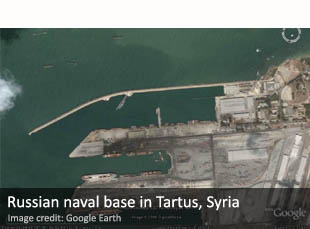
Russian naval base in Tartus, SyriaBy JOSEPH FITSANAKIS| intelNews.org |
The Russian service of the BBC has confirmed that a contingent of Russian “antiterrorist special forces” have landed in Syria. The news first appeared on Monday on the websites of several Russian news agencies, including Interfax and RIA Novosti. The latter claimed that the Russian troops, who were said to be Marines, arrived in the Syrian port of Tartus onboard the tanker Iman, which is part of Russia’s Black Sea fleet. According to the report, the tanker is strictly tasked with performing “logistical tasks [including] the replenishment of fuel and food [and] providing maritime anti-piracy security in the Gulf of Aden”. According to a statement from the Russian Black Sea Command, the special forces had landed in Syria in order to “demonstrate the Russian presence in the turbulent region and possibly evacuate Russian citizens”. Shortly after the initial reports of the troops’ landing in Tartus, ABC News spoke to an anonymous source at the United Nations Security Council, who described the news as “a bomb” that was “certain to have serious repercussions” on the situation in Syria. Soon afterwards, however, an unnamed source in the Syrian Ministry of National Defense told the SANA news agency in Damascus that the reports of Russian troops landing in Syria were “completely devoid of truth” and said the presence of the Russian tanker was connected with an anti-piracy mission. The Russian Ministry of Defense also told reporters that the Iman is not a warship and that its crew is composed entirely of civilian personnel. But a separate report on the Russian-language service of the BBC claims that, although the vessel is indeed hydrographic —designed to collect undersea topographic data— it contains sophisticated dual-use hardware that can easily be used for intelligence collection. The BBC report repeats earlier claims by the Interfax news agency that the Russian ship arrived in Tartus with a large contingent of marine brigade and airborne assault battalion members. It also quotes sources from the Syrian opposition, which allege that Russian troops were indeed seen disembarking in Taurus. Read more of this post
News you may have missed #697: US edition

David PetraeusBy IAN ALLEN| intelNews.org |
►►What happens when CIA couples divorce? One retired CIA senior paramilitary officer, who served for more than two decades and lives in Virginia, said he was told several years ago that the divorce rate for the agency’s operations division was astonishingly high. But unlike the Pentagon, which studies how often service members split up, and knows, for instance, that 29,456 of 798,921 military couples divorced last year, the CIA does not keep official tabs on its employees’ divorce rates.
►►Spies exchange tips in the cloud. While some US federal agencies shy away from cloud computing for fear of losing control over their data, the intelligence community and military increasingly are turning to networked services expressly to exert tighter security restraints, according to Jim Heath, Senior Science Adviser for the National Security Agency.
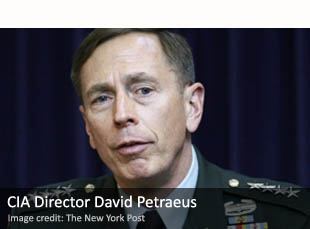
►►CIA Chief: We’ll spy on you through your dishwasher. More and more personal and household devices are connecting to the internet, from your television to your car navigation systems to your light switches. CIA Director David Petraeus cannot wait to spy on you through them. Earlier this month, Petraeus mused about the emergence of an “Internet of things” —that is, wired devices— at a summit for In-Q-Tel, the CIA’s venture capital firm. “‘Transformational’ is an overused word, but I do believe it properly applies to these technologies”, Petraeus enthused, “particularly to their effect on clandestine tradecraft”.

Mossad, CIA, ‘agree Iran has no active nuclear weapons program’

Iran's Natanz nuclear enrichment facilityBy JOSEPH FITSANAKIS| intelNews.org |
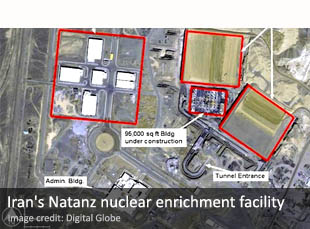
Quoting American intelligence sources, The New York Times reports that intelligence agencies from the United States and Israel agree that Iran suspended its nuclear weapons program years ago, and that Tehran is not currently attempting to revive it. As intelNews has been reporting consistently since 2009, the overwhelming consensus in the US intelligence community is that the Iranian regime suspended all efforts to build a nuclear bomb in 2003. Furthermore, the US intelligence community maintains that the decision to turn Iran into a nuclear power has yet to be conclusively taken in Tehran. This was first outlined in the 2007 US National Intelligence Estimate (NIE), an annual report cooperatively authored by the heads of all US intelligence agencies. This consensus appears even wider after Sunday’s New York Times report, which maintains that, even though many hawkish Israeli politicians advocate aggressive action against Iran, Israel’s intelligence agency, the Mossad, is in broad agreement with the premise of the 2007 NIE. The Times cites an anonymous “former senior American intelligence official”, who says that, although Israeli intelligence planners direct “very hard questions” to their American counterparts, the “Mossad does not disagree with the US on the [Iranian] weapons program”, and that “there is not a lot of dispute between the US and Israeli intelligence communities on the facts”. Undeniably, the 2007 NIE has its detractors, including some who accuse the US intelligence community of refusing to realize “that Iran now has the capability to change the balance of power in the Gulf”. The latest report in The Times does not deny that there are “significant intelligence gaps” in Washington’s ability to understand Iran’s intentions. Iran, argues the report —correctly— is “one of the most difficult intelligence collection targets in the world”. Read more of this post

News you may have missed #696

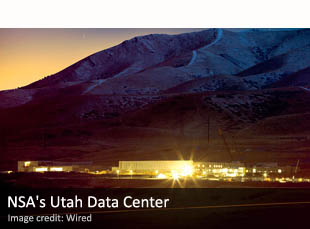
NSA's Utah Data CenterBy IAN ALLEN| intelNews.org |
►►French spies to stage labor protest. The main union representing French domestic intelligence officers, those charged with counter-espionage and anti-terror investigations, called Wednesday on its members to stage a protest. The head of the SNOP union, which represents senior police officers and is the main labor body for members of the DCRI security agency, said his members planned a “gathering” at their Paris headquarters. A smaller union said it wanted no part in the protest, and it was not clear how many of the agency’s 4,000 intelligence officers planned to take part.
►►James Bamford on the NSA’s new spy center in Utah. Under construction by contractors with top-secret clearances, the blandly named Utah Data Center is being built in Bluffdale for the National Security Agency. A project of immense secrecy, it is the final piece in a complex puzzle assembled over the past decade. Its purpose: to intercept, decipher, analyze, and store vast swaths of the world’s communications as they zap down from satellites and zip through the underground and undersea cables of international, foreign, and domestic networks. The heavily fortified $2 billion center should be up and running in September 2013.
►►Author of unauthorized CIA book gave proceeds to charity. After former CIA officer Ishmael Jones wrote a book about the CIA without gaining prior approval from the Agency, the government sought and won a judicial ruling that Jones had acted in violation of his CIA secrecy agreement, and that he could be held liable for the breach. But the government’s current efforts to seize the financial proceeds from Jones’ 2010 book, The Human Factor: Inside the CIA’s Dysfunctional Intelligence Culture, have been frustrated by the fact that the author has already given the proceeds away to charity.

State prosecutors probe alleged plot to kill Greek prime minister

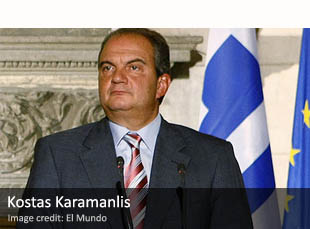
Kostas KaramanlisBy JOSEPH FITSANAKIS| intelNews.org |
Government prosecutors in Athens have opened a criminal investigation into an alleged plot to kill the Prime Minister of Greece in 2008, which was reportedly uncovered by Russian intelligence. In June of last year, Greek media claimed that the country’s National Intelligence Service (EYP) had been briefed by the Russian Federal Security Service (FSB) about the assassination plot. According to the Russian briefing, the plot, codenamed PYTHIA, was hatched by the intelligence agency of “a country allied to Greece”, and was targeted at conservative Prime Minister Kostas Karamanlis, who governed Greece from 2004 to 2009. The Russians claimed that Operation PYTHIA was purportedly aimed at preventing Athens from signing on to a series of energy deals with Moscow, including the ambitious South Stream pipeline project, which aims to connect Russian gas fields to the European energy market. On Wednesday, court official Nikos Ornerakis told a press conference in Athens that, based on preliminary investigations, Greek prosecutors considered the case credible and had filed a felony count of conspiracy “against persons unknown”. The Associated Press, which reported on the story, spoke to former Ambassador Ioannis Corantis, who headed Greece’s EYP intelligence service during the discovery of the alleged assassination plot. Ambassador Corantis confirmed that the EYP had indeed been briefed on Operation PYTHIA “by an official of the [Russian] FSB”, and that the briefing concerned a suspected assassination plot against Prime Minister Karamanlis. Read more of this post

News you may have missed #695

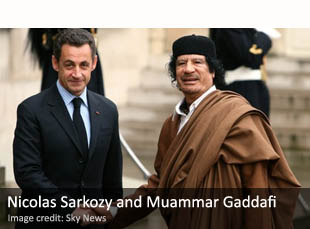
Nicolas Sarkozy and Muammar GaddafiBy IAN ALLEN| intelNews.org |
►►Spies meet over Syrian crisis. CIA chief David Petraeus met Turkey’s Prime Minister Recep Tayyip Erdogan on Tuesday for closed-door talks focusing on the crisis across the border in Syria. Meanwhile, General Murad Muwafi, who heads Egypt’s General Intelligence Directorate, left Cairo on Tuesday for a visit to Riyadh, Saudi Arabia. Also, US General Ronald Burgess, Defense Intelligence Agency Director, has arrived in Egypt and is expected to meet with several Egyptian officials to discuss the situation in Syria.
►►Gaddafi contributed €50m to Sarkozy election fund. Damaging new claims have emerged about the funding of Nicolas Sarkozy’s 2007 election campaign and his links with former Libyan leader Muammar Gaddafi. The French investigative website Mediapart claims to have seen a confidential note suggesting Gaddafi contributed up to €50 million to Sarkozy’s election fund five years ago.
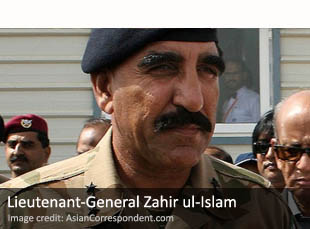
►►Analysis: US relations on the agenda for Pakistan’s new spy chief. Yusuf Raza Gilani has appointed Lieutenant General Zahir ul-Islam as the new chief of the Inter-Services Intelligence (ISI) agency, the main spy arm of the Pakistani military, ending weeks of speculation he would extend the term of Lieutenant Gen Ahmed Shuja Pasha, due to retire on March 18. The new spymaster faces a tough task fixing ever-worsening ties with the United States, but analysts say he is unlikely to reform an institution accused of helping militants in Afghanistan.

Irish government ‘refused cooperation’ with probe into IRA attack

Warrenpoint ambushBy JOSEPH FITSANAKIS| intelNews.org |

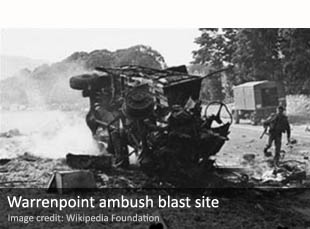
The government of the Republic of Ireland allegedly ordered senior police officials not to assist an investigation into a 1979 attack by the Provisional Irish Republican Army that killed 18 British soldiers in the UK province of Northern Ireland. The attack, known as the Warrenpoint ambush, took place in the afternoon of August 27, when a British military convoy was blown up by a remote-controlled 500-pound fertilizer bomb hidden in a lorry loaded with straw bales. It was soon followed by a second massive bomb blast at a nearby house, and resulted in the British Army’s greatest loss of life in a single incident during the Northern Ireland Troubles. Now a retired officer of the Royal Ulster Constabulary (RUC), as the British police body in Northern Ireland was then known, has told an official government inquiry that the Irish government refused to collaborate with the investigation into the Warrenpoint ambush, and even ordered its senior police officers to distance themselves from it. The man, who testified behind closed doors through a video link from Belfast, cannot be named and is instead referred to in tribunal documents as ‘Witness 68’. All that is known about him is that he is a retired detective and retired from the RUC with a rank of Deputy Assistant Chief Constable. He told the Smithwick Tribunal that the government of the Republic of Ireland instructed its intelligence and law enforcement personnel to view the Warrenpoint ambush as a political crime and to abstain from the British-led criminal investigation into the killings. Consequently, in April 1980, when British RUC officials met with senior officers from the Garda’s (Irish police) Criminal Intelligence Division in Dublin, the Irish delegation informed British officials that the Irish Prime Minister, Jack Lynch, had given specific instructions that “no assistance would be given to the RUC”. Subsequently, the RUC discovered that a site located in the Republic of Ireland, which the British suspected had been used to detonate the bomb that exploded a few yards away at Warrenpoint, had been destroyed before forensic teams were able to examine it. Read more of this post

News you may have missed #694

Hakan FidanBy IAN ALLEN| intelNews.org |
►►India’s spy satellite to be launched in April. The Radar Imaging Satellite, or RISAT-1, is a wholly Indian-built spy-surveillance satellite that can see through clouds and fog and has very high-resolution imaging. The Indian Space Research Organisation (ISRO) has said that RISAT-1 is slated for launch in April. The satellite would be used for disaster prediction and agriculture forestry, and the high-resolution pictures and microwave imaging “could also be used for defense purposes”.
►►GCHQ staff could risk prosecution for war crimes. British law firm Leigh Day & Co. and the legal action charity Reprieve are launching the action against Britain’s foreign secretary William Hague, accusing him of passing on intelligence to assist US covert drone attacks in Pakistan. Human rights lawyers have said that civilian staff at GCHQ, Britain’s signals intelligence agency, could also be at risk of being prosecuted for war crimes.
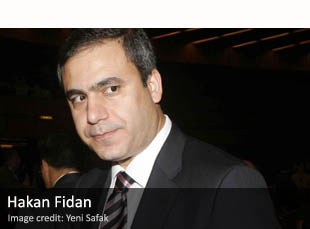
►►Turf war between Turkey’s top spy and police commander? A news report appeared yesterday, which claimed that there was a rift between Turkish intelligence agency MİT Undersecretary Hakan Fidan and National Police Chief Mehmet Kılıçlar, over intelligence sharing in the fight against the terrorist Kurdistan Workers’ Party (PKK). But the two agencies issued a rare joint statement calling media reports “unsubstantiated”.

US revokes Peruvian ex-defense minister’s visa over alleged spy links

Vicky Peláez and  Mikhail VasenkovBy JOSEPH FITSANAKIS| intelNews.org |
The United States has allegedly revoked an entry visa previously issued to the former Deputy Minister of Defense of Peru, over suspicions that he is connected to a major Russian espionage ring found operating in the United States. Fabián Novak had his visa revoked after he was allegedly included on a list drawn by the US Federal Bureau of Investigation, containing names of individuals connected to a Russian illegals program caught operating in the US in 2010. According to El Comercio, Peru’s oldest newspaper, Novak, who served as the country’s Deputy Defense Minster between 2006 and 2008, met repeatedly with two members of the 11-member Russian spy ring, which was busted in a series of coordinated raids across several US states in July of 2010. The Lima-based daily quotes an anonymous “high-level [US] government source” who claims that Novak directly contacted two of the 11 Russian spies, who entered the United States from Peru, using Uruguayan and Peruvian travel documentation. The two, Vicky Peláez, who posed as a journalist, and her husband Mikhail Anatolyevich Vasenkov (alias Juan Lazaro), an adjunct professor, were among nearly a dozen Russian illegals swapped less than two weeks after their arrests by the FBI with several CIA spies held in Russian prisons. The El Comercio source claimed that, according to the FBI, Novak met with two officials from the Russian embassy in Lima at least twice, in 2001 and 2006, to discuss the activities of Peláez and Vasenkov in the US. Read more of this post

News you may have missed #693: Israel edition

Meir DaganBy IAN ALLEN| intelNews.org |
►►India soon to announce Iranian role in New Delhi bomb attack. The Delhi Police has cracked the Israeli embassy car blast case and traced the conspiracy to Iranian secret agents. According to sources privy to the investigation, it has now been “conclusively established” that Syed Mohammad Kazmi, the freelance journalist recently arrested in the case, was in touch with an Iranian intelligence officer and had even visited Iran as part of the conspiracy. Sources in the Indian security establishment said that the breakthrough in the February 13 blast on an Israel diplomat’s car, will be announced by the New Delhi Police in a “day or two.” They added that another couple of detentions have been made in the case.
►►Ex-Mossad chief says Iran’s response to attack would be devastating. An Israeli attack on Iran would lead to a missile attack on Tel Aviv that would have a “devastating impact” on the ability of Israelis to continue their daily lives, Meir Dagan, former head of Israel’s spy agency Mossad, said on Monday. Dagan said that Iran doesn’t have only four nuclear sites, but it has “dozens” of them. He seemed quite skeptic over the effectiveness of an Israeli attack on Iran, saying that no military attack could halt the Iranian nuclear project. “The attack could only delay it”, he said.
►►Ex-Mossad chief says Iran regime is ‘very rational’. The Iranian regime is “very rational” and is moving deliberately in its secretive nuclear program, the former head of Israel’s Mossad intelligence agency says. “Maybe it’s not exactly rational based on what I call ‘Western thinking’, but no doubt that they are considering all the implications of their actions”, Meir Dagan said in an interview with CBS‘ 60 Minutes that aired Sunday.

Australian special forces secretly operating in Africa, says newspaper

Special Air Service RegimentBy JOSEPH FITSANAKIS| intelNews.org |
One of Australia’s most prominent newspapers suggested in a leading article yesterday that a secret Australian special forces squadron has been illegally conducting espionage operations in several African countries during the past year. According to Melbourne-based The Age, the 4 Squadron of Australia’s Special Air Service Regiment (SASR) has been deployed in “dozens of secret operations” during the past 12 months, in countries such as Kenya, Nigeria and Zimbabwe. Members of 4 Squadron have been operating dressed in civilian clothing, carrying forged identity papers, and with strict instructions to deny any connection with SASR if captured, said The Age. Although the existence of 4 Squadron has never been officially acknowledged, the unit is believed to have been established in 2004 or 2005, and is currently thought to be based at Swan Island in Victoria, north of the town of Queenscliff. Its initial mission was to provide armed protection to officers of the Australian Secret Intelligence Service (ASIS) whenever the latter are deployed in warzones or other exceptionally dangerous overseas environments. But 4 Squadron’s missions in Africa, which The Age says were authorized in 2010 by then Prime Minster Kevin Rudd, do not include ASIS officers, and instead require SASR members to act both in a military and civilian capacity in espionage assignments. According to the paper’s allegations, 4 Squadron missions have involved regular assessment and evaluation of inter-African border control standards, developing scenarios for evacuating Australians, mapping out landing sites for possible military interventions, and gathering first-hand intelligence on local politics and the activities of insurgents. The paper claims that the scope and breadth of 4 Squardon’s African assignments have raised concerns within the SASR, with some senior officials viewing the unit’s actions as “a possibly dangerous expansion of Australia’s foreign military engagement”. Read more of this post

News you may have missed #692

Lieutenant-General Zahir ul-IslamBy IAN ALLEN| intelNews.org |
►►Mole theory over MI6 codebreaker’s death. It is one of Britain’s most baffling spy mysteries. In 2010, the body of expert code breaker Gareth Williams was found locked in a large sports bag in the bathtub of his London flat. There were no obvious signs of how he died or who was responsible —with many claiming a “wall of silence” surrounding his death points to a cover-up at the very heart of the British establishment. And now it has been revealed Gareth may have been betrayed by a British double agent.
►►Pakistan picks new director for spy agency. The prime minister of Pakistan appointed a new general to run the country’s most powerful intelligence agency on Friday, signaling an important change in the military leadership at a pivotal moment in relations with the United States. Lt. Gen. Zahir ul-Islam will take over as the director general of the Inter-Services Intelligence Directorate, or ISI, on March 18, replacing Lt. Gen. Ahmed Shuja Pasha, who has held the post since 2008.
►►Russian diplomat alleges 15,000 foreign fighters in Syria. Addressing a one-day humanitarian forum on Syria at the United Nations in Geneva, Russia’s deputy ambassador Mikhail Lebedev said rebels had recently committed large-scale attacks against Syrian infrastructure, including schools and hospitals. Asked by Reuters how many foreign fighters were believed to be in Syria, he said: “how many got in through illegal routes? The border there is not demarcated, not delimited, so nobody knows. But at least 15,000”.

Spies seen behind fake Facebook profile of senior NATO commander

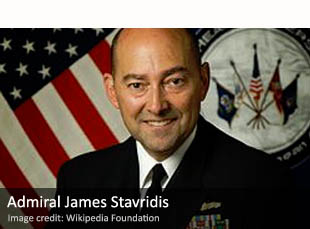
James G. StavridisBy JOSEPH FITSANAKIS| intelNews.org |
A Facebook account bearing the name of a senior commander of the North Atlantic Treaty Organization was set up by Chinese spies to siphon information from unsuspecting Western military officials, according to a British newspaper. The London-based Daily Telegraph said in an article that the fake Facebook account was discovered a year ago by NATO counterintelligence officers. It bore the name of United States Admiral James Stavridis, who serves as Supreme Allied Commander in Europe and currently leads the Organization’s mission in Libya. The account was reportedly used to befriend Western military officials, primarily in Britain and other European countries, probably in an attempt to collect personal information found on their personal pages on the popular social networking site. This sort of practice is known as ‘spear phishing’, and consists of messages sent to carefully targeted individuals, seemingly sent from a trusted source. The operation involving Admiral Stavridis appears to have been purposely targeted at high-ranking Western officials, a technique sometimes known as ‘whaling’. The London-based daily says NATO officials have been “reluctant to say publicly who was behind the attack”. But the paper claims it has been told that declassified briefings from NATO point to a series of Internet protocol addresses belonging to Chinese government facilities. Organization officials insist —correctly— that the individuals or government agencies behind the operation to falsify Stavridis’ social networking identity are unlikely to have acquired any actual military secrets. However, the information collected from Western military officials befriended online by Admiral Stavridis’ fake Facebook account could aid the compilation of personal and psychological profiles of these officials produced by foreign intelligence agencies. Read more of this post

News you may have missed #691

Thomas DrakeBy IAN ALLEN| intelNews.org |
►►NSA whistleblower says Obama worse than Bush. Thomas Drake, the whistleblower whom the administration of US President Barack Obama tried and failed to prosecute for leaking information about waste, fraud and abuse at the National Security Agency, now works at an Apple store in Maryland. In an interview with Salon, Drake says the Obama administration is “expanding the secrecy regime far beyond what Bush ever intended”.
►►Australian spies reportedly buying computer bugs. The Australian government is buying computer security weaknesses found by hackers before they are sold on the black market, as part of its defense strategy, according to an Australian security consultant who wishes to remain anonymous. He says while the government won’t admit it, buying vulnerabilities is an obvious part of “gathering intelligence”.
►►Refugees in Finland face spying threats. Foreign governments and groups are carrying out more spying on refugees and dissidents living in Finland, according to SUPO, the country’s security intelligence service. SUPO issued a report last week contending that while the Scandinavian country isn’t seeing an increased threat of terrorist acts on its soil, it still faces several terror-related challenges. One of them is “regular” surveillance activity by foreign intelligence services operating within Finland, whose aim is spy on their home countries’ dissidents and develop links with other refugees and expatriates.