News you may have missed #307

Bookmark and Share

Declassified MI5 files offer wealth of new information

Sophie Kukralova

Sophie Kukralova

By IAN ALLEN | intelNews.org |
Britain’s National Archives have authorized the release of nearly 200 files from the vaults of MI5, the country’s domestic intelligence service. The release of the documents, which range from 1937 to 1955, has given rise to numerous interesting historical revelations, including an apparent effort by German Hitler Youth groups to establish personal and institutional links with Lord Baden-Powell, founder and leader of the Boy Scouts. The relevant MI5 file notes that Baden-Powell, who was “wined and dined by senior Hitler Youth figures”, responded enthusiastically to the Nazi charm offensive. Other revelations include the Soviet sympathies of Sidney Bernstein, later Baron Bernstein, who founded Britain’s Granada Theatres (later Granada Television) in 1926. Read more of this post
Australia investigates more alleged Israeli spies

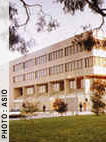
ASIO Headquarters in Canberra

ASIO HQ

By JOSEPH FITSANAKIS | intelNews.org |
The Australian Security Intelligence Organisation (ASIO) is among a number of Western intelligence agencies investigating at least three dual Australian-Israeli citizens, who are suspected of being Israeli spies. Citing “two Australian intelligence sources”, the Sydney Morning Herald said that the investigation into the three suspects began last year and is not connected to the January 19 assassination of Hamas official Mahmoud al-Mabhouh in Dubai. At least three of the 26-member Mossad hit squad that killed al-Mabhouh used forged Australian passports to enter and exit the United Arab Emirates. Read more of this post

Israeli agents tried to obtain Australian passports in 2004

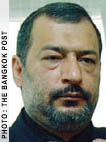
Ali Kazak

Ali Kazak

By IAN ALLEN | intelNews.org |
Yesterday’s revelation, that three members of the Mossad hit squad that assassinated Mahmoud al-Mabhouh in Dubai last January, used Australian passports, has shocked Australian public opinion. In reality, however, the Australian government had been warned in as early as 2004 that Israeli agents were trying to obtain Australian passports for use in international espionage operations. In March of that year, Ali Kazak, who was the Head of the General Palestinian Delegation to Australia and New Zealand, publicly revealed that Israeli Mossad agents had approached members of the Middle Eastern community in both countries, seeking to purchase usable passports. He even said that one Mossad agent active in Sydney had managed to acquire as many as 25 Australian passports before returning to Israel. Read more of this post

News you may have missed #297

Bookmark and Share

News you may have missed #0286

  • More on CIA spies working for corporations. Author Eamon Javers provides more information about his new book, in which he examines the increasing phenomenon of CIA agents working for private corporations on the side.
  • Rio Tinto spy controversy thickens. Anglo-Australian mining company Rio Tinto says it is “extremely worried” about four of its staff, who were arrested last July by Chinese authorities and have now been formally charged with espionage.
  • Court keeps White House spy emails secret. Two weeks ago, US President Barack Obama declared in his State of the Union address that “it’s time to require lobbyists to disclose each contact they make on behalf of a client with my administration or Congress”. This does not appear to apply to telecommunication industry lobbyists, who campaigned in favor of facilitating warrantless communications interception through the National Security Agency’s STELLAR WIND program.

Bookmark and Share

News you may have missed #0250

  • Pakistanis ask US to quit drone strikes. A Pakistani intelligence official has told the Associated Press that the response to the December 30 suicide bombing that killed seven CIA agents should not include intensifying unmanned drone strikes inside Pakistan. However, the CIA has reportedly “stepped up drone strikes” since the bombing.
  • Bush, Obama administrations guilty for neglecting info sharing. Thomas E. McNamara, former head of the US federal Information Sharing Environment, says the Bush and Obama administrations are both guilty of either losing interest or not focusing at all on promoting information sharing among often-secluded US government agencies.
  • China ends probe into Rio Tinto espionage case. Chinese prosecutors have now taken over the case of Stern Hu, the jailed boss of Anglo-Australian mining corporation Rio Tinto, after officials ended their investigation. Hu was arrested last July on espionage charges.

Bookmark and Share

Iran monarchists, foreign spies, behind suspicious news reports

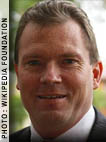
Mohammad Reza Madhi

M.R. Madhi

By IAN ALLEN | intelNews.org |
There is no question that the domestic security situation in Iran is critical, and that we may soon witness crucial political shifts in the Islamic Republic. At the same time, however, observers should be cognizant of what Politico’s Laura Rozen calls “a notable uptick […] in very fishy stories” forecasting the immediate end of the Islamic government by supposed radical Western-aligned forces. IntelNews has detected several such stories in recent days, such as this unconfirmed December 31 report in Israeli newspaper Ha’aretz, which stated that the Iranian government was moving “[h]undreds of military forces and tens of armored vehicles towards Tehran”, something which never actually occurred. Two days earlier, a report in Dutch government-owned Radio Netherlands had suggested that members of Iran’s Supreme National Security Council, including Supreme Leader Sayyid Ali Khamenei, were preparing to abandon the country and seek political asylum in Russia. Read more of this post

Spy agencies closely monitoring climate change talks

Defence Signals Directorate logo

DSD logo

By JOSEPH FITSANAKIS | intelNews.org |
I have written before about the increasing involvement of intelligence agencies in ongoing climate change negotiations between the world’s governments. In October, the CIA announced the establishment of its Center on Climate Change and National Security, despite fierce opposition by Republican lawmakers. Earlier this month, it was alleged that the hackers who stole and leaked onto the Internet hundreds of University of East Anglia’s Climatic Research Unit emails were operating via a Russian military and security network, a claim that has been disputed by the Russian FSB (Federal Security Service). However, a recent article in Australian daily The Canberra Times provides the first mainstream indication that a Western intelligence agency is “giving top priority” to the 2009 United Nations Climate Change Conference currently taking place in Denmark. Read more of this post

News you may have missed #0217

Bookmark and Share

News you may have missed #0206

Bookmark and Share

News you may have missed #0196

  • Legal problems facing CIA are no laughing matter. They include two criminal investigations by the US Justice Department, persistent inquiries by the Senate Select Committee on Intelligence, as well as legal challenges from “war on terrorism” detainees.
  • Aussie computer networks “most certainly” spied on. The Australian federal government’s computer network has “almost certainly” been targeted by cyber-spies from other countries, according to attorney general Robert McClelland. “In some incidents nation states [are responsible]”, he told reporters.
  • US still considering extraditing Philippine spy. A judge has yet to rule on whether Michael Ray Aquino, a former Philippine National Police intelligence officer who served prison time for passing classified US government documents to the Philippine opposition, will be extradited to face murder charges back home. See here for more on this strange case.

Bookmark and Share

Book claims CIA turned blind eye on Pakistan’s post-9/11 terror links

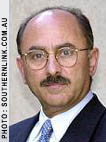
Jean-Louis Bruguiere

J.L. Bruguiere

By JOSEPH FITSANAKIS | intelNews.org |
A new book by France’s former leading investigating magistrate on counterterrorism affairs alleges that the CIA allowed the Pakistani army to train members of a notorious Islamist militant group, even after 9/11. In the book, entitled Ce que je n’ai pas pu dire (The Things I Would Not Utter), Jean-Louis Bruguiere says the US spy agency was aware that Pakistani army trainers worked with Lashkar-e-Taiba, a Pakistani group responsible for a series of sophisticated strikes in India, including the 2008 Mumbai attacks. The former magistrate bases his allegations on official testimony provided by Willy Brigitte, a French citizen from Guadeloupe, who was arrested in Australia in 2003, in connection with Lashkar-e-Taiba activities there. Soon after the US invasion of Afghanistan, Brigitte traveled to Pakistan aiming to join the Taliban insurgency, but was unable to cross the Pakistani-Afghan border. Read more of this post

News you may have missed #0182

  • China to keep Rio Tinto boss in prison. The Chinese government has extended (again) by two months a probe into Stern Hu, the jailed boss of Anglo-Australian mining corporation Rio Tinto. Hu was arrested by the Chinese last July on espionage charges.
  • Czech spy agency objects to outing Cold War agents. Recently a Czech research center published an extensive list of names of agents of StB, the country’s main intelligence agency in the communist era. But StB’s post-communist successor, the ÚZSI, condemned the airing of the names, calling it “a massive violation of protection of sources that is part of intelligence work, which also may have a negative impact on the Czech Republic’s [current] interests”.
  • Iran reportedly creates new domestic spy agency. A radical dissident Iranian group in Paris, with known ties to Washington, claims the Iranian regime has undertaken “the largest overhaul of the [country’s] intelligence structure since 1989”.

Bookmark and Share

Australian premier in ministerial spying scandal

Nathan Rees

Nathan Rees

By IAN ALLEN | intelNews.org |
The premier of Australia’s state of New South Wales has been accused of trying to spy on local government officials by planning to install telephone surveillance equipment in their work offices. Nathan Rees, a Labour Party politician, who is one of six Australian state chief executives, is reportedly planning to employ phone-tracking software in an attempt to “put the screws on suspected dissidents” within his cabinet. The technology in question appears to be a real-time phone call data monitoring system, which records basic information of telephone exchanges (i.e. who calls whom, at what time, etc), but not their content. According to The Sydney Morning Herald, Rees’ envoys have already contacted at least one telephone surveillance equipment provider, KNet Technology, whose representatives say they briefed the Premier’s people. Read more of this post