Founder of Polish special forces unit found shot dead in Warsaw

Slawomir PetelickiBy JOSEPH FITSANAKIS | intelNews.org |
Polish authorities have launched an official investigation into the death of a senior retired military intelligence officer who founded Poland’s best-known special forces unit. The body of Brigadier General Slawomir Petelicki, who held senior intelligence positions in both communist and post-communist Poland, was discovered by his wife on Saturday. It was reportedly lying on a pool of blood on the floor of the garage located under his apartment in the Mokotow district of Polish capital Warsaw. Polish media said on Monday that Petelicki’s body carried a single gunshot wound to the head and that a gun was found at the site. Petelicki, 66, had joined Poland’s Ministry of Internal Affairs in 1969 and was soon afterwards posted as a “Military Attaché” at the Polish consulate in New York. He later served in a similar capacity at the Polish embassy in Stockholm, Sweden, as well as in China and North Vietnam, among other countries. He managed to survive the post-communist purges in Poland’s intelligence community, and in 1990 he was assigned to a brand new special forces unit codenamed JW 2305. Through his leadership, the obscure unit was eventually transformed into the GROM (meaning ‘thunder’ in Polish) Special Forces regiment, which he led from 1990 until 1995. Initially, the existence of GROM was kept secret and was not openly acknowledged by the Polish government until 1994. Polish authorities said on Monday that they were treating Petelicki’s death as a case of suspected suicide. But many of the late intelligence officer’s colleagues and friends have voiced skepticism about the alleged suicide, claiming that the Brigadier General had not seemed depressed, and that he was not the kind of person who would contemplate taking his own life. Read more of this post

News you may have missed #743 (espionage edition)

Vladimir LazarBy IAN ALLEN | intelNews.org |
►►Denmark professor jailed for spying. Timo Kivimäki a Finnish professor of international politics in Copenhagen, Denmark, has been sentenced to five months in prison for spying, following a trial held behind closed doors, from which even the verdict was not released. Several Russian diplomats left Denmark after the start of the spy case and, according to Danish media, Kivimäki’s lawyer, Anders Nemeth, had attempted to have them return to act as witnesses.
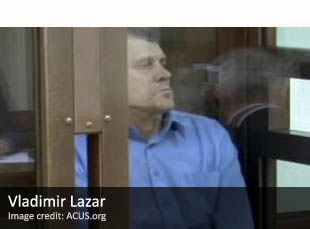
►►Retired Russian colonel convicted of spying for US. A Russian court has ruled that retired Colonel Vladimir Lazar spied for the US, and sentenced him to 12 years in prison. Lazar will be sent to a high-security prison and stripped of his military rank, the Federal Security Service said in a statement. Prosecutors said Lazar purchased several computer disks with more than 7,000 images of classified maps of Russia from a collector in 2008 and smuggled them to neighboring Belarus, where he gave them to an alleged American intelligence agent.
►►India arrests military intel staffer for spying. The soldier, identified only as Shivdasan, worked for the Indian Army’s Technical Support Division, which is a newly founded unit within Indian Military Intelligence. He was reportedly trapped by the Indian Directorate of Revenue Intelligence in an elaborate operation that involved a “double agent” and a relative of the soldier in Dubai.
How an ambitious Nazi spy operation in the US ended in failure

Norden bombsightBy IAN ALLEN | intelNews.org |
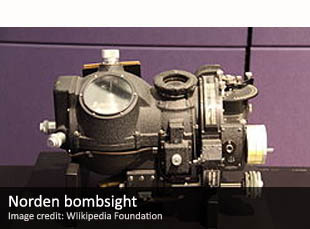
A well-researched article in The Chicago Tribune revisits one of the least known covert action episodes of World War II, which involved an ambitious Nazi espionage operation on US soil. The article, written by Ron Grossman, centers on Herbert Haupt, one of several American citizens and Nazi sympathizers, who were involved in the ruse. The German-born Haupt grew up in Chicago’s North Side and was working in West Garfield Park, at a factory that produced parts used for the Norden bombsight. The Norden bombsight was a sophisticated device that calculated the trajectory of a bomb dropped by an airplane, based on real-time flight conditions; moreover, it was connected to the aircraft’s autopilot, and was thus able to alter bomb trajectories according to changes in the wind, altitude, aircraft speed, or other effects. The Norden bombsight facilitated unprecedented bombing accuracy from high altitudes, and was thus rightly considered one of America’s most highly valued military secrets. In 1941, shortly before the United States entered World War II, Haupt took a leave of absence from his factory job and disappeared from the streets of Chicago’s North Side. It was later revealed that he traveled to Mexico City and presented himself at the German embassy there, offering to conduct espionage work for Nazi Germany. After securing a sum of money from German embassy officials, Haupt sailed to Japan and eventually made his way to Germany. A few months later, he illegally re-entered the US, sailing on a German U-boat that landed secretly in Florida carrying four German agents, all fluent English speakers. A second U-boat, carrying another four German agents, had landed almost simultaneously on Long Island. Haupt’s mission was to reenlist at the Norden bombsight factory in Chicago, so as to provide Nazi Germany with access to the top-secret device. Read more of this post

News you may have missed #734

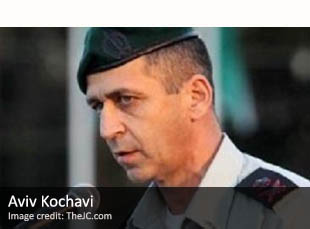
Aviv KochaviBy IAN ALLEN | intelNews.org |
►►Australian spy agency in rent dispute. The Australian government insists there is no dispute over the lease of the new, state-of-the-art headquarters of the Australian Security Intelligence Organisation, which cost nearly A$589 to build. But according to a number of government sources, the property has become the subject of a standoff between the ASIO and Australia’s Department of Finance and Deregulation. The Canberra Times reports that the Finance Department has told ASIO it will have to hand over more money than anticipated because of a blowout to building costs and timing. But the ASIO is refusing to pay more than initially agreed.
►►US unveils spy model of bin Laden compound. The United States intelligence community has unveiled a scale model of the compound in Abbottabad, Pakistan, where Osama bin Laden spent the last few years of his life in hiding. The model was built by the National Geospatial-Intelligence Agency (NGIA) and used by military and intelligence leaders to plan the daring night raid on May 2, 2011, that killed the al Qaeda founder. Its scale is an exact 1:84; every tree, bush, wall, animal pen, trash can and physical structure in the model existed at one time at the original compound in Abbottabad.
►►Israel military intelligence head in secret US visit. Israeli military intelligence chief Aviv Kochavi made a “secret visit” to Washington earlier this month to discuss the upcoming talks between world powers and Iran. An Israeli security official confirmed the visit, which was reported in Israel’s Haaretz newspaper, but could not provide further details. Meanwhile, three senior IDF intelligence officers resigned recently, following what they called “questionable” appointments to key positions. The three colonels held some of the most senior and classified positions in the Israeli military intelligence community.

Russia charges engineer with spying for foreign agency

The R-30 BulavaBy JOSEPH FITSANAKIS | intelNews.org |
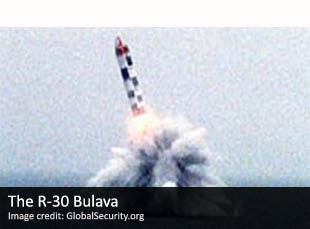
Russian authorities have charged an engineer working at a top-secret military facility in the Urals with espionage, accusing him of passing classified information about Russian ballistic missiles to agents of a foreign government. According to the InterFax news agency, which has strong links with the Russian government, the engineer had disclosed “secret data [and] state secrets concerning the area of strategic defense systems “. The Moscow-based news agency quoted an unnamed “Russian law enforcement official” who said that the accused spy worked at a critical research and development position inside a “restricted government facility that develops missile technology”. The source told InterFax that the alleged spy was working on the Russian R-30 Bulava ballistic missile, which is said to be in its final development stage. The R-30 Bulava (the Russian word for “mace”) is the name for Moscow’s latest-generation submarine-based ballistic missile technology. It is widely considered to be one of the future cornerstones of Russia’s nuclear weapons capability, and is thought to be the most expensive weapons project currently being developed in the country. The missile was approved for production last year, and is expected to come to service this coming October, when it will begin to replace Russia’s Soviet-era stock of submarine-launched nuclear missiles. The program is strongly linked to the country’s Borei-class ballistic-missile-capable nuclear submarines, which are expected to be able to launch the R-30 Bulava while underwater and in motion. Read more of this post

Israel accused of spying on Turkish fighter-pilot communications

Turkish Air Force F-16sBy JOSEPH FITSANAKIS | intelNews.org |
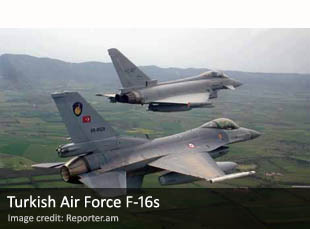
Authorities in Turkey have reportedly initiated a classified program to encrypt communications between Turkish fighter pilot trainees and their ground command centers, after it emerged that their conversations were being intercepted by Israeli intelligence. The allegations were aired earlier this week by Turkey’s Habertürk newspaper, which said that Israeli military intelligence had managed to “wiretap” (sic) for over a year radio exchanges between the Turkish pilots and their ground instructors. The Ankara-based newspaper claims that the Israelis had specifically targeted the 3rd Main Jet Base Group Command, in Konya, in Turkey’s Central Anatolia region. Konya, the birthplace of Turkey’s Minister of Foreign Affairs, Ahmet Davutoğlu, hosts one of the country’s most active naval bases, where hundreds of pilots undergo initial training in flying F-16 fighter jets. Upon completing their training, they are required to undergo intensive combat readiness training, before entering the ranks of the Turkish Air Force (TSK) as full fighter pilots. According to Habertürk, the aim of the Israeli interceptors was to uncover “details about the TSK’s training programs and flight strategies”. The paper claims that the discovery of the Israeli communications interception program prompted Turkish engineers to begin developing software specifically designed to encode communications between fighter jets and ground command facilities. Read more of this post

News you may have missed #719

Benny GantzBy IAN ALLEN | intelNews.org |
►►Iran says it has cracked US spy drone secrets. Iran claims it has cracked the encryption on the computer software onboard a US RQ-170 Sentinel drone which crashed in the country in December. General Amir Ali Hajizadeh, head of the Revolutionary Guards aerospace division, said engineers were decoding the last pieces of data from the spy plane, which came down near the Afghan border. An Iranian defense official recently said that Tehran has had several requests for information on the craft and that China and Russia have shown an interest.
►►Israel steps up covert operations says defense chief. Israel’s defense chief, Lieutenant General Benny Gantz, has confirmed his forces are carrying out increased special operations beyond the country’s borders. In an interview published on Wednesday to mark the eve of Israel’s Independence Day, Gantz said Israel was ready to attack Iran’s nuclear sites if ordered to do so. But he added that did not mean he was about to order the air force to strike. He also said that he had increased the number of covert Israeli operations in other countries, but gave no details. “I do not think you will find a point in time where there is not something happening, somewhere in the world”, he said.
►►US Pentagon plans new intelligence-gathering service. The US Pentagon is revamping its spy operations to focus on high-priority targets like Iran and China in a reorganization that reflects a shift away from the war zones of Iraq and Afghanistan that have dominated America’s security landscape for the past decade. Under the plan approved last week by Defense Secretary Leon E. Panetta, case officers from the new Defense Clandestine Service would work more closely with counterparts from the Central Intelligence Agency at a time when the military and spy agency are increasingly focused on similar threats.

News you may have missed #679

Salem al-HassiBy IAN ALLEN | intelNews.org |
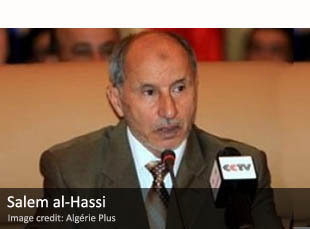
►►New spy chief in Libya. Libya’s ruling National Transitional Council yesterday appointed a lifelong opponent of slain Libyan leader Muammar Gaddafi as the country’s new intelligence chief. Salem al-Hassi, who was involved in a bid to assassinate Gaddafi in 1984, was appointed as the intelligence chief at a meeting of the council.
►►Anonymous hackers release German classified information. Hackers from the group Anonymous said last week they had accessed classified German files and posted them online, revealing details of the country’s military operations in Afghanistan. The military documents were collected for an inquiry, now finished, into a September 2009 airstrike by US jets under German orders that killed more than 140 Taliban fighters and Afghan civilians. Anonymous said it obtained the data from a server at the Bundestag  (German parliament).
►►Did Chinese espionage lead to F-35 delays? Did Chinese cyber spying cause the United States’ F-35 Joint Strike Fighter’s cost spikes and production delays? This is the question being asked by US Pentagon budget officials, according to industry magazine Aviation Week. Chinese spies apparently hacked into secure conference calls and listened to meetings discussing the classified technologies aboard the jets. In particular, China may have stolen info about the F-35’s secure communications and antenna systems, leading to costly software rewrites and other redesigns to compromised parts of the plane.

News you may have missed #654

Aleksandr ShlyakhturovBy IAN ALLEN | intelNews.org |
►►Anonymous hacks intel analysis firm StratFor. The loose-knit hacking movement Anonymous claimed Sunday via Twitter that it had stolen thousands of credit card numbers and other personal information belonging to clients of intelligence analysis firm Stratfor. The company had apparently failed to encrypt its customers’ credit card account information. The hackers announced their intention to use the credit cards for charitable donations.
►►CIA Inspector General clears assistance with NYPD. Back in August, The CIA denied allegations by the Associated Press that it helped the New York Police Department conduct covert surveillance on New York Muslims. The agency said the report “mischaracterized the nature and scope” of the CIA’s support for the NYPD. Now a report by the office of the CIA Inspector General, the CIA’s internal watchdog, has concluded that there was “no evidence that any part of the agency’s support to the NYPD constituted ‘domestic spying’”. The Associated Press notes that it is not clear if this report opens the door for other municipal police departments nationwide to work closely with the CIA in the war on terrorism.
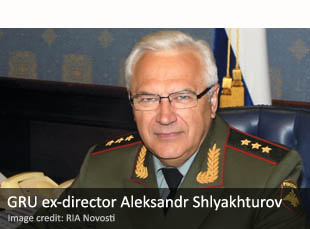
►►Russia replaces head of military spy agency. After denying initial rumors, Russia’s Defense Ministry said on Monday that “Major General Igor Sergun has been appointed head of the GRU [Russia’s Main Intelligence Directorate] through a Kremlin decree”. Sergun replaces Aleksandr Shlyakhturov, who had spearheaded a shake-up of the service since his appointment in 2009. The state RIA Novosti news agency quoted a ministry spokesman suggesting that Shlyakhturov had reached retirement age. No other reason was given for the move. Incidentally, if you are wondering how spies are faring in Dmitri Medvedev’s and Vladimir Putin’s administration, read this enlightening analysis by Mark Galeotti, Professor of Global Affairs at New York University.

Comment: Is China the New Spy Superpower?

US and China

US and China

By JOSEPH FITSANAKIS* | intelNews.org |
In fifteen years of monitoring intelligence-related developments, I have rarely seen so many news items about China appear simultaneously in the Western press, as I did during the past fortnight. On December 5, financial news network Bloomberg reported that the United States government invoked “Cold War-era national security powers” to compel telecommunications companies operating on American soil to disclose confidential data about their networks. The plan, spearheaded by the US Department of Commerce, but undoubtedly prompted and monitored by the National Security Agency, features a detailed survey distributed to dozens of telecommunications service providers, as well as hardware and software developers. The latter are reportedly required to supply “a detailed accounting” of every piece of “foreign-made hardware and software” installed on their networks, in a move that Bloomberg interprets as “a hunt for Chinese cyber-spying”. A few days later, intelligence researcher and author David Wise opined in The New York Times that the West had better recognize that China “has developed a world-class espionage service —one that rivals the CIA”. He qualified his statement by providing several examples of major espionage triumphs achieved by the Chinese intelligence services in the last decade, such as the acquisition of design blueprints for the US-built B-1 bomber and Northrop Grumman’s B-2 stealth bomber. Other examples given by Wise include China’s attainment of the design specifications for the US Navy’s Quiet Electric Drive system, aimed at enhancing the stealth abilities of submarines, as well as the remains of the modified Black Hawk helicopter that crashed in Abbottabad, Pakistan, during the CIA-led operation to assassinate al-Qaeda founder Osama bin Laden last May. Most of all, Wise laments the acquisition by the Chinese of the design specifications for the W-88 warhead, the symbol of America’s next-generation of mini-nuke weapons. Read more of this post

News you may have missed #642

Predator drone

Predator drone

►►Australia concerned China using civilian satellites to spy. Concerns that China may use civilian satellite tracking stations to monitor Australian military operations have been dismissed by the Swedish Space Corporation. The company owns and operates two satellite tracking stations 400 km north of the West Australian capital, Perth. One was used by the China Satellite Launch Company last month in China’s first space docking operation.
►►Did Iran capture US stealth drone intact? For the second time this year, the Iranian government is claiming it forced down a stealthy US Air Force spy drone. Only this time, it says it bagged the RQ-170 “with little damage” by jamming its control signal —a potentially worrying development for American forces heavily reliant on remote-controlled aircraft. A US official, who asked not to be named, told Reuters that “there is absolutely no indication up to this point that Iranians shot down this drone”.
►►Canadian Mounties spied on native protest groups. Canada’s federal government created a vast surveillance network in early 2007 to monitor protests by First Nations, including those that would attract national attention or target “critical infrastructure” like highways, railways and pipelines, according to RCMP documents. The RCMP intelligence unit reported weekly to approximately 450 recipients in law enforcement, government, and unnamed “industry partners” in the energy and private sector. The news follows revelations last month of the RCMP’s largest-ever domestic intelligence operation, aimed against G8 and G20 protesters.

News you may have missed #550

Sukhoi-27 jets

Sukhoi-27 jets

►►Chinese fighters chased US spy plane into Taiwan. It has been revealed that, late last June, The Taiwanese Ministry of National Defense sent two F-16 fighters to intercept a two Chinese Sukhoi-27 jets that crossed into its airspace, while pursuing an American U-2 reconnaissance plane. It was the first time that Chinese jets breached Taiwan’s airspace since 1999. The Pentagon declined to confirm the report, but some in Washington must have had flashbacks of the 2001 Hainan Island incident.
►►Israel arrests four of its soldiers for sabotaging spy gear. This story is interesting on numerous levels: according to a statement by the IDF’s Northern Command, Israeli military authorities plan to prosecute four Israeli female soldiers for repeatedly shutting off unspecified surveillance equipment designed to collect intelligence from neighboring Lebanon. When faced with the accusations, the soldiers apparently told their commanders that “they worked under very difficult conditions and couldn’t bear the pressure”.
►►Turkish national convicted for spying in Ukraine. Ukrainian prosecutors say Read more of this post

News you may have missed #515

  • US spies tracked suspected terrorists in Sweden. US intelligence agents have staked out suspected terrorists in Sweden without the authorization of the government there, Svenska Daglbadet newspaper has reported. Last November, Norway, Sweden and Denmark launched official investigations into reports that US embassies there operated illegal intelligence-gathering networks.
  • Aussie spy agency reported on WikiLeaks. Australian Prime Minister Julia Gillard’s department has revealed that WikiLeaks and its founder, Julian Assange, were the subject of Australian intelligence reporting last year, as the government anticipated the whistleblower website would spill “highly sensitive and politically embarrassing” secrets.
  • Former Taiwanese general accused of spying. Taiwanese government prosecutors are seeking a life sentence for Major General Lo Hsien-che, the most senior Taiwanese official to be arrested on espionage charges in the country since the early 1960s.

News you may have missed #513 (Pakistan edition)

  • Pakistan spy chief tells US to end drone strikes. Ahmed Shuja Pasha, the outgoing director of Pakistan’s Inter-Services Intelligence (ISI), has reportedly told CIA Deputy Director Michael Morell that Pakistan “will be forced to respond” if the US does not stop its drone strikes in the country.
  • CIA-ISI back in business. Overall, however, the meeting between Pasha and Morell was focused on mending CIA-ISI relations, according to Pakistan’s leading newspaper The Nation.
  • Leaked cables reveal joint US-Pakistan missions. US Special Forces were embedded with Pakistani troops on intelligence-gathering missions by 2009, confidential American diplomatic cables showed, a revelation that could hurt the Pakistani military’s public image. The Pakistani government has denied the reports.

News you may have missed #511