News you may have missed #811

Efraim HalevyBy IAN ALLEN | intelNews.org |
►►Former Mossad chief pushes for dialogue with Iran. After Meir Dagan, another former chief of Israeli intelligence agency Mossad has publicly called for a dialogue between the West and Iran. Speaking to Al-Monitor, an American website covering Middle-East news, Halevy, who directed the Mossad from 1998 to 2002, said that “the Iranians, in their heart of hearts, would like to get out of their conundrum”. IntelNews readers may remember Halevy’s comments in August, when he warned that Israel’s threats of a military attack on Iran were “credible” and “serious”, adding that, if he were an Iranian, he would be “very fearful of the next 12 weeks”.
►►UK says attack on Iran ‘not right course at this time’. The British government has reiterated that it does not believe military action against Iran would be appropriate at the moment, following the disclosure that Britain has rebuffed US requests to use UK military bases to support the buildup of forces in the Gulf. US diplomats have lobbied for the use of British bases in Cyprus, and for permission to fly from US bases on Ascension Island in the Atlantic and Diego Garcia in the Indian Ocean, both of which are British territories.
►►German spy agencies disclose spy tools in rare move. Most law enforcement agencies refuse to reveal the surveillance technologies they use, claiming doing so could threaten national security. But authorities in Germany have shown it is possible to be transparent without the sky falling in —by disclosing how they have spent millions on spy tools to help monitor Skype, email, and mobile phones. Earlier this year, German politician Jan Korte submitted a series of written questions to the country’s federal ministry of home affairs regarding surveillance tools. The answers Korte received were published in German in July, but have only this month been translated (.pdf) into English.

Irish police uncover Real IRA surveillance ring

Real IRA paradeBy JOSEPH FITSANAKIS | intelNews.org |
Police in the Republic of Ireland have arrested two men suspected of spying on the operational headquarters of the Garda Siochana (Irish Police) in Dublin. The two men, aged 41 and 32, who have not been named, were arrested after one of them was recognized by police officers as a known member of the Real Irish Republic Army. The Real IRA, or RIRA, is an Irish republican paramilitary organization formed in 1997, following a split in the Provisional IRA — the armed wing of Sin Fein. It seeks to bring about a united Ireland, but is considered a terrorist group by the United Kingdom and the United States, among other countries. Gardai officers discovered that the Real IRA suspect had used a false name to book a room in a hotel directly overlooking the regional headquarters of the Gardai on Harcourt Street. The building houses, among other police units, the Gardai’s Special Branch and the Criminal Assets Bureau, both of which are used to investigate paramilitary activity in the Republic. Upon searching the room, Gardai officers reportedly found “hi-tech surveillance equipment”, including parabolic microphones and digital cameras. Anonymous Gardai sources claim the equipment was used to eavesdrop on conversations held inside the Gardai building across the street, and to record the license tags of private vehicles belonging to Gardai personnel. Read more of this post

News you may have missed #773

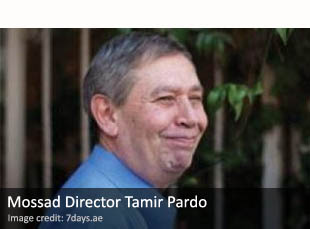
Tamir PardoBy IAN ALLEN | intelNews.org |
►►Conflicting reports on CIA-ISI meeting. Lieutenant General Zahir ul-Islam, who heads Pakistan’s premier intelligence agency, the ISI, held talks in Washington with his CIA counterpart General David Petraeus, between August 1 and 3. It was the first time in a year that the chief of the ISI made the trip to the US, signaling a possible thaw in relations. Depending on the source, the meeting was either “substantive, professional and productive”, or “made no big strides on the main issues”.
►►Senior Mossad official suspected of financial misconduct. A senior Mossad official is suspected of financial misconduct and has been forced to take a leave of absence until Israeli police complete an investigation into his alleged deeds, Israeli media reported on Sunday. The official, a department head in Israel’s spy organization, has reportedly denied any wrongdoing, but sources said he would likely not be reinstated in light of investigation findings and is effectively being forced to retire. The nature of the official’s alleged misconduct has not been reported, but it is said that the official in question has close ties to Mossad Director Tamir Pardo, who appointed him to his position last year.
►►Ex-NSA official disputes DefCon claims by NSA chief. William Binney, a former technical director at the NSA, has accused NSA director General Keith Alexander of deceiving the public during a speech he gave at the DefCon hacker conference last week. In his speech, Alexander asserted that the NSA does not collect files on Americans. But Binney accused Alexander of playing a “word game” and said the NSA was indeed collecting and indexing e-mails, Twitter writings, Internet searches and other data belonging to Americans. “The reason I left the NSA was because they started spying on everybody in the country. That’s the reason I left”, said Binney, who resigned from the agency in late 2001.

News you may have missed #763

RedHack posterBy IAN ALLEN | intelNews.org |
►►Taiwan ex-colonel nabbed for spying for China. Cheng Lin-feng, a retired Lieutenant Colonel in the Taiwanese army, and civilian Tsai Teng-han, were taken in by Taiwanese police last week on suspicion of spying for China. Cheng was allegedly recruited by Chinese intelligence when he travelled to the mainland to do business, Taiwan’s Ministry of National Defense said in a statement, adding that he had been investigated ever since a tip-off in 2009. A court spokesman said that details of case will be held until the investigation is completed.
Russian law brands foreign-funded NGOs ‘foreign agents’. Russia’s Lower House of Parliament has approved a bill that brands non-governmental organizations receiving funding from abroad as “foreign agents”, a law that activists fear the Kremlin will use to target critics. The bill is almost certain to be approved by the Upper House before being signed into law by President Vladimir Putin, who last year accused the US State Department of funding protests against him. The bill is seen by many analysts as setting up a legal infrastructure for a crackdown on the opposition. Meanwhile, official statistics show that wiretapping in the Russian Federation has nearly doubled over the past five years. The main driver of the rise, analysts say, involves the myriad of Russia’s rival security services spying on each other.
►►Turkish hackers release names of police informants. Members of Turkey’s Marxist cyberactivist group RedHack have dumped online a 75-megabyte text file with thousands of emails from Turkish police informants. The group said it released the information in retaliation against ultra-nationalist hackers who have been threatening opposition academics and journalists. RedHack, which has been using ‘defacement hacking’ to promote a Marxist political agenda since its founding, in 1997, is included on the Turkish government’s list of terrorist organizations. In March of this year, RedHack stole data from the Turkish police’s network, forcing the police to shut down all its servers.

Situation Report: CIA venture group funds video recorder firm

In-Q-TelBy TIMOTHY W. COLEMAN | intelNews.org |
On June 27, In-Q-Tel, the venture arm of the Central Intelligence Agency and other members of the United States intelligence community, announced a strategic partnership with Looxcie, makers of the first ever “wear and share” videocam recorders. The financial terms of the deal were not disclosed. In-Q-Tel, created in 1999, is the foremost strategic investor on behalf of the US Intelligence Community. Originally called “Peleus”, In-Q-Tel was initially associated with the CIA’s Directorate of Science and Technology (DS&T).  Interestingly enough, the “Q” in In-Q-Tel’s branding is apparently derived from a fictional character in the James Bond movies referred to as “Q”.  As many movie fans will recall, “Q” was responsible for outfitting Bond and other 00s with the famed and awe-inspiring gadgetry and technical equipment needed for missions. Having evolved from the CIA’s DS&T, whose primary purpose is to “create, adapt, develop and operate technical collection systems and apply enabling technologies to the collection, processing and analysis of information”, In-Q-Tel’s strategic investments in dual-purpose technology firms is hardly surprising. In fact, In-Q-Tel has a notable track record, especially given the fact that it is a government-run venture capital fund. Successful as it may be, In-Q-Tel represents itself quite humbly, formally explaining that it is a “not-for-profit organization […] created to bridge the gap between the technology needs of the Intelligence Community and new advances in commercial technology”. Read more of this post

News you may have missed #739

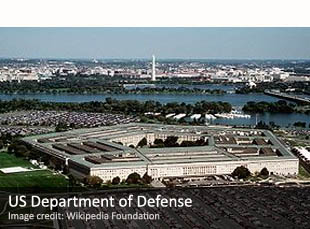
The US Department of DefenseBy IAN ALLEN | intelNews.org |
►►US Supreme Court to consider case on secret wiretapping. The Supreme Court has agreed to consider blocking a constitutional challenge to the government’s secret wiretapping of international phone calls and emails. At issue is whether Americans who have regular dealings with overseas clients and co-workers can sue to challenge the sweep of this surveillance if they have a “reasonable fear” their calls will be monitored. The case, to be heard in the fall, will put a spotlight on a secret surveillance program that won congressional approval in the last year of President George W. Bush’s presidency.
►►Analysis: Why is CIA applauding DoD’s intel grab? Last month, Director of National Intelligence James Clapper and Secretary of Defense Leon Panetta announced the creation of a new US espionage agency: the Defense Clandestine Service, or DCS. The new agency is expected to expand the Pentagon’s espionage personnel by several hundred over the next few years, while reportedly leaving budgets largely unchanged. The news nonetheless surprised some observers in Washington because the move appeared, at least initially, to be a direct challenge to the Central Intelligence Agency, whose National Clandestine Service leads the country’s spy work overseas. Then came a second surprise: former CIA officers and other intelligence experts started applauding. The question is why.
►►FBI forms secretive online surveillance unit. On May 22, CNet’s Declan McCullagh revealed that the FBI had quietly formed a new Domestic Communications Assistance Center (DCAC), tasked with developing new electronic surveillance technologies, including intercepting Internet, wireless, and VoIP communications. According to McCullagh, DCAC’s goal is “to invent technology that will […] more readily eavesdrop on Internet and wireless communications”. Read more of this post

Scandinavian phone company helps ex-Soviet republics spy on citizens

TeliaSonera CEO Lars NybergBy JOSEPH FITSANAKIS | intelNews.org |
A highly profitable cellular telecommunications company, which is jointly owned by a Swedish-Finnish public-private consortium, is enabling some of the world’s most authoritarian regimes to spy on their own citizens, according to a new report. TeliaSonera AB, the dominant telephone company and mobile network operator in Sweden and Finland, is currently active in nearly 20 countries around the world. In 2011, it posted a net profit of nearly $3 billion, 25 percent of which came from the company’s operations in countries of the former Soviet Union. They include some of TeliaSonera’s most lucrative franchises, such as Geocell in Georgia, Kcell in Kazakhstan, Ucell in Uzebekistan, Tcell in Tajikistan, and Azercell in Azerbaijan, among others. But a new investigation by Sweden’s public broadcaster, Sveriges Television AB  (SVT), accuses TeliaSonera of knowingly giving some of the world’s most oppressive governments the means to spy on their own citizens. The report, which is available online in English, effectively states that TeliaSonera is directly complicit in some of the world’s most severe human rights abuses. The accusation is bound to cause embarrassment among senior officials in the Swedish government, which owns nearly 40 percent of TeliaSonera’s stock. The SVT investigation singles out Uzbekistan, Belarus and Azerbaijan, where TeliaSonera operates monopoly cellular networks on behalf of the state, “in exchange for lucrative contracts”. While running the networks, TeliaSonera allegedly grants local intelligence agencies complete and real-time access to the all telephone calls, pen-register data, and content of text messages exchanged by users. This, says the SVT report, has in turn facilitated several arrests of pro-democracy activists and political dissidents in countries like Belarus and Azerbaijan. Read more of this post

News you may have missed #714

Tjostolv Moland and Joshua FrenchBy IAN ALLEN | intelNews.org |
►►British PM urged to intervene in Congo spy case. The mother of Joshua French, who has dual British and Norwegian nationality, and is facing execution in the Democratic Republic of Congo, has urged British Prime Minister David Cameron to ask Congolese authorities to pardon him. French, and his Norwegian friend Tjostolv Moland, were sentenced to death for murder and spying in the vast central African country in 2009. A prison official claimed in August last year that the pair had tried to escape, but their lawyer denies this.
►►Computers of Syrian activists infected with Trojan. Since the beginning of the year, pro-Syrian-government hackers have steadily escalated the frequency and sophistication of their attacks on Syrian opposition activists. Many of these attacks are carried out through Trojans, which covertly install spying software onto infected computers, as well as phishing attacks which steal YouTube and Facebook login credentials. According to the Electronic Frontier Foundation, the latest surveillance malware comes in the form of an extracting file which is made to look like a PDF if users have their file extensions turned off. The PDF purports to be a document concerning the formation of the leadership council of the Syrian revolution and is delivered via Skype message from a known friend.
►►Report claims Australian government spied on anti-coal activists. The leader of the Australian Greens, Bob Brown, says he is outraged at reports that the Australian Security Intelligence Organisation (ASIO) is spying on mining protesters, and says such action is a misuse of the spy agency’s resources. The revelations were reported in Australian newspapers yesterday, and are based on a Freedom of Information request to the Department of Resources, Energy and Tourism that was reportedly rejected because it involved “an intelligence agency document”. The ASIO says it cannot confirm whether it has conducted surveillance of anti-coal protesters, but it says it does not target particular groups or individuals unless there is a security-related reason to do so.

News you may have missed #636

Lebanon

Lebanon

►►Careless codeword may have cost CIA its Lebanon network. Hezbollah have reportedly just rolled up the CIA’s network of spies in Lebanon. If so, it’s because of one of the stupidest, least secure code words in history. According to ABC News, Hezbollah operatives figured out that CIA informants, who had infiltrated the Iranian proxy group, were meeting with their agency handlers at a Beirut Pizza Hut. How could Hezbollah deduce that location? “The CIA used the codeword ‘PIZZA’ when discussing where to meet with the agents,” ABC reports.
►►UK spy chiefs to be publicly questioned for first time. The heads of British intelligence agencies are set to be questioned for the first time in public, under plans to make spies more accountable. The directors of MI5, MI6 and GCHQ will face Parliamentarians on the Intelligence and Security Committee. Although, they have recently begun to make rare public appearances, and deliver speeches, it will be the first time the intelligence agency heads will face public cross-examination over their activities.
►►Documents reveal largest domestic spy operation in Canadian history. Police organizations across Canada co-operated to spy on community organizations and activists in what the Royal Canadian Mounted Police called one of the largest domestic intelligence operations in Canadian history, documents reveal. Information about the extensive police surveillance in advance of last year’s G8 and G20 meetings in southern Ontario comes from evidence presented in the case of 17 people accused of orchestrating street turmoil during the summits.

Leaked documents show capabilities of new surveillance technologies

Net Optics logo

Net Optics logo

By JOSEPH FITSANAKIS | intelNews.org |
A trove of hundreds of documents, obtained by participants in a secretive surveillance conference, displays in unprecedented detail the extent of monitoring technologies used by governments around the world. The Wall Street Journal, which obtained the leaked documents, says they number in the hundreds; they were reportedly authored by 36 different private companies that specialize in supplying government agencies with the latest surveillance hardware and software. They were among dozens of vendors that participated in an unnamed conference near Washington, DC, in October, which attracted interested buyers from numerous government agencies in America and beyond. The Journal, which has uploaded scanned copies of the leaked documents, says that many include descriptions of computer hacking tools. The latter enable government agencies to break into targeted computers and access data stored in hard drives, as well as log keystrokes by the targeted computers’ users. Other applications target cellular telecommunications, especially the latest models of so-called ‘smartphones’; one vendor in particular, Vupen Security, gave a presentation at the conference, which describes how its products allow for electronic surveillance of cell phones by exploiting security holes unknown to manufacturers. Some of the most popular products at the conference related to what the industry calls “massive intercept” monitoring, namely large-scale software systems designed to siphon vast amounts of telephonic or email communications data, or to capture all Internet exchanges taking place within a country’s computer network. One conference participant, California-based Net Optics Inc., bragged in its presentation about having enabled “a major mobile operator in China” to conduct “real-time monitoring” of all cell phone [and] Internet content on its network. The stated goal of the surveillance was to “analyze criminal activity” and “detect and filter undesirable content”. Read more of this post

Western companies provide Syrian regime with monitoring systems

Syria

Syria

By JOSEPH FITSANAKIS | intelNews.org |

An Italian communications company is working with the Syrian government to provide it with a sophisticated email surveillance system, using equipment created by American, French and German firms. The Syrian regime has come under sustained pressure by Western governments in recent months. The latter urge Syria’s President, Bashar al-Assad, to stop using lethal violence against protesters, citing independent reports that over 3,000 civilians have been killed by government forces since March. But Bloomberg News Agency cites an unnamed insider who claims Area SpA, a telecommunications surveillance company based in Milan, Italy, has technicians in several Syrian cities working feverishly to provide the  Syrian authorities with a state-of-the-art email surveillance system. According to the unnamed source, when completed, the surveillance system will be able to “intercept, scan and catalog virtually every e-mail that flows through the country”. The project, which has been codenamed ASFADOR, is directed by senior Syrial intelligence officials, who are supervising the work of several Italian technicians working in Damascus and elsewhere. Bloomberg reports that numerous Area SpA technicians have been traveling to Syria “in shifts”, as the company is anxiously trying to accommodate pressures by Syrian officials, who say “they urgently need to track people”. The Italian company, known for providing Italian law enforcement with telephone surveillance hardware and software, is apparently using equipment by European and American firms, including France’s Qosmos SA, Germany’s Ultimaco Safeware AG, and America’s NetApp Inc. Bloomberg, which claims it has seen blueprints of the surveillance system, contacted Area SpA’s chief executive officer, Andrea Formenti, who refused to comment on the case, except to say that his company “follows all laws and export regulations”. Wondering where you’ve heard all this before? Read more of this post

German government admits using Trojan to spy on private computers

CCC logo

CCC logo

By JOSEPH FITSANAKIS | intelNews.org |
The local government of at least one German federal state has admitted using specially designed computer software to spy on citizens, after a hacker group revealed the existence of the software. On Saturday, the German Chaos Computer Club (CCC), one of the world’s most reputable ‘white hat’ hacker groups, said that German authorities regularly employ the so-called ‘Bundestrojaner’ (‘Federal Trojan’) virus in order to spy on the users of targeted computers. Club member Frank Rieger told German newsmedia that the virus, which was revealed to the Club via an anonymous tipster, was developed by German police experts, and is used by government agents it to intercept electronic information during investigations. The Trojan is reportedly capable of surreptitiously taking screenshots of infected computers, keylogging, recording Skype conversations, and taking control of networked webcams or microphones, thus permitting physical eavesdropping of a person’s home or workplace. In doing so, the Trojan would appear to facilitate warrantless communications interception that exceeds legal limits set under German law. Moreover, according to CCC, the virus acts as a backdoor to infected systems, thus allowing the uploading and execution of unauthorized programs, and potentially may even facilitate the planting of incriminating evidence on targeted computers. Initially, German government officials denied the CCC’s allegations; on Monday, however, officials in the southern German state of Bavaria confirmed that local police forces have been using the Bundestrojaner virus since at least 2009. Read more of this post

News you may have missed #565 (United States edition)

DHS seal

DHS seal

►►Secret watch-list proposal causes US privacy groups protests. The US Department of Homeland Security (DHS) is planning to duplicate the FBI’s Terrorist Screening Database to expand an extensive database called Watchlist Service. The proposed database will include names, birthdays, photos and biometrics of targeted individuals. But the DHS has proposed to exempt the database from Privacy Act provisions, which means that a person can never know if they are on it.
►►US blacklists Syrian banks over WMD ties. The Obama administration unveiled punitive measures on Wednesday against two Syrian financial institutions for their alleged ties to nuclear proliferation in Syria and North Korea. The government-run Commercial Bank of Syria and a subsidiary, the Syrian-Lebanese Commercial Bank, are now prohibited from engaging in transactions with US individuals and from accessing any assets under US control. The US Department of the Treasury alleges that the banks have carried out transactions on behalf of the Scientific Studies and Research Center in Syria and the Tanchon Commercial Bank in North Korea, both of which the US blacklisted several years ago for supporting “WMD proliferation activities”.
►►FBI revises surveillance exam after cheating revelations. About a year ago, the US Federal Bureau of Investigation revealed that hundreds of its agents were caught having cheated on an examination about new surveillance guidelines (known as Read more of this post

News you may have missed #514

  • The spy kid. Multipart series by The Oregonian‘s Bryan Denson, on Nathaniel James Nicholson, son of CIA double agent Harold James Nicholson, who was convicted for spying on the US for Russia. Nathaniel was convicted in 2009 for maintaining contacts with his father’s Russian handlers.
  • Listening bug found in NZ MP’s home. Sources close to New Zealand’s Government Communication Security Bureau (GCSB) have said that at least one clandestine listening device has been found after a sweep of senior government officials’ homes.
  • Israel sells spy camera to Turkey despite concerns. Israel’s defense establishment has approved the sale to Turkey of the Long-Range Oblique Photography pod, a sophisticated intelligence system considered the pinnacle in Israeli military technology, despite worsening relations between the two countries.

News you may have missed #507

  • Pakistani media reveal name of CIA station chief. Mark Carlton, the purported CIA station chief in Islamabad, was named by a Pakistani newspaper and a private television news network over the weekend, the second holder of that post in less than a year to have his cover blown by the media.
  • How an immigrant from Taiwan came to spy for China. Well-researched article on Tai Shen Kuo, a Taiwanese-born American citizen who is serving time in an Arizona prison for spying on the US for China.
  • Domestic surveillance grew in US in 2010. The level of domestic US intelligence surveillance activity in 2010 increased from the year before, according to a new Justice Department report to Congress. Moreover, the secretive Foreign Intelligence Surveillance Court approved all 1,506 government requests to electronically monitor suspected “agents” of a foreign power or terrorists on US soil.