Hezbollah cell ‘connected with Boko Haram’ arrested in Nigeria

Weapons cache discovered in KanoBy JOSEPH FITSANAKIS | intelNews.org |
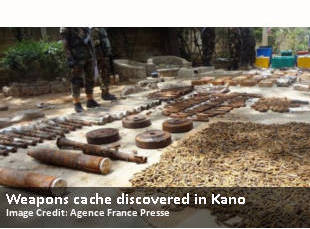
Nigerian authorities have announced the arrest of three alleged members of Lebanese group Hezbollah, following the discovery of a large weapons and explosives cache in northern Nigeria. Representatives of the West African country’s military and the State Security Service said on Thursday that three Lebanese nationals had been arrested between May 16 and 28. They were identified as Mustapha Fawaz, Abdullah Tahini and Talal Roda, with the latter being a dual Nigerian-Lebanese citizen. They are accused of being members of Hezbollah, the militant Shiite group that controls large swathes of Lebanese territory. All were reportedly arrested in Kano city, northern Nigeria’s most notable commercial center, which is home to a substantial Lebanese community of merchants. Nigerian security forces raided a warehouse adjacent to a residence belonging to a Lebanese national, where they discovered a hidden underground bunker below the master bedroom. In there they found and confiscated large quantities of assorted weapons, including a dozen anti-tank rockets, a rocket-propelled grenade launcher with 21 missiles, 19 AK-47 and submachine guns, as well as 76 grenades. Nigerian government representatives told local journalists on Thursday that the cache was “a Hezbollah armory” belonging to “a cell of Hezbollah”. A few hours later, officials of Israel’s Counter Terrorism Bureau (CTB) said Tel Aviv was aware of the Nigerian government’s operation. Read more of this post

MI6 archives reveal plans for WWII and Cold War black operations

Sir Stewart MenziesBy JOSEPH FITSANAKIS | intelNews.org |
Recently declassified British archives reveal a host of audacious plans for covert operations aimed at Nazi-occupied Europe during wartime and, after 1948, inside the Soviet Union. The plans, proposed by British intelligence officials, ranged from relatively innocuous psychological operations to assassinations of key political figures. The wartime plans were proposed in 1944 by Charles Peake, a British intelligence officer detailed to the headquarters of General Dwight Eisenhower. The iconic American military commander was in charge of plans for Operation OVERLORD, the allied troop landings on the beaches of Normandy in northern France. According to documents released last week by the United Kingdom National Archives, Peake’s proposal was entitled “Assassination Priorities for OVERLORD”. It contained an extensive list of senior German and French Axis officials that should be targeted for assassination in preparation for the D-Day landings. The hit list included “certain Germans in key positions in France”, notably Field Marshals Gerd von Rundstedt and Erwin Rommel. It also incorporated several senior members of France’s Nazi-controlled Vichy administration under Marshal Philippe Pétain. The proposal, however, was quickly shot down by no other than General Stewart Menzies, Director of the Secret Intelligence Service (known as MI6), who feared that intrusive covert actions by allied operatives would cause brutal reprisals against allied prisoners of war. Ironically, Menzies, known in government simply as “C”, drafted an ever more ambitious plan for black operations after the end of World War II, this time targeted at the Soviet Union. Read more of this post

News you may have missed #838 (analysis edition)

Predator droneBy IAN ALLEN | intelNews.org |
►►Delisle spy case barely caused ripples between Canada and Russia. The arrest of Jeffrey Delisle, a Canadian naval officer spying for Russia, did little to discourage Canada from welcoming that country’s defense chief to a Newfoundland meeting of Arctic nations last year. The visit underscored the puzzling lengths to which the Canadian government went to carry on a business-as-usual relationship with the one-time Cold War adversary. Most other planned military contacts between the two nations last year —including participation in the anti-terrorism exercise Operation Vigilant Eagle— also remained curiously normal.
►►Don’t believe the hype on Chinese cyberespionage. Within a day of each other, The Washington Post published a shocking list of US defense programs whose designs have reportedly been stolen by Chinese cyberattacks, and ABC news said the plans for Australia’s spy headquarters were also stolen by Chinese hackers. It makes China sound like a secret-sucking cyber espionage machine, but is that really the case? The knee-jerk interpretation to this disclosure (and others) is that China is a powerhouse of cyber espionage capable of stealing whatever secrets they want and that the US is powerless to stop them. This seems very unlikely.
►►US Predator drone program quietly shifted from CIA to DoD. The White House has quietly shifted lead responsibility for its controversial armed drone program from the CIA to the Defense Department. In a landmark speech last week at National Defense University in Washington, US President Barack Obama offered some clues into the status of the program, opaquely signaling it will now primarily be conducted by the United States military.

Chinese hackers ‘stole blueprints’ of Australian spy agency’s new HQ

ASIO's new headquartersBy JOSEPH FITSANAKIS | intelNews.org |
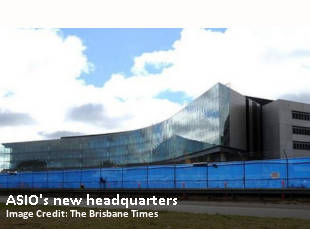
Chinese government hackers allegedly stole the master blueprints and other highly classified technical information relating to the new headquarters of the Australian Security Intelligence Organisation (ASIO). The state-of-the-art building, which is located at the shore of Lake Burley Griffin in Australian capital Canberra, has so far cost taxpayers in excess of AUD $631 million (US $608 million). Although it remains under construction, the new headquarters is said to feature the most sophisticated security features of any government building in Canberra. But a report aired on May 28 by Australian television’s Four Corners investigative program, alleged that a Chinese government agency managed to steal the building’s blueprints. The program claimed that the highly classified blueprints were stolen when hackers mounted a sophisticated cyberattack on a private-sector contractor involved in constructing the ASIO’s new headquarters. Four Corners suggested that the cyberattack, which was “traced to a server in China”, also compromised the building’s communications diagram, server locations and physical security systems. The revelation will undoubtedly add to the stream of public criticism about the project, which has been severely plagued by budget increases and construction delays. As recently as 2010, the government was insisting that the project was “progressing on time and on budget, with completion scheduled for mid-2012”. Today, however, the building’s budget has gone over by AUD $171 million and the building is expected to open its doors no earlier than the fall of 2013, with some commentators suggesting that it could be 2014 before ASIO’s personnel are able to start moving in. Read more of this post

Canada spy agency refused to notify Mounties about Russian agent

Jeffrey Paul DelisleBy JOSEPH FITSANAKIS | intelNews.org |
Canada’s main counterintelligence agency opted to keep secret from the Royal Canadian Mounted Police (RCMP) vital information about a Canadian naval officer who spied for Russia. Regular readers of this blog will be familiar with the case of Jeffrey Paul Delisle, a Sub-Lieutenant in the Royal Canadian Navy, who until 2011 was employed at Canada’s ultra-secure TRINITY communications center in Halifax. Delisle was arrested in January 2012 for passing information gathered from radio and radar signal interceptions to a foreign power, most likely Russia. In May of last year, it emerged that it was in fact the United States that alerted the Canadian Security Intelligence Service (CSIS) about Delisle’s espionage activities. What was supposed to happen next was that the CSIS —which is not a law enforcement agency— should have notified the RCMP of Delisle’s activities and requested his prompt arrest. Remarkably, however, the CSIS chose to keep the Delisle file concealed from the RCMP, ostensibly to prevent the possible exposure of intelligence sources and methods in open-court proceedings. The Canadian Press, which broke the story on Sunday, cited “numerous sources familiar with the Delisle case” in claiming that the CSIS’ refusal to request Delisle’s arrest “frustrated Washington”, which feared that the spy was routinely compromising United States secrets shared by America with its Canadian allies. So frustrated were the Americans, that the Federal Bureau of Investigation (FBI) sketched out a plan to lure Delisle onto US soil and arrest him there. Read more of this post

WWII files reveal bizarre case of British cross-dressing spy

Dudley ClarkeBy IAN ALLEN | intelNews.org |
A set of World War II-era British Foreign Office documents detail a highly unusual incident of a senior British spy, who was arrested in Spain for cross-dressing. The files, which were released this week by the National Archives, concern the case of Lieutenant Colonel Dudley Clarke, a senior operative of British intelligence who served with distinction in Europe and the Middle East. In October of 1941, Clarke was traveling though Spain en route to Egypt, by way of the British colony of Gibraltar. His instructions were to maintain a low profile throughout his trip, during which he posed as a foreign correspondent for The London Times. In reality, he was carrying with him key naval intelligence addressed to the British high command in Cairo. However, soon after arriving in Spanish capital Madrid, Clarke was arrested for appearing in a busy street dressed as a woman. A frantic cable sent to the Foreign Office by the British embassy in Madrid mentioned that the intelligence officer had been detained after he had been found “in a main street dressed —down to a brassiere— as a woman’. According to the —now declassified— memoranda complied by the Foreign Office, Clarke had told his Spanish police captors that he was “a novelist” and had dressed as a woman in order to “study the reactions of men to women in the streets”. But the conservative police officials in Francoist Spain did not buy Clarke’s story, and decided to charge him with “engaging in homosexual behavior”. London, meanwhile, was trying frantically to ensure that Clarke was released before either Spanish or German authorities realized that he was a British intelligence officer. The Foreign Office cabled the British embassy in Madrid with direct instructions that “in no circumstances should it be revealed that C[larke] is a British [intelligence] officer”. Read more of this post

News you may have missed #837

Alexander LitvinenkoBy IAN ALLEN | intelNews.org |
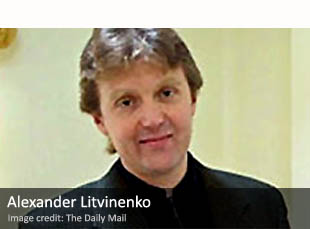
►►Russian ex-spy ‘would testify’ in Litvinenko inquiry. The 2006 murder of former Russian spy Alexander Litvinenko has never been solved and remains the subject of conflicting narratives and still-deepening intrigue over who may have killed him and why. Now a key witness, a US-based former Russian spy who worked with Litvinenko in the months leading up to his death, says he is willing to give evidence at a public inquiry. British police considered him such a vital witness that they visited the US three times to persuade him to give evidence at the inquest.
►►Assange reveals GCHQ messages discussing extradition. Authorities at GCHQ, Britain’s eavesdropping agency, face embarrassing revelations about internal correspondence in which WikiLeaks founder Julian Assange is discussed, apparently including speculation that he is being framed by Swedish authorities seeking his extradition on rape allegations. The records were revealed by Assange himself in a Sunday night interview with Spanish television. A message from September 2012, apparently says: “They are trying to arrest him on suspicion of XYZ. It is definitely a fit-up. Their timings are too convenient right after Cablegate“.
►►North Korean defector accused of spying by his sister. Earlier this year, Yoo Woo-sung, one of the most prominent North Korean defectors living in South Korea, was arrested on charges of espionage. Now court documents have shown that Yoo was arrested after testimony from his sister, who said he had been sent on a mission by North Korea’s secret police to infiltrate the defector community and pass back information about the people he met. The Washington Post reports that defectors from the North are increasingly facing the brunt of this suspicion.
►►Iran hangs two men for spying for Israel and US. Mohammad Heydari was found guilty of passing intelligence on “security issues and national secrets” to Israeli Mossad agents in exchange for cash. Kourosh Ahmadi was convicted of providing intelligence to the CIA, Tehran’s prosecutor’s office said. It is not clear when Heydari and Ahmadi were arrested or where they were tried. Their execution was handed down by Tehran’s Revolutionary Court and confirmed by the Supreme Court, Iran’s Fars news agency reported.

Russia expelled ex-US embassy official who rebuffed spy advances

US embassy in MoscowBy JOSEPH FITSANAKIS | intelNews.org |
Russian authorities expelled a former American diplomat living in Moscow earlier in May, less than two months after he allegedly rebuffed an offer to spy on the United States for Russia. The former official, Thomas Firestone, served two tours of duty as a Resident Legal Adviser at the American embassy in Moscow. He later joined the Moscow office of Baker & McKenzie, a US-based law firm with offices worldwide. Firestone had frequent and direct dealings with the Russian government in his capacity as a specialist in the Foreign Corrupt Practices Act. This US law permits the prosecution of bribery cases in American courts. According to The New York Times, Firestone was approached in March of this year by operatives of the Russian Federal Security Service, the FSB, one of the main successor agencies of the Soviet KGB. Citing “people familiar with the case”, The Times claims that the American lawyer turned down an offer to spy for Moscow on behalf of the FSB. On May 5, however, while returning to Moscow from a trip abroad, Firestone was detained at Sheremetyevo International Airport, 18 miles outside of the Russian capital. After a 16-hour detention, the former Justice Department official was told that he had been declared persona non grata (undesirable) and was to be denied entrance into Russia; he was promptly placed on a flight to the US, which departed shortly afterwards. The Times says that it remains unclear at this point whether Firestone’s expulsion was directly connected to his alleged refusal to give in to the FSB’s espionage advances. However, the paper claims that the matter has been raised with the Russian government by the administration of US President Barack Obama. Read more of this post

Russian news agency reveals name of CIA station chief in Moscow

US embassy in MoscowBy JOSEPH FITSANAKIS | intelNews.org |
A Russian news agency revealed the name of the alleged station chief of the United States Central Intelligence Agency (CIA) in Moscow, but then deleted the information from its website. Russia Today, a multilingual Moscow-based television network funded by the Russian government, hosted an interview on May 17 with an anonymous representative of the FSB, the Russian Federal Security Service. The FSB official was commenting on the case of Ryan Fogle, an alleged CIA case officer who was detained in downtown Moscow by the FSB on the evening of Monday, April 13. The Russians claim that Fogle, who held the post of Third Secretary of the Political Department of the United States embassy in Moscow, was trying to recruit a Russian intelligence officer. Russia Today quoted the FSB official as saying that Fogle’s operations “crossed the red line and [the FSB] had no choice but to react [by] observing official procedures”. He added that Fogle had been detected trying to recruit Russian government employees in as early as 2011. At that time, the anonymous source told Russia Today the FSB had “decided to warn [its] American colleagues and ask them to stop these activities”. The warning, he said, had been delivered by the FSB directly to the CIA station chief in Moscow; the article then proceeded to name the American official. International media are not bound by the 1982 US Intelligence Identities Protection Act, which makes it a federal crime to intentionally reveal the identity of individuals engaged in covert roles with US intelligence agencies. However, publicly revealing the identity of senior intelligence officials during peacetime is highly irregular and frowned upon, even among adversaries. The BBC, which reported on the revelation, described the move as a “breach of diplomatic protocol”. Read more of this post

Iranian diplomats expelled from Bosnia over spying allegations

Bosnia inside the former YugoslaviaBy JOSEPH FITSANAKIS | intelNews.org |
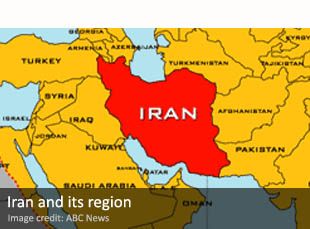
In a move described as extremely rare, authorities in Bosnia have expelled two diplomats from Bosnian ally Iran over allegations that they are intelligence officers. However, the expulsion process took a while, which arguably reveals the complicated relationship between the two predominantly Muslim nations. The two diplomats were initially declared personae non grata in late April, when the Bosnian government ordered that they leave the country by April 30. According to Bosnia and Herzegovina’s Ministry of Security, the two envoys, Jadidi Sohrab and Hamzeh Dolab Ahmad, third and second secretaries respectively at the embassy of the Islamic Republic of Iran in Sarajevo, had engaged in activities that were “in violation of their diplomatic protocol”. Word has it that the Bosnian order was issued shortly after Israeli intelligence informed the Bosnians that the two Iranian diplomats were in fact employees of the Ministry of Intelligence and National Security of the Islamic Republic of Iran (MISIRI). The Israelis also said that one of the two men had been spotted in India, Georgia and Thailand, all of which were sites of a simultaneous bombing campaign in February of 2012 against Israeli interests —though there is no public evidence that he had an active role in the attacks. On May 9, however, Bosnian media reported that the two Iranian diplomats were still in Sarajevo, more than a week since the expiration of the deadline they had been given to leave the country. Why the delay? According to Dr. John Schindler, Iran watcher and professor of national security affairs at the United States Naval War College, the move to expel the two Iranians had been “stymied by the establishment” in Bosnia, which remains decidedly pro-Iranian. Read more of this post

Analysis: Is US diplomat arrested in Russia a CIA case officer?

Ryan Christopher FogleBy JOSEPH FITSANAKIS | intelNews.org |
The Russian Ministry of Foreign Affairs lodged an official complaint yesterday with the United States Ambassador to Russia over the alleged espionage activities of Ryan Christopher Fogle. The Third Secretary in the Political Section of the US embassy was arrested with great media fanfare on Monday night, allegedly as he was trying to recruit a Russian intelligence officer. As can be expected, the Russian media had a field day with Fogle’s arrest; after all, it has been nearly a decade since the last time an American intelligence operative was publicly uncovered on Russian soil. Many Western observers, however, have questioned if Fogle could really be an officer of the Central Intelligence Agency, and whether the Russian Federal Security Service (FSB) simply framed an unsuspecting junior American diplomat. Much of the skepticism expressed by Western commentators focuses on the articles that were allegedly found by the FSB in Fogle’s backpack. They included several pairs of sunglasses, recording devices, as well as two wigs. Would a CIA officer be foolish enough to be carrying with him surreptitious recording devices in downtown Moscow? And do modern case officers still employ wigs when walking the streets of foreign capitals recruiting spies? The answer is, of course, yes. Read more of this post

Alleged CIA officer arrested in Moscow in Russian sting operation

Ryan Christopher FogleBy JOSEPH FITSANAKIS | intelNews.org |
Russia has accused an American diplomat of secretly working for the Central Intelligence Agency (CIA) following his arrest during a sting operation in Moscow. The diplomat, who was expelled from Russia on Tuesday, is Ryan Christopher Fogle; he held the post of Third Secretary of the Political Department of the United States embassy in the Russian capital. He was detained on Monday evening by counterintelligence officers of Russia’s Federal Security Service (FSB). Fogle’s arrest marked the first time in nearly a decade that espionage charges were leveled against an American government employee in Russia. Fogle, a 29-year-old native of St. Lous, Missouri, who graduated from Colgate University in New York in 2006, was arrested by the FSB in Moscow’s Akademika Pilyugina Street, allegedly right in front of an apartment complex reserved for foreign diplomatic personnel. He is accused by the FSB of conspiring to recruit a member of the Russian intelligence services, who is allegedly an antiterrorist expert working in Russia’s North Caucasus region. The FSB told Russian media that Fogle had communicated with his would-be recruit on the phone at least twice in the days prior to the sting operation. The FSB even took the extremely unusual step of airing footage of Fogle’s arrest on Russian state-run television. The American diplomat was shown pinned on the ground, wearing a blonde wig and baseball cap, while FSB officers handcuffed him. A second video released by the FSB, shows Fogle sitting quietly in a government office, in the presence of three other American government officials, including Michael Klecheski, Chief Political Officer at the US embassy in Moscow. All four of them are shown staring in silence, while an FSB official is expressing his strong displeasure over Fogle’s alleged espionage activities. According to the FSB, when Fogle was arrested, he was found to be carrying a backpack containing —among other things— his diplomatic identification card, two wigs, three pairs of sunglasses, recording devices, an RFID shield, a compass and a knife. He was also carrying three Ziploc bags filled with $100,000 in €500 notes, as well as a letter, written in Russian, addressed to his would-be recruit. Read more of this post

US government secretly obtained phone records of journalists

Associated PressBy JOSEPH FITSANAKIS | intelNews.org |
The Associated Press (AP) accused the United States government on Monday of secretly obtaining telephone records of its reporters, as part of a leak inquiry related to an intelligence operation. The news agency, which is owned cooperatively by news outlets worldwide, said the Department of Justice had secretly obtained pen-register information on 20 AP telephone lines in the US. Pen-register data includes lists of all numbers contacted from a particular telephone line and the duration of each call over a defined period. The agency said the government investigation included “the work and personal phone numbers of individual reporters”, as well as AP office telephone lines in New York and Washington, and even the main telephone line used by AP correspondents at the US Capitol Building. It is believed that government prosecutors were probing the source(s) of a May 7, 2012, AP report, which disclosed that the Central Intelligence Agency (CIA) had prevented a terrorist plot by al-Qaeda in the Islamic Arabian Peninsula. AP correspondents Matt Apuzzo and Adam Goldman had cited anonymous sources in claiming that the plot, allegedly hatched in Yemen, involved placing a bomb on a US-bound civilian airplane on the one-year anniversary of the death of al-Qaeda founder Osama bin Laden. Less than a fortnight later, sources told the Reuters news agency that the White House and CIA were furious with AP’s revelation, because it allegedly forced the termination of an “operation which they hoped could have continued for weeks longer”. Read more of this post

British spy agency to scrap $140m IT system over security fears

DeloitteBy IAN ALLEN | intelNews.org |
Britain’s domestic intelligence agency, MI5, has decided to “accept defeat” and scrap a multimillion digital records management program over fears it could create a dangerous “intelligence vacuum”. The program, which has so far cost the British taxpayer over £90 million ($140 million) in payments to private consultants, was first conceived in the run-up to the London 2012 summer Olympic Games. While evaluating terrorist-related threats posed by the hosting of the Games in the United Kingdom, British security officials decided that the government-wide intelligence-sharing system in place was archaic and in need of serious overhaul. They hired a group of senior IT management consultants from Deloitte, one of the world’s largest professional services firm, headquartered in New York, NY. The pricey corporate experts were tasked with helping MI5 digitally collate intelligence data collected or produced by all departments of the British government. Deloitte’s planning team had projected that the multi-million dollar system would be in place and operational by the summer of 2012, before the Olympic Games were held in London. This, however, proved wildly optimistic; Deloitte barely managed to scrape together a watered-down version of the promised records management program in late 2012. When the program was tested by MI5’s intelligence collection managers, it was found to contain serious errors that, according to British newspaper The Independent, could leave the country’s intelligence agencies “vulnerable and struggling with an intelligence vacuum”. When initially questioned about the Deloitte debacle by British lawmakers, MI5’s (now retired) Director, Sir Jonathan Evans, told the frustrated members of the British House of Commons Intelligence and Security Committee not to worry. Read more of this post

News you may have missed #836

Investigating the Boston bombingsBy IAN ALLEN | intelNews.org |
►►NSA guide explains how to access private info on Google. In 2007, the US National Security Agency produced a book to help its spies uncover intelligence hiding on the World Wide Web. The 643-page tome, called Untangling the Web: A Guide to Internet Research (.pdf), has just been released by the NSA following a FOIA request filed in April by MuckRock, a site that charges fees to process public records for activists and others. Although the author’s name is redacted in the version released by the NSA, Muckrock’s FOIA indicates it was written by Robyn Winder and Charlie Speight.
►►Are the EU’s unofficial spy services growing out of control? Since its founding, the European Union has been building its own spy programs, often triggered by specific needs, in an ad-hoc manner, without strategy and without a coherent concept about their structure, methods, and people. Unofficially, the has been building an intelligence apparatus of six services so far, some of them brand new, populated already by 1,300 specialists. But because they are technically not conducting covert operations, they simply deny being intelligence services.
►►Hearing on Boston bombings exposes intelligence failures. The US House Committee on Homeland Security’s hearing on the Boston Marathon bombings on Thursday amounted to more than the usual political posturing: it exposed clear deficiencies in communications among intelligence- and law-enforcement agencies. whatever the cause of the intelligence breakdown, the failure to share vital information —and the continued finger-pointing between agencies yesterday— shows the need to improve coordination.