Spies seen behind fake Facebook profile of senior NATO commander
March 12, 2012 6 Comments
 By JOSEPH FITSANAKIS| intelNews.org |
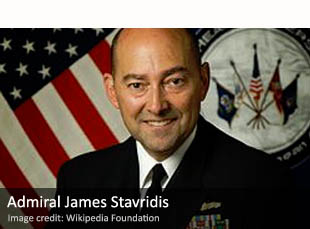
A Facebook account bearing the name of a senior commander of the North Atlantic Treaty Organization was set up by Chinese spies to siphon information from unsuspecting Western military officials, according to a British newspaper. The London-based Daily Telegraph said in an article that the fake Facebook account was discovered a year ago by NATO counterintelligence officers. It bore the name of United States Admiral James Stavridis, who serves as Supreme Allied Commander in Europe and currently leads the Organization’s mission in Libya. The account was reportedly used to befriend Western military officials, primarily in Britain and other European countries, probably in an attempt to collect personal information found on their personal pages on the popular social networking site. This sort of practice is known as ‘spear phishing’, and consists of messages sent to carefully targeted individuals, seemingly sent from a trusted source. The operation involving Admiral Stavridis appears to have been purposely targeted at high-ranking Western officials, a technique sometimes known as ‘whaling’. The London-based daily says NATO officials have been “reluctant to say publicly who was behind the attack”. But the paper claims it has been told that declassified briefings from NATO point to a series of Internet protocol addresses belonging to Chinese government facilities. Organization officials insist —correctly— that the individuals or government agencies behind the operation to falsify Stavridis’ social networking identity are unlikely to have acquired any actual military secrets. However, the information collected from Western military officials befriended online by Admiral Stavridis’ fake Facebook account could aid the compilation of personal and psychological profiles of these officials produced by foreign intelligence agencies. Read more of this post



 By IAN ALLEN | intelNews.org |















News you may have missed #703: US edition
March 28, 2012 by Ian Allen Leave a comment
►►NSA pressed to reveal details on Google deal. The Electronic Privacy Information Center is locking horns with the National Security Agency over a secret deal the agency cut with Google following an attack on Gmail by Chinese hackers in 2010. The information center has filed a Freedom of Information Act request with the NSA to obtain information about the deal. That request was rejected by a federal court and an appeal process continues.
►►US spy agencies can keep data on Americans longer. Until now, the US National Counterterrorism Center had to immediately destroy information about Americans that was already stored in other government databases when there were no clear ties to terrorism. But it will now be able to store information about Americans with no ties to terrorism for up to five years under new Obama administration guidelines. The new rules replace guidelines issued in 2008 and have privacy advocates concerned about the potential for data-mining information on innocent Americans.
►►Islam convert leads CIA’s Counterterrorism Center. Roger, which is the first name of his cover identity, has been chief of the CIA’s Counterterrorism Center for the past six years. Colleagues describe Roger as a collection of contradictions. A chain-smoker who spends countless hours on a treadmill. Notoriously surly yet able to win over enough support from subordinates and bosses to hold on to his job. He presides over a campaign that has killed thousands of Islamist militants and angered millions of Muslims, but he is himself a convert to Islam. His defenders don’t even try to make him sound likable. Instead, they emphasize his operational talents, encyclopedic understanding of the enemy and tireless work ethic.
Filed under Expert news and commentary on intelligence, espionage, spies and spying Tagged with 0 Islam convert leads CIA's Counterterrorism Center, 0 NSA pressed to reveal details on Google deal, 0 US spy agencies can keep data on Americans longer, CIA, CIA Counterterrorism Center, computer hacking, data mining, data retention, Electronic Privacy Information Center, FOIA, Gmail, Google, Internet, News, news you may have missed, NSA, United States, US National Counterterrorism Center