News you may have missed #789

Mikhail FradkovBy IAN ALLEN | intelNews.org |
►►Putin adds spy chief to energy commission. Russian President Vladimir Putin has reinforced a presidential commission seen as Kremlin’s vehicle for vying for control over the country’s crucial oil and gas sector, by adding the country’s top police officer and senior spy to its ranks. They are Interior Minister Vladimir Kolokoltsev and Mikhail Fradkov, director of the Foreign Intelligence Service, formerly a department of the KGB. The commission is driven by Igor Sechin, a former KGB officer and close ally of President Putin.
►►US spy sat agency plans major expansion. The National Reconnaissance Office (NRO), America’s secretive spy satellite agency, operates a vast constellation of spy satellites in orbit. But these surveillance spacecraft have traditionally only been able to gaze down on a few small areas of the planet at a time, like flashlights probing the dark. And this, only with careful advance planning by human operators on the ground. Now the NRO wants to expand the current flashlight-like satellite deployment to a horizon-spanning, overhead spotlight that can illuminate vast swaths of the planet all at once. The agency also wants new spacecraft that can crunch the resulting data using sophisticated computer algorithms, freeing the satellites somewhat from their current reliance on human analysts.
►►GCHQ warns of ‘unprecedented’ cyberattack threat. The British government’s electronic eavesdropping and security agency, GCHQ, has warned the chief executives of Britain’s biggest companies about an allegedly “unprecedented threat” from cyber-attacks. “GCHQ now sees real and credible threats to cybersecurity of an unprecedented scale, diversity, and complexity”, said Ian Lobban, the agency’s director. The magnitude and tempo of the attacks pose a real threat to Britain’s economic security’, Lobban adds, but notes that about 80% of known attacks would be defeated by embedding basic information security practices.

News you may have missed #783

Uri SaguyBy IAN ALLEN | intelNews.org |
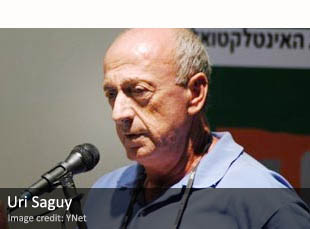
►►Israeli ex-intel chief says warns of ‘hysteria’ over Iran. Major General Uri Saguy (a.k.a. Uri Sagi), who was head of the IDF’s Operations Directorate during the 1982 Lebanon war, and Military Intelligence chief from 1991 to 1995, has warned of an “orchestrated and purposely timed hysteria that puts the country into a state of anxiety, artificial or not”, regarding the Iranian nuclear issue. Saguy, who resigned from the IDF in 1995 due to a conflict between him and the Chief of General Staff, added that “it would be a mistake if Israel uses force, certainly now, in order to thwart the Iranian nuclear potential”. The essence of Saguy’s message, notes Ha’aretz‘s Amir Oren, is that Israel’s citizens cannot trust Defense Minister Ehud Barak or Prime Minister Benjamin Netanyahu.
►►Australian spy chief warns of economic espionage. The director-general of the Australian Security Intelligence Organisation, David Irvine, has warned that the online revolution has left Australian companies increasingly vulnerable to cyber attacks and commercial espionage. Speaking to a business audience in Canberra, Irvine said that most online attacks in the business world go undetected, despite growing awareness of the threat. Asked how much commercial cyber crime went undetected, he said: “I would be very surprised if we who are active in this area are picking up the greater proportion of it, in fact, quite the reverse”.
►►Top US military official objects to attack on Iran. As Israeli officials are telling local reporters that they’re really, really ready to attack Iran’s nuclear facilities, and they mean it this time, the top US military officer is saying what a terrible idea that would be. “I may not know about all of [Israel’s] capabilities”, said General Martin Dempsey, the chairman of the Joint Chiefs of Staff. “But I think that it’s a fair characterization to say that they could delay but not destroy Iran’s nuclear capabilities”. Left unsaid: in a few years, the US and Israel would be back to the same standoff with Iran —except this time it might do so amidst a proxy terrorist war to avenge the Iranians.


News you may have missed #771

Shawn HenryBy IAN ALLEN | intelNews.org |
►►Analysis: Ex FBI official says foreign spies biggest online threat. Former FBI executive assistant director Shawn Henry has warned that the biggest threat online comes not from terrorists or hackers, but from foreign intelligence organizations looking to steal intellectual property. “The threat from computer attack is the most significant threat we face as a society, other than a weapon of mass destruction”, he said in his opening keynote at the Black Hat 2012 conference in Las Vegas. “Everything we do —R&D, intellectual property, and corporate strategies— is stored or transmitted electronically. The DNA of companies is available to bad guys”.
►►Taiwanese officials jailed for espionage. Two Taiwanese former officials have been sent to prison by the Taiwan High Court for leaking state secrets to China. Presidential Office official Wang Ren-bing was jailed for two years after being found guilty of passing confidential information about President Ma Ying-jeou’s May 2008 inauguration to Chinese intelligence operatives. Chen Pin-jen, a former aide of Chinese Nationalist Party (KMT) Legislator Liao Kuo-tung, was sentenced to eight months in prison for delivering the confidential information Wang gave him to China. The two were arrested in 2009.
►►Germany charges suspected Syrian spy. A spokeswoman for federal prosecutors in Germany said Sunday that they have filed charges against suspected Syrian spy Akram O., one of two men arrested on suspicion of having spied on Syrian opposition activists in Germany for several years. The two were arrested in February during a sting operation involving over 70 German counterintelligence operatives, who searched the suspects’ apartments. The spokeswoman said she could not give further details before an official confirmation is issued that the suspect and the defense team have received the indictment.

News you may have missed #754

Jonathan EvansBy IAN ALLEN | intelNews.org |
►►New German spy HQ to open a year late. The BND, Germany’s foreign intelligence service, was due to move from its base in Pullach, near Munich, to an enormous newly built center in Berlin, at the end of 2014. But that has now been officially put back by a year. The Berliner Morgenpost newspaper quoted BND president Gerhard Schindler saying he was “regularly losing young new staff”, due to the delay. The uncertainty has meant “they leave our authority and find themselves another employer”, he said.
►►UK spy chief warns of ‘astonishing’ levels of cyberespionage. In a rare public speech, Jonathan Evans, director general of MI5, Britain’s domestic spy service, has said that the West now faces an “astonishing” cyberespionage threat on an “industrial scale” from specific nation states. He said that cyberespionage is now conducted “with industrial-scale processes involving many thousands of people lying behind both state-sponsored cyber espionage and organized cyber crime”. Surely, however, Evans does not mean to imply that the West’s role in cyberespionage is purely defensive?
►►Aussie spy agency lacks resources to vet asylum seekers. An official audit into the Australian Security Intelligence Organisation’s ability to vet asylum seekers for potential security threats, has found that it is struggling with the “sharp increase” in boat arrivals, rudimentary computer systems and 30 per cent fewer staff than needed. The audit report examined 411 cases as a sample of the almost 180,000 security assessments ASIO completes each year.

US and Israel behind computer virus that hit Iran, say sources

Flame virus code segmentBy JOSEPH FITSANAKIS | intelNews.org |
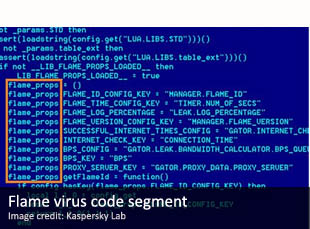
Flame, a sophisticated computer malware that was detected last month in computers belonging to the Iranian National Oil Company and Iran’s Ministry of Petroleum, was created by Israel and the United States, according to a leading American newspaper. Quoting “officials familiar with US cyber-operations”, The Washington Post reported on Wednesday that the malware, which is said to be “massive in size”, is part of a wider covert program codenamed OLYMPIC GAMES. The paper said that the US portion of the program is spearheaded by the National Security Agency, which specializes in cyberespionage, and the CIA’s Information Operations Center. The Post further claims that OLYMPIC GAMES has a three-fold mission: to delay the development of the Iranian nuclear program; to discourage Israeli and American officials from resorting to a conventional military attack on Iran; and to buy time for those officials who favor addressing the Iranian nuclear stalemate with diplomatic pressures coupled with sanctions. According to one “former intelligence official” quoted in The Post, the scale of OLYMPIC GAMES “is proportionate to the problem that’s trying to be resolved”. Russian antivirus company Kaspersky Lab, which first spotted the Flame virus in May, said that it is “one of the most complex threats ever discovered”. It is over 20 megabytes in size, consisting of 650,000 lines of code. In comparison, Stuxnet, a computer super-virus that was detected by experts in 2010, and caused unprecedented waves of panic among Iranian cybersecurity experts, was 500 kilobytes in size. Read more of this post

Comment: Who authored computer virus that ‘dwarfs Stuxnet’?

Flame virus code segmentBy JOSEPH FITSANAKIS | intelNews.org |
When the Stuxnet computer virus was detected, in 2010, it was recognized as the most sophisticated malware ever created. It had been specifically designed to sabotage Siemens industrial software systems, which were used in Iran’s nuclear energy program. Not surprisingly, most Stuxnet-infected computers were in Iran. Now a new, massive and extremely sophisticated piece of malware has been detected in computers belonging to the Iranian National Oil Company and Iran’s Ministry of Petroleum. It is called Flame and, according to antivirus company Kaspersky Lab, which first spotted the virus last week, it is “one of the most complex threats ever discovered”. Simply consider that Stuxnet, which caused unprecedented waves of panic among Iranian cybersecurity experts, was 500 kilobytes in size. Flame is over 20 megabytes in size, consisting of 650,000 lines of code; it is so complex that it is expected to take programming analysts around a decade to fully comprehend. The two are different, of course. Stuxnet was an infrastructure-sabotaging malware, which destroyed hundreds —maybe even thousands—of Iranian nuclear centrifuges. Flame, on the other hand, appears to be an espionage tool: it aims to surreptitiously collect information from infected systems. What connects them is their intended target: Iran. We now have Stuxnet, the most complex sabotaging malware ever discovered, which must have taken dozens of programmers several months to create, and Flame, the world’s most powerful cyberespionage tool ever detected by computer security experts. And both have been primarily directed at Iranian government computers. Read more of this post

Comment: US cybersecurity posture is not purely defensive

NSA headquartersBy JOSEPH FITSANAKIS | intelNews.org |
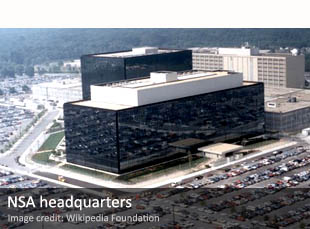
In recent years, news coverage of cyberespionage and cybersecurity has increased several times over; both subjects have escaped the narrow confines of technical literature and have entered the broad expanses of popular news media. This blog is no exception; since 2008, we have covered both cybersecurity and cyberespionage at length. In looking back at our coverage, it takes but a cursory glance to conclude that most of our reports feature the names of two countries: China and –to a far lesser extent– Russia. Moreover, the vast majority of our cybersecurity and cyberespionage coverage portrays the United States as a defensive actor, trying desperately to protect the integrity of its networks from foreign hackers. But is this accurate? How realistic is it to assume that the US, the world’s leading military power, abstains from offensive cyberespionage as a matter of strategy? The most likely answer is: not very. The problem is that much of the reporting on cybersecurity is based on national allegiances. Many American media pundits thus tend to forget that Washington, too, conducts cyberespionage. Read more of this post

News you may have missed #689: NSA edition

Michael HaydenBy IAN ALLEN| intelNews.org |
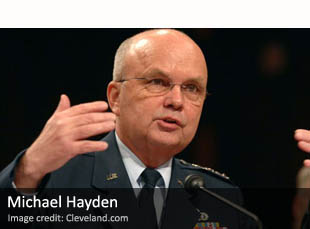
►►Ex-NSA Director calls Stuxnet a ‘good idea’. General Michael Hayden, once head of the NSA and CIA, who was no longer in office when the Stuxnet attack on Iran occurred, but who would have been around when the computer virus was created, denies knowing who was behind it. He calls Stuxnet “a good idea”. But he also admits “this was a big idea, too. The rest of the world is looking at this and saying, ‘clearly, someone has legitimated this kind of activity as acceptable'”.
►►NSA develops secure Android phones. The US National Security Agency has developed and published details of an encrypted VoIP communications system using commercial off-the-shelf components and an Android operating system. A hundred US government employees participated in a pilot of Motorola hardware running hardened VoIP called ‘Project FISHBOWL’, NSA Information Assurance Directorate technical director Margaret Salter told the RSA Conference in San Francisco on Wednesday. “The beauty of our strategy is that we looked at all of the components, and took stuff out of the operating system we didn’t need”, said Salter. “This makes the attack surface very small”.
►►Senior US Defense official says DHS should lead cybersecurity. In the midst of an ongoing turf battle over how big a role the National Security Agency should play in securing America’s critical infrastructure, Eric Rosenbach, deputy assistant secretary of Defense for Cyber Policy in the Department of Defense, said on Wednesday that the NSA should take a backseat to the Department of Homeland Security in this regard. “Obviously, there are amazing resources at NSA, a lot of magic that goes on there”, he said. “But it’s almost certainly not the right approach for the United States of America to have a foreign intelligence focus on domestic networks, doing something that throughout history has been a domestic function”.

US Pentagon computers cannot be protected, says NSA head

General Keith AlexanderBy JOSEPH FITSANAKIS | intelNews.org |
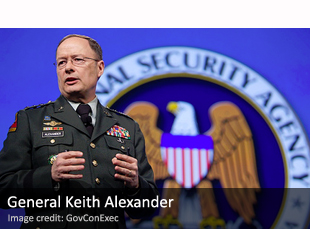
The man in charge of America’s most powerful intelligence agency says the United States Department of Defense computer network is so disordered and chaotic that it cannot be defended from cyberattacks. General Keith Alexander directs the National Security Agency, America’s wealthiest intelligence institution, which expert James Bamford has described as “the world’s most powerful spy agency”. As America’s foremost signals intelligence agency, the NSA is largely responsible for protecting the integrity, security and cohesion of the country’s public and restricted military communications networks, including computer networks. To do so, it consumes an annual budget that dwarfs those of most other intelligence agencies, and employs entire armies of computer security experts and other professionals. But, according to General Alexander, who also heads the US Pentagon’s new Cyber Command, there is not much his army of cyberwarriors can do to either prevent or repel possible large-scale cyberattacks directed against the DoD’s computer networks. The NSA chief was speaking yesterday at the International Conference on Cyber Security, a high-profile gathering of experts at New York’s Fordham University. He told the conference, which is sponsored by the Federal Bureau of Investigation, that the Pentagon’s computer infrastructure is too anarchic and chaotic to be successfully defended from cyberespionage, cyberterrorism, or cyberwarfare assaults. He said the DoD computer system consists of so many interconnected networks —over 15,000 in all— that the NSA “can’t see them all [let alone] defend them all”. As a result, said Alexander, the DoD’s current communications infrastructure “is indefensible”. Read more of this post

News you may have missed #648

Academi HQ

►►IntelNews editor interviewed on RT. IntelNews senior editor, Dr Joseph Fitsanakis, was interviewed yesterday on the main news program of the popular international news channel RT. The interview, concerning the rebranding of private security company Xe Services (formerly Blackwater) to Academi, can be watched here (watch video at the bottom of the page).
►►Contractors making a killing working in UK cyberdefense. Britain has spent more than £100 million ($160 million) in the past year on consultants to combat cyber espionage and the growing use of the internet by terrorists. Now, members of Parliament are investigating the soaring costs of employing private contractors, some paid the equivalent of £150,000 a year, three times the average wage at GCHQ, the UK’s signals intelligence agency.
►►Japan launches second spy satellite. Japan’s space agency, JAXA, has launched an intelligence-gathering satellite, its second this year. Japan launched its first pair of spy satellites in 2003, prompted by concerns over North Korea’s missile program. It currently has four optical information-gathering satellites in orbit. Officials refused to provide details of the capabilities of the most recently launched satellite.

News you may have missed #639

GCHQ

GCHQ

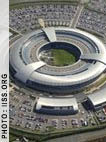
►►GCHQ will sell cyberdefense tech to private firms. The GCHQ, Britain’s signals intelligence agency, is to market some of its security technologies to companies in the private sector, in an attempt to bolster defenses against the foreboding threat of cyberwarfare. The UK government’s “cyber security strategy”, which was unveiled this month, has earmarked £650 million in public funding to set up a four-year National Cyber Security Program, a percentage of which will be used to collaborate with private companies. Click here for an excellent analysis on the public-private cybersecurity collaboration in Britain.
►►Was there a coup attempt in Trinidad? Many in Trinidad and Tobago were expressing skepticism yesterday about an alleged assassination plot, which Prime Minister Kamla Persad-Bissessar said had been uncovered against her and several of her ministers. Police said nearly a dozen people had been arrested, including members of the army and police, but authorities have not given more details, citing the need to maintain security in operations to dismantle the plot.
►►US Senators resist $7 Billion in spending cuts for spy satellites. The Obama Administration wants to stop incessant spending by Defense Department contractors, especially those who have wasted billions of US taxpayers’ money in failed spy satellite projects. But the contractors’ friends in Congress, including lawmakers on the US Senate Intelligence Committee, are trying to stop the White House from cutting a $7 billion commercial satellite program being developed by GeoEye Inc. and DigitalGlobe Inc. What else is new?

Analysis: Cloud computing causes ‘cosmic shift’ in US spy community

Cloud computing

Cloud computing

By JOSEPH FITSANAKIS | intelNews.org |
While many are focusing on recent reports of arrests of CIA operatives in Lebanon and Iran, American intelligence planners have other things on their minds: the latest buzzword is ‘cloud’; specifically, ‘cloud computing’. The term means storing information and software on a network, which can then be shared on demand by users of interconnected electronic devices. The US intelligence community’s interest in this form of data organizing has been known for quite some time. But according to specialist publication Federal Computer Week, cloud computing is rapidly becoming a reality, as one after the other, US intelligence agencies are “moving their classified, sensitive information off their own servers and into the cloud”. Such a change “might have sounded crazy five years ago”, says FCW, and the fact that it is happening marks nothing less than a “cosmic shift” for American intelligence. The migration unto the cloud was spearheaded two years ago by the National Security Agency; the NSA was later joined by the Defense Intelligence Agency, the National Geospatial-Intelligence Agency, and the super-secretive National Reconnaissance Office. Soon the CIA wanted in: in 2009, Jill Tummler Singer, the CIA’s deputy Chief Intelligence Officer, told ComputerWorld that the CIA was becoming one of the US government’s strongest advocates for cloud computing, even though “the term really didn’t hit our vocabulary until a year ago”. Not everyone is super-excited about the cloud. Last year, Brian Snow, the NSA’s former Technical Director, said at a conference that he didn’t trust cloud services, mostly because of the existence of countless unpatched software vulnerabilities. But the move is heavily supported by two of America’s most senior intelligence officials: Keith Alexander, commander of US Cyber Command and director of NSA —America’s largest intelligence agency— and Director of National Intelligence James Clapper. Read more of this post

Analysis: China an ‘easy scapegoat’, says leading cybersecurity expert

Mikko Hypponen

Mikko Hypponen

By JOSEPH FITSANAKIS | intelNews.org |
It is fashionable nowadays to single out China as the primary source of global cyberespionage. During the past few days alone, the Japanese government said Chinese hackers had attacked computers systems in its Lower Parliament, while Britain’s General Communications Headquarters (GCHQ) pointed to Beijing as the main culprit behind an unprecedented rise in organized cyberattacks. A few days ago, the United States intelligence community publicly named for the first time China and Russia as “the most aggressive collectors” of US economic information and technology online. But is the image of China as the ultimate cyber-villain accurate? Not necessarily, according to leading cybersecurity expert Mikko Hypponen. Speaking earlier this week at the PacSec 2011 conference in Tokyo, Japan, Hypponen, who leads computer security firm F-Secure, disputed the predominant view that a single country could be the source of the majority of organized cyberattacks directed against governmental and corporate targets. It is true, said Hypponen, that cyberespionage attacks “are commonly attributed to the Chinese government”. Moreover, it does appear like “a lot” of these attacks are indeed coming from Chinese sources, he said. But the problem of attribution —accurately and conclusively determining the responsible agency behind a cyberattack— remains unresolved in our time. Even if Chinese servers are conclusively identified as sources of such attacks, it would be dangerous to assume that Chinese government operatives —and not rogue agents, or nationalist hacker gangs— are necessarily behind them. Additionally, it is entirely possible that other countries —perhaps even Western countries— could be behind such attacks, but that they consciously try to mask them in such a way as to make China appear responsible. The reason is that Beijing is “such an easy scapegoat”, said Hypponen. Read more of this post

News you may have missed #625

Ahmed Al Hawan

Ahmed Al Hawan

►►Egypt’s most famous spy dies at 74. Egypt’s most famed spy on Israel, Ahmed Al Hawan, 74, has died after a long fight with illness, local media reported on Wednesday. Al Hawan worked for the Egyptian intelligence service during the years that followed Egypt’s military defeat by Israel in 1967. He supplied the Israelis with mistaken and misleading information that was crucial in Egypt’s war with Israel in 1973.
►►Analysis: Dark days for Taiwan’s spies. When Taiwan’s government last month announced budget cuts in military intelligence, the Ministry of National Defense (MND) insisted operations against mainland China would not be affected. However, media paint a vastly different picture, suggesting Taiwan’s future leaders will be completely deaf and blind to secretive developments across the Taiwan Strait.
►►US cyberespionage report names adversaries. A US intelligence report released last week concluded China and Russia are “the most aggressive collectors” of US economic information and technology online. But the report also states that America’s “allies and partners“, including the “French and the Israelis” are also stealing the s vital industrial and commercial secrets by infiltrating computer networks.

News you may have missed #621

Pakistan

Pakistan

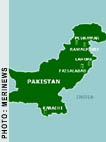
►►Pakistan denies spying on German forces in Afghanistan. Pakistani officials have rejected a German newspaper report that the country’s secret service spied on German security forces in Afghanistan. Without citing its sources, mass-selling weekly Bild am Sonntag reported on Sunday that Germany’s BND foreign intelligence agency warned its interior ministry that Pakistan had spied on 180 German police officers deployed in Afghanistan to train locals.
►►CIA expert says US government lacks security operating system. Industry is not providing the US government with the basic tools it needs to build a secure information infrastructure, according to Robert Bigman, chief of the CIA’s Information Assurance Group. “What we need is a secure operating system”, he said during a panel discussion at the Security Innovation Network showcase in Washington last month. “We gave up some time ago on the battle to build a secure operating system, and we don’t have one”.
►►US increased spy spending in 2011. The US Congress appropriated $54.6 billion for intelligence programs in the 2011 fiscal year, the Office of the Director of National Intelligence disclosed last week. The amount, which does not include what was spent on military intelligence, is a slight increase from the year before but could be the end of the upward trend, says CNN’s Security Clearance blog.