Analysis: Iranian-Israeli proxy war flares up in Sudan

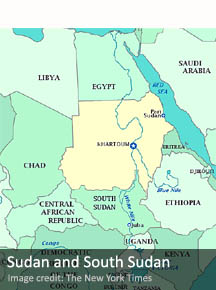
Sudan and South SudanBy JOSEPH FITSANAKIS | intelNews.org |
While much of the world focuses on the effects of hurricane Sandy in the eastern United States, the proxy war between Israel and Iran continues to flare up, this time in Africa. Last week, the government of Sudan accused Israeli of being behind a surprise bombing of a weapons factory in the Sudanese capital Khartoum. According to Sudan’s Minister of Information, Ahmed Belal Osman, four Israeli Air Force jets invaded Sudanese airspace and struck the Yarmouk military complex in Khartoum, inflicting heavy damages. There are unconfirmed claims that the factory was operated by the Iranian government and produced weapons that were smuggled through the Sinai Peninsula into the Gaza Strip, which is controlled by Palestinian group Hamas. On Tuesday, almost exactly a week after the alleged Israeli bombing took place, two Iranian warships arrived in Port Sudan, the country’s most important harbor, located on the Red Sea. The arrival of the vessels was confirmed by Iranian news agency IRNA, which said a helicopter carrier and a destroyer had docked at Port Sudan. The news agency, which is owned by the Iranian government, said the arrival of the ships was meant to contribute to anti-piracy efforts in the Red Sea. But non-Iranian news media, including British newspaper The Independent, quote observers who view the ships’ arrival in Sudan as an Iranian “show of support” for the Sudanese government. According to this explanation, Tehran’s decision to send the ships to the East African country is part of an ongoing proxy war between Iran and Israel taking place throughout the region. Read more of this post

Former CIA senior analyst argues in favor of US deal with Iran

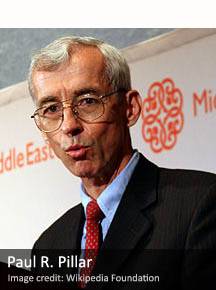
Paul R. PillarBy JOSEPH FITSANAKIS | intelNews.org |
A former senior analyst in the United States Central Intelligence Agency has come out in support of a bilateral compromise between Iran and the West on Tehran’s nuclear program. In an article published last week, Georgetown University professor Paul R. Pillar, who spent nearly three decades with the CIA, dismissed the widespread view that the differences between Iran, Israel, and the West are insurmountable. Commenting on news of a nine-step negotiation plan offered by Tehran in early October, but dismissed by Washington as “unworkable”, Pillar said the offer provided the initial steps of an “eminently achievable agreement” between the interested parties. The CIA veteran, who rose to be one of the Agency’s top analysts prior to his retirement in 2005, argued that a possible outcome of bilateral negotiations would be for Iran to curtail its enrichment of uranium to the 20 percent level in exchange for the lifting of most economic sanctions imposed on Iran by Western countries. “An agreement along these lines makes sense”, he added, “because it would meet the major concerns of each side” in the dispute. He cautioned, however, that, under such an agreement, Tehran would not only be prohibited from continuing its uranium enrichment process, but would also be required to surrender all quantities of uranium previously enriched to a level above 20 percent. Such an agreement, claimed Pillar, would mean that neither Iran nor Israel and the West would receive everything they wanted at once. Instead, the process would depend on a gradual implementation of several bilateral agreements in stages, “each side giving something and getting something at each stage”. Read more of this post

News you may have missed #796

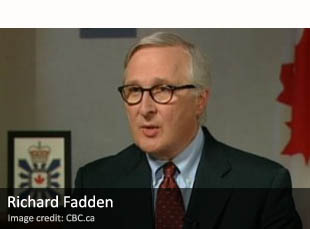
Richard FaddenBy IAN ALLEN | intelNews.org |
►►Iranian spy scandal sparks outrage in Turkey. After a nearly yearlong investigation into an alleged Iranian spy ring in Turkey, seven people were charged in early September with “providing information related to state security and establishing an [illegal] organization”. The charges against five Turkish citizens and two Iranian nationals followed a raid on the suspects’ residences and workplaces on August 29, in which videos and pictures of border security, documents, correspondence with Iranian intelligence and weapons were found, according to the investigation materials. Tehran denied any connections to those arrested, while officials in Ankara revealed more alleged evidence showing that Iran is providing support to the PKK.
►►British SIGINT agency ‘helps US drone attacks’. Britain’s former Director of Public Prosecutions, Lord Macdonald, has said there is “pretty compelling” evidence that the British government’s signals intelligence agency, GCHQ, is passing information to the United States to help it locate targets for controversial drone attacks in Pakistan. Earlier this year David Anderson, the British state’s independent reviewer of terrorism-related legislation, warned that the British government faced “a raft of civil cases” over possible complicity in the CIA drone attacks.
►►Canada’s top spy dismisses call for human rights scrutiny. In a newly declassified memo, CSIS director Richard Fadden appears to dismiss the Canadian Human Rights Commission’s recommendation that national security agencies do more to ensure they are not taking part in racial profiling or other objectionable practices. “I am confident in the service’s existing human rights policies and procedures, as well as our accountability and review structures”, Fadden says in the January 2012 memo, which is addressed to Canada’s Public Safety Minister Vic Toews. The memo —initially classified secret— was discovered by Mike Larsen, a criminology instructor in British Columbia, who obtained it under the Access to Information Act.

CBS re-broadcasts Iran comments by former Mossad chief

Meir DaganBy JOSEPH FITSANAKIS | intelNews.org |
One of the few certainties in the spiraling crisis between Iran, Israel and the United States, is that Tel Aviv and Washington do not agree on how to respond to Tehran’s nuclear program. Nowhere is this lack of unity more noticeable than in the difference of opinion between the Office of the Israeli Prime Minister, Benjamin Netanyahu, and the White House. Netanyahu, a leading hawk in Israeli political circles, has made it clear that, unlike United States President Barack Obama, he believes that the time for diplomacy has run out, and that Israel has no option but to consider direct military strikes on Iran. Last weekend he even took the unprecedented step of advising American voters to elect a leader willing “to draw a red line” on the issue of Iran. It is worth noting, however, that senior figures in Israel’s intelligence community seem to be siding with the US on this dispute. Leading the wave of dissention within the ranks is Meir Dagan, former Director of the Mossad, Israel’s most revered intelligence agency. In November of 2010, Meir Dagan stepped down from his post as the head of the Mossad after having led the agency for over eight years —the longest tenure of any Mossad director in history. Soon afterwards, he admonished calls by Netanyahu’s people to bomb Iran as “the stupidest idea” he had ever heard. On Sunday, September 16, the CBS flagship investigative program 60 Minutes aired again an important interview with Dagan, which was first broadcast on March 11 of this year. The timing of the re-broadcast is critical, as observers in the Middle East appear increasingly certain that an Israeli military attack on Iran is imminent. Read more of this post

MI6 chief paid ‘extremely rare’ secret visit to Israel: newspaper

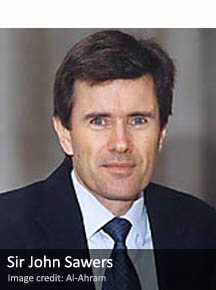
Sir John SawersBy JOSEPH FITSANAKIS | intelNews.org |
The Director of Britain’s Secret Intelligence Service, widely known as MI6, visited Israel in secret in late August in an effort to convince the Israelis not to launch military strikes on Iran, according to a British newspaper. In an article published on Tuesday, The Daily Mail said Sir John Sawers, who leads Britain’s foremost external spy agency, held private meetings with leading Israeli officials, among them Prime Minister Benjamin Netanyahu and Defense Minister Ehud Barak. His message, according to the paper, was that London wanted more time so that the economic and diplomatic sanctions imposed on Iran by the international community to bear fruit. Sanctions are considered by some in the West a viable alternative to calls by Israeli officials for direct military attacks on Iran, aimed at stopping the country’s nuclear program. If confirmed, Sir John’s visit to Israel would represent a near-unprecedented move; this is because, unlike his counterpart at the United States Central Intelligence Agency, the Director of MI6, known informally as ‘C’, does not routinely travel to foreign countries as a diplomatic messenger of the British government. Many, therefore, will see Sawers’ alleged trip to Israel as yet another sign that the Jewish state is beginning to lean heavily in favor of attacking Iran using overt military means. In a possibly related development, Israel’s Minister for Intelligence and Atomic Energy said on Wednesday that he supported international sanctions on Iran. Read more of this post

Why did Canada suddenly suspend all diplomatic ties with Iran?

John BairdBy JOSEPH FITSANAKIS | intelNews.org |

On Friday September 7, 2012, John Baird, Canada’s Minister of Foreign Affairs, announced that Canada was suspending all diplomatic relations with Iran and was expelling Iranian diplomats from the country, effective immediately. Additionally, said Baird, Ottawa would officially list Iran as a state sponsor of terrorism under the Canadian Justice for Victims of Terrorism Act. By the time Baird made his announcement, all Canadian diplomats serving in Iran were on their way home. Iranian diplomats in Canada were given five days to leave the country. Relations between the two countries have been rocky since at least 2003, when Canadian photographer Zahra Kazemi was killed under detention in Tehran, and Iran has not had a full ambassador in Canada for nearly five years. Still, the news surprised even former government insiders in Canada. Ray Boisvert, until recently Assistant Director of the Canadian Security Intelligence Service, described Ottawa’s move as “unprecedented”. What was it that caused the final rupture in Canadian-Iranian relations? Why expel the Iranian diplomats now? Leading Middle Eastern experts in Canada cannot seem put their finger on a specific reason. Iran observer James Devine, of Canada’s Mount Allison University, told CBS that Ottawa’s move was “not tied to a specific event”. The Canadian former Ambassador to Tehran, John Mundy, said he believed the break in relations was not tied to a direct threat against Canadian interests. But CBS said many Iranian-Canadians believe the drastic move by the Canadian government should be seen as “an immediate sign” of a looming military attack on Iran by Western powers or Israel. In a recent article on the subject, Canadian political analyst Brian Stewart argued that Ottawa’s “overnight liquidation” of its diplomatic relations with Tehran must be rooted in “new intelligence” showing that Iran “absolutely poses a security threat in Canada”.   Read more of this post

Israeli PM had ‘sharp exchange’ with US Ambassador over Iran

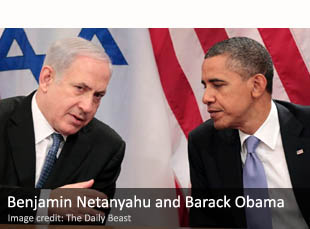
Benjamin Netanyahu and Barack ObamaBy JOSEPH FITSANAKIS | intelNews.org |
A United States Congressman, who chairs the US House of Representatives Intelligence Committee, says he witnessed a “sharp exchange” between the Israeli Prime Minister and the American Ambassador to Israel, over the Iranian nuclear program.  Earlier this week we reported that Representative Mike Rogers (R-MI), who visited Israel in an official capacity last week, said that he did not believe Israel would attack Iran before the US Presidential elections in November. But in a radio interview with the Detroit-based WJR station on Thursday, Rogers said he thought Israeli leaders were “at wits’ end” over what he described as indecisiveness by the Barack Obama administration in responding to the Iranian nuclear program. The Republican politician said that the meeting he attended at the Israeli Prime Minister’s office was supposed to be a “discussion on intelligence and technical issues”. But it quickly “spun out of control”, he said, when the Israeli leader allegedly criticized the US Ambassador to the country, Dan Shapiro, over the US government’s perceived unwillingness to go beyond imposing diplomatic sanctions on Iran. Rogers described the situation as “a very tense […], very sharp exchange” between the two men, which revealed “elevated concerns on behalf of the Israelis” about the unfolding Iranian nuclear stalemate. Responding to a question from the interviewer, Rogers added that he did not think he had ever witnessed “such a high-level confrontation” between a representative of the American government and a foreign official. Read more of this post

Ex-CIA Director cautions Israel against attacking Iran

Michael HaydenBy JOSEPH FITSANAKIS | intelNews.org |

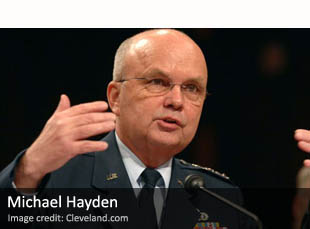
The former Director of the United States Central Intelligence Agency has warned that an Israeli attack on Iran would likely backlash and might actually push Tehran to build nuclear weapons earlier than currently projected. General Michael Hayden, the only person to lead both the CIA and the US National Security Agency, told Israeli newspaper Ha’aretz on Monday that Iran is not yet close to building a nuclear weapon and that Israel should carefully consider how to respond to its neighbor’s alleged nuclear weapons ambitions. During his CIA tenure, General Hayden supervised the 2007 US National Intelligence Estimate, produced cooperatively by all 16 agencies of the US intelligence community, which concluded that Iran had halted its nuclear weapons activities. In his interview on Monday, Hayden said that, in his view, the conclusion of the 2007 NIE “still holds”, as Tehran has not yet made the decision to weaponize its missile and fissile material. Hayden, who was recently appointed as national security adviser to Republican Presidential hopeful Mitt Romney, said that, by rushing to attack Iran now, Israeli military leaders would “actually push [Tehran] to do that which [an attack] is supposed to prevent: getting nuclear weapons”. The retired General added that any military attack on Iran would “pose a difficult challenge” in terms of its strategic outcome, since “there is no absolute certainty that all targets are known” inside Iran. Furthermore, he said, even if Israel decided to attack Iran militarily, it would have to go beyond mere air raids, and would soon discover that its resources were limited. Read more of this post

News you may have missed #784

Aimal FaiziBy IAN ALLEN | intelNews.org |
►►US agencies still not sharing intelligence. Nearly half of US federal agencies are not sharing documented incidents of potential terrorist activity with US intelligence centers, according to officials in the Office of the Director of National Intelligence. Federal and police officials are supposed to deposit reports of suspicious behavior through a system known as the Nationwide Suspicious Activity Reporting Initiative (NSARI). It is a virtualized inventory of tips that can be reached by federal, state or local government authorities. But progress in connecting local agencies to fusion centers through the NSARI appears to be slow-going. Almost exactly a year ago, a similar report by the US Congressional Research Service found that US intelligence agencies were still struggling to strengthen their information-sharing networks.
►►Russian spies ‘top priority’ for Czech intelligence. A new report by the Czech Security Information Service (BIS) says that Russian intelligence services are the most active foreign espionage organizations in the Czech Republic. The report, published last Wednesday, states that Russian spies work under different covers, mainly at Russian diplomatic missions, and in numbers that are utterly unjustified, given the current status of Czech-Russian relations. “Russian intelligence officers were spotted at different public and corporate events, where they tried to resume old contacts and meet new people”, the report said. It is worth noting that the BIS report devoted nine paragraphs to Russian espionage and only one to Chinese. Chinese intelligence officers “do not pose an immediate risk to Czech citizens”, the report said.
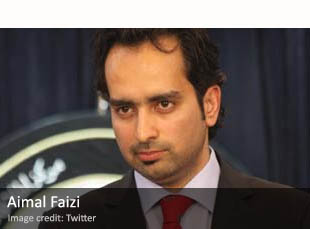
►►Afghanistan blames ‘foreign spies’ for insider attacks. Some of Afghan President Hamid Karzai’s top advisers said this week that the recent rise in insider attacks on NATO troops is the product of foreign spy agencies infiltrating Afghanistan’s security forces. They said that Afghanistan’s National Security Council has concluded that both Pakistani and Iranian intelligence organizations are recruiting young Afghans to enlist in the army and police with the intention of targeting Western service members. The officials suggested that the ultimate aim of the alleged efforts by foreign agencies is to destabilize Afghanistan’s forces. One of the Afghan government’s spokesmen, Aymal Faizi (pictured), said that the allegations from Kabul rested on classified evidence from “documents, telephone calls, pictures and audio that show direct contact between these individuals and foreign spy agencies”.

News you may have missed #783

Uri SaguyBy IAN ALLEN | intelNews.org |
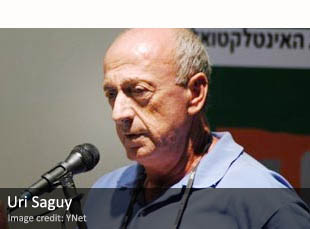
►►Israeli ex-intel chief says warns of ‘hysteria’ over Iran. Major General Uri Saguy (a.k.a. Uri Sagi), who was head of the IDF’s Operations Directorate during the 1982 Lebanon war, and Military Intelligence chief from 1991 to 1995, has warned of an “orchestrated and purposely timed hysteria that puts the country into a state of anxiety, artificial or not”, regarding the Iranian nuclear issue. Saguy, who resigned from the IDF in 1995 due to a conflict between him and the Chief of General Staff, added that “it would be a mistake if Israel uses force, certainly now, in order to thwart the Iranian nuclear potential”. The essence of Saguy’s message, notes Ha’aretz‘s Amir Oren, is that Israel’s citizens cannot trust Defense Minister Ehud Barak or Prime Minister Benjamin Netanyahu.
►►Australian spy chief warns of economic espionage. The director-general of the Australian Security Intelligence Organisation, David Irvine, has warned that the online revolution has left Australian companies increasingly vulnerable to cyber attacks and commercial espionage. Speaking to a business audience in Canberra, Irvine said that most online attacks in the business world go undetected, despite growing awareness of the threat. Asked how much commercial cyber crime went undetected, he said: “I would be very surprised if we who are active in this area are picking up the greater proportion of it, in fact, quite the reverse”.
►►Top US military official objects to attack on Iran. As Israeli officials are telling local reporters that they’re really, really ready to attack Iran’s nuclear facilities, and they mean it this time, the top US military officer is saying what a terrible idea that would be. “I may not know about all of [Israel’s] capabilities”, said General Martin Dempsey, the chairman of the Joint Chiefs of Staff. “But I think that it’s a fair characterization to say that they could delay but not destroy Iran’s nuclear capabilities”. Left unsaid: in a few years, the US and Israel would be back to the same standoff with Iran —except this time it might do so amidst a proxy terrorist war to avenge the Iranians.

Ex-CIA officer urges Bulgaria to probe alleged Hezbollah attack alone

Robert BaerBy JOSEPH FITSANAKIS | intelNews.org |
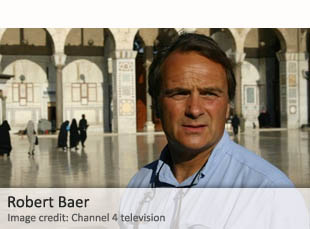
A 22-year veteran of the United States Central Intelligence Agency, who spent over a decade in the Middle East, has urged Bulgaria to probe a recent suicide attack against Israeli tourists on its soil without relying on American or Israeli assistance. Robert Baer, who is considered a foremost intelligence expert on Hezbollah, the Lebanese Shiite group accused of orchestrating the attack, said that Bulgarian authorities should keep the investigation free of the “intelligence games” currently taking place between the US, Israel and Iran. He was speaking Sunday on Bulgaria’s bTV, in reference to the July 18 blast that hit a bus stationed outside the main airport building in the Black Sea resort town of Burgas. The suicide bomber, whose identity remains unknown, killed himself, the Bulgarian bus driver and five Israeli tourists. Soon after the attack, Israel announced that it had gathered “unquestionable intelligence” showing that Hezbollah, backed by Iran, was behind the suicide bombing. But according to Baer, who spent several years in Lebanon in the 1980s, Israeli and American intelligence investigators are too politicized to be able to provide objective evidence as to the culprits of the attack. The former CIA case officer told bTV that both Tel Aviv and Washington “want to lead a war in Iran” and that they will be tempted to point at Tehran as the main instigator of the suicide blast in Burgas. Read more of this post

News you may have missed #780

Syrian rebel video of downed dronesBy IAN ALLEN | intelNews.org |
►►Israeli Prime Minister rebukes President’s Iran comments. Aides to Israeli Prime Minister Benjamin Netanyahu launched a stinging rebuke to the country’s president, Shimon Peres, after he said that Israel should not act alone in launching military action against Iran’s nuclear program. In an interview on Israeli television, Peres said: “It is clear to us we cannot do it on our own. We can only delay [Iran’s progress]. Thus it’s clear to us that we need to go together with America”. Officials from Netanyahu’s office were quoted in the Israeli media as saying: “Shimon Peres forgets what the role of the president of Israel is”. The row is a stark example of the sharp differences at the heart of Israel’s political, military and intelligence establishment over the merits and dangers of an early unilateral military strike on Iran.
►►Russian embassy in UK alleges attack by Syrian activists. Russia’s embassy in London accused British police on Friday of taking no action to prevent an attack on its building by a group of activists protesting Moscow’s support for Syrian President Bashar al-Assad. It made the accusation as about 40 protesters clad in balaclavas demonstrated outside the embassy, located in an upscale part of London, against the verdict in a trial of the Russian feminist punk band Pussy Riot in Moscow. An embassy spokesman said a group of protesters chanting anti-Assad slogans attacked the building overnight, throwing stones and smashing windows.
►►Syrian rebels put captured Iranian drones on YouTube. The opposition to Bashar al-Assad says it’s captured spy drones made by Assad’s patron, Iran. And it’s put the evidence on YouTube. In the video, Syrian rebels show off three smallish, unarmed surveillance drones they say they downed. The two larger drones appear to be variants of Iran’s homemade Ababil, or Swallow, surveillance aircraft. All three show signs of damage, with the tiny drone’s nose cone looking to have taken the worst, and alongside the drones are pamphlets displaying the face of the dead Iranian ayatollah Ruhollah Khomeini. It’s yet more evidence that Iran considers Syria’s civil war to be a proxy contest with much at stake for their influence in the region.

News you may have missed #778 (analysis edition)

Lieutenant-General Zahir ul-IslamBy IAN ALLEN | intelNews.org |
►►Some rules restrain Mossad’s work in Iran. It is widely believed that at least four assassinations of Iranian nuclear scientists in Tehran were carried out in recent years by Mossad operatives. The perpetrators were part of an elite unit within Israeli intelligence, called Kidon, founded in 1972 to avenge the killing of 11 Israeli athletes at the Munich Olympics, by any means necessary. But veteran Israeli intelligence correspondents Dan Raviv and Yossi Melman argue that the Kidon is not technically a ‘lawless’ organization; it has to comply with a set of “unwritten regulations” adopted by Israel’s secret agencies fifty years ago.
►►Are US and Pakistani spy agencies starting to get along? The relationship between the CIA and Pakistan’s Inter-Services Intelligence (ISI) agency has been at the core of Washington and Islamabad’s alliance for over a decade now. But over the past two years, as suspicions have grown, the two sides had become near adversaries. After months of relations languishing at an all-time low, Pakistan and the US may now be opening up a fresh phase of engagement. Following US Secretary of State Hillary Clinton’s recent apology for the loss of 24 Pakistani soldiers at a border checkpoint last November, NATO supplies are rumbling through again. Washington has also released funds for Pakistani military operations it had previously withheld. And, perhaps most crucially, the two fractious allies’ top spies are said to be talking again. New ISI Director Zahir ul-Islam (pictured) visited Washington for talks earlier this month.
►►Why the US isn’t arming Syria’s opposition –yet. Up until this point, the only thing the US has owned up to is providing humanitarian assistance and communications equipment to Syrian opposition groups. A report earlier this month revealed that US President Barack Obama signed a secret “finding” in July, which allows the CIA to take action in Syria, but does not include lethal support. In other words, the US won’t be sending in Seal Team Six to take down Assad any time soon, but it is training certain groups to handle and gather intelligence. Why is that?

White House silent on rumors of ‘alarming’ info about Iran nukes

Ehud BarakBy JOSEPH FITSANAKIS | intelNews.org |

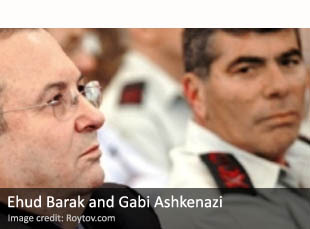
The White House has refused comment on news from Israel that a recent American intelligence report contains “explosive” new findings on Iran’s nuclear program. Israeli newspaper Ha’aretz said yesterday that, according to Israel’s Minister of Defense, Ehud Barak, a new National Intelligence Estimate (NIE) on Iran is currently “being passed around senior [government] offices” in the United States. Speaking on Thursday on government-owned Israel Radio, Barak said that the new NIE has brought American estimates on Iran’s nuclear program “closer to the Israeli position”. The NIE is a classified report, produced annually, that presents the consensus view of the US Intelligence Community on critical issues affecting American national security. Notably, a series of recent NIE reports have consistently argued that the Iranian government remains essentially indecisive about whether to militarize its nuclear program. IntelNews regulars may recall that, according to The New York Times, Israel’s primary external intelligence agency, the Mossad, is in broad agreement with the premise of recent American NIEs. Like its American equivalent, the CIA, the Israeli agency does not believe that Iran’s nuclear program has been militarized at this point. There is, however, one crucial difference between American and Israeli estimates on the subject: namely Tel Aviv’s view that the Iranian nuclear program should be militarily confronted regardless of Tehran’s future policy goals. According to Barak, the new American intelligence report contains “alarming […] information” that Iran has achieved “surprising, notable progress” on the research and development stage of its nuclear program. Read more of this post

Israeli intelligence insiders warn of ‘imminent’ attack on Iran

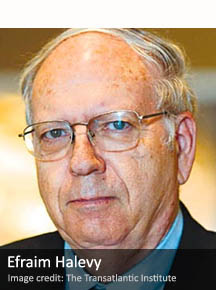
Efraim HalevyBy JOSEPH FITSANAKIS | intelNews.org |

If Iranian government officials had a uranium centrifuge for each time a warning is issued of an impending military attack on Tehran, they would undoubtedly have a nuclear weapon by now. Warnings about such an attack are now ‘a-dime-a-dozen’. Yet it is admittedly difficult to ignore the increasing frequency with which such warnings are being issued by leading retired intelligence officials in Israel. Last week alone, two intelligence insiders, Major-General Danny Yatom and Efraim Halevy, both former Directors of the Mossad, Israel’s main external intelligence agency, said a military attack on Iran was imminent. Speaking on Wednesday, Halevy said that Israel’s threats of a military attack were “credible” and “serious”, adding that, if he were an Iranian, he would be “very fearful of the next 12 weeks”. His comments were echoed on Sunday by Major-General Yatom, who told Israel’s Army Radio that the debate among senior Israeli security officials was not over whether Israel should strike Iran, but about when it should do so. The two men spoke shortly after a similar warning was issued by Major-General Aharon Ze’evi Farkash, former chief of Israel’s Military Intelligence Directorate. Farkash, who is not a proponent of an all-out military operation against Iran, said that an Israeli attack would probably come “within weeks, or a couple of months”. It is worth pointing out that all three men issued their public warnings along with significant reservations about the way Israel is handing the situation with Iran. Halevy said that, in his view, “it would not be desirable for Israel to act alone” against Iran and warned of a potentially serious international backlash. Major-General Farkash reiterated his previously stated position that an open military attack on Iran at this point in time would be premature and would “ruin the legitimacy that is needed” in order to permanently stop Iran’s alleged nuclear ambitions. Read more of this post