News you may have missed #783

Uri SaguyBy IAN ALLEN | intelNews.org |
►►Israeli ex-intel chief says warns of ‘hysteria’ over Iran. Major General Uri Saguy (a.k.a. Uri Sagi), who was head of the IDF’s Operations Directorate during the 1982 Lebanon war, and Military Intelligence chief from 1991 to 1995, has warned of an “orchestrated and purposely timed hysteria that puts the country into a state of anxiety, artificial or not”, regarding the Iranian nuclear issue. Saguy, who resigned from the IDF in 1995 due to a conflict between him and the Chief of General Staff, added that “it would be a mistake if Israel uses force, certainly now, in order to thwart the Iranian nuclear potential”. The essence of Saguy’s message, notes Ha’aretz‘s Amir Oren, is that Israel’s citizens cannot trust Defense Minister Ehud Barak or Prime Minister Benjamin Netanyahu.
►►Australian spy chief warns of economic espionage. The director-general of the Australian Security Intelligence Organisation, David Irvine, has warned that the online revolution has left Australian companies increasingly vulnerable to cyber attacks and commercial espionage. Speaking to a business audience in Canberra, Irvine said that most online attacks in the business world go undetected, despite growing awareness of the threat. Asked how much commercial cyber crime went undetected, he said: “I would be very surprised if we who are active in this area are picking up the greater proportion of it, in fact, quite the reverse”.
►►Top US military official objects to attack on Iran. As Israeli officials are telling local reporters that they’re really, really ready to attack Iran’s nuclear facilities, and they mean it this time, the top US military officer is saying what a terrible idea that would be. “I may not know about all of [Israel’s] capabilities”, said General Martin Dempsey, the chairman of the Joint Chiefs of Staff. “But I think that it’s a fair characterization to say that they could delay but not destroy Iran’s nuclear capabilities”. Left unsaid: in a few years, the US and Israel would be back to the same standoff with Iran —except this time it might do so amidst a proxy terrorist war to avenge the Iranians.

News you may have missed #780

Syrian rebel video of downed dronesBy IAN ALLEN | intelNews.org |
►►Israeli Prime Minister rebukes President’s Iran comments. Aides to Israeli Prime Minister Benjamin Netanyahu launched a stinging rebuke to the country’s president, Shimon Peres, after he said that Israel should not act alone in launching military action against Iran’s nuclear program. In an interview on Israeli television, Peres said: “It is clear to us we cannot do it on our own. We can only delay [Iran’s progress]. Thus it’s clear to us that we need to go together with America”. Officials from Netanyahu’s office were quoted in the Israeli media as saying: “Shimon Peres forgets what the role of the president of Israel is”. The row is a stark example of the sharp differences at the heart of Israel’s political, military and intelligence establishment over the merits and dangers of an early unilateral military strike on Iran.
►►Russian embassy in UK alleges attack by Syrian activists. Russia’s embassy in London accused British police on Friday of taking no action to prevent an attack on its building by a group of activists protesting Moscow’s support for Syrian President Bashar al-Assad. It made the accusation as about 40 protesters clad in balaclavas demonstrated outside the embassy, located in an upscale part of London, against the verdict in a trial of the Russian feminist punk band Pussy Riot in Moscow. An embassy spokesman said a group of protesters chanting anti-Assad slogans attacked the building overnight, throwing stones and smashing windows.
►►Syrian rebels put captured Iranian drones on YouTube. The opposition to Bashar al-Assad says it’s captured spy drones made by Assad’s patron, Iran. And it’s put the evidence on YouTube. In the video, Syrian rebels show off three smallish, unarmed surveillance drones they say they downed. The two larger drones appear to be variants of Iran’s homemade Ababil, or Swallow, surveillance aircraft. All three show signs of damage, with the tiny drone’s nose cone looking to have taken the worst, and alongside the drones are pamphlets displaying the face of the dead Iranian ayatollah Ruhollah Khomeini. It’s yet more evidence that Iran considers Syria’s civil war to be a proxy contest with much at stake for their influence in the region.
News you may have missed #778 (analysis edition)

Lieutenant-General Zahir ul-IslamBy IAN ALLEN | intelNews.org |
►►Some rules restrain Mossad’s work in Iran. It is widely believed that at least four assassinations of Iranian nuclear scientists in Tehran were carried out in recent years by Mossad operatives. The perpetrators were part of an elite unit within Israeli intelligence, called Kidon, founded in 1972 to avenge the killing of 11 Israeli athletes at the Munich Olympics, by any means necessary. But veteran Israeli intelligence correspondents Dan Raviv and Yossi Melman argue that the Kidon is not technically a ‘lawless’ organization; it has to comply with a set of “unwritten regulations” adopted by Israel’s secret agencies fifty years ago.
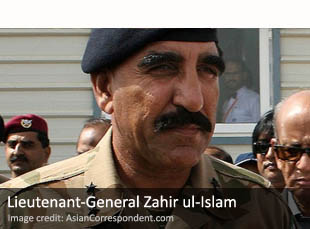
►►Are US and Pakistani spy agencies starting to get along? The relationship between the CIA and Pakistan’s Inter-Services Intelligence (ISI) agency has been at the core of Washington and Islamabad’s alliance for over a decade now. But over the past two years, as suspicions have grown, the two sides had become near adversaries. After months of relations languishing at an all-time low, Pakistan and the US may now be opening up a fresh phase of engagement. Following US Secretary of State Hillary Clinton’s recent apology for the loss of 24 Pakistani soldiers at a border checkpoint last November, NATO supplies are rumbling through again. Washington has also released funds for Pakistani military operations it had previously withheld. And, perhaps most crucially, the two fractious allies’ top spies are said to be talking again. New ISI Director Zahir ul-Islam (pictured) visited Washington for talks earlier this month.
►►Why the US isn’t arming Syria’s opposition –yet. Up until this point, the only thing the US has owned up to is providing humanitarian assistance and communications equipment to Syrian opposition groups. A report earlier this month revealed that US President Barack Obama signed a secret “finding” in July, which allows the CIA to take action in Syria, but does not include lethal support. In other words, the US won’t be sending in Seal Team Six to take down Assad any time soon, but it is training certain groups to handle and gather intelligence. Why is that?

White House silent on rumors of ‘alarming’ info about Iran nukes

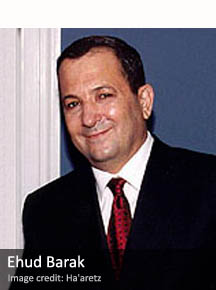
Ehud BarakBy JOSEPH FITSANAKIS | intelNews.org |
The White House has refused comment on news from Israel that a recent American intelligence report contains “explosive” new findings on Iran’s nuclear program. Israeli newspaper Ha’aretz said yesterday that, according to Israel’s Minister of Defense, Ehud Barak, a new National Intelligence Estimate (NIE) on Iran is currently “being passed around senior [government] offices” in the United States. Speaking on Thursday on government-owned Israel Radio, Barak said that the new NIE has brought American estimates on Iran’s nuclear program “closer to the Israeli position”. The NIE is a classified report, produced annually, that presents the consensus view of the US Intelligence Community on critical issues affecting American national security. Notably, a series of recent NIE reports have consistently argued that the Iranian government remains essentially indecisive about whether to militarize its nuclear program. IntelNews regulars may recall that, according to The New York Times, Israel’s primary external intelligence agency, the Mossad, is in broad agreement with the premise of recent American NIEs. Like its American equivalent, the CIA, the Israeli agency does not believe that Iran’s nuclear program has been militarized at this point. There is, however, one crucial difference between American and Israeli estimates on the subject: namely Tel Aviv’s view that the Iranian nuclear program should be militarily confronted regardless of Tehran’s future policy goals. According to Barak, the new American intelligence report contains “alarming […] information” that Iran has achieved “surprising, notable progress” on the research and development stage of its nuclear program. Read more of this post

Israeli intelligence insiders warn of ‘imminent’ attack on Iran

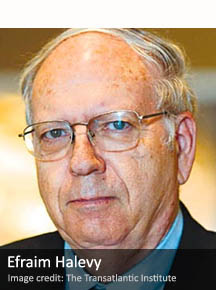
Efraim HalevyBy JOSEPH FITSANAKIS | intelNews.org |
If Iranian government officials had a uranium centrifuge for each time a warning is issued of an impending military attack on Tehran, they would undoubtedly have a nuclear weapon by now. Warnings about such an attack are now ‘a-dime-a-dozen’. Yet it is admittedly difficult to ignore the increasing frequency with which such warnings are being issued by leading retired intelligence officials in Israel. Last week alone, two intelligence insiders, Major-General Danny Yatom and Efraim Halevy, both former Directors of the Mossad, Israel’s main external intelligence agency, said a military attack on Iran was imminent. Speaking on Wednesday, Halevy said that Israel’s threats of a military attack were “credible” and “serious”, adding that, if he were an Iranian, he would be “very fearful of the next 12 weeks”. His comments were echoed on Sunday by Major-General Yatom, who told Israel’s Army Radio that the debate among senior Israeli security officials was not over whether Israel should strike Iran, but about when it should do so. The two men spoke shortly after a similar warning was issued by Major-General Aharon Ze’evi Farkash, former chief of Israel’s Military Intelligence Directorate. Farkash, who is not a proponent of an all-out military operation against Iran, said that an Israeli attack would probably come “within weeks, or a couple of months”. It is worth pointing out that all three men issued their public warnings along with significant reservations about the way Israel is handing the situation with Iran. Halevy said that, in his view, “it would not be desirable for Israel to act alone” against Iran and warned of a potentially serious international backlash. Major-General Farkash reiterated his previously stated position that an open military attack on Iran at this point in time would be premature and would “ruin the legitimacy that is needed” in order to permanently stop Iran’s alleged nuclear ambitions. Read more of this post

News you may have missed #765

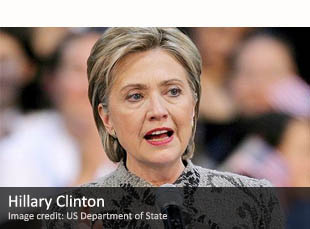
Hillary ClintonBy TIMOTHY W. COLEMAN | intelNews.org |
►►MI6 chief says Iran will get nukes in 2 years. Sir John Sawers, the head of Britain’s Secret Intelligence Service, has been quoted as publicly forecasting that Iranian nuclear weapons efforts will likely come to fruition by 2014. Sawers is quoted in The Daily Telegraph as saying: “The Iranians are determinedly going down a path to master all aspects of nuclear weapons; all the technologies they need”, adding “it’s equally clear that Israel and the United States would face huge dangers if Iran were to become a nuclear weapon state”. He went on to assert that Iran would have achieved nuclear statehood in 2008 had it not been for clandestine efforts to thwart such ends. He did not elaborate on what he meant by his comments, for which he was criticized in Parliament earlier this week.
►►MI6 chief claims US interrogators were ‘obsessed’. In the same Telegraph interview, Sir John claimed that British interrogators, following the attacks of September 11, 2001, came “close to the line” of illegality. He went on to say that US interrogators straddled the line between legal and illegal, insinuating that US personnel may have crossed the line during interrogations. Sir John is quoted as explaining: “They [US interrogators] got so obsessed with getting a right answer that they drifted into an area that kind of amounted to torture”. He went on to claim that British personnel involved in interrogations never crossed the line, observing: “We’ve never been there, we’ve never been involved in that, and I think our accountability, our disciplines, have helped us keep on the right side of these lines”.
►►Clinton says Israeli spy Pollard unlikely to be freed. US Secretary of State Hillary Clinton has reaffirmed Washington’s position that Jonathan Pollard was unlikely to receive clemency or see freedom anytime soon. During a press conference in Jerusalem on July 16, Secretary Clinton stated unequivocally: “He [Jonathan Pollard] was sentenced to life in prison, he is serving that sentence, and I do not have any expectations that that is going to change”. Pollard, a former US naval intelligence analyst, was suspected of trying to provide classified information to South Africa, Pakistan, and Australia. He was arrested and convicted of espionage for providing classified information to the State of Israel. He is serving a life sentence for his crimes.

Israel, not US, behind killings of Iranian scientists, claims new book

Yossi MelmanBy IAN ALLEN | intelNews.org |
The United States has endorsed but does not actively participate in an ongoing Israeli-led program of assassination operations against Iranian nuclear scientists, according to a new book by two veteran Israeli intelligence commentators. Published today, July 9, by Levant Books, Spies Against Armageddon: Inside Israel’s Secret Wars, is written by CBS News correspondent Dan Raviv and Yossi Melman, intelligence and military affairs analyst for Israel’s leading newspaper, Ha’aretz.  The two authors claim that the killings, which are allegedly aimed at preventing Iran from building a nuclear weapon, form one aspect of a multi-layered program of sabotage that consists of regular spy-missions deep inside Iranian territory. Raviv and Melman allege that Israeli operatives routinely enter and exit Iran using “a multitude of routes” and an extensive network of safe houses that is said to predate the 1979 Islamic Revolution. The book, an advanced copy of which has been received by intelNews, appears to dispute widespread media speculation that Israeli covert operations inside Iran are carried out by members of ethnic minorities hostile to Tehran and trained by the Mossad, Israel’s primary covert action intelligence agency. According to Raviv, the task of ‘beheading’ the Iranian nuclear program is considered politically delicate by the Israeli government; the latter would never consider “farm[ing] out a mission that is that sensitive”. The CBS correspondent argues that Mossad would indeed use ethnic, religious or political “dissidents” inside Iran, primarily “for assistance and logistics”. But the hit itself, said Raviv, would be carried out by Mossad officers: Read more of this post

US and Israel behind computer virus that hit Iran, say sources

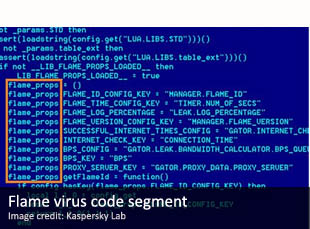
Flame virus code segmentBy JOSEPH FITSANAKIS | intelNews.org |
Flame, a sophisticated computer malware that was detected last month in computers belonging to the Iranian National Oil Company and Iran’s Ministry of Petroleum, was created by Israel and the United States, according to a leading American newspaper. Quoting “officials familiar with US cyber-operations”, The Washington Post reported on Wednesday that the malware, which is said to be “massive in size”, is part of a wider covert program codenamed OLYMPIC GAMES. The paper said that the US portion of the program is spearheaded by the National Security Agency, which specializes in cyberespionage, and the CIA’s Information Operations Center. The Post further claims that OLYMPIC GAMES has a three-fold mission: to delay the development of the Iranian nuclear program; to discourage Israeli and American officials from resorting to a conventional military attack on Iran; and to buy time for those officials who favor addressing the Iranian nuclear stalemate with diplomatic pressures coupled with sanctions. According to one “former intelligence official” quoted in The Post, the scale of OLYMPIC GAMES “is proportionate to the problem that’s trying to be resolved”. Russian antivirus company Kaspersky Lab, which first spotted the Flame virus in May, said that it is “one of the most complex threats ever discovered”. It is over 20 megabytes in size, consisting of 650,000 lines of code. In comparison, Stuxnet, a computer super-virus that was detected by experts in 2010, and caused unprecedented waves of panic among Iranian cybersecurity experts, was 500 kilobytes in size. Read more of this post

Comment: Who authored computer virus that ‘dwarfs Stuxnet’?

Flame virus code segmentBy JOSEPH FITSANAKIS | intelNews.org |
When the Stuxnet computer virus was detected, in 2010, it was recognized as the most sophisticated malware ever created. It had been specifically designed to sabotage Siemens industrial software systems, which were used in Iran’s nuclear energy program. Not surprisingly, most Stuxnet-infected computers were in Iran. Now a new, massive and extremely sophisticated piece of malware has been detected in computers belonging to the Iranian National Oil Company and Iran’s Ministry of Petroleum. It is called Flame and, according to antivirus company Kaspersky Lab, which first spotted the virus last week, it is “one of the most complex threats ever discovered”. Simply consider that Stuxnet, which caused unprecedented waves of panic among Iranian cybersecurity experts, was 500 kilobytes in size. Flame is over 20 megabytes in size, consisting of 650,000 lines of code; it is so complex that it is expected to take programming analysts around a decade to fully comprehend. The two are different, of course. Stuxnet was an infrastructure-sabotaging malware, which destroyed hundreds —maybe even thousands—of Iranian nuclear centrifuges. Flame, on the other hand, appears to be an espionage tool: it aims to surreptitiously collect information from infected systems. What connects them is their intended target: Iran. We now have Stuxnet, the most complex sabotaging malware ever discovered, which must have taken dozens of programmers several months to create, and Flame, the world’s most powerful cyberespionage tool ever detected by computer security experts. And both have been primarily directed at Iranian government computers. Read more of this post

New Israeli special forces command escalates covert action

Benny GantzBy JOSEPH FITSANAKIS | intelNews.org |
In recent months, intelNews has paid particular attention to senior Israeli security officials, or former officials, who routinely caution against plans for an Israeli military attack on Iran. These include Amos Yadlin, former head of Israel’s Military Intelligence directorate, and former Mossad Directors Meir Dagan and Tamir Pardo, who believes that a nuclear-armed Iran “would not be an existential threat to Israel”. But such current or former Israeli officials, who view a possible Israeli military attack on Iran as catastrophic, should not be seen as advocating pacifist views. On the contrary, they caution against an open Israeli military attack on Iran, favoring instead a covert-action approach. There are now signs that, under pressure by the United States, the Israeli administration of Benjamin Netanyahu is gradually heeding such advice. One such indication is to be found in the increasingly instrumental role played by Benny Gantz, the Chief of General Staff of the Israel Defense Forces. Lieutenant-General Gantz, who rose to the position of Israel’s most powerful soldier in February of 2011, arguably represents the most hawkish wing of the Israeli military. He is also one of the most vocal adherents of Israeli military supremacy in the Middle East ‘by any means necessary’. In April, he spoke publicly to confirm that, under his leadership, the Israeli military has “escalated special operations beyond the country’s borders”. Since then, he has refused to provide details of such operations, which he has described as “highly classified”. But an article published earlier this month in The Jerusalem Post discusses the rise in Israeli covert operations in the context of a new Israeli special forces command called Deep Corps. Read more of this post

News you may have missed #734

Aviv KochaviBy IAN ALLEN | intelNews.org |
►►Australian spy agency in rent dispute. The Australian government insists there is no dispute over the lease of the new, state-of-the-art headquarters of the Australian Security Intelligence Organisation, which cost nearly A$589 to build. But according to a number of government sources, the property has become the subject of a standoff between the ASIO and Australia’s Department of Finance and Deregulation. The Canberra Times reports that the Finance Department has told ASIO it will have to hand over more money than anticipated because of a blowout to building costs and timing. But the ASIO is refusing to pay more than initially agreed.
►►US unveils spy model of bin Laden compound. The United States intelligence community has unveiled a scale model of the compound in Abbottabad, Pakistan, where Osama bin Laden spent the last few years of his life in hiding. The model was built by the National Geospatial-Intelligence Agency (NGIA) and used by military and intelligence leaders to plan the daring night raid on May 2, 2011, that killed the al Qaeda founder. Its scale is an exact 1:84; every tree, bush, wall, animal pen, trash can and physical structure in the model existed at one time at the original compound in Abbottabad.
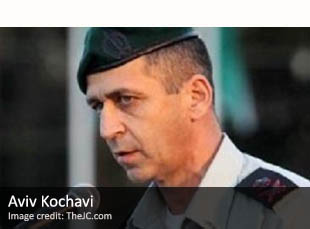
►►Israel military intelligence head in secret US visit. Israeli military intelligence chief Aviv Kochavi made a “secret visit” to Washington earlier this month to discuss the upcoming talks between world powers and Iran. An Israeli security official confirmed the visit, which was reported in Israel’s Haaretz newspaper, but could not provide further details. Meanwhile, three senior IDF intelligence officers resigned recently, following what they called “questionable” appointments to key positions. The three colonels held some of the most senior and classified positions in the Israeli military intelligence community.

News you may have missed #733

Stella RimingtonBy IAN ALLEN | intelNews.org |
►►Women in US intelligence seek balance in life. Nada Bakos (photo) was one of many women serving as CIA analysts before 9/11, who then moved to the operations side after the terrorist attacks. She didn’t yet have a family when she accepted her assignment as a targeting officer in Iraq. After a couple of years, as Bakos was deep into her career on the operations side, she decided she wanted to start a family. That was a problem. At least 160 other women feel her pain. Women from the CIA, the National Security Agency, Naval Office of Intelligence and dozens of other agencies met last week at the Women in National Security conference in McLean, Virginia, to try and find a better way.
►►Interview with ex-MI5 Director Stella Rimington. Australian Radio hosts an interesting audio interview with Dame Stella Rimington, who headed MI5, Britain’s domestic intelligence agency, from 1992 to 1995. She speaks about the experience of being the first director of MI5 to be publicly identified and the sometimes sinister invasions to her privacy as a result. Moreover, she says the only thing that surprised her about the Leveson inquiry into phone hacking and the conduct of the British media is that nobody recognized it was going on before.
►►US government think-tank warns against strikes on Iran. The RAND Corporation, a think tank which advises the United States Department of Defense, warned last week Tuesday against an Israeli or American attack on Iran’s nuclear reactors, and recommended that the administration of Barack Obama try to “quietly influence the internal Israeli discussion over the use of  military force”. In 2009, before Stuxnet, a RAND report had argued that the US may be better off focusing on cyber-defense instead of resorting to cyberattacks.

News you may have missed #730

Majid Jamali FashiBy IAN ALLEN | intelNews.org |
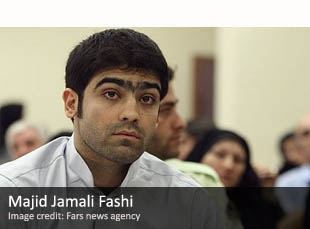
►►Iran executes man convicted of killing nuclear physicist. Iran on Tuesday hanged Majid Jamali Fashi, convicted of playing a key role in the 2010 murder of Iranian nuclear scientist Masoud Ali Mohammadi, and of spying for Israel. Mohammadi, a particle physics professor at Tehran University who was killed in a bomb attack outside his home in January 2010.
►►Bahrain sentences man accused of spying for Iran. Bahraini authorities accused the unnamed 47-year-old man of having leaked high-level information on Bahrain’s military, Interior Ministry and US Naval Base. He was allegedly paid more than BD27,000 on behalf of Iran’s Revolutionary Guard by two Iranians who lived in Kuwait. The two Iranians, who worked as diplomats in the Iranian Embassy in Kuwait, were convicted in absentia for selling military, industrial and economic information to Iran between 2002 and last April.
►►NSA declassifies document after publishing it. The National Security Agency last week invoked a rarely-used authority in order to declassify a secret document that was mistakenly posted on the NSA website with all of its classified passages intact. The article (.pdf) is a historical study entitled Maybe You Had to Be There: The SIGINT on Thirteen Soviet Shootdowns of US Reconnaissance Aircraft. It was written by Michael L. Peterson and was originally published in the classified journal Cryptologic Quarterly in 1993.

News you may have missed #721

Yuval DiskinBy IAN ALLEN | intelNews.org |
►►US spies clash with military over outsourcing spy satellites. Members of the US intelligence community and the military are finding themselves on opposite sides regarding the future of American spy satellites. Since the US first began using satellites to collect intelligence data, the government largely relied on its own technology. But in recent years, as private companies have developed sophisticated satellites of their own, Washington has been increasingly relying on commercial sources for spy missions. Now senior intelligence officials have urged the Obama administration to move away from relying on commercial satellite imagery.
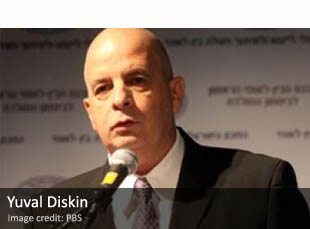
►►Israeli ex-spy criticizes plans for war with Iran. Many Israeli retired officials have criticized Prime Minister Benjamin Netanyahu’s government, but the censure from Yuval Diskin, who stepped down as head of the Shin Bet domestic intelligence service last year, was especially harsh. “I have no faith in the prime minister, nor in the defense minister”, Diskin said in the remarks broadcast by Israeli media on Saturday. “I really don’t have faith in a leadership that makes decisions out of messianic feelings”. Speaking in New York, former Mossad Director Meir Dagan said simply that Diskin “spoke his own truth”.
►►Litvinenko’s widow still waiting for answers. In 2000, after Vladimir Putin became President of the Russian Federation, KGB/FSB officer Alexander Litvinenko fled with his family to the UK, where they claimed political asylum and, later, British citizenship. During his time in London, Litvinenko consulted for MI5 and MI6, worked at a corporate security agency, and wrote two books, including Blowing Up Russia, which alleged that the Russian apartment bombings of 1999 were organized by the FSB, to justify war with Chechnya and sweep Putin into power. He died in 2006 of radioactive poisoning. Six years on, Litvinenko’s widow, Marina, says she is still waiting for answers.

Iran offers more details on alleged Israeli sabotage ring

Israel and IranBy IAN ALLEN | intelNews.org |
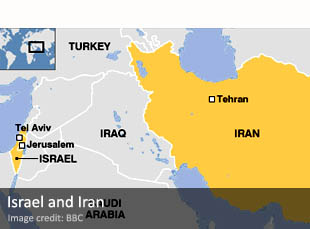
Iranian state media have released fresh details about the arrests of several members of an alleged Israeli sabotage ring, which were initially announced last week. According to the original reports from Tehran, which were notably vague, the ring was allegedly supported by Israel and its members were “plotting attacks” against Iranian government targets. The latest reports from Iran’s IRNA news agency state that the arrestees include “more than fifteen Iranian and foreign nationals […] spying for Israel” and that those arrested were involved in a complex sabotage plot orchestrated by the “Zionist regime” —a term used by Iranian government media to refer to the Jewish state. The reports claim that the group had planned to assassinate an Iranian government “specialist”, possibly a reference to employees in the Islamic Republic’s nuclear program. Moreover, Iranian state prosecutors allege that the planned assassination had been scheduled for last February 10, but was preempted by the planners’ arrests. The date suggests that the arrests were conducted over two months ago. If the February 10 date is accurate, it would also signify that the alleged assassination had been planned for the day before the 33rd anniversary of the 1979 Islamic Revolution, which commemorates the day when the regime of Iran’s Shah collapsed and power was transferred to the hands of the revolutionaries led by Ayatollah Khomeini. Read more of this post